
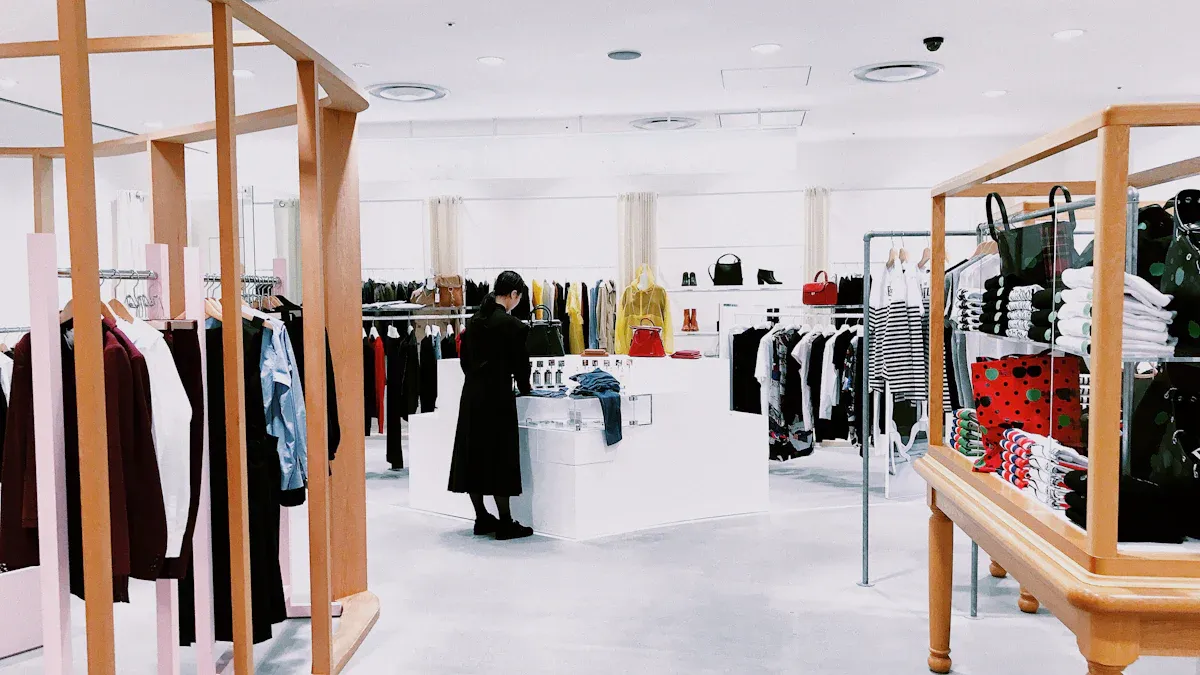
You shape a successful retail environment by combining strategic design, sensory engagement, staff excellence, sustainability, experiential elements, and technology integration. When you focus on both physical and digital spaces, you create a consistent and engaging experience. Retailers using innovations like Electronic Shelf Labels, ESL Gateway AP, and ESL Price Tag see higher sales and engagement. The table below highlights how elements of a compelling retail environment drive results in Esl Retail:
| Evidence Type | Statistic/Insight |
|---|---|
| Sales Volume | Retailers embracing innovations achieve 31.8% higher sales volume |
| Engagement Rates | Tech-enabled experiences drive 18% higher engagement rates |
| Sustainability Focus | 73% of CXOs prioritize sustainability investments |
Defining the Retail Environment
A retail environment shapes every interaction you have with shoppers. You encounter a blend of physical and digital spaces, each designed to influence consumer behavior and create a cohesive retail environment. Understanding the types of retail environments and the elements of a compelling retail environment helps you adapt to the shopper-driven evolution that defines today’s market.
Physical and Digital Spaces
In-Store and Online Interactions
You experience retail through both physical retail stores and digital platforms. Physical locations offer sensory engagement, immediate product access, and personal service. Online spaces provide convenience, broader selection, and personalized recommendations. Recent industry literature highlights the integration of these spaces, often called phygital retail. This approach merges the best of both worlds, allowing you to move seamlessly between in-store and online interactions.
- Phygital retail enhances your experience by connecting digital tools with physical touchpoints.
- Personalization and emotional connections play a key role in shaping your interactions with brands.
- Technology ensures a seamless journey, whether you shop in person or online.
Retail design now draws from multiple disciplines, including design and social sciences. This holistic approach ensures that every aspect of the retail environment, from atmospheric variables to technology, works together to engage you as a consumer.
Importance of Store Location and Accessibility
Store location and accessibility remain critical for attracting shoppers. You notice that stores in high-traffic areas or near complementary businesses often see more foot traffic. Easy access, visible signage, and proximity to public transportation all contribute to a positive shopping experience. When you can reach a store easily, you are more likely to visit and make a purchase. Retailers who prioritize accessibility create an inviting atmosphere that welcomes a diverse range of shoppers.
External and Internal Factors
Store Assessments and Audits
You benefit when retailers regularly assess and audit their stores. These evaluations help identify strengths and areas for improvement. Internal factors such as human resources, organizational culture, operational processes, financial resources, and leadership styles all influence how a store operates. By conducting thorough assessments, retailers ensure that their teams deliver consistent service and maintain high standards.
- Internal factors include:
- Human resources
- Organizational culture
- Operational processes
- Financial resources
- Leadership styles
Regular audits also help retailers adapt to shifting consumer behavior and changing market demands. You see the results in stores that feel organized, well-staffed, and responsive to your needs.
Impact of Surroundings on Customer Experience
The surroundings of a retail environment play a significant role in shaping your experience. External factors such as economic conditions, technological advancements, legal and political regulations, social trends, and competitive landscapes all affect how retailers operate. You notice that societal trends, values, and demographics influence the products and services available to you.
- External factors include:
- Economic conditions
- Technological advancements
- Legal and political regulations
- Social trends
- Competitive landscapes
Retailers must also consider eco-friendly practices and environmental regulations. As a shopper, you may prefer stores that prioritize sustainability and offer products that align with your values. Businesses that monitor competitors and adapt to new entrants stay relevant and continue to meet your expectations.
Note: A well-designed retail environment adapts to both internal and external influences, ensuring you always receive a high-quality experience.
By understanding these factors, you can appreciate how retailers create environments that respond to your needs and preferences. This approach supports a shopper-driven evolution, where your behavior and expectations drive continuous improvement in the retail sector.
Store Layout and Flow in the Retail Environment
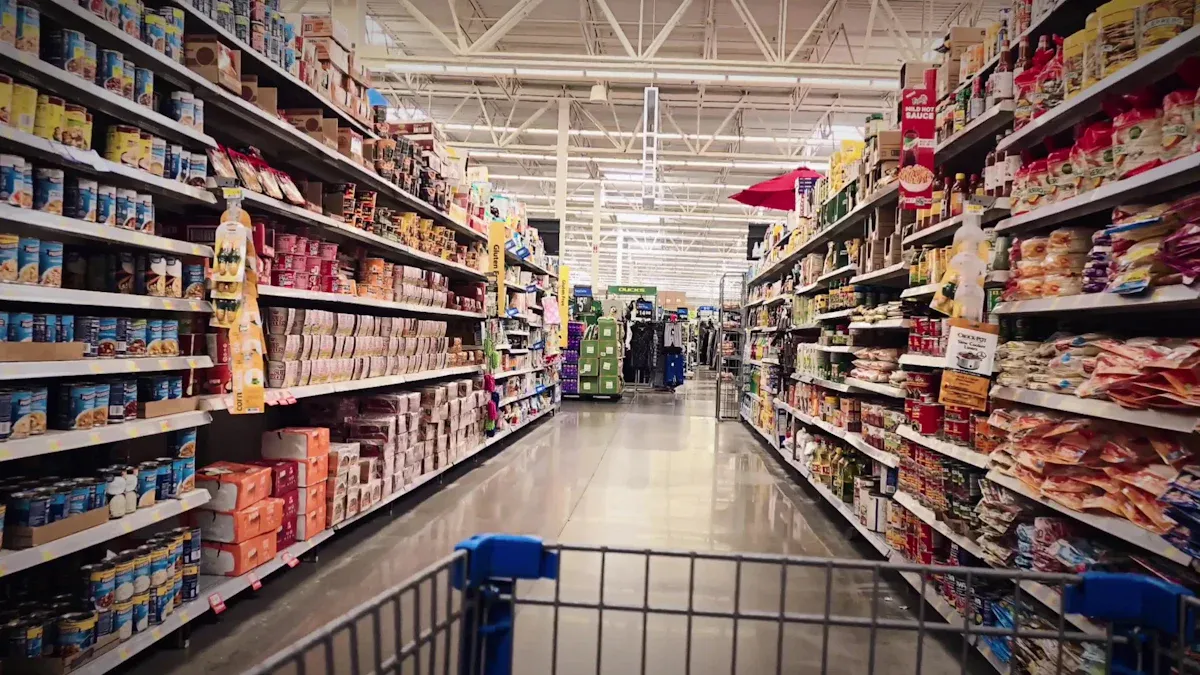
A well-designed retail environment shapes how you interact with products and influences your buying decisions. You encounter different types of retail environments, each with unique layouts that guide your movement and enhance your experience.
Strategic Store Design
Maximizing Space and Efficiency
You notice that retailers maximize space by organizing shelves, displays, and aisles to create an efficient flow. When you walk into a store, you see that clutter-free displays make it easier to focus on products. Retailers use the decompression zone near the entrance to help you adjust to the environment. Effective merchandising shapes your journey and inspires engagement. Lighting highlights products and sets the atmosphere, making the space inviting.
Guiding Customer Movement
Store layout directs your movement, encouraging exploration and guiding you toward high-margin products. Retailers use focal points to draw your attention and create visual interest. The ‘power of threes’ principle enhances visual appeal and encourages add-on sales. Color psychology affects your mood and behavior, influencing your shopping experience. Sensory elements like music and scent encourage you to linger and explore more.
Zoning and Product Placement
Creating Focal Points
Retailers create focal points by grouping complementary products and using eye-level placement. You often see pasta placed near pasta sauce, making it convenient to find related items. Storytelling in merchandising connects products to your lifestyle and needs. The Rule of Three creates visually appealing displays that attract your attention.
Enhancing Navigation
Retailers enhance navigation by understanding customer movement and strategically placing products in high-traffic areas. You find milk at the back of the store, which increases your exposure to other items as you walk through. Digital signage influences your purchasing decisions and helps you locate products quickly. Self-service kiosks reduce wait times and enable you to order out-of-stock items.
| Evidence Type | Description |
|---|---|
| Product Placement | Placing related items together, such as pasta near pasta sauce, enhances convenience and encourages additional purchases. |
| Traffic Flow | Understanding customer movement helps in strategically placing products in high-traffic areas, like milk at the back of the store. |
| Eye-Level Placement | Products at eye level are more likely to be noticed and purchased, with studies indicating a 35% increase in sales for items placed at this height. |
Benefits for Retailers and Customers
Increased Sales Opportunities
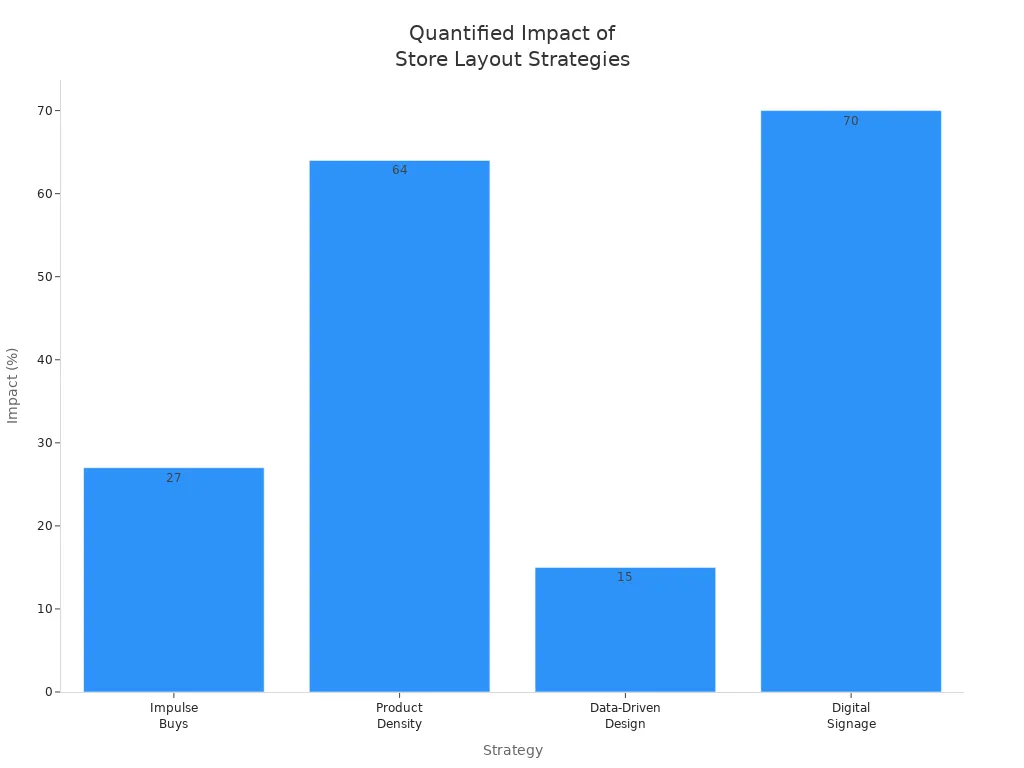
Optimized store layout and flow create more opportunities for you to make purchases. Strategic product placement attracts your attention and encourages impulse buys. Cross-merchandising increases average order value by placing complementary items together. Retailers using layout optimization software report a 15–20% increase in customer dwell time and up to a 12% boost in sales conversions after layout improvements.
| Benefit | Description |
|---|---|
| Increased Sales | Rearranging layout based on heat mapping correlates with higher sales. |
| Reduced Customer Dissatisfaction | Optimizing layout reduces congestion, leading to happier customers. |
| Improved Shopping Experience | A well-planned layout enhances the overall shopping experience. |
| Better Staff Allocation | Identifying high traffic areas helps in optimizing staff placement. |
Improved Shopping Experience
A well-planned retail environment reduces congestion and makes your shopping experience enjoyable. Clutter-free displays simplify your journey, making it easier to find what you need. Interactive displays allow you to customize products, enhancing engagement. Omnichannel integration ensures a seamless experience across platforms, whether you shop in-store or online.
Tip: When you shop in a store with optimized layout and flow, you spend more time exploring, discover new products, and enjoy a smoother journey from entrance to checkout.
Sensory Elements: Lighting, Scent, and Music
Creating a compelling retail environment requires you to pay close attention to sensory elements. Lighting, scent, and music shape how you perceive a space, influence your mood, and guide your purchasing decisions. These factors work together to transform different types of retail environments into memorable destinations.
Lighting Strategies
Ambient and Accent Lighting
Lighting sets the tone in any retail space. You notice that warm lighting creates a cozy atmosphere, encouraging you to browse longer. Bright lighting energizes you, prompting quicker decisions. Retailers use ambient lighting to establish a welcoming environment, while accent lighting highlights specific areas or products. Spotlights draw your attention to new arrivals or featured items, making them stand out.
- Research shows that effective lighting can boost sales by up to 40 percent.
- Switching to LED lighting increased sales by 19 percent in U.S. grocery stores.
Retailers who understand these effects use lighting to guide your behavior and enhance your experience.
Highlighting Key Products
Strategically placed lighting helps you focus on key products. When you enter a store, you see spotlights illuminating bestsellers or promotional displays. This approach increases product visibility and encourages you to explore featured items. Softer ambient lighting in other areas creates a comfortable space, inviting you to spend more time in the store.
Tip: You can identify high-value products quickly when retailers use accent lighting effectively.
Scent Marketing
Creating Memorable Atmospheres
Scent plays a powerful role in shaping your perception of a retail environment. Appealing aromas make you feel relaxed and connected to the brand. Retailers use scent marketing to create memorable atmospheres that encourage you to linger and explore.
- Studies show that pleasing scents boost favorable evaluations and customer engagement.
- A meta-analysis of 671 ambient scent experiments found that aromas enhance customer experience.
Influencing Customer Mood
Scent influences your mood and behavior. You may feel more positive and open to making purchases in a store with a pleasant aroma. Research demonstrates that appealing scents increase dwell time and purchase intention. In fact, a study revealed that 84% of consumers are more likely to buy from a scented store than an unscented one.
- Scent marketing helps retailers build emotional connections with you.
- You often associate specific scents with certain brands, reinforcing loyalty.
Music Selection
Aligning with Brand Identity
Music shapes your impression of a retail space. Retailers select music that aligns with their brand identity, whether it’s classical for luxury or pop for a youthful vibe. You subconsciously connect the music style to the brand’s personality, which influences your perception and shopping behavior.
| Effect | Description |
|---|---|
| Brand perception | Different music styles can influence how you perceive brands, e.g., classical for luxury. |
| Mood | Music can create a relaxed or excited atmosphere, impacting purchase likelihood. |
| Tempo | Slow music encourages thoughtful shopping, while fast music promotes quick browsing and impulse buys. |
Setting the Shopping Pace
Music tempo affects how you shop. Slow music encourages you to move through the store thoughtfully, increasing the chance of careful decision-making. Fast-paced music energizes you, leading to quicker browsing and more impulse purchases. Retailers use these strategies to match the desired pace of shopping in their stores.
- Background music can enhance your shopping experience, potentially increasing sales by 10%.
- Genres like Jazz and Lounge often lead to higher spending.
- In one study, playing French music in a wine store increased sales of French wines.
Note: You experience a more enjoyable and engaging retail environment when sensory elements work together to create a cohesive atmosphere.
Visual Merchandising and Signage in a Changing Retail Landscape
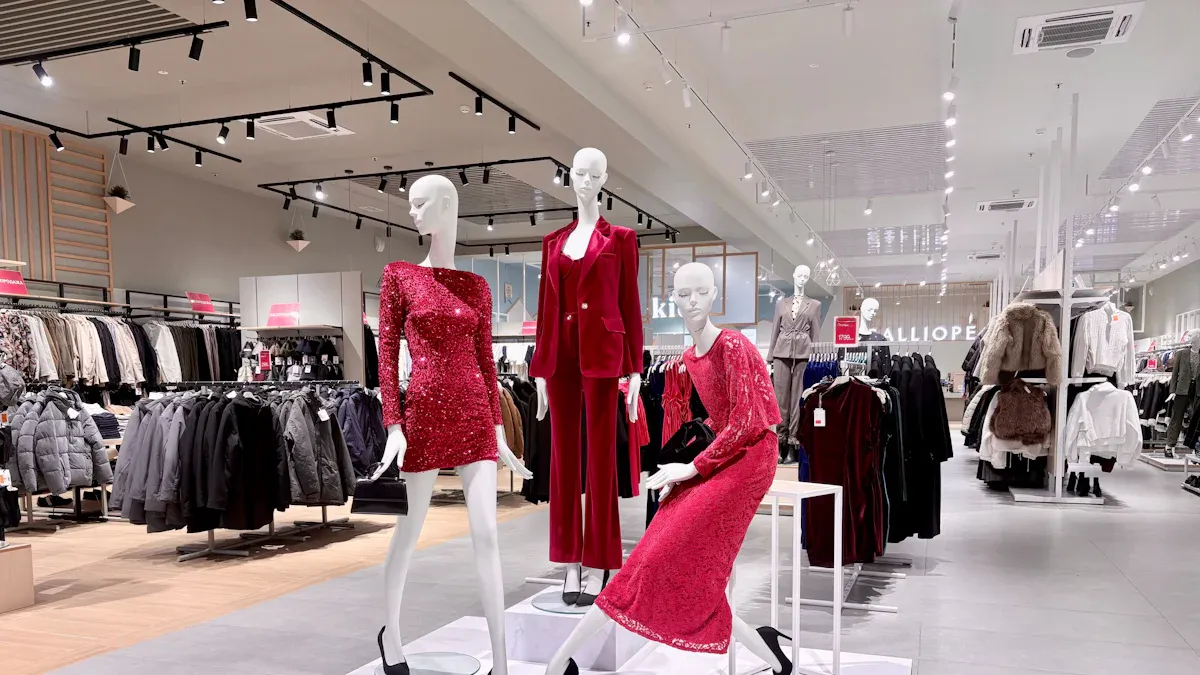
Visual merchandising and signage play a critical role in shaping your experience within the retail environment. You see how these elements adapt to the changing retail landscape, making stores more engaging and easier to navigate.
Visual Merchandising Techniques
Storytelling Through Displays
You connect with brands when displays tell a story. Retailers use themed arrangements to showcase products in real-life scenarios. For example, a kitchen display might feature cookware, utensils, and recipe cards together. This approach helps you imagine how products fit into your daily life. Engaging displays often use augmented reality, allowing you to visualize items in your own space. Digital signage and interactive displays provide dynamic content that responds to your interests.
| Technique | Description |
|---|---|
| Holiday-Specific Displays | Engaging displays that celebrate holidays can boost seasonal sales and enhance the in-store atmosphere. |
| Seasonal Transitions in Merchandising | Smooth transitions between seasons keep displays relevant and can increase sales of seasonal items. |
| Event-Based Merchandising | Themed displays based on local or national events create timely and engaging shopping experiences. |
| Augmented Reality (AR) | AR allows customers to visualize products in their own space, enhancing both in-store and online shopping experiences. |
| Digital Signage and Interactive Displays | These technologies provide dynamic content that can be tailored to specific promotions or audiences. |
| Keeping Displays Fresh and Updated | Regular updates to displays keep the shopping experience engaging and encourage repeat visits. |
| Effective Use of Negative Space | Thoughtful use of empty space can highlight key products and create a sense of luxury. |
| Creating Multi-Sensory Experiences | Engaging multiple senses enhances the store environment and makes it more memorable for customers. |
Seasonal and Promotional Themes
You notice how retailers refresh displays for holidays, back-to-school, or local events. These seasonal and promotional themes keep the store environment exciting and relevant. Regular updates encourage you to return and see what’s new.
Effective Signage
Clear Navigation
You find your way easily when signage is clear and well-placed. Wayfinding signs guide you through large stores or complex shopping centers. This guidance helps you locate products quickly, improving your overall experience and encouraging more purchases.
- Clear and informative signage makes it easier for you to navigate the store.
- Wayfinding signage helps you move efficiently, reducing frustration.
Informative Product Details
You make better decisions when signs provide product details, prices, and promotions. Digital signage can update instantly, showing you the latest offers. When you see effective promotional signage, you are more likely to make impulse purchases. In fact, 19% of customers make unplanned buys when promotional signs are present.
Direct Benefits
Driving Impulse Purchases
You respond to engaging displays and signage by making more spontaneous purchases. Digital signage influences your buying decisions at the moment they happen. Retailers report that 89% of business owners see increased in-store purchases after adding digital signage.
Reducing Customer Confusion
You feel more confident when you can find products and information easily. Effective visual merchandising and signage improve navigation and reduce confusion. This creates a more inviting shopping environment and encourages you to return.
Tip: When you see fresh displays and clear signage, you enjoy a smoother, more enjoyable shopping journey.
Employee Training and Engagement in the Retail Environment
You encounter a retail environment where employee training and engagement shape your experience as a consumer. Staff knowledge and attitude influence consumer behavior, drive loyalty, and impact sales. Retailers who invest in their teams create a positive atmosphere that supports business growth.
Staff Knowledge and Attitude
Product Expertise
You expect retail staff to understand the products they sell. When employees demonstrate product expertise, you feel confident in your choices. Retailers encourage staff to learn about features, benefits, and uses of each item. This expertise helps you make informed decisions and increases your satisfaction.
Customer Service Skills
You value authentic service in every retail interaction. Employees who show genuine interest in your needs create trust. Retailers train staff to listen actively, respond promptly, and resolve issues with empathy. Service orientation transfers from managers to employees, shaping your perception of the brand.
| Evidence Description | Key Findings |
|---|---|
| Transfer of service orientation from managers to employees | Sales managers’ attitudes influence employees, which in turn affects customer perceptions and loyalty. |
| Employees’ service orientation and authenticity | Customers evaluate the authenticity of service, which is crucial for loyalty. |
| Perceived authenticity mediates relationships | Authenticity perceptions impact customer loyalty and employee performance. |
- Sales managers’ attitudes are transferred to employees, affecting customer attitudes.
- Customers’ perceived authenticity of sales employees leads to higher satisfaction and loyalty.
- Training in service orientation is essential for enhancing customer evaluations.
Ongoing Training Programs
Role-Playing Scenarios
You benefit when retailers use role-playing scenarios in training. These exercises prepare staff for real-life situations, improving their ability to handle diverse customer needs. Employees practice responding to questions, managing complaints, and upselling products. This hands-on approach builds confidence and sharpens skills.
Feedback and Improvement
You notice improvements when retailers provide regular feedback to employees. Constructive feedback helps staff identify strengths and areas for growth. Retailers encourage open communication and continuous learning, which leads to better service delivery.
- Investing in employee training helps them connect with the business vision, enhancing their commitment to the brand promise.
- Clarifying roles through training reinforces the significance of employees, leading to better service delivery.
- Engaged employees are more likely to perform at high levels, resulting in increased sales and customer satisfaction.
- Training programs lead to a rise in average basket size and conversion rates.
- Improved staff knowledge and service quality directly correlate with customer satisfaction, especially in a competitive retail environment.
- Customer service training enhances understanding of customer needs and develops better sales skills.
- It fosters stronger teamwork and camaraderie, which are essential for a positive customer experience.
Impact on Customer Experience
Building Trust
You trust retailers who prioritize employee engagement. Engaged staff deliver consistent service, making you feel valued. This trust encourages you to return and recommend the store to others.
Creating Repeat Business
You become a loyal customer when you experience excellent service. Retailers with high employee engagement see a significant increase in repeat purchases. Engaged employees contribute to better customer experiences, fostering loyalty and advocacy.
- Engaged employees enhance customer satisfaction and loyalty, leading to increased repeat business.
- This results in more predictable revenue streams, positively affecting company valuation.
- Companies with high employee engagement see a 59% increase in customer loyalty and repeat purchases.
Tip: When you interact with knowledgeable and engaged staff, you enjoy a seamless shopping journey and are more likely to return.
Sustainability and Social Responsibility in the Changing Retail Landscape
You see sustainability and social responsibility shaping the retail environment as consumer expectations evolve. Retailers now prioritize eco-friendly practices and community engagement to meet the demands of the changing retail landscape.
Eco-Friendly Store Practices
Energy-Efficient Lighting
You notice retailers switching to energy-efficient lighting, such as LEDs, to reduce energy consumption and operational costs. LEDs can lower energy use by up to 80%, making them a smart choice for stores aiming to minimize their environmental impact. Many retailers also purchase energy from renewable sources like wind and solar, helping them achieve carbon neutrality. Heat recycling, where stores use heat from refrigeration units for heating, further improves energy efficiency.
- Energy-efficient technologies reduce operational costs and support sustainability goals.
- Carbon offsets and renewable energy sources help stores lower their environmental footprint.
Sustainable Materials
You encounter stores that favor sustainable materials in their fixtures, displays, and packaging. Retailers eliminate single-use plastic bags and promote reusable options to reduce plastic pollution. Many stores offer bulk products and encourage the use of reusable shopping bags, minimizing waste. You see products with minimal packaging, which decreases landfill waste and supports recycling initiatives. Clear labeling and education make recycling easier for you, increasing participation.
- Reducing plastic waste and using biodegradable packaging significantly impact customer retention.
- Minimal packaging and recycling programs help stores manage waste responsibly.
Tip: When you choose stores with eco-friendly practices, you support efforts that benefit both the environment and your community.
Social Responsibility Initiatives
Community Engagement
You recognize retailers that invest in community engagement. These stores support local organizations, sponsor events, and create programs that give back to the community. For example, Patagonia donated $10 million of Black Friday sales to environmental organizations, resonating with eco-conscious consumers. Starbucks increased involvement from ethically certified suppliers by 70%, showing how social responsibility can enhance community support and brand loyalty.
- Community engagement builds trust and strengthens relationships between retailers and local residents.
- Retailers that support social causes foster pride and loyalty among customers.
Ethical Sourcing
You value retailers committed to ethical sourcing. Stores that offer ethically sourced products demonstrate transparency and responsibility. Patagonia’s founder sparked a conversation on responsible consumption, leading 76% of consumers to favor eco-friendly companies. Ethical sourcing ensures that products meet high standards for labor and environmental practices.
- Ethically sourced products attract conscious consumers and reinforce brand integrity.
- A 2020 study found that 66% of millennials are willing to pay more for products from socially responsible companies.
Benefits to Brand and Customers
Enhancing Brand Reputation
You prefer brands that support environmental or social causes. Retailers committed to sustainability see 87% of consumers favoring their brand, while 88% report greater loyalty. Sustainable products create new markets and revenue streams, helping retailers grow and adapt.
- Retailers with strong sustainability efforts enjoy enhanced brand reputation and customer trust.
- Organic food offerings and waste management initiatives further boost customer loyalty.
Attracting Conscious Consumers
You feel proud to associate with brands that share your values. A 2019 study found that 78% of Patagonia’s customers feel proud due to its environmental initiatives. Biodegradable packaging and ethical sourcing appeal to conscious consumers, driving repeat business and long-term loyalty.
- Conscious consumers seek out retailers with transparent and responsible practices.
- Sustainability and social responsibility help retailers retain customers and stand out in the market.
Note: By choosing retailers that prioritize sustainability and social responsibility, you contribute to positive change in the retail environment.
Experiential Events, Technology, and Future Trends in the Retail Environment
Creating Memorable Experiences
Product Demonstrations
You experience the retail environment as more than a place to shop. Retailers host product demonstrations that allow you to interact with new items before making a purchase. These events showcase features and benefits, helping you understand how products fit into your daily life. When you attend a live demonstration, you gain confidence in your buying decisions and feel more connected to the brand.
Workshops and Classes
Retailers also offer workshops and classes that build community and foster learning. You might join a DIY workshop, attend a cooking class, or participate in a fitness session. These experiences encourage you to engage with products in practical ways. You become part of a group, share ideas, and develop new skills. According to recent industry data, 85% of customers are more likely to purchase after attending a brand’s live event, and 70% are more inclined to become repeat customers.
| Type of Experiential Event | Description |
|---|---|
| Interactive Store Layouts | Designed to immerse customers in a unique environment, enhancing the shopping experience. |
| Technology Integration | Uses AR, VR, and interactive displays for hands-on product encounters. |
| In-Store Events and Workshops | Creates community through product launches, DIY workshops, and live demonstrations. |
| Personalized Services | Offers tailored shopping experiences based on individual customer preferences. |
Technology Integration
Digital Tools and Point-of-Sale Systems
You notice how digital tools and modern point-of-sale systems streamline your shopping journey. Retailers use these technologies to manage inventory accurately and make data-driven decisions. You benefit from faster checkout processes, reduced wait times, and personalized offers. Self-service kiosks and mobile payment options increase your satisfaction and make shopping more efficient.
- Improved inventory management through accurate tracking and data-driven decisions.
- Streamlined communication between departments via connected devices.
- Enhanced customer experience with self-service technologies, reducing wait times and increasing satisfaction.
- Faster checkout processes that reduce wait times.
- Customer data management for personalized offers and loyalty programs.
- Improved inventory management through automated tracking.
Modern POS technology revolutionizes retail by streamlining transactions and personalizing customer interactions. It reduces wait times, enhances inventory management, and provides real-time sales data, all of which contribute to a more efficient shopping experience and improved customer satisfaction.
Omnichannel Strategies
You expect a seamless experience whether you shop online, in-store, or through mobile apps. Omnichannel retailing connects these touchpoints, allowing you to move easily between platforms. Efficient inventory and fulfillment systems reduce stockouts and improve delivery times. Voice commerce and conversational AI offer convenient shopping through voice-activated devices. Retailers continuously optimize their strategies to stay competitive and relevant.
- Fabletics utilizes digital insights to identify high-demand locations for new store openings.
- Each store enhances the brand experience by offering fitness classes and community events.
- This approach transforms shopping into a holistic lifestyle experience, demonstrating the impact of omnichannel strategies.
Innovations Shaping the Changing Retail Landscape
AI and Automation
You see innovation driving change in the retail environment. AI and automation help retailers forecast demand, personalize your shopping journey, and manage supply chains proactively. Stores use AI-driven design to reflect local community uniqueness. Predictive customer service resolves issues before they arise, and dynamic pricing adjusts in real time based on market conditions.
- Sophisticated forecasting tools aid retailers in making better site selection decisions.
- Personalization enhances the customer journey by adapting website layouts to individual preferences.
- Contextual commerce facilitates seamless purchases across various environments.
- Omnichannel orchestration ensures a cohesive experience across all customer interactions.
Virtual and Augmented Reality
Retailers implement virtual and augmented reality to create immersive experiences. You can try on glasses virtually, explore vehicles in a VR showroom, or attend a remote property tour. These technologies improve convenience, boost engagement, and increase your confidence in purchasing decisions.
| Retailer | Implementation Description | Observed Outcomes |
|---|---|---|
| Tesco | VR grocery shopping platform replicating supermarket aisles. | Improved online grocery shopping interactivity. |
| Sotheby’s International Realty | VR property tours allowing remote inspection of luxury homes. | Enhanced customer convenience and engagement. |
| Kellogg’s | VR heatmaps and eye-tracking to study customer interactions in simulated stores. | Improved shelf arrangement and increased sales. |
| Walmart | VR training simulations for employee preparation. | Reduced training time and improved staff readiness. |
| Apple | Virtual product testing labs for new products. | Enhanced consumer confidence in product features. |
| BMW | VR showroom technology for vehicle exploration and customization. | Lower showroom expenses and improved customer experience. |
| Warby Parker | Virtual eyewear try-on service for glasses. | Increased customer confidence in purchasing decisions. |
| FaceCake | AI-powered VR shopping platform for trying on clothes and cosmetics. | More personalized and engaging shopping experience. |
You see retailers measure the success of experiential events and technology integration using customer feedback, sales performance, and engagement levels. These metrics help businesses refine their strategies and deliver better experiences.
Tip: Stay aware of emerging trends and innovations in retail. You will benefit from a more engaging, efficient, and personalized shopping journey.
You transform the retail environment into a true destination when you integrate layout, sensory elements, staff engagement, sustainability, experiential events, and technology. Companies in the changing retail landscape have seen success by focusing on consumer behavior and innovation:
- A gaming merchandise retailer created a successful retail environment by combining knowledgeable staff with engaging events.
- A teledentistry brand improved satisfaction by enhancing physical locations.
| Strategy | Impact on Immediate Sales | Impact on Long-term Loyalty |
|---|---|---|
| Ethical Considerations | Aligns with sustainability goals | Builds responsibility and stakeholder relationships |
| Customer Engagement | Innovative strategies boost sales | Sustained engagement reinforces relationships |
| Personalized Experiences | Tailored offerings drive purchases | Creates lasting connections with consumers |
You stay ahead of trends by adopting a holistic, adaptable approach. This drives immediate results and builds loyalty in retail.
FAQ
What makes a retail environment successful?
You create a successful retail environment by combining strategic design, sensory engagement, staff expertise, sustainability, experiential events, and technology. Each element works together to enhance customer experience and drive business results.
How does store layout influence your shopping behavior?
Store layout guides your movement and highlights key products. You find navigation easier, discover new items, and spend more time exploring when retailers optimize space and product placement.
Why do retailers use scent and music in stores?
Retailers use scent and music to shape your mood and perception. Pleasant aromas and tailored playlists encourage you to linger, feel comfortable, and make more purchases.
How does employee training impact your experience?
Trained employees provide accurate product information and deliver authentic service. You feel valued and confident in your choices, which increases satisfaction and loyalty.
What are some examples of sustainability in retail?
You see sustainability in energy-efficient lighting, reusable bags, minimal packaging, and ethical sourcing. Retailers also support recycling programs and community initiatives to reduce environmental impact.
How does technology improve your shopping journey?
Technology streamlines checkout, manages inventory, and personalizes offers. You benefit from faster service, self-service kiosks, and seamless experiences across online and physical stores.
What are experiential events in retail?
Experiential events include product demonstrations, workshops, and interactive displays. You engage with products, learn new skills, and connect with brands in memorable ways.
Why is signage important in retail stores?
Signage helps you navigate stores, find products, and learn about promotions. Clear signs reduce confusion and improve your overall shopping experience.