SES-imagotag, Hanshow Technology, Pricer, Displaydata, SoluM, Zhsunyco, Samsung, and Opticon consistently rank among the best electronic price tag manufacturers worldwide. These companies provide reliable ESL Price Tag solutions, cutting-edge ESL Gateway AP connectivity, and innovative Electronic Shelf Labels designed to meet the dynamic demands of Esl Retail. Retailers choose these industry leaders for accurate pricing, improved operational efficiency, and seamless system integration. The electronic shelf label market is experiencing rapid growth, fueled by automation and the need for real-time data.
| Metric/Segment | Value/Projection |
|---|---|
| Global Market Size (2024) | USD 2.50 Billion |
| Projected Market Size (2033) | USD 7.80 Billion |
| CAGR (2026-2033) | 14.00% |
Leading manufacturers of ESL Price Tags help Esl Retail businesses save labor costs, boost pricing accuracy, and enhance customer satisfaction. Partnering with the best electronic price tag provider ensures long-term success in the expanding electronic shelf label market.
What Defines the Best Electronic Price Tag Factory?
Key Criteria for Evaluation
Product Quality and Reliability
Factories that lead the electronic shelf label market consistently deliver products with high durability and reliability. Electronic shelf labels must withstand frequent handling, temperature changes, and continuous operation. E-paper displays, known for low energy consumption and long battery life, have become the industry standard. These features ensure that retailers experience fewer disruptions and lower maintenance costs, which directly impacts operational efficiency.
Technological Innovation
Innovation drives the electronic shelf labels market forward. Top factories integrate advanced technologies such as NFC, QR codes, and AI-driven pricing algorithms. By 2026, a significant portion of consumer packaged goods brands will use QR codes for customer engagement, and retailers will expect electronic shelf labels to support real-time updates and dynamic pricing. Factories that invest in research and development create opportunities for retailers to adopt smart retail solutions and stay ahead in a competitive market.
Global Market Presence
A strong global presence signals a factory’s ability to meet diverse market demands. Leading manufacturers supply electronic shelf labels to hypermarkets, supermarkets, and specialty stores across continents. Their extensive distribution networks and partnerships enable them to respond quickly to changing retail trends and regulations. This reach also supports the high growth opportunities seen in the electronic shelf label market.
Customer Service and Support
Exceptional customer service distinguishes the best factories. Retailers rely on responsive technical support, comprehensive training, and reliable after-sales service. Factories that offer seamless integration with inventory management and point-of-sale systems help retailers maximize the benefits of retail automation. This support ensures smooth deployment and ongoing performance of electronic shelf labels.
Sustainability and Compliance
Sustainability has become a defining factor in the electronic shelf labels market. Factories now use eco-friendly materials such as recycled kraft card and bamboo. Compliance with global regulations, including upcoming nutrition labeling requirements, demonstrates a commitment to responsible manufacturing. These practices align with consumer expectations and regulatory trends, enhancing a factory’s reputation in the market.
Industry Trends and Demands
Digital Transformation in Retail
Digital transformation shapes the adoption of electronic shelf labels. Retailers now manage prices and product information in real time, enabling dynamic pricing strategies. Automation reduces labor costs and improves accuracy, while integration with digital systems supports omnichannel retailing. Case studies from major retailers show measurable improvements in efficiency, customer satisfaction, and revenue after implementing electronic shelf labels.
Customization and Scalability
Retailers seek solutions that adapt to their unique needs. Factories that offer customizable electronic shelf labels and scalable systems address the diverse requirements of different store formats. Features such as multi-color displays, wireless communication, and easy installation support rapid deployment and future expansion. As the electronic shelf label market continues to grow, factories that prioritize flexibility and innovation will remain at the forefront of the electronic shelf labels market.
Leading Companies in the Electronic Shelf Labels Market
The electronic shelf labels market features several global leaders, each driving innovation and setting benchmarks for quality, technology, and service. The following companies stand out for their contributions, scale, and impact on the best electronic price tag solutions worldwide.
SES-imagotag (France)
Company Overview
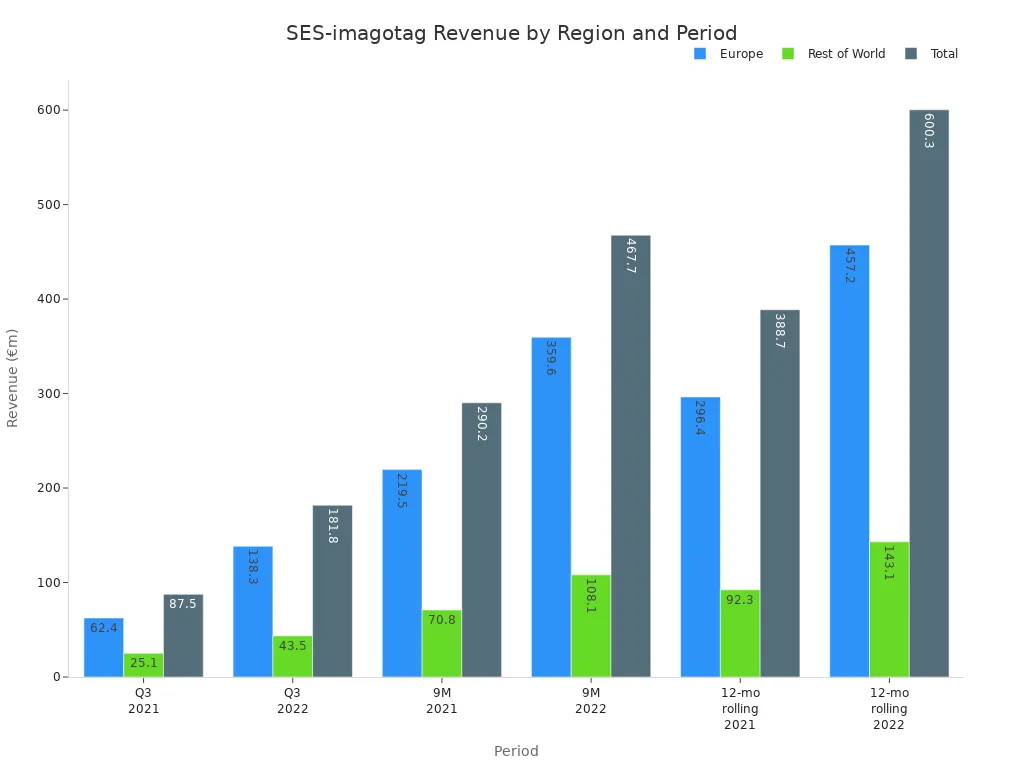
SES-imagotag, headquartered in France, leads the electronic shelf labels market with a strong focus on digital transformation for retail. The company specializes in electronic shelf labels, real-time merchandising, and digital signage. SES-imagotag has achieved rapid growth, with revenue reaching €619.1 million in 2023. The company serves retailers across Europe and international markets, with international sales contributing 45% of total revenue in 2022.
| Year | Revenue (€m) | Year-over-Year Growth (%) |
|---|---|---|
| 2020 | 120 | N/A |
| 2021 | 162 | 35% |
| 2022 | 203 | 25% |
SES-imagotag’s profitability improved in 2022, with a gross profit margin of 39% and a net profit margin of 8%. The company continues to expand its international reach and value-added services.
Flagship Products
SES-imagotag offers a comprehensive range of electronic shelf labels and digital retail solutions. The VUSION platform stands as the company’s flagship, enabling dynamic pricing, inventory monitoring, and in-store advertising. SES-imagotag’s ESLs support NFC, QR codes, and cloud-based management, providing retailers with real-time data and seamless integration with ERP systems. The company also introduced four-color ESLs and AdShelf video rails, enhancing both functionality and customer engagement.
Unique Strengths
- SES-imagotag pioneered NFC technology, cloud-based solutions, and four-color ESLs in the market.
- The company invests heavily in research and development, maintaining a two-year innovation lead over competitors.
- SES-imagotag’s infraless ESL technology leverages existing in-store networks, reducing installation time and carbon footprint.
- The VUSION platform shifts the business model from hardware sales to SaaS, supporting dynamic pricing and omnichannel retail.
- Features such as geolocation, pick-to-light, and LED blinking improve operational efficiency and customer experience.
Notable Achievements
SES-imagotag has secured partnerships with major retailers, including 11 of the top 50 North American retailers. The company’s strategic plan, VUSION 2022, targets significant growth in customers, installed labels, and software revenue. SES-imagotag sets the highest quality standards in product design and production, ensuring reliability throughout the product lifecycle. The company’s rapid product development and delivery meet the tight schedules of global retailers.
Hanshow Technology (China)
Company Overview
Hanshow Technology, based in China, has established itself as a global leader in electronic shelf labels and digital retail solutions. The company serves over 20,000 stores in more than 50 countries, including key markets in Europe, North America, and Asia-Pacific. Hanshow operates subsidiaries in the US, UK, France, Germany, and several other countries, supporting over 400 clients worldwide.
Key Product Lines
Hanshow’s product portfolio includes advanced electronic shelf labels such as NEBULAR, NEBULAR PRO, LUMINA AQUA, and POLARIS PRO. These solutions offer high screen-to-body ratios, durability, and dynamic geolocation. Hanshow also provides intelligent in-store marketing products, AIoT inventory robots like Spatrol, and the ALL STAR IoT Cloud platform. The company’s solutions support a wide range of retail sectors, including grocery, DIY, consumer electronics, and fashion.
Technological Innovations
Hanshow Technology leads in AI, IoT, and Retail Media integration. The company’s partnership with E Ink has resulted in ESLs with high-resolution, sunlight-readable displays and low power consumption. Hanshow introduced the Polaris Pro ESL, featuring outdoor strength and real-time pricing updates. The company’s innovations include:
- AI-integrated smart shopping carts for interactive experiences.
- Dynamic geolocation and pick-to-light features for efficient store operations.
- Proprietary HiLPC protocol for enhanced communication between retailers and brands.
- Comprehensive digital engagement tools for personalized customer experiences.
Global Partnerships
Hanshow collaborates with leading retailers and technology partners to drive digital transformation in retail. The company’s broad international presence and continuous investment in research and development support its position as a top provider of electronic shelf labels and smart retail solutions.
Pricer (Sweden)
Company Background
Pricer, headquartered in Sweden, stands as one of the most established names in the electronic shelf labels market. The company has a long history of innovation, specializing in electronic shelf labels and automated price update solutions. Pricer reported revenue of US$174.1 million in 2023, reflecting its strong market presence.
| Company Name | Headquarters Location | Approximate Revenue (2023) | Specialization Highlights |
|---|---|---|---|
| SES-imagotag | France | €619.1 Million | Electronic shelf labels, real-time merchandising, digital signage |
| Pricer AB | Sweden | US$174.1 Million | Electronic shelf labels, automated price updates, NFC |
| Hanshow | China | N/A | Digital shelf labels, IoT, AI retail solutions |
Product Portfolio
Pricer’s product range includes electronic shelf labels with e-paper displays, NFC capabilities, and automated price update systems. The company’s solutions enable retailers to manage pricing efficiently and accurately. Pricer’s ESLs integrate with inventory and point-of-sale systems, supporting real-time data synchronization and operational efficiency.
Market Leadership
Pricer has played a pivotal role in shaping the electronic shelf labels market. The company’s early adoption of e-paper technology and focus on automation have set industry standards. Pricer’s solutions are widely used by retailers seeking reliable, scalable, and easy-to-integrate electronic shelf labels.
Awards and Recognition
In September 2023, the ePaper Industry Alliance recognized Pricer for its pioneering contributions to the ePaper industry. The award highlighted Pricer’s early and sustained innovation in applying ePaper technology to electronic price tags, beginning in 2004 and expanding to mass market adoption by 2007. This recognition underscores Pricer’s influence in opening new markets and driving the growth of electronic shelf labels.
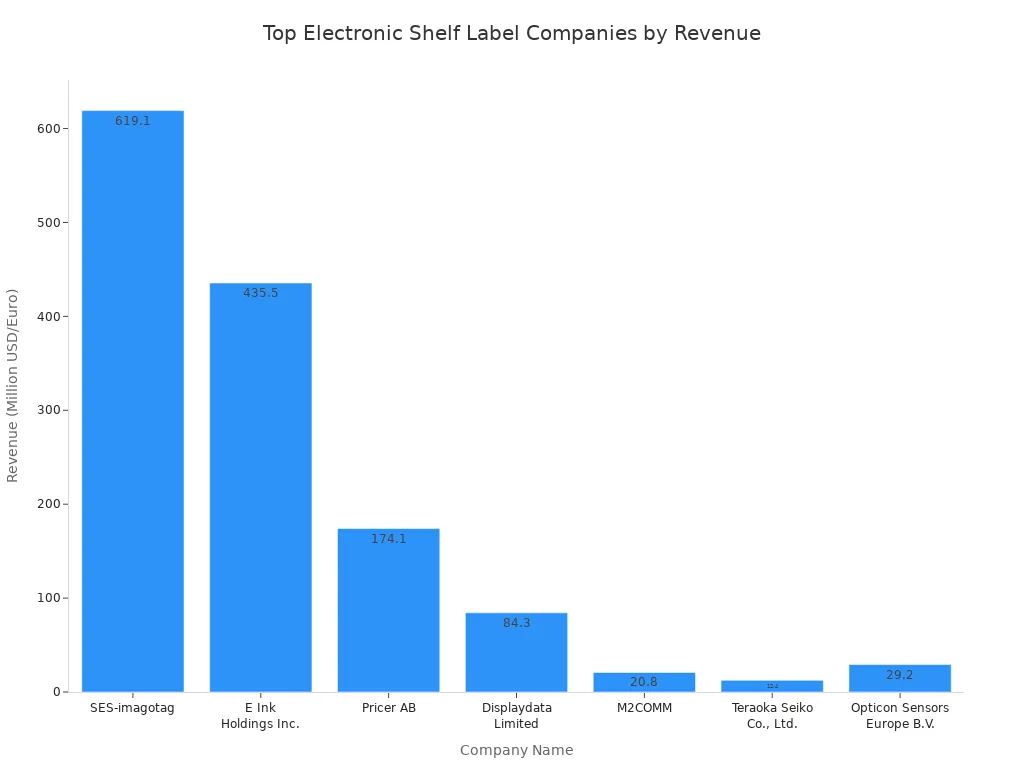
The best electronic price tag manufacturers continue to shape the future of retail by delivering advanced solutions, expanding their global reach, and setting new standards for quality and innovation in the electronic shelf labels market.
Displaydata (United Kingdom)
Company Overview
Displaydata, based in the United Kingdom, stands as a leading innovator in the electronic shelf labels industry. The company has established a strong presence in both domestic and international markets. Displaydata focuses on delivering advanced digital pricing solutions for retailers, supporting the shift toward digital transformation in the retail sector. Major supermarket chains in the UK, such as Tesco and Sainsbury’s, have adopted Displaydata’s solutions across hundreds of stores. This adoption reflects the company’s influence and the region’s commitment to retail modernization.
Product Features
Displaydata’s electronic shelf labels offer high-resolution displays, wireless connectivity, and centralized management. The labels support instant price and product information updates, ensuring accuracy and efficiency. Retailers benefit from features such as:
- E-paper displays with clear visibility in various lighting conditions
- Real-time synchronization with inventory and pricing systems
- Long battery life for reduced maintenance
- Flexible mounting options for different shelf types
These features help retailers streamline operations and maintain pricing accuracy across large store networks.
Differentiators
Displaydata distinguishes itself through continuous innovation and a focus on sustainability. The company integrates advanced display technology and IoT connectivity, enabling seamless integration with retail management systems. Displaydata also prioritizes eco-friendly solutions, responding to the growing demand for sustainable electronic shelf labels. The company’s commitment to operational efficiency and customer experience sets it apart from competitors.
Displaydata ranks among the top global players in the electronic shelf labels market, alongside SES-imagotag and Pricer AB. The company’s emphasis on innovation and sustainability drives its leadership position.
Industry Impact
Displaydata has played a significant role in shaping the electronic shelf labels market in Europe and beyond. The company’s solutions support over 900 retail stores in the United Kingdom, contributing to Europe’s leadership in global adoption. The following table highlights Displaydata’s impact across key regions:
| Region/Country | ESL Market Share / Adoption | Key Factors Supporting ESL Adoption |
|---|---|---|
| Europe | Over 44.47% market share | Technological advancement, retail innovation, supportive regulations |
| United Kingdom | ~900 retail stores with ESLs | Strong digital transformation focus in retail sector |
| Germany | >1,500 retail stores with ESLs | Focus on retail efficiency and customer experience |
| France | ~1,200 retail stores with ESLs | Streamlining operations, pricing accuracy |
Europe’s early adoption and favorable policies have positioned Displaydata as a key driver of digital transformation in retail. The company’s solutions enhance operational efficiency and improve the customer experience for retailers worldwide.
SoluM (South Korea)
Company Profile
SoluM, headquartered in South Korea, has emerged as a prominent provider in the electronic shelf labels industry. Established in 2015 as a spin-off from Samsung Electro-Mechanics, SoluM leverages decades of wireless communication expertise. The company operates with in-house manufacturing, which ensures high quality, rapid production, and cost competitiveness. SoluM’s commitment to innovation and quality assurance has positioned it among the top five companies in the global electronic shelf labels market.
Product Range
SoluM’s product portfolio centers on the Newton series, which represents third-generation electronic shelf labels. The Newton ESLs feature:
- Ten-year battery life for long-term reliability
- Rapid update capabilities for real-time pricing and information changes
- Seven-color LED displays for enhanced visibility and communication
- NFC integration for mobile payments and interactive experiences
SoluM also offers the Advanced Information Management System (AIMS), a software platform that streamlines pricing and product information management. The company’s products serve major retail brands worldwide, including Loblaws, DOUGLAS, ShopRite, Xiaomi, and Lowe’s.
R&D Capabilities
SoluM invests heavily in research and development, driving industry-first innovations. The company’s R&D team averages over ten years of experience, focusing on enhancing product features and quality. Key achievements include:
- Industry-leading battery life and display technology
- Advanced software solutions for centralized management
- Customizable designs to align with retailer branding
- Integration of multiple wireless technologies for global adaptability
SoluM’s R&D efforts support digital transformation in retail, enabling retailers to improve efficiency and customer engagement.
International Reach
SoluM maintains a strong international presence, with products deployed in over 50,000 stores across more than 45 countries. The company’s global reach is supported by SoluM Europe GmbH and partnerships with leading retailers. SoluM’s Newton ESLs have become a preferred choice for retailers seeking reliable, scalable, and innovative electronic shelf labels. The company’s extensive distribution network and manufacturing capacity ensure timely delivery and support for clients worldwide.
Zhsunyco (China)
Company Overview
Zhsunyco, based in China, specializes in smart retail solutions, including electronic shelf labels, E-Ink displays, and LCD displays. The company operates a modern manufacturing facility with 12 production lines and a capacity of up to 6 million ESL units annually. Zhsunyco’s focus on quality and innovation has enabled it to serve more than 35,200 stores in over 180 countries. The company holds 142 utility model patents and 11 invention patents, reflecting its leadership in product development.
Product Innovations
Zhsunyco has introduced several notable innovations in the electronic shelf labels sector:
- Four-color ESLs launched in 2024, supporting black, white, red, and yellow for enhanced visual appeal
- Size options ranging from 1.54″ to 10.2″, suitable for various retail applications
- Dynamic display updates with centralized control for instant pricing and product information changes
- Long battery life and energy-efficient design for busy retail environments
- User-friendly installation without additional hardware
- Mobile control app for real-time updates and operational flexibility
- Regular software updates to ensure accuracy and reduce errors
- Advanced PCB assembly techniques for product reliability
These innovations improve retail operations, enhance the customer experience, and reduce labor costs.
Global Distribution
Zhsunyco has built an extensive global distribution network. The company operates in over 180 countries and serves more than 35,000 supermarkets worldwide. Its manufacturing facility covers 20,000 square meters, supporting large-scale production and supply. Zhsunyco integrates multiple wireless technologies, including 2.4GHz, BLE, NFC, WiFi, and 433MHz, to ensure product adaptability across diverse markets. The company’s annual sales revenue reaches approximately $150 million, demonstrating strong market demand.
Market Recognition
Zhsunyco’s commitment to innovation and quality has earned it recognition as a leading provider of electronic shelf labels. The company offers comprehensive global support and customized solutions for international clients. Its advanced manufacturing processes and patent portfolio reinforce its reputation for reliability and technological leadership in the electronic shelf labels market.
Samsung (South Korea)
Company Profile
Samsung Electro-Mechanics stands as a prominent force in the electronic shelf labels industry. The company operates from South Korea and maintains a reputation for technological excellence and manufacturing scale. Samsung consistently appears in competitive analyses as a key player in the electronic shelf label market. The company leverages its expertise in electronics and display technology to support the rapid growth of digital retail solutions.
Electronic Shelf Label Solutions
Samsung offers a range of solutions designed to meet the evolving needs of modern retailers. The company focuses on graphic e-paper displays, which provide clear visibility and energy efficiency. Samsung’s electronic shelf labels integrate seamlessly with retail management systems, supporting real-time price updates and inventory tracking. The company’s solutions cater to various retail environments, from supermarkets to specialty stores.
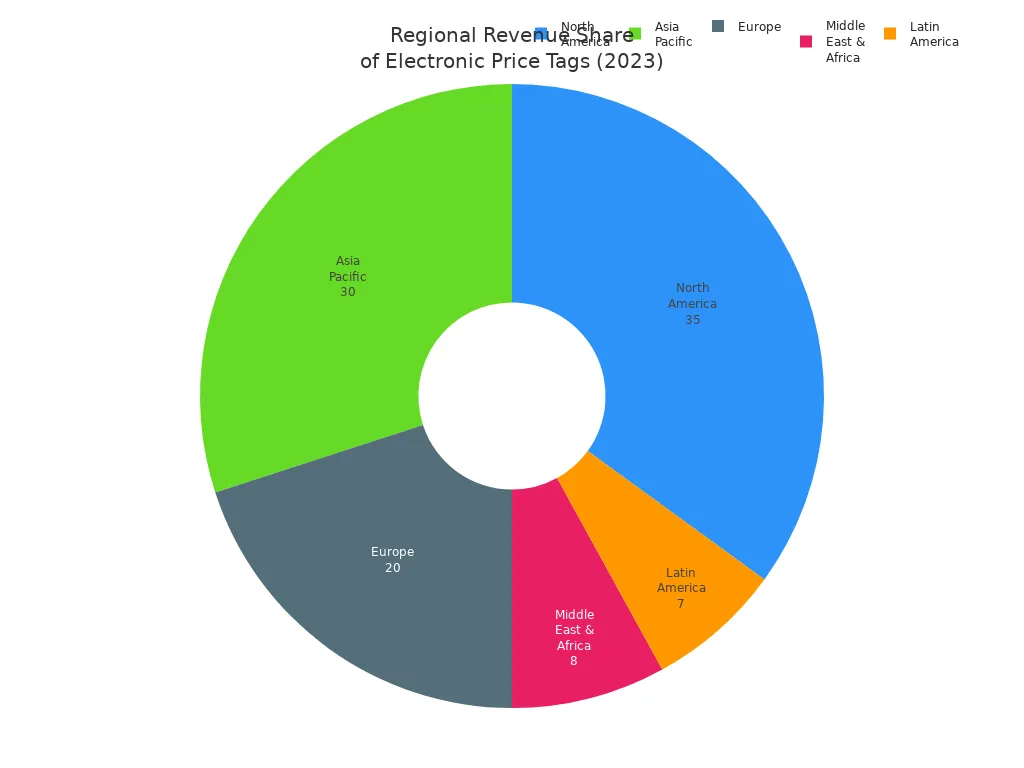
Samsung’s presence in the Asia-Pacific region contributes to the highest projected growth in electronic shelf label adoption. Retailers in this region benefit from Samsung’s advanced processing machinery and scalable solutions.
Technological Leadership
Samsung Electro-Mechanics demonstrates leadership through continuous innovation and strategic market activities. The company participates in product launches, collaborations, and joint ventures to expand its influence in the electronic shelf label sector. Samsung’s focus on graphic e-paper technology aligns with industry trends that prioritize low power consumption and high display quality. The company’s manufacturing capabilities enable large-scale deployment of electronic shelf labels across diverse markets.
- Samsung is frequently listed among innovators in the ESL market.
- The company engages in partnerships and acquisitions to strengthen its market position.
- Samsung’s expertise in electronics supports the development of reliable and efficient solutions.
Global Impact
Samsung’s global impact extends beyond its home market. The company operates alongside other major players such as E Ink Holdings, Pricer AB, and Panasonic Corporation. Samsung’s strategies include expanding its distribution networks and forming alliances with international partners. The company’s influence supports the widespread adoption of electronic shelf labels, particularly in regions experiencing rapid retail expansion.
| Region | Samsung’s Market Activity |
|---|---|
| Asia-Pacific | High growth, strong presence |
| North America | Strategic collaborations |
| Europe | Participation in joint ventures |
| Global | Recognized as a key ESL provider |
Samsung’s commitment to innovation and market expansion ensures its continued relevance in the electronic shelf label industry.
Opticon (Japan/Global)
Company Overview
Opticon, headquartered in Hoofddorp, Noord Holland, has established itself as a leading competitor in the global electronic shelf label industry. Founded in 1976, the company brings decades of experience in automatic identification and data capture technology. Opticon’s operations span multiple continents, reflecting its commitment to serving a diverse, international client base.
Product Range
Opticon delivers a comprehensive range of solutions for electronic shelf labels. The company’s portfolio includes e-paper and LCD-based labels, wireless communication modules, and integrated management software. Opticon’s products support real-time price updates, inventory management, and seamless integration with retail systems. The company designs its solutions to address the needs of both large-scale retailers and smaller specialty stores.
Unique Features
Opticon distinguishes itself through a focus on innovation and adaptability. The company regularly participates in international events, such as the NRF in New York City, to showcase its latest advancements. In 2024, Opticon collaborated with Epishine, a Swedish technology firm, to develop new ESL technology. This partnership highlights Opticon’s commitment to sustainable solutions and cutting-edge design.
- Opticon’s electronic shelf labels feature energy-efficient displays and robust wireless connectivity.
- The company emphasizes ease of installation and user-friendly interfaces.
- Opticon’s solutions adapt to various retail formats, supporting both centralized and decentralized management.
Industry Contributions
Opticon plays an active role in shaping the global electronic shelf label market. The company’s participation in industry events and collaborations with international partners demonstrate its influence. Opticon’s global reach spans North America, Europe, Asia-Pacific, Latin America, and the Middle East & Africa. The company’s ongoing innovation and commitment to quality contribute to the advancement of electronic shelf label solutions worldwide.
Opticon’s presence alongside other leading global players underscores its importance in the evolution of digital retail technology.
Comparing the Best Electronic Price Tag Factories
Product Quality and Performance
Durability and Reliability
Top electronic shelf label factories prioritize durability and reliability to ensure long-term performance in demanding retail environments. Several factors influence these qualities:
| Factor | Explanation | Impact on Durability and Reliability |
|---|---|---|
| Wireless Technology | Different wireless solutions (RF, IR) offer varying coverage, speed, and resistance to interference. The choice depends on store size and infrastructure. | Reliable wireless communication ensures timely updates and stable operation, reducing failures. |
| Battery Life | Battery longevity depends on update frequency, tag size, and features like LED lights. E-Ink displays can last 5-7 years, while LCDs may last 1-2 years. | Longer battery life reduces maintenance and downtime, improving reliability. |
| Environmental Adaptability | ESLs must operate under various conditions, including extreme temperatures and humidity. Materials resistant to harsh environments extend lifespan. | Stable performance in challenging settings increases reliability. |
| Durability | Robust construction helps ESLs withstand daily wear and tear, minimizing replacements. | Enhanced system stability and reduced maintenance needs. |
Factories that excel in these areas deliver electronic shelf labels that retailers can trust for uninterrupted operations.
Display Technology
Display technology plays a crucial role in both performance and customer experience. E-paper displays dominate the market due to their low power consumption and clear visibility in different lighting conditions. Some factories offer multi-color displays, which enhance product visibility and support promotional activities. LCD displays, while offering vibrant colors, require continuous power and suit specific use cases. The choice of display impacts battery life, maintenance, and the effectiveness of real-time pricing.
Innovation and Technology
Software Integration
Modern electronic shelf labels rely on advanced software integration to streamline retail operations. Key innovations include:
- Unique IDs on tags enable targeted price updates and promotions.
- QR codes provide instant access to product reviews, nutritional information, and stock levels.
- Automated price update systems eliminate human error and ensure pricing accuracy.
- Software generates product location maps and uses flashing tags to assist staff with order fulfillment.
- Integration with POS systems improves inventory management and real-time pricing visibility.
- Cloud-based platforms allow centralized management and instant updates across all tags.
- API support ensures seamless integration with ERP and POS systems.
These features support dynamic pricing strategies and enhance operational efficiency.
IoT and Connectivity
Leading factories embed robust IoT and connectivity features into their solutions. Their platforms support:
- Secure device-to-cloud connectivity and lifecycle management.
- Scalability for millions of devices and billions of messages.
- Edge-to-cloud security with remote monitoring and over-the-air updates.
- Centralized device management for digital operations.
- Modular integration for inventory management, picking, and smart payments.
- AI monitoring for stock levels and retail loss prevention.
- Wireless SoCs with ultra-low power consumption and advanced security.
- Bluetooth tracking for shopper analytics and optimized product placement.
These capabilities enable real-time pricing, automation, and data-driven decision-making in retail.
Global Reach and Support
Distribution Networks
Global distribution networks ensure that electronic shelf labels reach retailers efficiently. Leading factories operate in dozens of countries, with multiple offices and warehouses. For example:
| Company | Countries Present | Locations | Employees | Key Support Capabilities |
|---|---|---|---|---|
| Sourceability | 15 | 22 | 350+ | Certified global distribution, digital supply chain tools |
Such networks support rapid deployment and consistent supply for large-scale retail operations.
After-Sales Service
Comprehensive after-sales service distinguishes the best factories. They provide:
- Training and helpdesk support for smooth adoption.
- Real-time technical assistance to resolve issues quickly.
- Ongoing software updates to maintain system performance.
- Localized support through regional offices and websites.
These services ensure that retailers maximize the value of their electronic shelf labels and maintain efficient, real-time pricing across their stores.
Pricing and Value
Cost Efficiency
Cost efficiency remains a top priority for retailers evaluating electronic shelf label factories. Leading manufacturers design their solutions to minimize both upfront investment and ongoing operational expenses. Companies like SES-imagotag, Hanshow Technology, and SoluM leverage advanced manufacturing processes and economies of scale. These practices help reduce unit costs, making large-scale deployments more accessible for retailers of all sizes.
Retailers benefit from electronic shelf labels that offer long battery life and low maintenance requirements. E-paper technology, now standard across most top factories, supports energy savings and reduces the frequency of replacements. Some factories provide modular systems, allowing retailers to upgrade or expand their networks without replacing existing infrastructure. This approach further enhances cost efficiency by extending the lifespan of initial investments.
A comparison of cost-saving features among leading factories:
| Factory | Battery Life | Maintenance Needs | Upgrade Flexibility |
|---|---|---|---|
| SES-imagotag | Up to 10 yrs | Low | High |
| Hanshow | 5-10 yrs | Low | Moderate |
| SoluM | Up to 10 yrs | Very Low | High |
| Zhsunyco | 5-7 yrs | Low | Moderate |
Note: Longer battery life and modular upgrades can significantly reduce total cost of ownership for retailers.
Customization Options
Customization options set the best electronic price tag factories apart in a competitive market. Retailers operate in diverse environments, each with unique branding, shelf configurations, and operational needs. Leading factories address these differences by offering a wide range of display sizes, color options, and mounting solutions.
Factories such as Displaydata and Opticon provide electronic shelf labels that support multi-color displays, custom graphics, and variable screen sizes. These features allow retailers to align digital labels with their store aesthetics and promotional strategies. Some manufacturers also offer software customization, enabling integration with existing inventory and point-of-sale systems. This flexibility ensures that electronic shelf labels fit seamlessly into current workflows.
Retailers can select from:
- Multiple display sizes (from 1.5″ to over 10″)
- Color options for branding or promotions
- Custom mounting brackets for unique shelving
- Software APIs for integration with retail management systems
These customization options empower retailers to create a tailored solution that meets both operational and branding goals.
How to Choose the Right Electronic Shelf Labels Partner
Assessing Your Business Needs
Store Size and Scale
Every business must evaluate its store size and operational scale before selecting an electronic shelf labels partner. Large supermarkets and multi-location chains require scalable solutions that can handle thousands of labels and frequent updates. Smaller stores may prioritize ease of installation and minimal disruption. Companies should look for partners offering flexible deployment processes and systems that maintain performance as the business grows. Scalability ensures that the chosen solution can expand alongside the organization, supporting both current and future needs.
Integration Requirements
Seamless integration with existing systems stands as a critical factor. Businesses should confirm that the electronic shelf labels can connect with their point-of-sale and inventory management platforms. Wireless communication capabilities enable real-time updates and reduce manual intervention. Compatibility with digital solutions for retailers allows for unified pricing and inventory control. Early assessment of technology compatibility and vendor collaboration helps prevent costly delays and ensures a smooth transition.
Evaluating Factory Capabilities
Production Capacity
A reliable partner must demonstrate sufficient production capacity to meet demand, especially during peak periods or large-scale rollouts. Factories with advanced manufacturing lines and robust supply chains can deliver consistent quality and timely shipments. Companies should inquire about lead times, order flexibility, and the ability to scale production as business requirements evolve.
Quality Assurance
Quality assurance processes protect businesses from operational disruptions. Leading factories implement strict testing protocols to ensure durability, display clarity, and battery longevity. Labels must withstand store environments, including moisture and frequent handling. High display clarity and long battery life reduce maintenance needs and support continuous operation. Security certifications, such as ISO 27001, provide additional confidence in data protection and system integrity.
Considering Long-Term Partnerships
Support and Maintenance
Ongoing support and maintenance services play a vital role in maximizing the value of electronic shelf labels. Top partners offer comprehensive training, real-time technical assistance, and regular software updates. These services help businesses resolve issues quickly and maintain optimal system performance. Ease of installation and configuration minimizes operational disruption and supports efficient adoption.
Future-Proofing
Future-proof technology ensures that investments remain valuable as retail solutions evolve. Businesses should seek partners that offer customizable displays, support for new features like geolocation, and cloud-based updates. Flexibility in label sizes, color options, and interactive elements such as QR codes allows companies to adapt to changing branding and promotional needs. Analytics and reporting features help optimize pricing strategies and improve operational efficiency over time.
Tip: Early collaboration with vendors and a thorough assessment of technology compatibility can streamline integration and reduce long-term costs.
The electronic shelf label market features global leaders who excel in innovation, reliability, and scalability. Each factory brings unique strengths, from advanced display technology to robust support networks. Businesses should compare solutions based on product quality, integration, and long-term value. Selecting the best electronic price tag partner requires a clear understanding of operational needs and future plans. The electronic shelf label market continues to evolve, offering new opportunities for growth and efficiency.
Careful alignment with the right partner ensures success in the electronic shelf label market and positions businesses to lead in a competitive market.
FAQ
What is an electronic price tag?
An electronic price tag, also called an electronic shelf label (ESL), displays product prices and information digitally. Retailers update these tags remotely using wireless technology. This system improves pricing accuracy and reduces manual labor.
How do electronic shelf labels connect to store systems?
Electronic shelf labels use wireless communication, such as radio frequency (RF), Bluetooth, or Wi-Fi. These labels receive updates from a central server or management software, ensuring real-time price changes and inventory synchronization.
What are the main benefits of using electronic price tags?
Electronic price tags provide accurate pricing, reduce labor costs, and support dynamic promotions. Retailers can update prices instantly across all stores. This technology also improves inventory management and enhances the customer experience.
How long do electronic shelf labels typically last?
Most electronic shelf labels use e-paper displays and energy-efficient batteries. These labels often last between five and ten years, depending on update frequency and environmental conditions.
Can electronic price tags display more than just prices?
Yes. Many electronic price tags show product details, barcodes, QR codes, and promotional messages. Some advanced models support multi-color displays and interactive features for customer engagement.
Are electronic shelf labels suitable for all types of stores?
Electronic shelf labels work in supermarkets, convenience stores, electronics retailers, and specialty shops. Factories offer different sizes and mounting options to fit various shelving and store layouts.
What should retailers consider when choosing an electronic price tag factory?
Retailers should evaluate product quality, integration capabilities, support services, and scalability. They should also consider battery life, display technology, and customization options. A reliable partner ensures smooth deployment and long-term value.