You can transform your store’s efficiency with effective grocery inventory management. Smart systems like Electronic Shelf Labels, ESL Gateway AP, and ESL Price Tag help you track products and reduce errors. Esl Retail solutions enable you to monitor inventory in real time, driving waste reduction and preventing lost sales.
The following table highlights how better practices impact your results:
| Aspect | Impact |
|---|---|
| Better Replenishment | Fresher goods, higher profits, less waste |
| Accurate Forecasting | Fewer stockouts, reduced spoilage |
| Analytical Capabilities | Smarter replenishment, increased profitability |
| Spoilage Forecasts | High availability, minimized waste |
Why Grocery Inventory Management Matters
The High Cost of Poor Grocery Store Inventory Management
You face significant risks when you overlook grocery store inventory management. Stock inconsistencies, seasonal demand shifts, and data management issues can disrupt your operations. The following table highlights the most common challenges you encounter:
| Challenge | Description |
|---|---|
| Stock Inconsistencies | Stock discrepancies often lead to overstock or stockouts. |
| Managing Seasonal Demand Fluctuations | Adjusting inventory to match seasonal demand shifts remains a challenge. |
| Data Management Complexities | Different suppliers provide product data in various formats. |
| Lack of Visibility | Tracking inventory across multiple stores or warehouses complicates management. |
| Spoilage and Expiration | Perishable goods require careful shelf life monitoring. |
| Handling Multi-Channel Sales | Maintaining consistent inventory data across sales channels is difficult. |
Poor grocery inventory management impacts your bottom line. You may lose up to 8% of revenue due to poor inventory availability. US grocery retailers report $18 billion in spoiled or unusable food each year. Out-of-stocks cause North American food retailers to lose 5.9% of total retail sales. You also face financial losses from theft, spoilage, and errors. These issues distort inventory records, increase administrative overhead, and reduce labor efficiency. You may feel pressure to raise prices or absorb losses, which weakens your market position.
Benefits of Smart Grocery Inventory Management
When you implement effective grocery inventory management, you unlock measurable benefits. You reduce food waste by 28% through better shelf life tracking. Staff spend 45% less time on inventory tasks, which allows them to focus on customer service and increases on-shelf availability by 15%. You see a 32% drop in inventory shrinkage, which improves your gross margins. Accurate inventory data leads to better stock management and fewer stockouts or overstocking.
Smart grocery store inventory management also improves customer satisfaction. Real-time tracking ensures customers find products in stock. Automated ordering minimizes stockouts and streamlines restocking. Fresher products increase satisfaction and lower costs from unsold perishables. In a competitive market, these advantages help you stand out and build customer loyalty. Supermarket inventory management systems that provide real-time visibility and automation drive both efficiency and profitability.
Essential Grocery Inventory Management Hacks
FIFO Method for Grocery Store Inventory Management
You need a reliable system to keep perishable goods fresh and reduce waste. The FIFO (First-In, First-Out) method stands as a cornerstone of grocery store inventory management. This approach ensures you sell older inventory before newer stock. By moving products received first to the front of shelves, you minimize spoilage and maintain high product quality. For example, when you receive fresh milk on different days, you place the oldest stock at the front so it sells first. This method proves essential for managing perishable goods like dairy, produce, and baked items.
Tip: The FIFO method helps you avoid costly spoilage and keeps your customers happy with fresher products.
Approximately 55% of companies use the FIFO method as their primary inventory strategy. You can see significant improvements in inventory turnover and inventory accuracy when you implement this method as part of your grocery inventory management plan. The FIFO method forms the backbone of an effective grocery inventory management process, especially in environments where product freshness directly impacts sales and customer satisfaction.
- The FIFO method ensures that items received first are sold first, which is essential for managing perishable goods.
- For example, fresh milk delivered on different days should be sold in the order it was received to prevent spoilage.
Setting Par Levels for Grocery Inventory Management
You can streamline your grocery store inventory management by setting par levels for each product. Par levels represent the minimum amount of stock you need to meet customer demand without overstocking. To determine optimal par levels, you use a formula that considers average daily sales, supplier lead times, and safety stock. The formula looks like this:
PAR Level = (Average Daily Sales × Lead Time) + Safety Stock
By establishing par levels, you ensure a steady supply of inventory while avoiding excess stock and unnecessary costs. This approach supports your grocery inventory management process by providing clear guidelines for reordering and restocking.
| Benefit | Description |
|---|---|
| Improve Inventory Control | Maintain optimal stock levels, reducing the risk of stockouts and overstocking. |
| Enhance Customer Satisfaction | Ensure products are consistently available, improving service levels and customer satisfaction. |
| Increase Cost Efficiency | Prevent overstocking to reduce holding costs and minimize the risk of inventory becoming obsolete. |
| Boost Operational Efficiency | Streamline the reordering process and reduce manual inventory checks to save time and resources. |
| Improve Cash Flow | Avoid excess inventory to free up capital for other investments, enhancing overall financial management. |
Note: Use the par level formula to ensure you always have enough stock on hand, but not so much that you tie up cash or risk spoilage.
Regular Cycle Counting in Grocery Store Inventory Management
You maintain inventory accuracy and prevent costly errors by conducting regular cycle counts. Cycle counting involves checking a portion of your inventory on a recurring schedule rather than performing a full physical count once a year. Most businesses choose daily, weekly, or monthly cycles based on inventory value, logistical constraints, and staffing. You can divide your inventory into classes and count them at different intervals:
- Class A items: Count every 30 days.
- Class B items: Count every 60 days.
- Class C items: Count every 90 to 180 days.
This method allows you to catch discrepancies early, improve inventory turnover, and keep your records up to date. Regular cycle counting forms a critical part of supermarket inventory management, supporting a robust grocery inventory management plan and helping you avoid stockouts or overstocking.
Pro Tip: Schedule cycle counts during slow periods to minimize disruption and ensure accurate results.
Tracking Expiry Dates and High-Risk Items
You face unique challenges when managing perishable goods and high-risk items in your store. Products like dairy, meat, and fresh produce require close monitoring to prevent spoilage and ensure safety. Tracking expiry dates forms a critical part of effective grocery inventory management. You need reliable systems that help you identify products approaching expiration and allow you to act quickly.
The most successful stores use a combination of technology and best practices to stay ahead. The following table outlines the most effective methods for tracking expiry dates and high-risk items:
| Method | Description |
|---|---|
| Real-Time Inventory Tracking | Provides up-to-date information about stock levels and expiration dates, helping to avoid losses. |
| Automated Alerts and Notifications | Sends instant notifications for approaching expiration dates, enabling prompt action. |
| Expiration Date Management Software | Offers features for monitoring perishable stock levels and predictive demand forecasting. |
You can use real-time inventory tracking to maintain visibility over your stock. This approach gives you immediate access to expiration data, which helps you make informed decisions. Automated alerts and notifications play a vital role. These systems notify you when products near their expiration dates, so you can prioritize their sale or removal. Expiration date management software often includes predictive tools that forecast demand and highlight high-risk items, allowing you to optimize ordering and reduce waste.
Tip: Set up automated notifications for high-risk items. This ensures you never miss a critical expiration date and helps you maintain food safety standards.
Tracking expiry dates directly impacts your ability to reduce waste. Automated systems alert your staff when products approach expiration, so you can take action before spoilage occurs. This proactive strategy helps you sell items while they remain fresh, which minimizes food waste and protects your bottom line.
Digital tools also enable you to adjust prices in real time for products nearing expiration. By offering discounts on these items, you encourage faster sales and provide value to your customers. This approach not only cuts waste but also improves customer satisfaction by delivering good deals on quality products.
You strengthen your grocery inventory management by focusing on expiry dates and high-risk items. These practices support a safer, more efficient store and help you maintain a reputation for quality and reliability.
Advanced Grocery Store Inventory Management Strategies
Accurate Forecasting and Ordering
You achieve success in grocery store inventory management by mastering forecasting and ordering. Accurate forecasting helps you predict demand, maintain optimal inventory levels, and improve replenishment cycles. You use past sales data, market trends, and customer information to make informed decisions. This approach increases accuracy and reduces waste.
- Prevent stockouts by predicting demand for bestsellers.
- Reduce waste by stocking just enough of slower-moving items.
- Control cash flow by investing in inventory that will sell.
- Capitalize on trends by forecasting inventory for popular products.
You should implement a robust demand forecasting system. Real-time inventory tracking systems help you identify stockouts quickly. When you analyze sales data and consumer behavior, you improve forecasting accuracy and make better replenishment decisions. AI-driven analytics can track buying patterns and generate precise demand forecasts. This process leads to higher inventory turnover and supports optimal inventory levels.
Adjusting for Seasonality and Local Trends
Seasonality and local trends play a crucial role in grocery store inventory management. You must adjust your inventory planning and replenishment strategies to match changing demand throughout the year. The following table highlights key points:
| Evidence | Explanation |
|---|---|
| Seasonal demand influences purchasing behavior | You align inventory with actual customer demand by understanding seasonal trends. |
| Excess inventory leads to high holding costs | Seasonal analysis helps you maintain lean inventory and protect margins. |
| Meeting customer expectations builds loyalty | Stocking popular products at the right time enhances customer experience. |
You can improve forecast accuracy by using data analytics to identify demand patterns. Pre-season planning allows you to analyze historical sales data and collaborate with marketing for promotions. Flexible warehousing solutions and just-in-time replenishment help you adjust capacity and minimize holding costs. Inventory diversification and clearance sales keep your inventory balanced and responsive to demand shifts.
Preventing Overordering and Stockouts
You prevent overordering and stockouts by following proven grocery store inventory management strategies.
- Monitor inventory levels regularly.
- Use demand forecasting to guide replenishment.
- Maintain safety stock for unexpected demand spikes.
- Establish strong supplier relationships for reliable replenishment.
- Automate replenishment processes to reduce manual errors.
- Optimize stock across multiple locations.
- Plan for supply chain disruptions.
Inventory management systems provide insights into purchasing patterns and trends. You make informed decisions about stocking popular products and discontinuing slow movers. Real-time tracking ensures you know exactly what is in stock and what needs replenishment. Data analytics help you understand customer buying habits, aligning inventory with actual demand. This approach minimizes the risk of overordering and supports optimal inventory levels.
Grocery Inventory Management by Product Type
Fresh vs. Packaged Goods Strategies
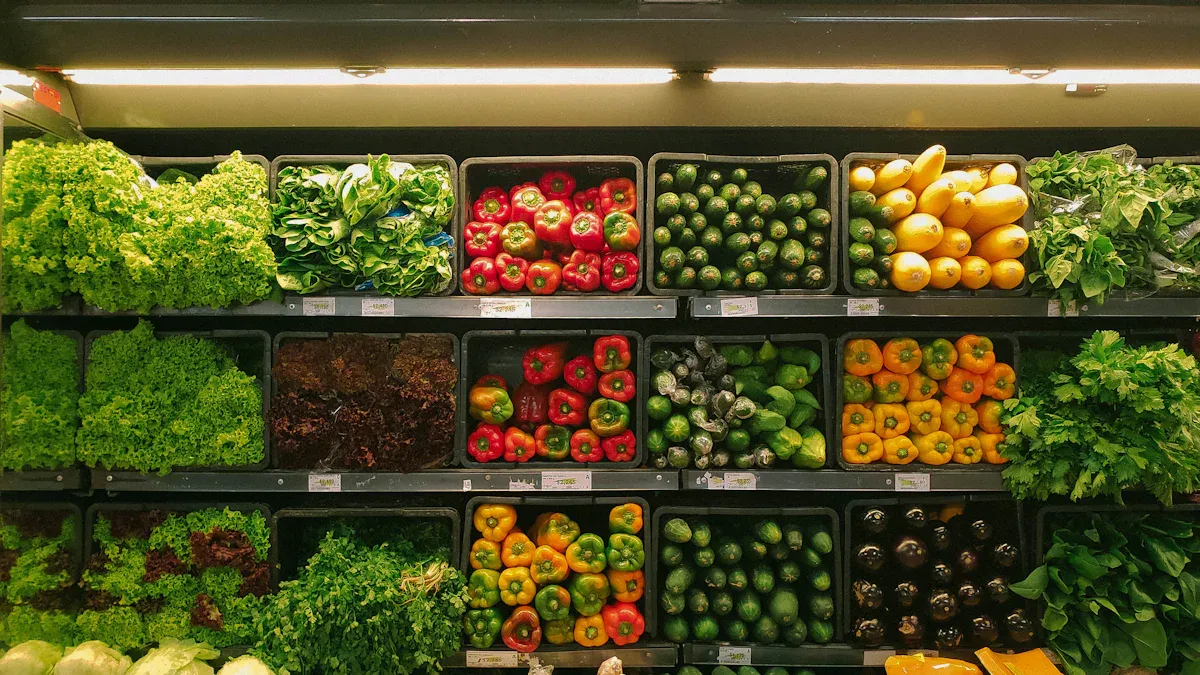
You need different strategies for managing fresh and packaged goods. Fresh items, such as produce, dairy, and meat, require strict temperature control and quick turnover. You must check these products daily for quality and expiration dates. Fresh item management depends on accurate tracking and frequent rotation. You can use shelf-life monitoring tools to help reduce spoilage and maintain food safety.
Packaged goods, like canned foods and snacks, offer longer shelf lives. You can store these items in bulk and replenish them less often. However, you still need to monitor sales trends and avoid overstocking. You should organize packaged goods by category and use clear labeling to simplify restocking. Automated inventory systems help you track both fresh and packaged products, supporting efficient grocery inventory management.
Tip: Use color-coded labels for fresh and packaged goods to help staff identify handling priorities quickly.
Managing Fast-Moving and Slow-Moving Items
You must recognize the difference between fast-moving and slow-moving inventory. Fast-moving items, such as staples and snacks, sell quickly and need constant replenishment. You can rely on real-time tracking and automated reorder alerts to keep these products in stock. This approach helps you meet customer demand and avoid lost sales.
Slow-moving items, including specialty products and certain perishables, require careful monitoring. You should track expiry dates and sales velocity to minimize waste and protect your profit margins. Regular reviews help you decide when to discount or remove slow sellers from your shelves.
- Fast-moving inventory needs continuous replenishment and real-time tracking.
- Slow-moving inventory benefits from close monitoring of expiry dates and sales trends.
A balanced approach to inventory ensures you maximize sales while reducing waste. You improve efficiency and profitability by tailoring your grocery inventory management strategies to each product type.
Leveraging Grocery Store Inventory Management Software

Real-Time Tracking and Automation
You gain a competitive edge when you use grocery store inventory management software with real-time tracking and automation. Immediate insight into product depletion allows you to restock quickly and avoid stockouts during busy hours. Real-time tracking feeds accurate data into your ecommerce platforms, which improves order accuracy and reduces substitutions. Staff can manage freshness by identifying products nearing expiration, reducing waste and maintaining quality. Mobile-enabled cycle counting saves time on manual checks, letting your team focus on customer service.
Tip: Real-time inventory management helps you adjust orders for perishable goods based on current stock, which lowers waste and carrying costs.
The following table highlights the advantages of using grocery store inventory management software:
| Advantage | Description |
|---|---|
| Enhanced Inventory Accuracy | Minimizes human errors in inventory counting, ensuring accurate stock records through technology. |
| Improved Stock Management | Automates monitoring stock levels, reducing stockouts and overstocking through timely alerts. |
| Waste Reduction | Helps manage perishable goods effectively, reducing waste by alerting about nearing expiration dates. |
| Better Customer Satisfaction | Ensures popular items are in stock, enhancing customer loyalty and reducing out-of-stock frustrations. |
| Cost Savings | Optimizes stock levels, leading to significant cost savings and improved profitability. |
Integrating Grocery Store Inventory Management Software with POS Systems
You streamline operations when you integrate grocery store inventory management software with your POS systems. Automation allows your team to focus on strategic tasks instead of manual counts. Real-time tracking ensures product availability and minimizes waste. Enhanced product availability leads to better shopping experiences for your customers.
| Benefit | Description |
|---|---|
| Efficiency | Automates processes, allowing teams to focus on strategic tasks. |
| Accuracy | Real-time tracking minimizes waste and ensures product availability. |
| Customer Satisfaction | Enhanced product availability leads to improved shopping experiences. |
| Operational Optimization | Streamlines tasks like automatic reordering and performance analytics, reducing human errors. |
| Time Management | Reduces time spent on manual counts, allowing more focus on strategic tasks. |
| Demand Forecasting | Aligns inventory with market demand, minimizing waste and ensuring availability. |
| Enhanced Tracking | Provides insights into inventory needs, reducing handling time for employees. |
| Predictive Analytics | Offers insights into consumer behavior, enhancing decision-making and operational efficiency. |
Automated Reordering and Alerts
You reduce manual errors and improve accuracy with automated reordering and alerts in grocery store inventory management software. Automated systems use barcode scanning and RFID tags to update stock levels instantly, which eliminates stock-level miscalculations. Continuous updates to inventory records help you make better purchasing decisions. Automated alerts notify you when stock reaches reorder points or when products near expiration.
- Automated systems help you avoid costly production delays by ensuring all components are available.
- Precise inventory counts minimize the risk of overstocking or stockouts.
Note: Automation in grocery store inventory management software supports better accuracy and efficiency, helping you maintain optimal inventory levels and reduce waste.
Building a Culture of Grocery Inventory Management Excellence
Staff Training on Grocery Store Inventory Management Best Practices
You build a strong foundation for grocery inventory management by investing in staff training. Well-trained employees understand how to track inventory accurately and respond to challenges quickly. You empower your team to make data-driven decisions and use technology to streamline daily tasks. The following table highlights best practices for training your staff:
| Best Practice | Description |
|---|---|
| Data-Driven Decision Making | Train staff to use zero mover reports to identify non-selling products, enabling smarter stocking decisions based on analytics. |
| Use of Electronic Shelf Labels (ESLs) | Implement ESLs to automate pricing updates, reduce manual processes, and allow for real-time price adjustments based on demand, enhancing inventory management efficiency. |
| Direct Store Delivery (DSD) | Adopt DSD processes to streamline inventory receipt and management, ensuring accurate order fulfillment and reinforcing the importance of purchasing inventory at the right price and quantity. |
You see measurable improvements when you focus on training. Employees who know how to use electronic shelf labels and analyze zero mover reports help you reduce errors and improve inventory turnover. You also benefit from streamlined order receipt and fulfillment, which supports accurate stocking and minimizes waste.
Tip: Schedule regular training sessions to keep your team updated on new technologies and best practices.
- Staff training is crucial for reducing inventory shrinkage in grocery stores.
- Employees who understand their role in preventing shrinkage contribute to improved inventory accuracy.
- Training should cover accurate inventory tracking, identifying suspicious behavior, avoiding transaction errors, and understanding theft policies.
Accountability and Communication in Grocery Inventory Management
You create a culture of excellence by promoting accountability and open communication. Assign clear roles and responsibilities for inventory tasks so every team member knows what you expect. Use daily checklists and performance metrics to track progress and address issues quickly. Encourage staff to report discrepancies and share ideas for improvement.
Regular team meetings help you discuss inventory challenges and celebrate successes. You foster trust and collaboration when you listen to feedback and recognize achievements. Transparent communication ensures everyone stays informed about changes in procedures or technology.
Note: Open communication and accountability drive continuous improvement in grocery inventory management. You build a team that takes ownership and works together to achieve store goals.
You unlock powerful results by applying grocery inventory management hacks. Stores observe immediate benefits, including reduced waste, optimized labor, and improved sales. The table below highlights these advantages:
| Benefit | Description |
|---|---|
| Reduce waste | Optimizing replenishment levels saves money by minimizing wasted orders and spoilage. |
| Boost sales | Ensures a continuous supply of products, leading to increased customer satisfaction and loyalty. |
| Inventory balance errors | 27% reduction in errors related to inventory balance. |
| Product availability | Achieved a 10% increase in product availability while reducing inventory by 13%. |
Start today with these best practices:
- Implement inventory management software for real-time tracking.
- Optimize stock levels to match demand patterns.
- Conduct regular audits to identify discrepancies.
Take action now to improve efficiency and product availability in your store.
FAQ
What is the best way to reduce grocery store inventory waste?
You should use the FIFO method, track expiry dates, and set par levels. These steps help you sell older stock first and avoid overordering. Automated alerts also help you act before products expire.
How often should you perform cycle counts in your store?
You should schedule cycle counts regularly. Many stores count high-value items monthly and less critical items quarterly. Regular checks help you catch errors early and keep inventory records accurate.
Can inventory management software work with your existing POS system?
Most modern inventory management software integrates with POS systems. Integration lets you track sales and inventory in real time. This connection improves accuracy and streamlines your operations.
How do you handle slow-moving grocery items?
You should review sales data to spot slow movers. Mark down prices or bundle these items to encourage sales. Regular reviews help you decide when to remove products that do not sell.