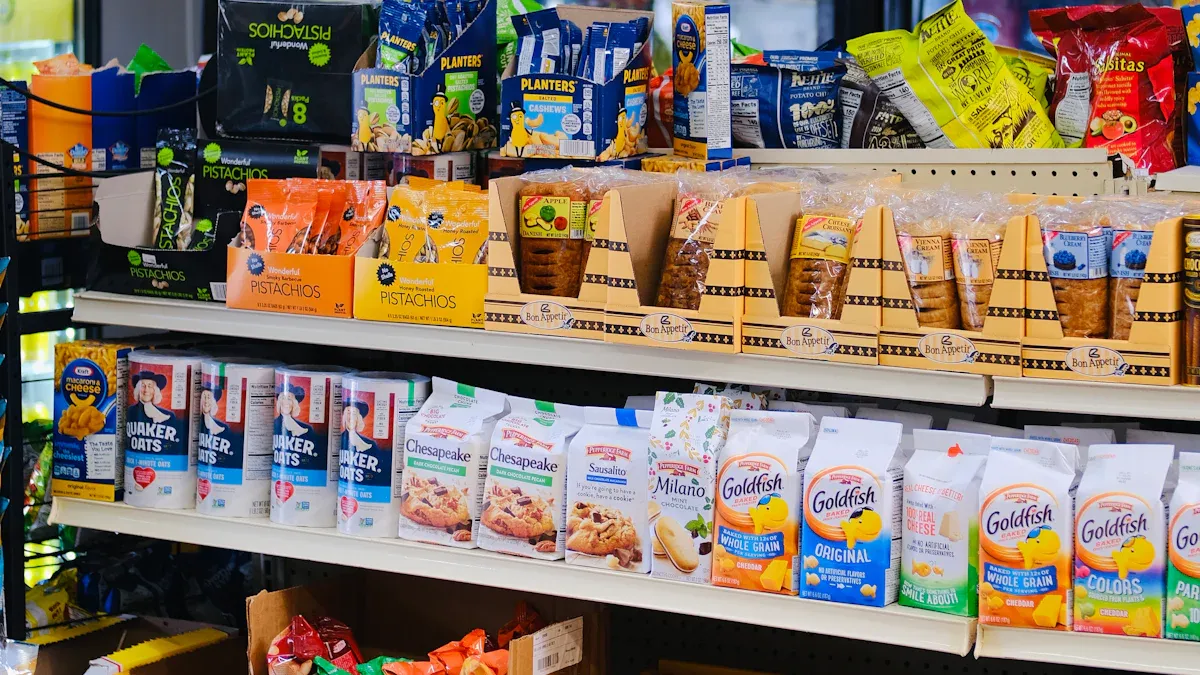
An e-ink shelf label, also known as an electronic shelf label, is a digital display unit you place on retail shelves. It uses e-ink technology to show product and pricing information.
Each ESL Price Tag connects wirelessly to a central server through an ESL Gateway AP. This system allows you to make instant, store-wide updates to your digital shelf labels. The market for Electronic Shelf Labels is expanding rapidly in the Esl Retail sector, reflecting a major industry shift.
| Metric | Value |
|---|---|
| MARKET SIZE 2025 | 3.203 (USD Billion) |
| COMPOUND ANNUAL GROWTH RATE (CAGR) | 15.02% (2024 – 2035) |
Adopting this e-ink system transforms pricing management, making each e-ink shelf label a strategic asset for your business.
How Does an E-Ink Shelf Label System Work?
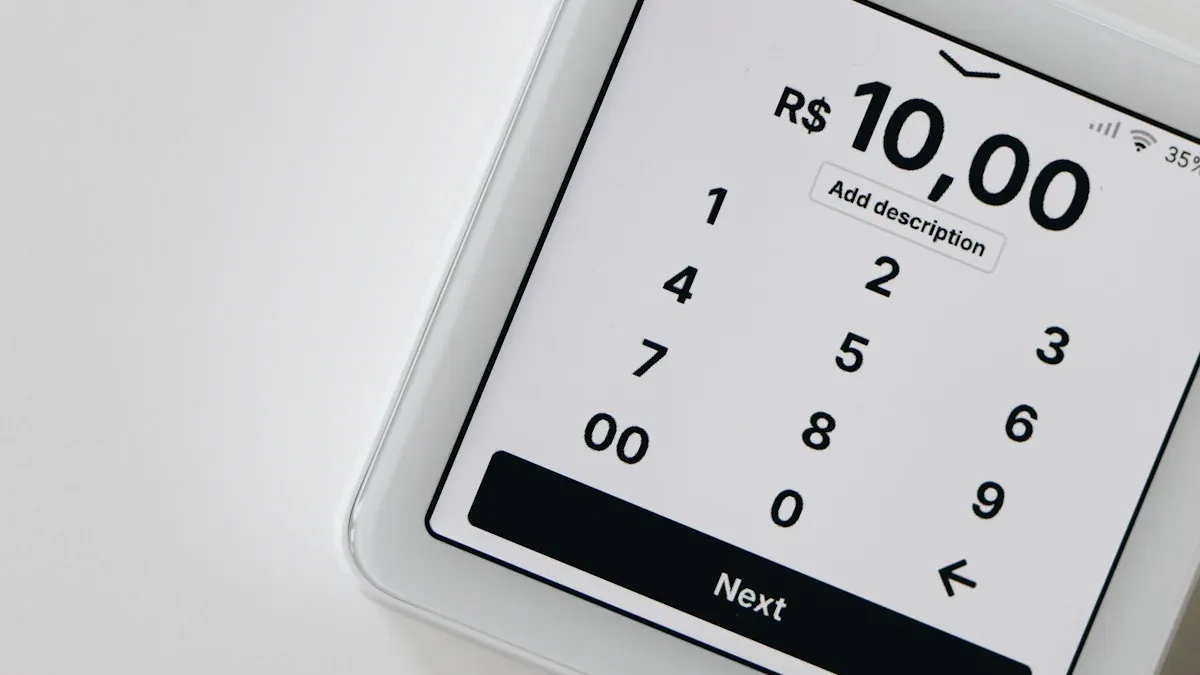
Understanding the mechanics of an ESL system reveals its power. The system combines hardware, software, and wireless communication to automate your pricing and product information displays. It operates through a clear, layered architecture that ensures reliability and speed.
The Core System Architecture
An ESL system is built on a multi-layered framework. Each layer has a specific job, working together to connect your central data to each individual shelf label. You can think of the architecture in these key parts:
- Client Layer: This layer consists of the e-ink shelf labels on your shelves. They receive data and display the information you send.
- Access Layer: Wireless access points or base stations make up this layer. They act as bridges, transmitting data between your management system and the labels.
- Network Layer: This includes your store’s existing network infrastructure, like switches and routers, which connects the access points to your central server.
- Service Application Layer: This is the central software, often a web portal. Here, you manage prices, promotions, and product data for the entire system.
The Automated Update Process
The system sends updates from your central server to the labels in a simple, automated sequence. Radio frequency is the most common communication method, ensuring stable transmission across the store. The process unfolds in three main steps:
- Data Preparation: Your ESL management software processes the new price or product information. It packages this data for transmission.
- Wireless Transmission: A communication station, or base station, receives the data package. It then broadcasts the information wirelessly to the targeted labels.
- Display Update: The designated e-ink label acts as a receiver. It gets the new data and instantly updates its screen, requiring no manual intervention.
The E-Paper Technology and Battery Life
The longevity of ESLs comes from their unique e-paper display. This e-ink technology only consumes power when the image on the screen changes. Once an update is complete, the label holds the image without using any battery power. This efficiency allows for an impressive battery life of up to 10 years. However, several factors influence this lifespan, including the frequency of updates and the tag’s size.
Note: Environmental conditions play a crucial role. A label in a freezer may have a battery life of around 3 years, while the same label at room temperature could last for 10 years.
Properly managing these factors ensures you maximize the operational life of every label in your store.
Why Use Electronic Shelf Labels? Key Business Benefits
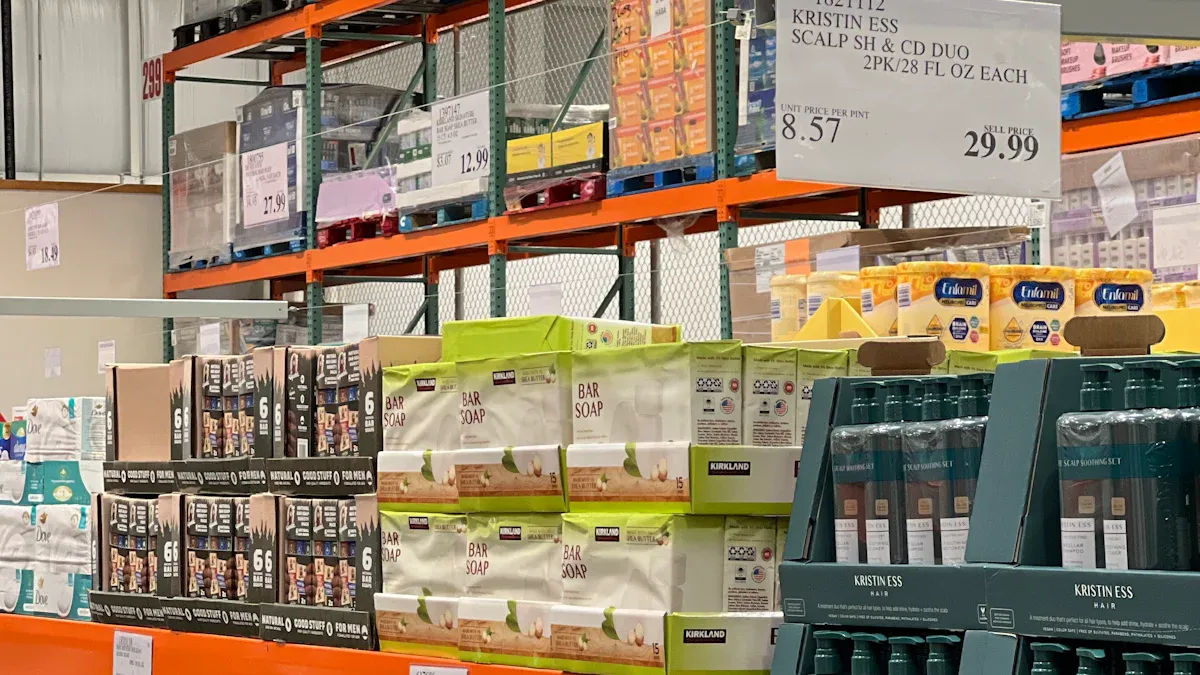
Adopting electronic shelf labels is more than a simple upgrade; it is a strategic business decision that unlocks new levels of efficiency and profitability. You can transform core retail operations by automating price management and integrating shelf-edge data with your central systems. This technology directly addresses long-standing challenges in retail, offering a clear return on investment.
Achieve Dynamic Pricing and Boost Profitability
Dynamic pricing allows you to adjust prices in real-time based on demand, competitor pricing, inventory levels, or promotional schedules. With traditional paper tags, this strategy is impossible to execute at scale. Electronic shelf labels make it a reality. You gain the agility to respond instantly to market conditions, maximizing your margins on every product.
For example, you can automatically lower prices on items nearing their expiration date to reduce waste. You can also respond to a competitor’s sale within minutes, not hours or days. This capability has a measurable impact on your bottom line. One Fortune 500 specialty retailer saw a 30 basis point increase in Gross Margin in tested categories by implementing dynamic pricing. This result is even more impressive because only 10% of their stores used electronic shelf labels at the time, showing the strategy’s power.
By implementing real-time price updates, you not only boost profitability but also ensure complete pricing accuracy. This accuracy reduces customer complaints and builds trust, leading to greater loyalty and satisfaction.
Drastically Reduce Operational Costs
Manual price changes are a significant drain on your resources. The process requires employees to print tags, find products on the sales floor, and replace old labels one by one. This work is time-consuming, pulls staff away from customer service, and is prone to costly errors.
Electronic shelf labels eliminate this entire workflow. Your central system sends updates to every tag simultaneously, completing a store-wide price change in seconds. This automation delivers substantial savings. Retailers report a 30–60% reduction in labor dedicated to price changes and execute promotions 80–95% faster.
You also eliminate the recurring costs of paper, ink, and printers. More importantly, you virtually erase financial losses from pricing errors. The system ensures the price at the shelf always matches your point-of-sale (POS) system, preventing discrepancies that lead to lost revenue and customer frustration. Centralized management gives you a complete audit trail, tracking every price modification for full accountability.
Enhance Store Operations and Inventory Management
Integrating electronic shelf labels with your inventory management and ERP systems creates a powerful, unified operation. This connectivity streamlines tasks and provides real-time visibility into your stock, which is crucial for modern retail.
Your staff can manage inventory with far greater efficiency. Instead of performing manual counts, they can use the system to monitor stock levels directly. Some advanced digital shelf labels feature LED lights that you can flash to guide employees during tasks like restocking or order picking for online fulfillment. This visual cue dramatically speeds up workflows and reduces errors.
This integration also improves the accuracy of your inventory data.
- ESLs synchronize product information, pricing, and stock levels across your POS, ERP, and e-commerce platforms.
- You can display real-time stock information, such as “low stock” alerts or estimated restock dates, directly on the shelf.
- When integrated with inventory scanning robots, the system can automatically verify shelf data and flag discrepancies for immediate correction.
This seamless flow of information ensures your promotional execution is compliant, your inventory counts are accurate, and your team spends less time on manual checks and more time helping customers.
Improve the Customer Shopping Experience
You can transform the in-store journey from a passive activity into an engaging, interactive experience. Modern shoppers expect accurate information and seamless interactions. Electronic shelf labels provide the tools to meet and exceed these expectations, directly influencing purchasing decisions and fostering loyalty.
A key benefit is the ability to build unwavering customer trust. Your shoppers want consistency between your online and in-store prices. Electronic shelf labels ensure this alignment, eliminating the frustration of price discrepancies. This consistency reinforces your brand’s reliability. Furthermore, the appearance of your pricing matters.
- Well-designed, high-resolution displays convey professionalism and quality.
- Messy, outdated paper tags can create a negative impression of your store.
- Strategic placement of these clear digital tags captures attention and guides purchase decisions.
You can also turn your shelves into interactive information hubs. Many electronic shelf labels now include features that empower customers to learn more at the point of decision.
- NFC & QR Codes: Customers can tap their phones or scan a code to access detailed product videos, style tutorials, or real-time reviews. You can also link them to digital coupons or your e-commerce site.
- Interactive Buttons: A customer can press a button to call for staff assistance. Some advanced electronic shelf labels allow customers to flip through up to seven pages of information, displaying nutritional facts, allergy warnings, or detailed specifications.
By providing instant access to rich product content, you help customers make confident, informed choices. This reduces their uncertainty and increases the likelihood of a purchase, all without needing to track down an employee.
Finally, you can use electronic shelf labels to drive sales and create excitement. The technology enables you to deploy dynamic promotional strategies effectively. You can create a sense of urgency with flash sales or highlight limited-edition products to increase demand. They also serve as a powerful tool for upselling and cross-selling. You can display information about complementary items or promote discounted bundles directly on the tag, encouraging customers to add more to their carts. This flexibility gives you a modern way to manage promotions and enhance the shopping experience.
What Key Features Should You Look for in an Electronic Shelf Label?
Selecting the right system requires you to evaluate several key features. Your choice will impact everything from store aesthetics to operational efficiency. You should focus on the hardware’s performance, connectivity, and long-term maintenance needs to ensure a successful investment in electronic shelf labels.
Display Quality and Durability
The display is the most critical component of any electronic shelf label. You need a screen that is clear, easy to read, and durable enough for a busy retail environment. Look for high-contrast e-paper displays that are visible from wide angles and under various lighting conditions.
Vendors offer electronic shelf labels in multiple sizes and resolutions to fit different products and shelving types. Larger screens generally provide a higher pixel count, allowing for more detailed information.
| Screen Size (inches) | Resolution |
|---|---|
| 4.2 | 400 * 300 |
| 2.9 | 296 * 128 |
| 3.5 | 384 * 184 |
| 2.66 | 152 * 296 |
| 13.3 | N/A |
| 7.3 | N/A |
| 5.83 | 648 * 480 |
| 7.5 | 800 * 480 |
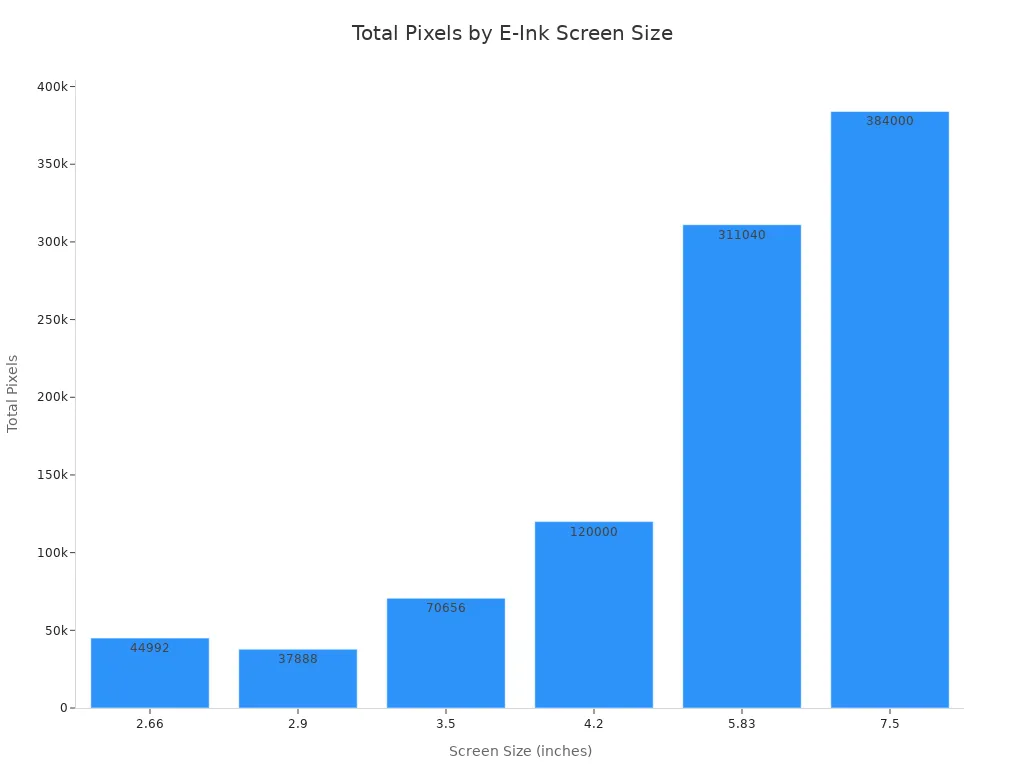
Durability is also essential. Your labels should have a protective casing to resist scratches and impact. You should also verify the operating temperature range, especially if you plan to use them in refrigerated or freezer sections.
Connectivity, Speed, and Reliability
The communication protocol determines how fast and reliably your electronic shelf labels receive updates. The two primary technologies are Infrared (IR) and Radio Frequency (RF). Each has distinct advantages.
| Feature | Infrared | Radio Frequency (RF) |
|---|---|---|
| Wiring/Antennas | Requires no wiring or antennas | May require wiring or antennas |
| Speed | Faster, updates 50,000 labels/hour | Slower, potentially one-tenth of infrared’s speed |
| Target Location | Better at locating targets in smaller areas | Less precise in smaller areas |
| Battery Power | Less required, cheaper to maintain | More required |
| Implementation Cost | Lower | Higher, more infrastructure changes needed |
| Interference | Cleaner, less interference | Can face interference |
Modern systems are incredibly fast. You can update hundreds of prices for a promotion across dozens of stores “in minutes, rather than hours.” This speed allows you to execute dynamic pricing strategies effectively. Reliability is just as important. Look for systems with two-way communication, which allows each label to confirm it has received and applied an update successfully.
Battery Longevity and Maintenance
The battery life of your electronic shelf labels directly impacts your total cost of ownership. E-paper technology is extremely power-efficient, but battery performance still varies.
A label’s battery can last from 5 to 10 years. This lifespan depends on factors like the frequency of updates, the operating temperature, and the size of the display. You should choose a system with user-replaceable batteries. This feature simplifies maintenance and prevents you from having to replace the entire unit when the battery dies, reducing long-term costs.
Interactivity with LEDs and NFC
Modern electronic shelf labels do more than just display prices; they create an interactive shelf edge. You should look for models equipped with multi-color LED lights and Near Field Communication (NFC) to enhance both store operations and the customer journey.
LED indicators transform how your staff manages tasks. You can use these lights to streamline critical workflows and improve accuracy.
- Pick-by-Light: The LED on a specific electronic shelf label can flash to guide an employee directly to an item for an online order, significantly speeding up fulfillment.
- Stock Alerts: You can program lights to signal product status. An “inventory warning light-up” can notify staff about low-stock items, while an “out-of-stock light-up” prompts immediate replenishment.
NFC technology empowers your customers. Shoppers can tap their smartphones on a tag to instantly access rich content. You can link them to product reviews, how-to videos, or exclusive digital coupons, creating an engaging and informative experience right at the point of decision.
Software Integration with POS and ERP Systems
The true power of electronic shelf labels is unlocked when you integrate them with your core business software. A seamless connection between your labels, Point of Sale (POS), and Enterprise Resource Planning (ERP) systems creates a single, authoritative source for all product and pricing data. This eliminates discrepancies and automates data management.
You should prioritize a solution that offers native integration with the systems you already use. Many vendors provide out-of-the-box compatibility with major platforms.
- ERP Systems: Look for connections to software like SAP, Oracle NetSuite, and Microsoft Dynamics.
- POS Systems: Ensure compatibility with platforms such as Square, Shopify POS, and Lightspeed.
This deep integration ensures that any price change in your ERP is automatically and accurately reflected on the shelf. It creates a reliable, end-to-end data flow that minimizes manual errors and boosts operational efficiency.
Choosing a system with universal compatibility gives you the flexibility to connect with virtually any third-party software. This capability future-proofs your investment and ensures your electronic shelf labels remain a central part of your retail technology ecosystem.
How to Implement E-Ink Shelf Labels in Your Store
A successful rollout of electronic shelf labels requires careful planning and a phased approach. You can ensure a smooth transition and maximize your return on investment by following a clear implementation strategy. This process breaks down the journey into manageable steps, from initial planning to full-scale deployment.
Step 1: Define Goals and Assess Needs
Your first step is to establish clear objectives for your project. You should identify the specific pain points you want to solve. Are you trying to reduce labor costs from manual price changes? Do you want to eliminate pricing errors and improve compliance? Or is your main goal to enable dynamic pricing strategies?
Answering these questions helps you define success. You should assess your current store environment and operational workflows.
- How many price changes do you perform weekly?
- What are your current costs for paper, ink, and labor?
- Which product categories would benefit most from dynamic updates?
This initial assessment provides a baseline to measure the project’s impact.
Step 2: Choose a Vendor and Technology
Selecting the right partner is critical. You need a vendor whose technology aligns with your goals and integrates with your existing systems. Evaluate potential vendors based on their software capabilities, hardware durability, and support services. The right e-ink shelf label solution should offer robust integration with your POS and ERP systems.
Consider the communication technology carefully. Radio Frequency (RF) offers broad coverage, while Infrared (IR) can provide faster updates in dense environments. Your choice will impact installation complexity and long-term performance.
Ask for demonstrations and compare the display quality of different e-ink tags. A reliable vendor will work with you to find the best fit for your unique retail environment.
Step 3: Plan and Execute a Pilot Program
You should not deploy the system across all your stores at once. Instead, plan and execute a pilot program in a controlled setting. Choose one or two stores, or even a single department, to test the technology. This pilot allows you to validate the system’s performance and identify potential challenges before a full rollout.
During the pilot, you can:
- Train a small group of employees on the new system.
- Measure key performance indicators (KPIs) against your initial goals.
- Gather feedback from both staff and customers.
This trial run provides invaluable data and helps you refine your implementation strategy for a seamless, store-wide deployment.
Step 4: Manage the Full-Scale Rollout and Staff Training
With a successful pilot complete, you can now manage the full-scale rollout. Use the insights from your trial to create a detailed deployment schedule. You might choose a phased approach, updating stores region by region or department by department. This method minimizes disruption and allows your technical team to provide focused support.
Effective staff training is the cornerstone of a successful implementation. Your employees are the ones who will interact with the system daily. You must equip them with the knowledge to use the technology confidently. Training should cover more than just the basics of how the system works. Show your team how ESLs make their jobs easier, from faster task completion with pick-by-light features to eliminating tedious manual price changes.
Empower a few employees as “super-users” in each store. These individuals can act as the first point of contact for their colleagues, answering questions and troubleshooting minor issues. This builds internal expertise and streamlines support.
Step 5: Monitor Performance and Optimize Strategy
Your work does not end once the labels are on the shelves. You must continuously monitor performance to ensure you are achieving your goals and maximizing your return on investment (ROI). You should track specific key performance indicators (KPIs) to measure the system’s impact on your operations and profitability.
Key metrics to monitor include:
- Update Response Time: How quickly price changes appear on the shelf.
- Price Accuracy Rate: The consistency of prices across your shelves, POS, and online channels.
- Labor Efficiency: The reduction in staff hours spent on pricing tasks.
- Inventory Turnover: The rate at which stock moves, influenced by optimized pricing.
- Revenue from Dynamic Pricing: The income generated from real-time promotions.
- Customer Satisfaction (CSAT): Feedback related to pricing clarity and accuracy.
- Return Rate from Pricing Errors: A decrease in returns caused by incorrect prices.
Use this data to refine your approach. You can adjust your dynamic pricing rules, optimize promotional schedules, and identify new ways to leverage the technology.
For your modern retail business, an e-ink shelf label is a key strategic investment. This technology delivers greater efficiency, accuracy, and agility to your operations. You solve the core problems of manual pricing by automating updates and reducing costs. Adopting an e-ink system is a direct path to strengthening your competitive position and increasing profitability. This makes each e-ink shelf label a powerful asset for your store.
The return on investment is compelling. Your break-even point can be surprisingly short, leading to significant long-term gains.
| Scenario | Break-even Point | 1-Year ROI | 15-Year ROI |
|---|---|---|---|
| Specific Case 1 | 5 months | 145% | 3170% |
| Specific Case 2 (Conservative) | 2.3 years | N/A | 472% |
Looking ahead, this technology will only become more integral to retail.
- ESLs will evolve into strategic platforms for digital operations.
- They will enable in-store retail media and targeted promotions.
- The market will favor open platforms that act as profit-generating data infrastructure.
FAQ
How long does it take to update prices?
You can update thousands of labels across your store in just minutes. The exact speed depends on your communication technology and the number of tags. This capability allows you to implement dynamic pricing and promotions almost instantly, ensuring operational agility.
Can electronic shelf labels work in freezers?
Yes, you can use them in cold environments. You must select labels specifically rated for freezer use. The battery life will be shorter in colder temperatures, so you should plan for more frequent replacements compared to labels at room temperature.
What happens if the network goes down?
The labels will continue displaying the last information they received. E-paper technology holds its image without power. You cannot send new updates until you restore the network connection, but existing prices remain visible and accurate on the shelf.
Do I need to replace the whole tag when the battery dies?
No, you do not have to replace the entire tag. You should choose a system with user-replaceable batteries. This feature simplifies maintenance and lowers your long-term costs, as you only need to swap out the battery.