So, what is Imagotag? It is the leading brand name for electronic shelf labels (ESLs), which are advanced digital price labels. The global retail technology company VusionGroup creates these innovative devices. Retailers use the smart labels to electronically update pricing and product data, replacing traditional paper tags. Nearly 68% of major retailers now utilize this technology. The global ESL market is valued at over USD 1.7 billion and is projected to grow significantly, making it a new operational standard.
System Snapshot: Key Components 📝 The Esl Retail solution primarily involves the ESL Price Tag on the shelf and a communication network managed by an ESL Gateway AP (Access Point) to receive updates.
What is Imagotag and How Does It Work?
To understand the impact of this technology, it is essential to know the answer to the question, what is Imagotag and how does it function? The system operates through a seamless integration of hardware and software components. It creates a centralized, responsive network that eliminates manual price changes and ensures store-wide accuracy. This sophisticated ecosystem is what empowers retailers to manage their pricing and product information with remarkable speed and precision.
The Core Components of the System
The Imagotag solution is built on three foundational pillars: the physical labels on the shelf, a dedicated in-store communication network, and a powerful central software platform that orchestrates everything.
The Electronic Shelf Label (ESL)
The most visible component is the electronic shelf label itself. These are not simple LCD screens but advanced smart digital labels designed for clarity and longevity.
- Display Technology: The labels use fully graphic E-ink (electronic ink) displays, which provide a high-contrast, paper-like appearance that is easy to read from various angles. They are available in multi-color options, such as black, white, and red or yellow, to highlight promotions and key information.
- Battery Life: Each tag contains a self-sufficient battery. This battery powers the device for an impressive 7 to 10 years, making it a low-maintenance solution for retailers.
The In-Store Communication Network
These digital price labels do not connect to a store’s standard Wi-Fi. Instead, the system uses a dedicated communication infrastructure to ensure reliable and interference-free data transmission.
| Technology Component | Specification |
|---|---|
| Communication Method | Radio Frequency (RF) |
| Frequency Band | 2.4GHz |
Imagotag utilizes Radio Frequency (RF) technology to send data from its central system to the labels. It operates on the 2.4GHz band, intelligently using channels that are typically not occupied by Wi-Fi or Bluetooth. This dedicated network guarantees that updates are delivered quickly and successfully without disrupting other wireless services in the store.
The Central Management Software
The brain of the operation is the central management software. This platform gives retailers complete control over their entire network of electronic shelf labels. The software automates price changes and allows staff to manage a wide range of tasks, including:
- Assigning products to specific labels.
- Changing the images and templates displayed on the screen.
- Refreshing display information to ensure accuracy.
- Displaying operational data, like inventory levels from an ERP system, directly on the label for store associates.
The Instant Update Process
The true power of the Imagotag system lies in its ability to execute real-time updates across thousands of labels almost instantly. The process is a simple yet powerful three-step workflow.
The Imagotag system enables merchants to update pricing across an entire store or chain within seconds. This capability ensures error-free and hassle-free price management, even for thousands of labels at once.
Step 1: Price Change in Central System
A store manager or pricing analyst initiates a change in the central management software. This could be a single price adjustment, a store-wide promotional campaign, or a chain-wide update synchronized across hundreds of locations.
Step 2: Data Transmission to Access Points
Once the command is confirmed, the software securely transmits the new data to dedicated access points installed throughout the store. These access points act as communication relays, receiving information from the central server and preparing it for broadcast to the shelves.
Step 3: Wireless Update to the Label
The access points broadcast the update via radio frequency to the targeted labels. The E-ink screen on the correct label receives the data and refreshes its display with the new price, promotion, or product information. This entire sequence happens in moments, ensuring the price on the shelf always matches the price at the checkout.
Key Benefits Driving Retail Adoption
The rapid adoption of Imagotag technology stems from a powerful dual advantage. It delivers significant operational gains for retailers while simultaneously creating a more transparent and satisfying experience for customers. This win-win proposition is the primary force behind its growing presence in stores worldwide.
For the Retailer: Operational Excellence
For any retail business, success hinges on efficiency, accuracy, and the ability to adapt to market changes. Imagotag’s system directly addresses these core needs, providing a clear path to operational excellence.
Dynamic and Agile Pricing
Retailers can now implement dynamic pricing strategies with unprecedented speed. A manager can adjust prices across an entire category or store in response to competitor promotions, fluctuating supply costs, or to clear perishable inventory. This agility allows businesses to maximize margins and react to market conditions in minutes, not days. This strategic control over pricing is a significant competitive advantage.
Unmatched Operational Efficiency
The system revolutionizes store operations by eliminating the manual labor associated with paper tags. Employees no longer spend countless hours printing, cutting, and physically replacing thousands of individual price tags.
This automation frees up store associates from tedious pricing tasks. They can then refocus their efforts on higher-value activities, such as assisting customers, managing inventory, and improving store presentation.
This shift dramatically boosts overall store efficiency and reduces operational costs tied to labor and materials like paper and ink.
Guaranteed Pricing Accuracy
Price discrepancies between the shelf and the checkout are a major source of customer frustration and lost revenue. Electronic labels solve this problem by synchronizing shelf prices directly with the point-of-sale (POS) system. This guarantees that the displayed price is always the correct price. Studies of large-scale deployments, such as Walmart’s use of VusionGroup technology, show that digital tags can reduce pricing errors by as much as 98%. In fact, the Imagotag system is designed to eliminate these errors entirely, ensuring 100% pricing accuracy.
Enhanced Inventory Management
Modern electronic labels serve as a direct link to a store’s back-end inventory system. They can display crucial data for employees, such as:
- Stock-on-hand counts
- Next delivery date
- Product location in the stockroom
This real-time information empowers staff to manage stock levels more effectively, identify replenishment needs faster, and locate products for customers without leaving the aisle.
For the Customer: A Better Shopping Trip
While retailers reap major operational rewards, the customer experience also sees a substantial upgrade. The technology fosters trust and provides shoppers with the information they need to make confident purchasing decisions.
Trustworthy and Reliable Prices
Customers gain confidence knowing that the price displayed on the shelf is accurate. This eliminates the unpleasant surprise of being overcharged at the checkout and reduces purchase friction. Consistent and reliable pricing builds shopper trust, which is a cornerstone of customer loyalty.
Access to More Product Information
The digital screen on Imagotag labels can display far more than just a price. Shoppers can view nutritional facts, allergen warnings, country of origin, or even QR codes that link to product reviews and recipes. This access to rich, real-time information at the point of decision helps customers make more informed choices that align with their needs and preferences.
Real-Time Promotions and Discounts
Shoppers benefit from the immediate application of promotions. When a sale starts, the digital labels update instantly to reflect the new, lower price. This clarity ensures customers are always aware of current deals, such as flash sales or limited-time offers, creating a more engaging and rewarding shopping journey.
How Imagotag Improves Your Shopping Experience
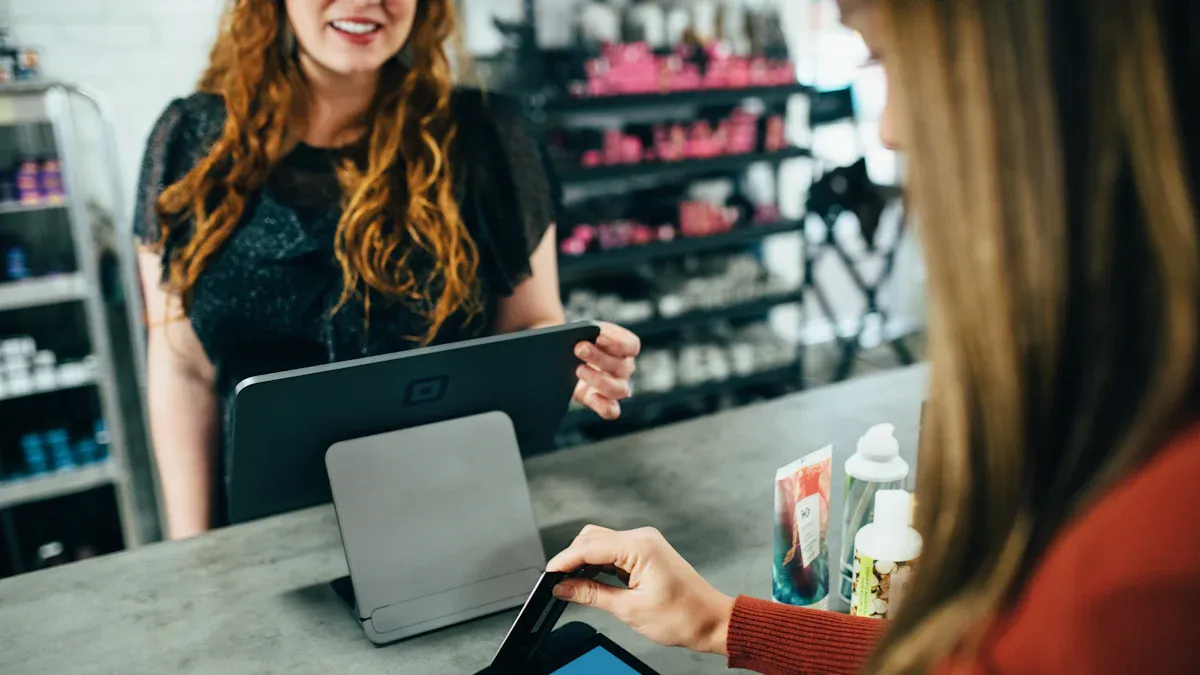
Imagotag labels transform the shelf edge from a static price holder into a dynamic hub of information. This technology directly enhances the shopping journey by providing clarity, context, and convenience right at the point of decision.
More Than Just a Price Tag
The digital screen on an Imagotag label offers far more than just pricing. It serves as a mini-billboard for each product, delivering valuable details that help shoppers make confident and informed choices.
Nutritional and Allergen Information
Modern consumers demand transparency about the products they buy. Imagotag labels can display key nutritional data, such as calorie counts and sugar content, directly on the shelf. Some systems even allow shoppers to scan a label with a store app to see detailed allergen information or health scores, making it easier to find products that fit specific dietary needs.
Product Origin and Sourcing Details
Shoppers are increasingly interested in the sustainability and origin of their food. Retailers like Carrefour use Imagotag labels to display sustainability ratings. This allows customers to see at a glance how a product scores on environmental and social metrics, empowering them to support brands that align with their values.
Unit Pricing and Comparisons
The labels simplify value comparisons by clearly displaying unit pricing (e.g., price per ounce or per 100 grams). This helps customers easily determine the most cost-effective option between different package sizes, ensuring they get the best value for their money.
Interactive In-Store Features
Imagotag technology introduces interactive elements that bridge the gap between the physical shelf and the digital world. These features make shopping more efficient and engaging for both customers and store staff.
QR Codes for Reviews and Videos
Many labels feature QR codes that shoppers can scan with their smartphones. Retailers like Best Buy use this feature to give customers instant access to online product pages. A quick scan can pull up:
- Detailed product specifications
- Customer reviews and ratings
- Instructional videos or promotional content
This provides a wealth of real-time information without the need to search for it manually.
Stock Level Indicators
The labels can connect directly to a store’s inventory system. This allows them to display operational data, such as stock levels, for store associates. An employee can see at a glance if an item is in the stockroom, helping them assist customers more quickly and efficiently.
“Pick-to-Light” for Staff and Shoppers
For online orders fulfilled in-store, Imagotag’s “Pick-to-Light” feature is a game-changer. When an employee begins picking an order, the labels for the required items flash with a bright LED light.
This visual cue guides the picker directly to the correct product. The system dramatically increases picking speed and accuracy, ensuring online orders are ready for pickup faster. This innovation streamlines operations and improves the buy-online-pick-up-in-store experience.
Imagotag’s Impact Beyond the Grocery Store
While highly visible in grocery aisles, Imagotag’s technology extends far beyond food retail. The system’s flexibility makes it a powerful tool for the digitalization of commerce across numerous sectors. Retailers in various industries adopt these labels to enhance efficiency, improve data accuracy, and create a better customer experience.
Applications Across Different Industries
Different retail environments leverage Imagotag’s capabilities to solve unique challenges, proving the technology’s versatility.
Electronics and DIY Retail
In electronics and DIY stores, product specifications are critical. Imagotag labels provide a dynamic way to manage complex information. Retailers use them to:
- Display detailed technical data and brand promotions directly at the shelf.
- Provide augmented product information through QR codes.
- Launch synchronized marketing campaigns across an entire chain of stores instantly.
Pharmacies and Healthcare Settings
Pharmacies use electronic labels to manage pricing and critical regulatory information with precision. The system allows them to:
- Update prices instantly to reflect new stock or promotions.
- Ensure compliance by displaying dosage instructions or recall notices.
- Eliminate pricing errors and avoid accounting issues.
When a recent VAT regulation change occurred in Europe, pharmacies with ESLs updated thousands of tags centrally. This saved immense labor and ensured immediate compliance, while others struggled with manual updates.
This automation frees pharmacists to spend more time advising patients.
Industrial and Logistics Warehouses
In warehouses, efficiency is paramount. Imagotag labels are key components for logistics and inventory management. They help automate inventory tracking, enable dynamic order picking with light-up features, and provide real-time updates on stock levels. This reduces human error and significantly lowers labor costs.
Fashion and Apparel Showrooms
Fashion retailers use the labels to display more than just a price. A tag can show available sizes and colors for an item, link to online lookbooks, or highlight sustainable materials. This enriches the showroom experience and provides shoppers with valuable information.
A Global Leader in Retail Tech
Imagotag’s widespread adoption is driven by its parent company, VusionGroup, a dominant force in retail technology. It provides powerful digital solutions for physical commerce.
The Company: VusionGroup
VusionGroup, formerly known as SES-imagotag, was founded in 1992. It has since grown into the global leader in electronic shelf labels and retail IoT solutions, pioneering the technology that now defines modern store operations.
Serving Over 300 Major Retailers
VusionGroup’s technology powers operations for over 300 major retailers globally. Prominent clients include Nordic retailer Kesko, which deployed over 6.6 million labels across its stores. In the UK and Ireland alone, the system is used by trusted brands such as M&S, Morrisons, WH Smith, and SPAR.
A Worldwide Market Presence
With installations in thousands of stores across dozens of countries, VusionGroup has established a truly worldwide market presence. Its solutions have become an operational standard for retailers seeking to modernize their stores and compete in an increasingly digital landscape.
The Main Competitors to Imagotag
While VusionGroup’s Imagotag is a dominant force, the market for digital store solutions is highly competitive. Several other key companies provide robust electronic shelf labels, each with unique strengths and technological approaches. Understanding these players provides a clearer picture of the industry landscape.
Key Players in the ESL Market
The global ESL market features a handful of major innovators driving the technology forward.
Pricer
Based in Sweden, Pricer is one of the oldest and most established competitors in the ESL space. The company is particularly known for its use of infrared (IR) communication technology, which offers a different approach to data transmission compared to Imagotag’s radio frequency system.
Displaydata (now part of SoluM)
Displaydata was a UK-based innovator known for its four-color e-paper labels. In 2020, the South Korean company SoluM acquired Displaydata, integrating its technology and market presence to strengthen its global position.
SoluM
Originally a division of Samsung, SoluM has emerged as a major global competitor. The company offers a comprehensive range of ESL solutions and has expanded its influence significantly, partly through its acquisition of Displaydata.
Hanshow
Hanshow is a rapidly growing company that has secured major contracts with retailers worldwide. It provides a complete suite of digital store solutions built around its proprietary All-Star IoT platform and communication protocols.
What Differentiates the Brands
Competition in the ESL market centers on a few key technological and design distinctions. These differences influence a retailer’s choice when selecting a system.
Communication Technology (RF vs. Infrared)
The method used to update the labels is a primary differentiator. Most systems, including Imagotag and Hanshow, use Radio Frequency (RF) protocols. These systems transmit data wirelessly, much like Wi-Fi. In contrast, Pricer uses optical infrared communication.
| Feature | SES-imagotag (RF) | Pricer (IR) |
|---|---|---|
| Communication | Advanced wireless, NFC | Optical infrared |
| Key Capabilities | Interactive features, mobile device links | Robust, modular design |
| Benefits | Enhanced customer engagement | Streamlined price management |
This choice in technology affects everything from installation complexity to battery consumption and the potential for interference.
Software Platform Features
The software that manages the system is just as important as the hardware.
- Imagotag uses its VUSION cloud platform, which integrates AI and data analytics for advanced omnichannel strategies.
- Hanshow operates on its All-Star IoT platform, which uses a proprietary communication protocol for managing its devices.
- SoluM focuses on providing platforms that offer deep customization and seamless integration with existing POS and inventory systems.
Label Design and Battery Life
The physical design of the labels themselves is a crucial factor. Companies compete on screen clarity, the number of colors available (e.g., black, white, red, yellow), and overall durability. Battery life is also a major selling point, with most brands offering batteries that last for several years to minimize maintenance.
The Future of Imagotag and Smart Retail

The evolution of electronic shelf labels is a cornerstone in the ongoing digitalization of commerce. Imagotag and similar technologies are moving beyond simple price updates. They are becoming central hubs for creating fully connected, intelligent, and sustainable retail environments.
The Vision for a Connected Store
The future of retail lies in a seamlessly integrated store where digital and physical elements work together. Imagotag is at the forefront of this transformation, connecting various data streams to enhance store operations and the customer journey.
Integration with In-Store Cameras
Retailers are now pairing ESLs with a sophisticated computer vision and artificial intelligence platform. This system uses in-store cameras to create a live, data-rich view of the shelves.
- Ceiling-mounted cameras continuously monitor shelves to detect out-of-stock items or low inventory.
- AI models analyze the visual data to identify empty spaces and ensure products match their planogram locations.
- The system can automatically alert staff to restock a specific product, ensuring shelves remain full and organized.
Connection to Shopper Loyalty Apps
Imagotag labels bridge the gap between a shopper’s smartphone and the physical shelf. Retailers like Sam’s Club integrate their digital tags with mobile apps, such as Scan & Go. This connection allows for powerful retail media and in-store advertising opportunities. A customer can scan a label to receive personalized promotions or flash sales directly on their phone, creating a highly engaging and individualized shopping experience.
AI-Powered Merchandising
Artificial intelligence transforms ESLs into powerful tools for strategic decision-making. These retail iot applications allow businesses to implement advanced merchandising strategies.
AI algorithms analyze sales data, inventory levels, and competitor prices to execute dynamic pricing. For example, a supermarket can automatically discount perishable items nearing their expiration date, reducing food waste and capturing revenue. Walmart uses its digital shelf system to update prices in minutes, a task that once took days.
Advancing Sustainability in Retail
Beyond operational efficiency, smart labels play a crucial role in helping retailers achieve their sustainability goals. The technology offers tangible environmental benefits by reducing waste and optimizing resource use.
Eliminating Paper and Ink Waste
The most immediate environmental benefit of ESLs is the complete elimination of paper price tags. This shift saves millions of paper labels and reduces the consumption of ink and toner annually. It represents a significant step toward a paperless retail operation.
Reducing Carbon Footprint
The impact on sustainability extends to carbon emissions. By reducing food waste, retailers also lower their associated carbon footprint. One major European retailer using ESLs reported a 17% reduction in CO2 equivalent emissions alongside a 17% drop in food waste over four years.
Optimizing Supply Chains
ESLs with dynamic pricing capabilities help retailers manage inventory with incredible precision. By discounting items to encourage sales, stores can prevent overstocking and reduce the need for wasteful disposal. Some supermarkets have cut food waste by as much as 30% using this strategy. This optimization leads to fewer unnecessary deliveries and a more efficient, sustainable supply chain from the warehouse to the shelf.
So, what is imagotag? It is the brand name for the world’s leading electronic shelf labels, a technology that has become a standard in modern retail. Its widespread adoption is driven by the immense operational efficiencies it provides retailers and the enhanced accuracy it offers customers. As stores become more digitized, the answer to what is imagotag? becomes clear. It is a fundamental technology for creating the connected, efficient, and customer-friendly shopping environment of the future.
FAQ
What is Imagotag?
Imagotag is the leading brand name for electronic shelf labels (ESLs). VusionGroup creates these digital price tags. Retailers use them to display and update product information electronically, replacing paper labels and ensuring pricing accuracy across the store.
How do Imagotag labels update?
A central software system sends new data to in-store access points. These access points then transmit the update to the specific label using radio frequency. The E-ink screen refreshes almost instantly with the new information.
What are the main benefits for retailers?
Retailers gain significant advantages. Key benefits include:
- Dynamic pricing agility
- Increased operational efficiency
- Guaranteed pricing accuracy
- Enhanced inventory management
This technology automates tasks and reduces operational costs.
How long does the battery in an Imagotag label last? 🔋
Each electronic shelf label contains a self-sufficient battery. The E-ink display technology is very energy-efficient. This allows the battery to power the device for an impressive 7 to 10 years, minimizing maintenance for the retailer.
Who are the main competitors to Imagotag?
The electronic shelf label market is competitive. Major players include Pricer, known for its infrared technology, along with SoluM and Hanshow. These companies compete on communication methods, software features, and label design to provide digital store solutions.
Is this technology only used in grocery stores?
No, the technology is highly versatile. Industries beyond grocery use Imagotag labels. These include electronics stores, pharmacies, industrial warehouses, and fashion showrooms. Each sector adapts the labels to manage complex information, ensure compliance, and improve efficiency.