
Your retail marketing strategy is the process you use to promote products directly to consumers. It encompasses every activity that draws customers to your store, whether physical or digital. This includes modern Esl Retail solutions like Electronic Shelf Labels, where an ESL Gateway AP instantly updates each ESL Price Tag to influence purchase decisions. Your efforts position you within a vast and expanding global landscape.
| Metric | Value |
|---|---|
| Global Retail Market Value (2023) | USD 32 Trillion |
| Projected Global Retail Market Value (2032) | USD 56.4 Trillion |
| Compound Annual Growth Rate (CAGR) (2024-2032) | 6.5% |
What Is Retail Marketing and Why Is It Important?
Effective retail marketing is your direct line to the consumer. It connects your products with the people who need them. This process involves every strategic action you take to attract customers and guide them toward a purchase.
The Core Definition of Retail Marketing
At its heart, retail marketing is the sum of all activities that bring a customer into your retail environment. This applies to both a physical storefront and an online e-commerce site. It covers everything from your initial advertising to the final point-of-sale display. Your goal is to create a compelling experience that not only draws attention but also persuades shoppers to buy. It is a multifaceted discipline designed to move products from your shelf into the customer’s hands.
The Importance in Today’s Market
In a crowded marketplace, a strong retail marketing plan is not just an advantage; it is a necessity. It helps you stand out, connect with your audience, and achieve critical business objectives.
Drives Foot and Web Traffic
Your marketing efforts are the engine that brings people to you. Today’s consumers are cautious and conduct extensive online research before buying. This behavior has led to a significant increase in online clicks as shoppers seek information. Content from reviews and network partners is vital, accounting for 35% of clicks because it helps consumers make informed decisions. A well-executed strategy places your brand in front of these researchers, guiding them to your website or physical store.
Builds Brand Awareness
Effective marketing makes your brand memorable and trustworthy. When customers recognize your name, logo, and values, they are more likely to choose you over a competitor. Customer reviews are a powerful tool for building this trust. Data shows that 63% of consumers are more likely to purchase from companies that feature reviews, as it provides social proof and transparency.
Pro Tip: Consistently sharing your brand’s story and values across all channels creates a unified identity that resonates with your target audience and builds lasting recognition.
Increases Sales and Revenue
The ultimate goal of your marketing activities is to increase sales. Every campaign should contribute to your bottom line. Beyond competitive pricing, you can motivate customers by offering top-tier services. Free and fast delivery are primary motivators for shoppers choosing to buy directly from a brand. Furthermore, expanding your payment options to include digital wallets or “Buy Now, Pay Later” services can directly boost conversions and reduce cart abandonment by offering greater flexibility.
Fosters Customer Loyalty
Great marketing does not end at the first sale. It focuses on building relationships that encourage repeat business. Loyalty and rewards programs are incredibly influential, impacting about half of all consumer spending. Budget-conscious shoppers actively use these programs to manage costs. By investing in strategies that reward repeat customers, you create a loyal base that provides sustainable revenue and advocates for your brand.
Understanding the Four Ps of Retail Marketing
The four Ps of retail marketing—Product, Price, Place, and Promotion—provide a foundational framework for your strategy. Mastering this classic marketing mix helps you make strategic decisions that align with your customer needs and business goals. Let’s explore the first three elements.
Product: What You Sell
Your product is the core of your business. It is what you offer to solve a customer’s problem or fulfill a desire. Success starts with having the right items on your physical or digital shelves.
Product Assortment and Variety
Your product assortment defines the range of items you carry. You can focus on product depth or breadth to appeal to your target audience.
- Product Depth: This involves offering many variations of a single product line. Coca-Cola excels here by providing numerous flavors and sizes of its core beverage, from Coke Zero to Cherry Coke, meeting diverse tastes and occasions.
- Product Breadth: This strategy involves offering a wide variety of different product lines. For example, Toys ‘R’ Us historically offered everything from action figures to children’s bikes, covering many categories under one roof.
Quality and Unique Features
High quality and unique features differentiate your products from competitors. You can command higher prices and build a loyal following when you offer something special. Focus on what makes your products superior, whether it is craftsmanship, innovative technology, or exclusive designs. These attributes become powerful selling points in your retail marketing campaigns.
Price: How You Price It
Your pricing strategy directly impacts your profitability and brand perception. It is a delicate balance between covering costs, staying competitive, and communicating value to the customer.
Pricing Strategies
You can adopt several pricing models. Common approaches include cost-plus pricing (adding a markup to your cost), competitive pricing (basing prices on competitors), or value-based pricing (setting prices based on perceived customer value). Choose the strategy that best fits your brand and market position.
Discounts and Promotions
Sales, coupons, and special offers are effective tools for driving traffic and clearing inventory. You should use them strategically to create urgency and reward loyal customers without devaluing your brand over the long term.
Communicating Value
Price is what a customer pays; value is what they receive. Your job is to clearly communicate the benefits your product offers. Highlight its quality, durability, or the exceptional service that comes with it to justify the price tag.
Place: Where You Sell It
“Place” refers to the channels where customers can purchase your products. Your distribution strategy must prioritize convenience and accessibility for your target audience.
Physical Store Location
Your physical location is a critical asset. A store in an inconvenient area can miss out on significant sales, as strong foot traffic still drives 85% of total retail revenue. A prime location enhances brand perception, improves convenience, and attracts customers organically.
Location Intelligence: Use data on demographics, competitor density, and consumer trends to find “whitespace locations.” These are areas with fewer competitors but a high concentration of your target audience, often leading to a better return on investment.
E-commerce Storefront
Your website is your digital flagship store. It must be easy to navigate, visually appealing, and optimized for mobile devices. A seamless online shopping experience is essential for capturing sales in the digital age.
Omnichannel Distribution
An effective omnichannel approach integrates your physical and digital channels. This creates a unified customer experience, allowing shoppers to browse online, purchase via a mobile app, and pick up their order in-store. This cohesive journey meets modern consumer expectations.
Promotion: How You Market It
Promotion is the final, crucial element of the four ps of retail marketing. It covers all the ways you communicate with your audience to inform, persuade, and remind them about your brand and products. Effective promotion of retail products requires a balanced promotional mix of different tactics designed to capture attention and drive action. Your ultimate goal is to show customers why they should choose you.
Advertising and Sales Promotions
Your advertising strategy uses paid channels to broadcast your message to a broad audience. This includes everything from digital ads to traditional print and television spots. A creative approach can make a big impact. For example, Lay’s used a high-frequency, humorous campaign on Groundhog Day to dominate the conversation and keep its brand top-of-mind.
Sales promotions, on the other hand, are short-term incentives that create urgency and encourage immediate purchases. Common tactics include:
- Discounts, coupons, and limited-time offers.
- Buy One, Get One (BOGO) deals.
- Interactive contests that boost engagement. Pringles’ #PringlesFlipFlag campaign allowed fans to vote on which country’s flag appeared on digital billboards, turning a promotion into a fun, shared experience.
Public Relations (PR)
Public relations focuses on earning positive media coverage and managing your brand’s public image. Unlike advertising, PR builds credibility through authentic storytelling and community engagement. A clever PR campaign can generate massive organic buzz. Heinz’s “Ketchup Fraud” campaign masterfully engaged customers by asking them to report restaurants refilling Heinz bottles with generic ketchup, reinforcing brand authenticity and sparking widespread conversation.
Values in Action: Patagonia’s “Worn Wear” initiative is a powerful PR tool. By creating a program for customers to trade in, repair, and buy used gear, the company showcases its commitment to sustainability. This builds a strong, positive reputation that resonates deeply with its target audience.
Digital and Content Marketing
Modern retail marketing thrives in the digital space where you can connect directly with customers. This includes social media, email marketing, search engine optimization (SEO), and creating valuable content that helps and engages your audience. These channels allow for incredible personalization. Nike’s “Nike By You” platform, for instance, empowers you to design your own footwear, fostering a deep sense of ownership and brand loyalty.
Technology can also bridge the digital and physical worlds to enhance the customer journey.
- Augmented Reality (AR): IKEA’s Kreativ app lets you use your phone’s camera to visualize how furniture will look in your home, reducing purchase uncertainty.
- Experiential Marketing: L’Occitane au Brésil created an exclusive pop-up store inside a cable car, generating an unforgettable and highly shareable experience that fueled social media buzz for weeks.
Exploring the Broader Retail Marketing Mix
The traditional four Ps provide a strong foundation, but a truly effective retail marketing plan incorporates additional elements. You must consider the people who execute your vision and the presentation that brings your brand to life. Mastering this expanded marketing mix helps you create a holistic and compelling customer experience.
Personnel: The People Behind the Sale
Your employees are the face of your brand. They are often the most direct and influential touchpoint for your customers. Investing in your team is investing in your business’s success.
Customer Service Excellence
Exceptional customer service turns one-time shoppers into loyal advocates. Your team members are not just there to solve problems; they are partners in your customers’ success. When you empower them to anticipate needs and offer unique insights, you build powerful relationships founded on trust. Satisfied employees lead to happier customers, which directly translates to a better customer experience and opens new revenue opportunities.
Staff Training and Knowledge
Continuous employee training is a high-impact investment. It directly boosts sales and satisfaction. Companies that prioritize ongoing training can see sales conversions increase by 20-30%. Well-trained employees sell with confidence because they understand the deeper value of your products. They become trusted advisors who can explain how an item improves a customer’s life.
Training in Action: You can use practical coaching strategies to build your team’s skills.
- Simulate real customer questions to prepare for objections.
- Rotate roles so employees can experience both sides of a sale.
- Use video analysis to help staff see their own body language and tone.
Presentation: The Look and Feel
Presentation covers every visual and sensory element of your brand. It is how you shape your customers’ perception from the moment they encounter you, whether in-store or online.
Visual Merchandising
Effective visual merchandising uses psychology to guide customer behavior. Your goal is to capture attention and make products irresistible. You can use color to evoke specific emotions—like red for urgency in a sale or black for luxury. Grouping items in threes also creates arrangements that are more aesthetically pleasing and memorable.
Store Layout and Atmosphere
Your store’s layout and atmosphere should create an immersive journey. A well-planned space uses defined pathways to influence foot traffic and encourage exploration. You can also engage multiple senses to make the environment more memorable. Strategic lighting, inviting textures, and pleasant scents encourage customers to stay longer and interact more with your products.
Website User Experience (UX)
Your website’s user experience (UX) is the digital equivalent of your store’s atmosphere. A clean, intuitive, and mobile-friendly design is essential. Your site must load quickly and make it easy for customers to find what they need. A frustrating online experience will send shoppers to your competitors, so you must prioritize a seamless and enjoyable digital journey.
Key Types of Retail Marketing Strategies
You can group your retail marketing strategies into three main categories: in-store, digital, and omnichannel. A successful marketing strategy blends elements from each to create a complete customer journey. These strategies work together to attract, engage, and convert shoppers.
In-Store Marketing Tactics
Your physical store is a powerful marketing tool. You can optimize the environment to guide customer behavior and boost sales.
Visual Merchandising and Signage
You use visual merchandising and eye-catching signage to create an appealing atmosphere. These elements guide customers through the store, highlight key products, and communicate your brand’s personality.
Point-of-Sale (POS) Displays
You place point-of-sale displays near checkout counters to encourage last-minute purchases. These displays are perfect for promoting small, high-margin items or limited-time offers.
In-Store Events and Demos
You can host in-store events to build community and create memorable experiences. Participating in local events humanizes your brand and connects you with new customers. Business leaders recognize this power, with 84% attributing brand success to event marketing. You can also partner with other local businesses to cross-promote and build trust within your community.
Digital Marketing Tactics
Your digital presence is essential for reaching modern consumers. These tactics help you connect with your audience online, where many purchasing decisions begin. The promotion of retail products online requires a diverse set of digital marketing initiatives.
Social Media Marketing
You use social media platforms to build a community around your brand. This channel is evolving into a direct sales driver, with social commerce revenue projected to surpass 1 trillion US dollars by 2028.
Email Marketing Campaigns
You can send targeted email campaigns to nurture leads and encourage repeat business. Personalized offers and exclusive content keep your brand top-of-mind.
Search Engine Optimization (SEO)
You apply SEO to improve your website’s visibility in search engine results. This helps customers find you when they are actively looking for products you sell.
Pay-Per-Click (PPC) Advertising
You run PPC campaigns to place ads directly in front of potential buyers. This is a fast way to drive targeted traffic to your product pages.
Omnichannel Marketing Integration
The rise of omnishoppers—customers who use multiple channels in their shopping journey—makes integration critical. Omnichannel retail marketing ensures a smooth transition between your online and offline worlds.
Creating a Seamless Customer Journey
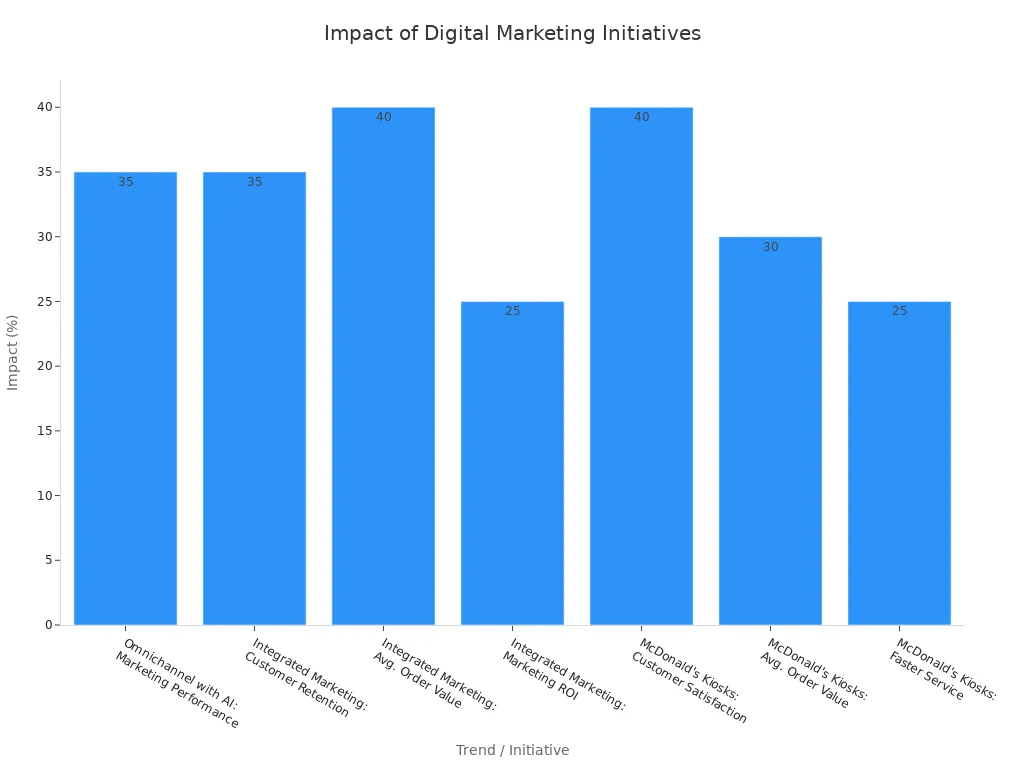
You must create a seamless customer journey for today’s shoppers. An integrated omnichannel approach delivers powerful results. It can increase customer retention by 35% and boost average order value by 40%. A cohesive journey makes shopping convenient and keeps customers loyal.
Buy Online, Pick-up In-Store (BOPIS)
You can offer BOPIS to bridge your digital and physical stores. This popular omnichannel retail marketing tactic allows customers to browse and buy online, then conveniently collect their items in person.
Consistent Cross-Channel Branding
You need to maintain brand uniformity across all touchpoints. A consistent look, feel, and voice ensures your brand is recognizable. This consistency strengthens your digital customer journey and builds trust with omnishoppers. Your retail marketing depends on this unified experience.
How to Build a Winning Retail Marketing Strategy
A powerful retail marketing strategy is your roadmap to connecting with customers and driving sales. You build it by following a structured process that starts with a deep understanding of your audience and ends with continuous optimization. This methodical approach ensures your efforts are focused, measurable, and aligned with your core business objectives.
Step 1: Define Your Target Audience
Before you can sell anything, you need to know who you are selling to. A deep understanding of your target audience is the foundation of any successful marketing strategy. This customer-oriented approach ensures your products, messaging, and channels resonate with the people most likely to buy from you.
Develop Customer Personas
You can create detailed customer personas to bring your target audience to life. These are fictional characters crafted from market research and data analytics that represent your ideal customers. A persona encapsulates preferences, shopping behaviors, values, and aspirations, making it easier to tailor your efforts.
For example, a fashion brand might develop a persona for a “Trendsetter.” This individual is not just a follower of fashion; they are an architect of style.
- Identity: For them, fashion is a form of communication that conveys their unique perspective and values.
- Influence: Their interests often extend beyond apparel to technology, art, and music.
- Key Trait: They are early adopters, fearless in their choices, and have an innate ability to spot what is next, making them a touchstone for others.
By creating such personas, you can visualize your customer, understand their motivations, and craft a marketing strategy that speaks directly to them.
Research Customer Needs and Behaviors
To build accurate personas, you must conduct thorough research. You can use a mix of methods to gather insights into customer needs and behaviors.
- Primary Research: This involves collecting original data directly from your audience. You can use surveys to assess customer satisfaction, one-on-one interviews to map the customer journey, or focus groups to gauge emotional responses to new concepts. Observational research, where you watch customers interact with products in a natural setting, can reveal unconscious behaviors that people might not articulate.
- Secondary Research: You can leverage existing data from industry reports, government statistics, or academic studies. This method is often faster and more cost-effective, ideal for establishing a baseline market understanding or identifying broad trends.
- Competitive Analysis: You should examine your competitors to see who they are targeting. Analyzing their websites, press releases, and customer reviews can reveal opportunities in the market. This helps you understand how competitors compare in brand awareness and pricing, allowing you to identify underserved demographic segments.
- Analytics: You can use your own data to understand current and potential customers. Examining website analytics, email click rates, and social media engagement helps you identify individuals who are interested but have not yet purchased. This allows you to segment audiences for targeted retail marketing campaigns.
Step 2: Set SMART Marketing Goals
Once you know your audience, you need to define what you want to achieve. Setting clear, measurable goals gives your retail marketing strategies direction and purpose. The SMART framework is an excellent tool for this. Your goals should be Specific, Measurable, Achievable, Relevant, and Time-bound.
Align Goals with Business Objectives
Your marketing goals must support your broader business objectives. You should first define your top-level business goals, such as increasing overall revenue or expanding market share. Then, you can translate those into specific marketing objectives.
For instance, if your business goal is to increase revenue by 15%, your marketing objectives might include generating a specific number of qualified leads or increasing website traffic. This alignment ensures your marketing team understands the bigger picture and works toward shared outcomes. You can use a table to map different marketing tactics to the goals they support.
| Marketing Tactic | Supported Business Goals |
|---|---|
| Content Marketing | Brand awareness, lead generation |
| Email Marketing | Customer retention, lead nurturing |
| Social Media Marketing | Community engagement, driving traffic |
| Search Engine Marketing (SEM) | Website traffic, direct conversions |
Establish Clear Benchmarks
SMART goals come with built-in benchmarks that make it easy to track progress. Each goal should have clear metrics and a deadline. This creates accountability and helps you determine whether your strategies are working.
Here are a few examples of SMART goals for a retail business:
- Improve customer retention by 15% within six months. You can achieve this by implementing a loyalty program and using personalization in your email campaigns. You will measure success by tracking repeat purchase rates.
- Increase monthly revenue by 20% by the end of the next fiscal quarter. You can accomplish this by improving your upselling strategies through targeted email campaigns. You will measure progress by tracking the number of upsells per month.
- Improve your online rating from 4.2 to 4.5 stars within one month. You can do this by sending an automated email to satisfied customers asking for a review. You will measure success by counting new 5-star reviews.
Step 3: Select Your Marketing Channels
With your audience defined and goals set, you must decide where to deliver your message. Choosing the right marketing channels is crucial for reaching your customers effectively and making the most of your budget. Your retail marketing strategy should focus on the platforms where your audience is most active.
Identify Where Your Audience Is Active
Different demographics prefer different channels. You need to meet your customers where they are. For example, younger, more affluent city-dwellers are highly active on Instagram, making it a prime channel for fashion, beauty, and home decor brands. In contrast, email marketing is highly effective for reaching millennials, who are often persuaded by promotional offers delivered to their inbox.
Performance marketing channels offer precise targeting to help you connect with specific audiences.
- Social Media Advertising: You can use interest-based targeting and lookalike audiences to reach users with specific hobbies or behaviors.
- Search Engine Marketing (SEM): You can use keyword and location targeting to show ads to users actively searching for products like yours.
- Email Marketing: This channel allows for deep personalization, enabling you to send targeted campaigns based on past purchase behavior, which is key to a successful customer journey.
Allocate Your Budget Effectively
Once you have identified your channels, you need to allocate your budget. It is better to invest properly in a few high-impact channels than to spread your resources too thinly across many.
A popular framework is the 70/20/10 rule.
- 70% of your budget goes to core, proven strategies that deliver reliable results (e.g., email marketing, SEO).
- 20% is allocated to emerging tactics with some track record (e.g., influencer marketing).
- 10% is reserved for new, high-risk experiments (e.g., a new social media platform).
This approach balances steady growth with innovation. You can also use an econometric model to simulate different budget scenarios, helping you shift funds from saturated channels to those with higher potential ROI. This ensures your retail marketing plan is both efficient and adaptable, optimizing every step of the customer journey.
Step 4: Craft Your Messaging and Offers
Your message is the heart of your retail marketing. It is how you communicate your value and persuade customers to choose you. A strong message, combined with timely offers, creates a powerful incentive for shoppers to complete their customer journey.
Define Your Unique Value Proposition (UVP)
Your Unique Value Proposition (UVP) is a clear statement that explains the benefit you offer, how you solve a customer’s problem, and what distinguishes you from the competition. It is the core of your marketing strategy and should be front and center in your communications. You can build a compelling UVP by following a structured approach.
- Start with a Clear and Concise Headline. Your headline must immediately grab attention and convey your main benefit. It should directly address a key customer need. For example, a headline like “Accounting software that makes billing painless” instantly communicates a solution to a common frustration.
- Add a Supporting Subheadline. You can use a subheadline to expand on your promise. This short explanation details what your product does, who it is for, and how it delivers value. A great example is, “Millions of businesses of all sizes use Stripe to accept payments, send payouts, and manage their businesses online.”
- Highlight Key Benefits, Not Just Features. You should focus on how your product improves a customer’s life. Instead of listing technical specs, explain the outcomes. For instance, “Store and share files effortlessly. Access your content anywhere” clearly communicates convenience and accessibility.
- Use Visuals to Reinforce Your Message. High-quality images and videos make your UVP more impactful. Visuals are processed much faster than text, helping you communicate your value instantly.
- Address Customer Pain Points Directly. You need to understand the core problem you solve for your target audience. Frame your product as the ideal solution to their biggest frustrations. This customer-centric approach makes your UVP highly relevant and persuasive.
Create a Promotional Calendar
A promotional calendar is an essential tool for organizing your retail marketing strategies. It helps you plan campaigns around key holidays, seasons, and events, ensuring your offers are timely and relevant. A well-structured calendar keeps your team aligned and your messaging consistent.
You can build your calendar around major retail moments throughout the year.
- Mother’s Day & Father’s Day: These are major gifting events. You can use content marketing and personalization to connect with shoppers. For example, a campaign sharing heartfelt “Mom Stories” or one offering custom wallets made from old baseball gloves for Father’s Day creates an emotional connection.
- Summer Season: This is the perfect time to push seasonal items like beachwear and outdoor gear. You should plan your paid marketing campaigns to launch just before the season begins and then shift your focus to retention strategies.
- Back to School: This season offers opportunities across many categories, from clothing to home furnishings. You can create an engaging on-site experience and use discount codes around Labor Day to drive sales.
- Q4 (Halloween to Christmas): This is the biggest sales period of the year. You should plan a variety of promotions, such as sitewide discounts, Buy One, Get One (BOGO) deals, and tiered savings. Amid the sales-heavy messaging, you can also share feel-good stories to build brand affinity.
Step 5: Execute, Measure, and Optimize
Launching your retail marketing strategy is just the beginning. The final and most critical step is to execute your campaigns, measure their performance, and use the data to make improvements. This continuous cycle of execution and optimization is what separates successful strategies from unsuccessful ones.
Launch and Manage Campaigns
With your plan in place, it is time to go live. You will launch your campaigns across the channels you selected, from email and social media to in-store displays. Effective management involves monitoring your campaigns in real time to ensure they are running smoothly. You need to watch your budget, respond to customer interactions, and make sure all technical elements are functioning correctly. This active management helps you catch any issues early and keep your campaigns on track.
Track Performance and Adjust Tactics
You cannot improve what you do not measure. Tracking key performance indicators (KPIs) is essential for understanding what works and what does not. You should use analytics tools to monitor metrics like website traffic, conversion rates, and return on ad spend (ROAS). This data provides invaluable insights into the effectiveness of your retail marketing strategies.
Data in Action: Kellogg’s provides a powerful example of data-driven optimization. The company used a suite of analytics tools to manage its advertising across different retailers. By analyzing search terms, using AI for optimization, and running experiments, Kellogg’s achieved remarkable results. The brand saw a 68% increase in revenue on Amazon Ads and a 25% increase in ROI on another major retail site.
This case shows how you can use performance data to refine your tactics. If a particular ad is underperforming, you can adjust the creative or targeting. If an email campaign has a low open rate, you can test different subject lines. This iterative process of tracking, analyzing, and adjusting ensures your marketing strategy evolves and improves over time, maximizing your return on investment and enhancing the overall customer journey. By embracing personalization and data, you can turn insights into action and build a truly dynamic retail marketing engine.
Essential KPIs to Measure Retail Success
To gauge the effectiveness of your retail marketing efforts, you must track Key Performance Indicators (KPIs). These metrics provide clear, data-backed insights into your performance, helping you make informed decisions to drive growth.
Key Sales Metrics
Sales metrics are the most direct measure of your commercial success. You should monitor them closely to understand your financial health.
Total Revenue
This is the total income you generate from all sales over a specific period. It is the ultimate indicator of your business’s top-line performance.
Average Transaction Value (ATV)
ATV measures the average amount a customer spends in a single transaction. You can increase this by training staff on upselling and cross-selling techniques.
Sales Per Square Foot
This metric reveals how efficiently you use your physical retail space. You can boost this KPI by optimizing your store layout, refining your product assortment to feature best-sellers, and creating an engaging in-store environment.
Key Customer Metrics
These KPIs help you understand your relationship with your customers. They provide insight into loyalty and shopping behavior.
Customer Lifetime Value (CLV)
CLV predicts the total revenue you can expect from a single customer throughout their relationship with your brand. You can calculate it with a simple formula:
CLV = (Average Purchase Value × Purchase Frequency) × Average Customer Lifespan
This metric helps you identify your most valuable customers so you can tailor your marketing strategies to them.
Customer Retention Rate
This KPI measures the percentage of customers who return to make repeat purchases. You can improve retention by implementing loyalty programs, offering personalized communications, and providing exceptional customer service.
Foot Traffic and Dwell Time
Foot traffic counts the number of people entering your physical store. Dwell time measures how long they stay. Both indicate your store’s drawing power and the engagement level of your in-store experience.
Key Digital Metrics
Your digital marketing initiatives require their own set of KPIs. These metrics track the performance of your online presence and campaigns.
Website Traffic and Source
This metric shows you how many visitors come to your site and where they come from (e.g., search engines, social media). It helps you understand which channels are most effective.
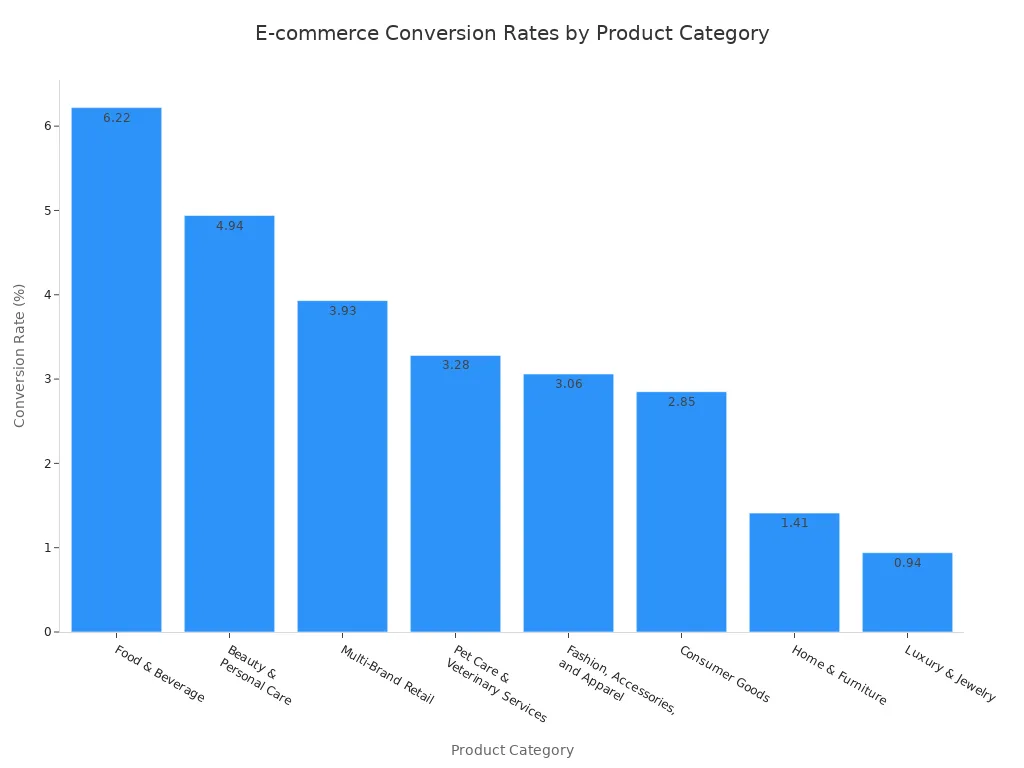
E-commerce Conversion Rate
This is the percentage of website visitors who complete a purchase. Conversion rates vary by industry. For example, categories like Food & Beverage often see higher rates due to frequent repurchases.
Click-Through Rate (CTR)
CTR measures the percentage of people who click on your ad or link after seeing it. It is a key indicator of how well your messaging resonates with your target audience.
Return on Ad Spend (ROAS)
ROAS calculates the revenue you earn for every dollar you spend on advertising. This metric is crucial for evaluating the profitability of your paid campaigns and optimizing your digital customer journey.
Inspiring Examples of Retail Marketing

Studying successful brands helps you understand how to apply marketing principles in the real world. You can learn from these leaders to refine your own strategies and create a powerful connection with your customers.
Sephora’s Beauty Insider Program
Mastering Loyalty and Personalization
Sephora’s Beauty Insider program is a masterclass in personalization that drives customer loyalty. You can see how the brand transforms transactional data into a highly tailored customer journey. The program offers tiered rewards, birthday gifts, and exclusive access to events, making members feel valued. This focus on personalization has yielded incredible results.
| Statistic | Value |
|---|---|
| Number of Members (by 2023) | 34 million |
| Percentage of Transactions Driven by Members | 80% |
| Expected Business Value of Kohl’s Collaboration (by 2025) | $2 billion |
By analyzing purchase history, Sephora provides relevant product recommendations and content. This deep level of personalization encourages repeat business and builds a community around the brand. It is a prime example of personalization that drives customer loyalty effectively.
Target’s Omnichannel Dominance
Integrating the App, Drive Up, and In-Store Experience
Target excels at omnichannel retail marketing by creating a seamless experience for modern omnishoppers. You can observe how the company blends its digital and physical assets to offer unmatched convenience. The Target app, Drive Up service, and in-store pickup options work together flawlessly. This integration is critical, as over 95% of all online orders are fulfilled through Target’s physical store network.
This strategy directly addresses the rise of omnishoppers, who expect a fluid journey between online and offline channels. Research shows that companies with strong omnichannel strategies achieve a 91% higher year-over-year customer retention rate.
Target’s approach proves that a cohesive experience pays off. Customers who shop across multiple channels spend more and visit more often, demonstrating the power of a well-executed strategy.
Trader Joe’s Unique In-Store Culture
Building a Brand Through Product and Atmosphere
Trader Joe’s shows you how to build a powerful brand without traditional advertising. The company focuses on creating a unique retail buying experience through its product selection and store atmosphere. You will not find sales or loyalty cards; instead, trust is built through a generous return policy and transparent pricing.
Key elements of its success include:
- Authentic Experience: Stores maintain a consistent feel with Hawaiian shirts and hand-drawn signs, yet they are localized with city-specific art and products.
- Customer Trust: You can return any item for any reason, no questions asked. This builds unwavering confidence.
- Inspired Employees: Staff are knowledgeable and genuinely engage with customers, offering recommendations and creating a welcoming environment.
This focus on culture and experience turns a simple grocery trip into an enjoyable adventure, fostering deep brand loyalty.
Your retail marketing strategy integrates the complete marketing mix to connect with customers. You build a successful marketing strategy by understanding your audience and setting clear goals. You must consistently measure performance to refine your marketing strategy for sustainable growth. This adaptive approach to retail marketing helps you build a powerful engine to increase sales and thrive in a competitive landscape. By testing and learning, you can turn insights into powerful results.
FAQ
What is the difference between retail marketing and general marketing?
Retail marketing focuses on selling products directly to consumers. You use it to drive traffic to a specific store, physical or online. General marketing can have broader goals, such as building brand awareness for a B2B audience or promoting a service without a direct retail endpoint.
How can a small business compete with large retailers?
You can compete by creating a unique niche and offering superior customer experiences. Focus on building a strong community around your brand. Personalized service and a curated product selection are powerful differentiators that large chains often cannot replicate. This strategy helps you build a loyal customer base.
What is the most important part of the retail marketing mix?
No single “P” is most important; they all work together. Your product must meet a need, your price must reflect value, your place must be accessible, and your promotion must reach your audience. A successful strategy requires you to balance all elements of the marketing mix effectively.
How much should I budget for retail marketing?
Your marketing budget depends on your industry, business stage, and goals. A common guideline suggests allocating 5-10% of your total revenue to marketing. New businesses might need to invest more initially to build awareness. You should track your return on investment to adjust spending.
What is omnichannel retail marketing?
Omnichannel marketing creates a seamless, integrated shopping experience across all your channels. You ensure customers can move between your website, mobile app, and physical store without friction. This unified approach meets modern shopper expectations and boosts loyalty by providing ultimate convenience.
How do I measure the success of my retail marketing?
You measure success by tracking Key Performance Indicators (KPIs). Key metrics include customer retention rate, average transaction value (ATV), and e-commerce conversion rate. These data points show you what works, helping you refine your strategy and optimize your budget for better results.
What is the future of retail marketing?
The future of retail marketing lies in personalization and technology. You will see more artificial intelligence (AI) driving recommendations and augmented reality (AR) enhancing the shopping experience. Building authentic customer relationships through data-driven insights will become even more critical for success in a competitive market.