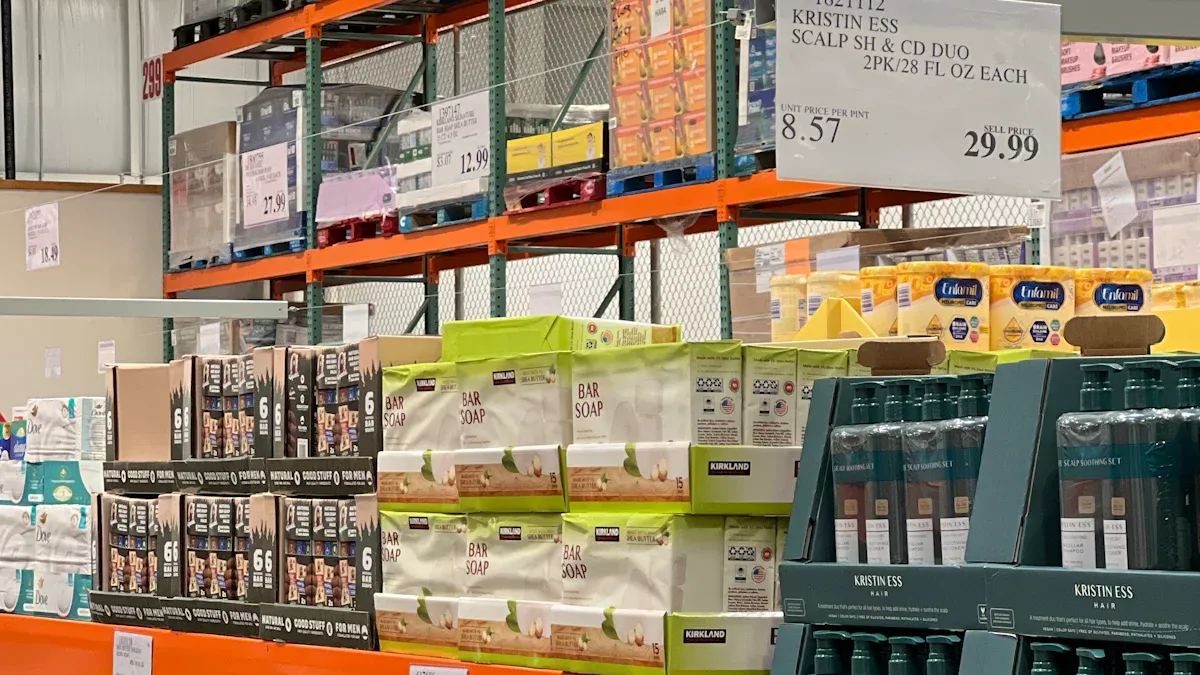
In 2025, the financial argument for electronic shelf labels has become undeniable. Your investment pays for itself through drastic labor reduction, the end of costly pricing errors, and new revenue from dynamic pricing. This transition to digital labels represents a fundamental operational shift for Esl Retail. The market’s rapid expansion, with 2025 size estimates exceeding $1.3 billion, reflects the widespread adoption of technologies like the ESL Gateway AP and the individual ESL Price Tag.
Note: The global ESL market is projected to grow significantly, with various analysts forecasting a compound annual growth rate (CAGR) between 12% and 20% from 2025 onward.
The Upfront Bill: What Electronic Shelf Labels Really Cost in 2025
Before you can reap the long-term rewards, you must address the initial investment. Understanding the upfront bill is the first step in building a realistic financial model for your transition. The total cost is not just one number; it is a combination of hardware, software, and setup expenses. Let’s break down exactly what you should budget for.
Hardware and Infrastructure Investment
The most significant portion of your initial outlay will be the hardware itself. This primarily includes the individual electronic shelf labels for your products and the network infrastructure needed to run them. The price per label varies widely based on size, display technology, and features.
In 2025, you can expect the cost per label to fall within a general range.
- Typical Price Range: $5 to over $20 per unit.
- Minew Supermarket 2.9” ble5.0: $5 – $13
- Newton M3 2.2” shelf tag: $8 – $10
- EE-153R electronic shelf label: $10 – $15
The key driver of this price difference is the display technology. You will primarily choose between E-ink (or e-paper) and LCD screens. E-ink labels are known for their low power consumption and paper-like appearance, making them a popular choice for standard pricing. LCDs offer vibrant, full-color displays capable of playing video, but they come at a higher cost and consume more energy.
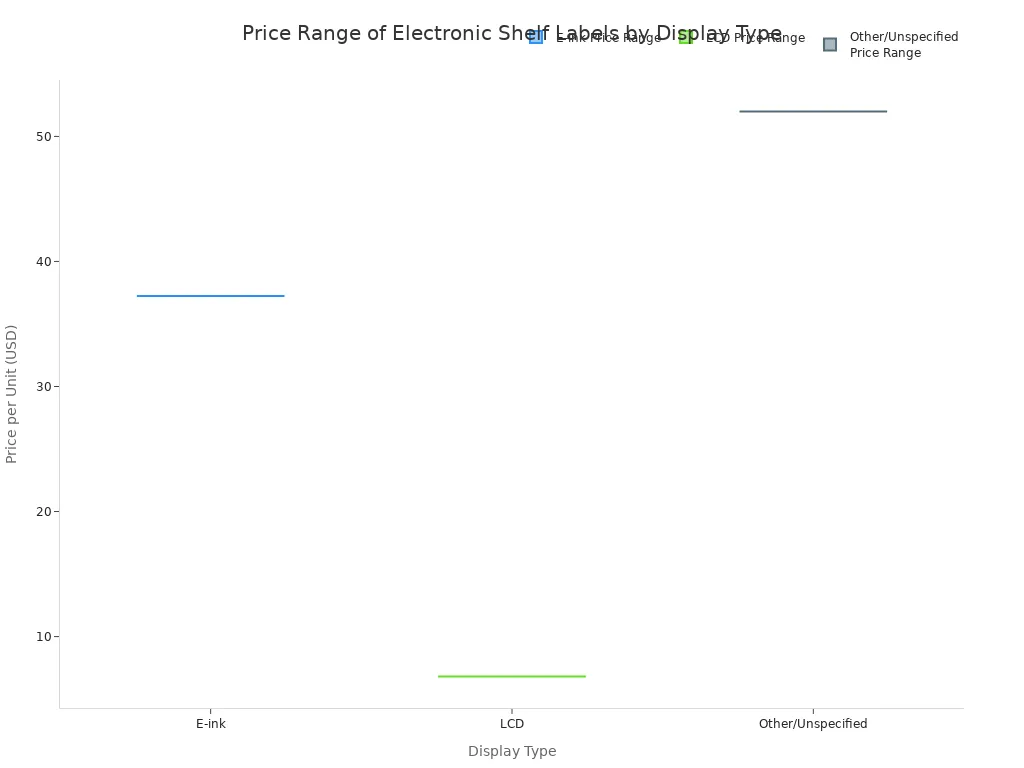
The chart below illustrates the broad price distribution, showing that while E-ink occupies the lower and mid-range, LCD options can extend to much higher price points, especially for large or feature-rich displays.
To help you budget, consider how different features impact the unit cost of these digital price labels.
| Product Description | Price Range (per unit) | Display Type | Size (inches) | Key Features/Notes |
|---|---|---|---|---|
| E Ink Display Wifi BLE Electronic Shelf Label | $4 – $4.50 | E-ink | 2.13 | Supermarket Digital Price Tag System |
| E-paper Labels | $6.80 – $8.30 | E-paper (e-ink) | 2.9 | For Retail Store |
| E-paper display electronic shelf label | $10.68 – $14.50 | E-paper (B&W) | 4.2 | N/A |
| Smart Retail E Ink Display Electronic Shelf Label | $21 – $25 | E-ink | 4.2 | Easy Reading High |
| E-ink Electronic Shelf Label | $37.23 – $44.16 | E-ink (Black, White, Red) | 7.5 | For Groceries, Markets, Supermarket |
| Full Color Screen Electronics Shelf Label | $52 – $58 | Full Color Screen | N/A | Digital Price Tags Demo |
Don’t Forget the Backbone! 📡 Your labels are useless without the network that controls them. You must also budget for wireless access points or gateways. These devices communicate with your central server and transmit data to thousands of labels simultaneously. The number you need depends on your store’s size and layout.
Software, Licensing, and Installation Fees
The brain behind your new system is the software. It manages your pricing data, designs label templates, and monitors the health of your entire network of electronic shelf labels. This cost component is typically structured in one of two ways: a perpetual license or a subscription. Your choice between these models will significantly impact your cash flow and long-term budget.
Understanding the difference is crucial for your financial planning.
| Factor | Perpetual License (plus Maintenance) | Subscription License (Term-Based) |
|---|---|---|
| Ownership | You own a permanent right to use a specific software version. | You only have the right to use the software during the active subscription term. |
| Payment Model | A large, one-time capital expenditure (CapEx) purchase. | Ongoing operating expenditure (OpEx) payments (monthly or annually). |
| Budget Impact | High upfront cost. Potentially lower total cost of ownership over many years. | Spreads the cost over time. Total cost can exceed a perpetual license if used long-term. |
| Upgrades & Support | Included only if you pay for an annual maintenance contract. | Continuously included as long as your subscription is active. |
| Flexibility | Less flexible. You must purchase new licenses to scale up. | More flexible. You can often adjust user counts or capacity at renewal. |
Finally, unless you have a dedicated IT team with experience in this area, you will need to budget for professional installation. This fee covers the physical mounting of labels and access points, network configuration, and system integration. Getting a professional quote for this service is essential to avoid surprise costs down the line.
The Hidden Ongoing Costs You Must Factor In
Your initial investment is only the beginning of the financial story. To accurately gauge the long-term impact on your wallet, you must look beyond the purchase price and analyze the Total Cost of Ownership (TCO). These recurring expenses are critical for a realistic budget.
Total Cost of Ownership Explained
Total Cost of Ownership provides a complete picture of your investment over its entire lifecycle. It forces you to account for every dollar spent, not just the upfront bill. A comprehensive TCO analysis for your ESL system includes several key cost categories.
- Acquisition Costs: This is the initial expense you pay for all hardware, software licenses, and installation services.
- Operational Costs: These are the daily expenses required to run the system, including energy consumption and the staff time needed to manage it.
- Maintenance Costs: This category covers the budget for regular upkeep, software updates, and necessary hardware repairs or replacements.
- Downtime Costs: You must consider the potential revenue lost if your system goes offline or experiences performance issues.
- End-of-Life Costs: This is the final expense related to decommissioning, recycling, or safely disposing of the hardware when you eventually upgrade.
Battery Life and Maintenance Contracts
Two of the most significant ongoing costs you will face are battery replacements and software maintenance. Modern ESL batteries have a long lifespan, often lasting between five and ten years, especially with energy-efficient e-paper displays and infrequent price updates. However, you should plan for a shorter cycle of 3 to 6 years if your strategy involves frequent daily updates or if labels are placed in harsh environments like freezers.
Even more critical is the cost of software support. Your vendor may offer a steep discount on the initial license, but the ongoing maintenance contract can quickly erode those savings.
Pro Tip: Scrutinize Your Support Agreement 📝 A vendor’s annual support fee can be a fixed percentage, sometimes as high as 22%, of the software’s original list price, not your discounted purchase price. Over a 5-year period, these fees can easily surpass what you saved upfront. You must negotiate these terms carefully and include the full, long-term support cost in your TCO calculation.
The Payback Part 1: Hard Savings That Go Straight to Your Bottom Line

The initial investment in an ESL system can seem daunting. However, the payback begins almost immediately through direct, measurable savings. These are not abstract benefits; they are hard dollars that flow directly back to your profit margin. You will see the most significant impact in two critical areas: your labor expenses and your losses from pricing errors.
Slashing Your Labor Budget
You currently spend a significant portion of your labor budget on a task that generates zero revenue: changing paper price tags. Your employees walk the aisles, find the correct product, remove the old tag, and insert the new one. This process is slow, tedious, and prone to error. Electronic shelf labels completely automate this function, freeing up your team for tasks that actually improve the customer experience and drive sales.
Consider the typical time commitment for manual price updates in a retail environment.
- Traditional stores require employees to spend between 5 and 10 hours per week replacing paper tags.
- A team without automation tools can easily spend over 10 hours weekly just adjusting prices for promotions and regular updates.
With an ESL system, you can update over 10,000 labels in seconds from a central computer. The time savings are immediate and substantial. You can translate these saved hours directly into payroll dollars.
A Quick Calculation: Imagine your store spends a conservative 8 hours per week on price changes. You pay your staff an average of $18 per hour.
8 hours/week * $18/hour = $144 per week
$144/week * 52 weeks = $7,488 per yearYou save nearly $7,500 annually for just one small store, simply by eliminating this single task. You can now reallocate those 416 hours of labor to customer service, online order fulfillment, or better merchandising.
Eliminating Costly Pricing Errors
Pricing errors are a silent killer of profit and customer trust. A price on the shelf that does not match the price at the register creates a negative customer experience and can lead to direct financial loss. You may be forced to honor the lower shelf price, losing margin on that sale. Worse, repeated errors can lead to fines for inaccurate grocery pricing and damage your store’s reputation.
Retailers report that implementing an ESL system eliminates between 5% and 10% of all pricing inaccuracies. The system achieves this by creating a single source of truth. When you update a price in your central system, the change is pushed simultaneously to the POS register and the digital tag on the shelf. This synchronization makes discrepancies virtually impossible.
The financial impact of eliminating these errors is significant. Even a small error rate adds up to substantial losses over a year. The table below shows how recovering this lost revenue improves your bottom line.
| Metric | Before ESLs (with 7% error rate) | After ESLs (with 0% error rate) |
|---|---|---|
| Scenario | A customer finds lower grocery prices on the shelf than at checkout. | The shelf price and checkout price are always identical. |
| Store Action | You honor the lower price to maintain customer satisfaction. | The correct price is charged, protecting your margin. |
| Financial Impact | You lose margin on every incorrectly priced item sold. | You capture the full, intended margin on every sale. |
| Annual Loss Example | $5,000,000 annual sales * 0.5% average error impact = $25,000 lost revenue | $0 lost revenue from pricing errors |
By ensuring 100% price accuracy, you not only protect your profits but also build shopper confidence. Customers learn they can trust your prices, which is an invaluable asset in a competitive market.
The Payback Part 2: Unlocking New Revenue and Efficiency
Beyond direct cost savings, your ESL investment unlocks powerful new ways to increase revenue and streamline operations. You can move from a reactive retail model to a proactive one. This shift is driven by data and automation, turning your shelves into a strategic asset.
Boosting Sales with Dynamic Pricing
You can now adjust prices instantly in response to demand, competition, or inventory levels. This is the power of dynamic pricing. It allows you to maximize margin on high-demand items or clear slow-moving stock without waiting for a weekly flyer. A well-executed dynamic pricing strategy turns your pricing from a static number into a responsive sales tool. Major retailers are already proving its effectiveness.
| Retailer | Dynamic Pricing Strategy with ESLs | Achieved Results |
|---|---|---|
| Walmart | Tested real-time grocery prices, updating them frequently. | Cut price-checking time by 70%, freeing up staff. |
| Hema Fresh | Used ESLs for instant markdowns on perishable goods. | Reduced food waste by 25% and increased sales by 15%. |
| Kroger | Synced digital tags directly with inventory levels. | Enabled automated, real-time price adjustments. |
Improving Inventory and Restocking
Your digital price labels become the eyes of your inventory system. They do more than display a price; they communicate stock status. Automated shelf-monitoring systems track product levels with near-perfect accuracy. This technology alerts your staff exactly when replenishment is needed, eliminating manual shelf checks and human error. You can free your team to focus on more valuable duties.
Retailers lose millions each year from out-of-stock situations. By using automated stock tracking, the retailer Monoprix increased product availability by 2–3 points and improved turnover by 1.2% per store.
Modern systems use machine learning to forecast demand and prevent stockouts before they happen. For example, Multicare, a health system, used this technology to reduce reordering time by 50%. This ensures your shelves are always full, maximizing sales opportunities and improving employee satisfaction.
Debunking the Myths: Surge Pricing and Customer Trust
A common fear surrounding ESLs is the idea of “surge pricing”—the worry that you might charge customers more during busy hours, similar to a ride-sharing app. This myth creates significant hesitation for many retailers. However, the reality of how stores use this technology is far more strategic and customer-focused.
What the 2025 Data Really Shows
The data from 2025 shows that retailers are not using ESLs to exploit peak shopping times. Instead, you can leverage dynamic pricing to compete more effectively and manage inventory. You can instantly match a competitor’s sale price or automate markdowns on perishable goods nearing their expiration date. This strategy helps you clear stock, reduce waste, and offer targeted deals that benefit the shopper. The goal is not to alienate customers with unpredictable price hikes but to create a more responsive and competitive pricing environment.
Building Shopper Confidence with Accuracy
The greatest impact of ESLs on customer trust comes from their flawless accuracy. When the price on the shelf always matches the price at checkout, you eliminate a major source of shopper frustration. This consistency builds a powerful foundation of trust and loyalty.
Accurate pricing is not just a convenience; it is a promise to your customers. Data shows 60% of shoppers are more likely to trust a store that maintains up-to-date shelf pricing.
By implementing ESLs, you directly improve the customer experience and boost satisfaction.
- You provide greater transparency, giving customers access to correct product information and promotions.
- You ensure consistent grocery prices, allowing shoppers to make informed decisions without confusion.
- You eliminate human error, guaranteeing customers are charged correctly every time.
This reliability fosters a positive shopping environment, encouraging customers to return. Retailers using ESLs have seen customer satisfaction scores increase by as much as 15% simply by delivering on this basic promise of price accuracy.
Calculating Your ROI: Are ESLs Worth It for Your Store?
You have seen the costs and the benefits. Now you must connect them to calculate your potential Return on Investment (ROI). This calculation will determine if electronic shelf labels are a financially sound decision for your specific business. The numbers often tell a compelling story.
A Sample ROI for a Mid-Sized Retailer
You can expect to recover your initial investment faster than you might think. Most retailers see a full ROI within 12 to 36 months. A Forrester study confirmed this, finding that a representative retail chain paid for its system in just 18 months. The payback comes from shifting your expenses away from manual labor and toward a more efficient, automated system.
The table below breaks down the financial transformation for a sample mid-sized store. It contrasts the high recurring costs of manual labeling with the long-term benefits of an ESL system.
| Category | Manual Labeling (Sample Store) | ESL System (Investment & Benefits) |
|---|---|---|
| Operational Costs | $6,000/month in labor for price changes | Lower long-term operational costs |
| Efficiency Gains | 400 hours/month for price changes | 60–90% reduction in price update time |
| ROI | N/A | Full return on investment in < 18 months |
| Other Benefits | Hidden costs and labor burden | Real-time price syncing; improved customer experience |
When to Reconsider the Investment
This technology offers powerful advantages, but you should still evaluate if the timing is right for your store. You should reconsider the investment if you cannot project significant improvements across key financial metrics. Before committing, analyze your potential gains in these specific areas.
- Direct Cost Reduction: Can you achieve substantial labor savings and eliminate paper and printing costs?
- Revenue Enhancement: Do you have a clear strategy to use dynamic pricing? Can you quantify potential gains from eliminating pricing errors and stockouts?
- Operational Efficiency: Will faster price changes and better promotional execution directly impact your bottom line?
If your analysis shows minimal savings in these categories, perhaps due to very low labor costs or infrequent price changes, you may want to delay the investment. The goal is a clear and predictable return.
The verdict for 2025 is clear. Increasing retail automation and the need for dynamic pricing have made electronic shelf labels a strategic necessity. You can no longer view them as a luxury. They are essential for improving operational efficiency and staying competitive.
The shocking truth is not the initial cost. It is the significant, compounding savings and revenue you lose every day without them.
Your next step is to move from general numbers to your specific reality. Calculate your store’s potential ROI to see exactly how much you stand to gain.
FAQ
What is the primary financial benefit of using ESLs?
You will see the biggest financial impact from three core areas. You drastically reduce labor costs spent on manual price changes. You eliminate revenue loss from pricing errors. Finally, you unlock new sales opportunities through dynamic pricing strategies that respond instantly to market conditions.
How long do the labels and their batteries last?
You can expect the hardware to be a long-term investment. Most modern e-paper labels have a battery life of 5 to 10 years, depending on how frequently you update prices. The physical labels themselves are durable and designed to last for many years in a retail environment.
Can customers see the price change as it happens?
No, the update process is seamless and nearly instantaneous.
- You initiate a price change in your central software.
- The system sends the new data to the specific label.
- The e-paper display refreshes to the new price in seconds.
The change is too fast for a customer to notice.
Are ESL systems difficult to install and manage?
You will likely need professional installation to ensure the network infrastructure is configured correctly. Once set up, however, the management software is designed for ease of use. Your team can control thousands of labels from a single dashboard, making daily operations simple and efficient.