Solum electronic shelf labels represent a highly cost-effective investment for 2025, with a typical ROI achieved within 18-24 months. The financial benefits are clear. Drastic reductions in labor costs and the complete elimination of pricing error losses drive savings. An Esl Retail environment uses an ESL Gateway AP to update every ESL Price Tag instantly, cutting the total cost of operations. This system also unlocks new revenue streams, making electronic shelf labels a strategic choice.
Understanding the Total Cost of Solum Electronic Shelf Labels
A comprehensive financial analysis requires a clear view of the total cost of ownership. This extends beyond the price of the labels themselves. The total investment includes hardware, software, installation, and ongoing operational expenses. A thorough evaluation of these components reveals the complete financial picture.
Breaking Down the Upfront Investment
The initial investment in electronic shelf labels is a multi-faceted figure. It encompasses the hardware for the entire system and the professional services required for deployment. The primary cost of electronic shelf labels is the hardware itself. The price per unit varies based on size, display technology, and features.
- 1.5-inch to 2.5-inch labels: These smaller tags typically range from $5 to $15 per unit.
- 3-inch to 4.2-inch labels: Mid-sized options are generally priced between $15 and $30 per unit.
- 5-inch and larger labels: Large-format displays, especially with color and interactivity, can cost from $30 to over $100 per unit.
For a large-scale deployment of 10,000 tags, a retailer can expect a total hardware cost between $60,000 and $100,000. Beyond the labels, the upfront investment includes essential infrastructure like gateways and servers. Professional installation is also a critical component. A proper installation ensures the system functions correctly from day one. The installation process involves network setup and physical placement of the hardware. This careful installation guarantees optimal communication between the gateways and labels. Businesses should budget for this professional installation to avoid future performance issues. The final step of the installation involves system configuration and testing.
Analyzing Long-Term Operational Costs
Long-term expenses are a crucial part of the total cost calculation. These ongoing costs primarily involve software licensing and system maintenance. Solum provides its powerful management platform, Aims, through a Software-as-a-Service (SaaS) model. This means the technology is licensed, not sold outright.
BY USING THE TECHNOLOGY, YOU: (A) ACKNOWLEDGE THAT YOU HAVE READ AND UNDERSTAND THESE TERMS OF SERVICE; AND (B) ACCEPT THESE TERMS OF SERVICE AND AGREE THAT YOU ARE LEGALLY BOUND BY THEIR TERMS. IF YOU DO NOT AGREE TO THESE TERMS, DO NOT DOWNLOAD, INSTALL OR USE THE TECHNOLOGY AND DELETE IT FROM YOUR DEVICES.
This licensing model provides continuous access to the latest features and security updates. Retailers can choose from several tiers, including:
- Aims SaaS Starter Kit: A trial package for businesses to test the system.
- Aims SaaS for Retail Business: A comprehensive solution for managing thousands of tags and boosting store productivity.
- Aims SaaS Solution: An enterprise-level command system for managing multiple store locations.
Maintenance and support represent the final piece of the operational cost puzzle. Solum offers structured support plans to ensure system reliability. These plans provide 24/7 assistance for a predictable monthly fee.
| Plan Type | Cost per month/per 10 tags | 24/7 Support |
|---|---|---|
| Aims SaaS Standard | $4 | Yes |
| Aims SaaS Advanced | $6 + add-on | Yes |
| Aims Link Standard | Free (monthly license fee) | Yes |
Furthermore, Solum electronic shelf labels are engineered to minimize maintenance. The new light-powered rail-based ESL system eliminates the need for disposable batteries. This innovation drastically reduces the long-term cost and labor associated with battery replacements, a significant advantage for large-scale retail environments.
Calculating Direct ROI: Hard Savings in Your Store
The return on an electronic shelf label investment is not abstract. It appears as tangible, measurable savings on the store’s balance sheet. Retailers realize these hard savings primarily through two channels: a dramatic reduction in operational expenses and the complete removal of losses from pricing errors. These direct financial benefits form the foundation of a compelling business case.
Slashing Labor and Material Expenses
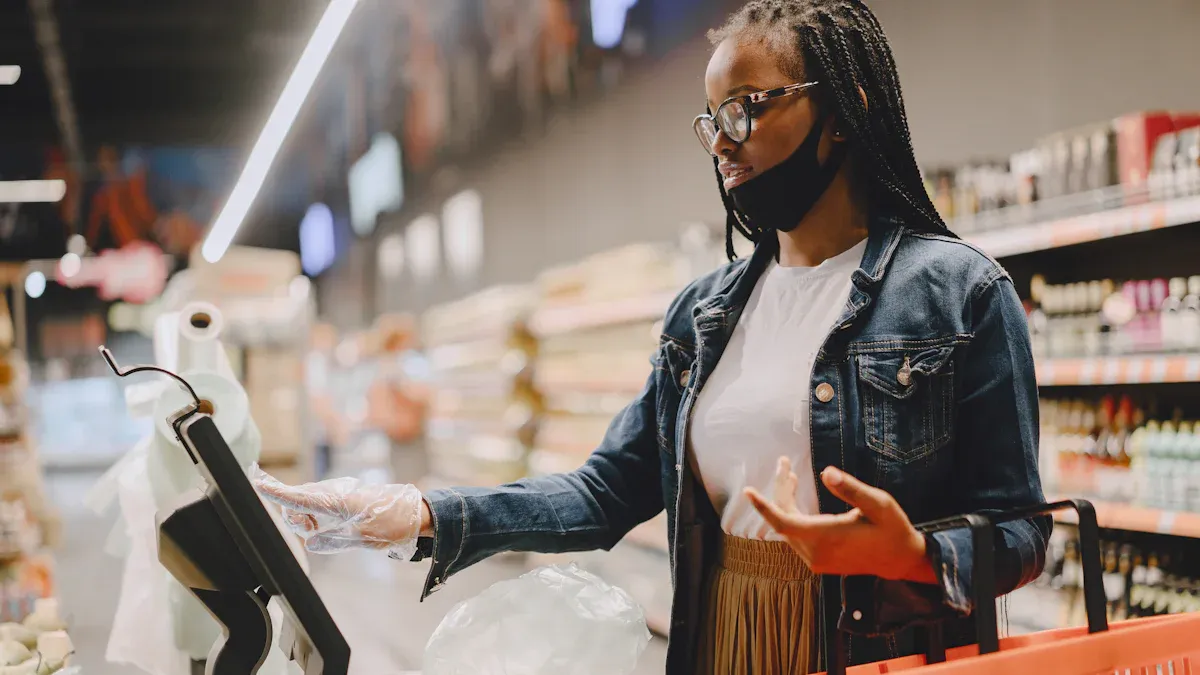
Traditional paper price tags create a significant and recurring labor cost. Employees spend countless hours printing, cutting, and physically replacing thousands of labels. This manual process is inefficient and pulls staff away from value-added activities like customer service and inventory management. The implementation of electronic shelf labels automates this entire workflow, generating immediate and substantial labor savings.
The time saved varies by store size and promotional frequency, but the impact is always significant. A mid-sized store can reclaim over 10 hours per week previously lost to manual labeling. Some grocers have reported saving as many as 50 labor hours weekly. Even a store with just 2,000 products and a modest update schedule can save over four hours each week. The benefits compound quickly. A retailer making 3,000 price changes weekly saves approximately 5,200 labor hours annually.
This reclaimed time becomes a powerful asset. The HOMEPLUS (TESCO KR) case study showed that store staff, freed from price tag management, could dedicate more time to customer interactions. This shift directly improved customer satisfaction. The financial advantages extend beyond labor. Retailers also eliminate recurring material costs, including:
- Paper and label stock
- Printer ink and toner
- Printer maintenance and replacement
These combined savings in labor and materials represent a major component of the ROI calculation.
Eliminating Costly Pricing Errors
Manual pricing is prone to human error. A misplaced decimal point or an outdated promotional tag can lead to significant financial losses and customer frustration. The cost of these mistakes includes not only direct revenue loss from undercharging but also the labor required to handle price checks and resolve customer disputes at checkout. Furthermore, regulatory bodies can impose steep fines for pricing discrepancies.
Solum electronic shelf labels eradicate these issues by ensuring flawless pricing accuracy. The system links every tag directly to the central pricing database. An update in the system reflects instantly and correctly on the shelf. This synchronization provides several key advantages:
- It guarantees consistency between the shelf price and the point-of-sale (POS) system.
- It prevents customer disputes over incorrect pricing.
- It eliminates the risk of costly fines for non-compliance with pricing regulations.
Beyond the immediate financial cost, pricing errors erode a retailer’s most valuable asset: customer trust. Inaccurate pricing creates friction and doubt. Transparent and reliable pricing, on the other hand, builds confidence and loyalty. When a business provides clear and accurate information, it fosters a positive shopping experience.
Companies that fail to provide accurate and complete pricing information foster mistrust and lose opportunities to build customer loyalty. Conversely, when customers perceive transparency in pricing, they ‘feel safe,’ which encourages them to ‘come back,’ ‘spend more,’ and ‘tell their friends.’
Ultimately, perfect pricing accuracy is not just about avoiding losses. It is a strategic investment in customer relationships that pays long-term dividends.
Indirect ROI: How Electronic Shelf Labels Boost Profitability

Beyond direct cost reductions, the true power of Solum electronic shelf labels lies in their ability to generate new revenue and create profound operational efficiencies. These indirect benefits contribute significantly to a strong long-term ROI by transforming how a store operates, competes, and serves its customers. The integration with POS systems ensures that every strategic decision is executed flawlessly on the shelf.
Unlocking Dynamic Pricing Strategies
Static pricing is a relic of the past. Modern retail demands agility. Electronic shelf labels give brick-and-mortar stores the same dynamic pricing capabilities that online giants use to dominate the market. Retailers can now implement real-time pricing adjustments based on demand, competitor prices, or inventory levels. This strategy unlocks significant revenue potential. For instance, one fashion retailer saw a 30% revenue lift after adopting an AI-driven dynamic pricing strategy.
This technology enables several powerful tactics:
- Competitive Response: Instantly match or beat a competitor’s promotional pricing.
- Promotional Agility: Launch flash sales or targeted markdowns on slow-moving items without manual effort.
- A/B Testing: Test different price points to find the optimal balance for sales and margin.
Automatic price updates remove delays and empower retailers to be proactive. This responsive pricing enhances the customer experience by offering fair, market-driven prices.
Enhancing In-Store Operational Efficiency
The benefits of ESLs extend deep into store operations, particularly for order fulfillment. As “click-and-collect” services grow, picking speed and accuracy become critical. Solum’s system streamlines this entire process.
Guided picking with ESLs simplifies the process, reducing the need for extensive training and store knowledge. This makes staffing easier and more affordable.
When an order is received, the system creates an optimal picking route for staff. The ESL tag for the required item then flashes, visually guiding the employee to the exact product location. This feature saves an average of 5-10 seconds per pick. For a store processing millions of picks annually, these seconds translate into thousands of saved labor hours. This boost in operational efficiencies improves real-time inventory management and reduces the overall cost of fulfillment. The seamless integration with POS systems ensures inventory and pricing data remain in perfect sync, boosting accuracy across all channels.
Why Solum is the Cost-Effective Choice for 2025
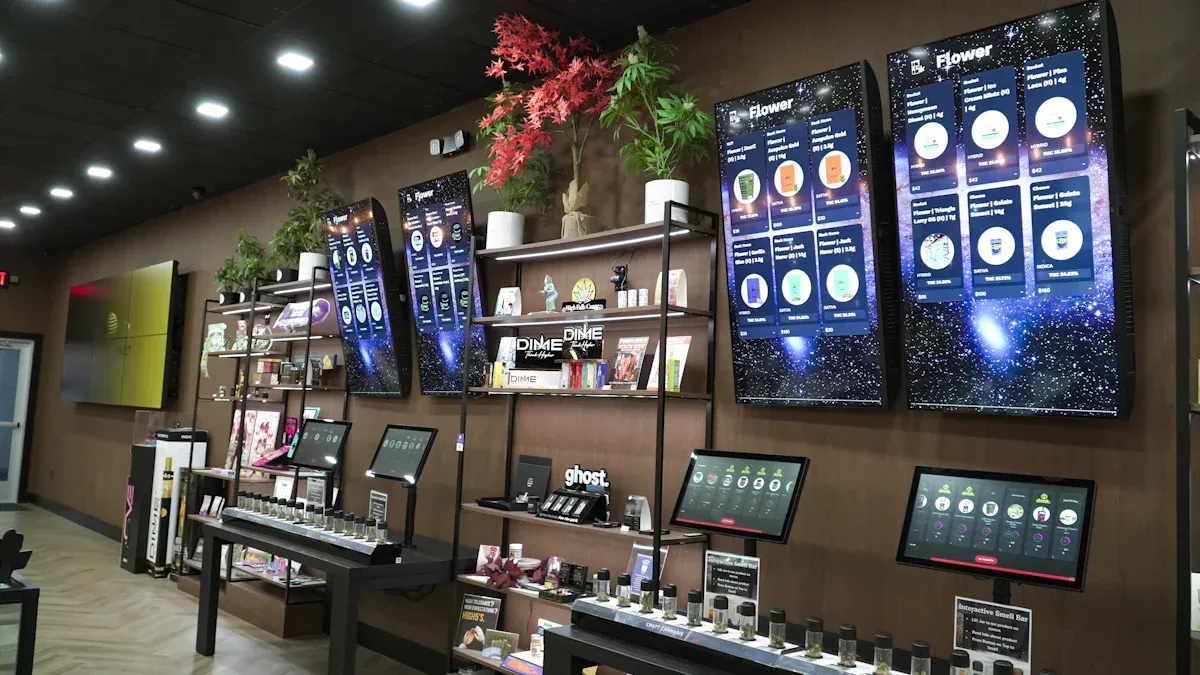
Choosing the right ESL provider involves looking beyond the initial price tag to the total cost of ownership. Solum stands out as a financially sound choice for 2025 due to its advanced technology, powerful management software, and durable hardware. These elements work together to maximize ROI and minimize long-term expenses.
Superior Low-Power Technology
A significant long-term cost for any electronic shelf labels system is battery replacement. Solum directly addresses this with its industry-leading low-power technology. The flagship Newton ESLs boast a remarkable ten-year battery life. This is double the lifespan of competing systems, which often last only up to five years. This extended operational life drastically reduces maintenance labor and the recurring cost of replacement batteries, delivering substantial savings over the system’s lifetime.
Centralized Cloud Management Platform
Solum’s Aims cloud platform is the system’s central nervous system, designed to reduce complexity and expense. It provides a single interface for managing millions of labels across multiple stores. Retailers can update prices, customize layouts, and integrate with existing IT systems seamlessly. The platform operates on a pay-as-you-go SaaS model, which offers several financial advantages:
- Eliminates the need for large upfront investments in server hardware.
- Reduces reliance on in-house IT staff for system maintenance.
- Ensures robust security with compliance for GDPR and CCPA.
This cloud-based approach allows businesses to scale their operations efficiently, paying only for the resources they use while benefiting from enterprise-level security and performance.
Future-Proof Durability and Design
Retail environments can be harsh. The solum electronic shelf labels are built to withstand daily operational challenges, protecting a retailer’s investment. The Newton series of labels carries an IP67 rating. This certification guarantees they are completely protected from dust and can be submerged in up to one meter of water for 30 minutes. This level of durability ensures the labels will function reliably for years in any setting, from produce aisles to outdoor garden centers, preventing premature replacement and associated expenses.
In 2025, an investment in Solum electronic shelf labels is a strategic financial decision. The market for electronic shelf labels is expanding rapidly, with global growth projected at a 17.4% CAGR through 2033. The combination of reduced labor cost and zero pricing errors makes the ROI clear. This investment directly lowers operational cost and boosts profitability.
Take the next step. Contact Solum for a personalized analysis to see how much your business can save.
FAQ
How long does it take to install Solum ESLs?
Installation time varies with store size. A professional team typically completes the setup for a standard supermarket within a few days. The process involves installing gateways and deploying the labels. This efficient installation minimizes disruption to store operations.
Can Solum ESLs integrate with my existing POS system?
Yes, Solum’s Aims platform is designed for compatibility. It integrates seamlessly with most existing Point of Sale (POS) and ERP systems. This connection ensures that pricing data remains synchronized across all platforms, from the central database to the shelf edge.
What happens if an ESL tag is damaged?
Solum ESLs are built with an IP67 rating for high durability. In the rare event a tag is damaged, it can be quickly and easily replaced. The Aims management system allows staff to unpair the old tag and link a new one in moments.
How do ESLs improve pricing accuracy?
The system links every label directly to the central pricing database. Price changes made in the system update on the shelf automatically. This direct synchronization eliminates manual errors and guarantees perfect pricing accuracy between the shelf and the checkout counter.