
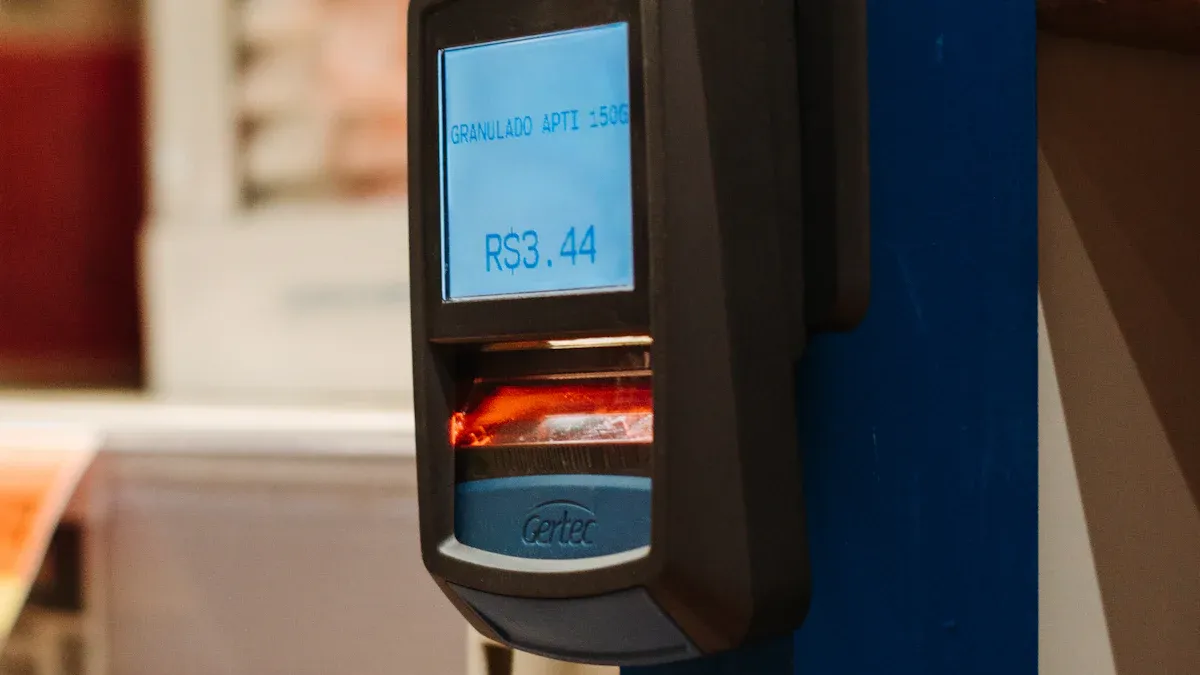
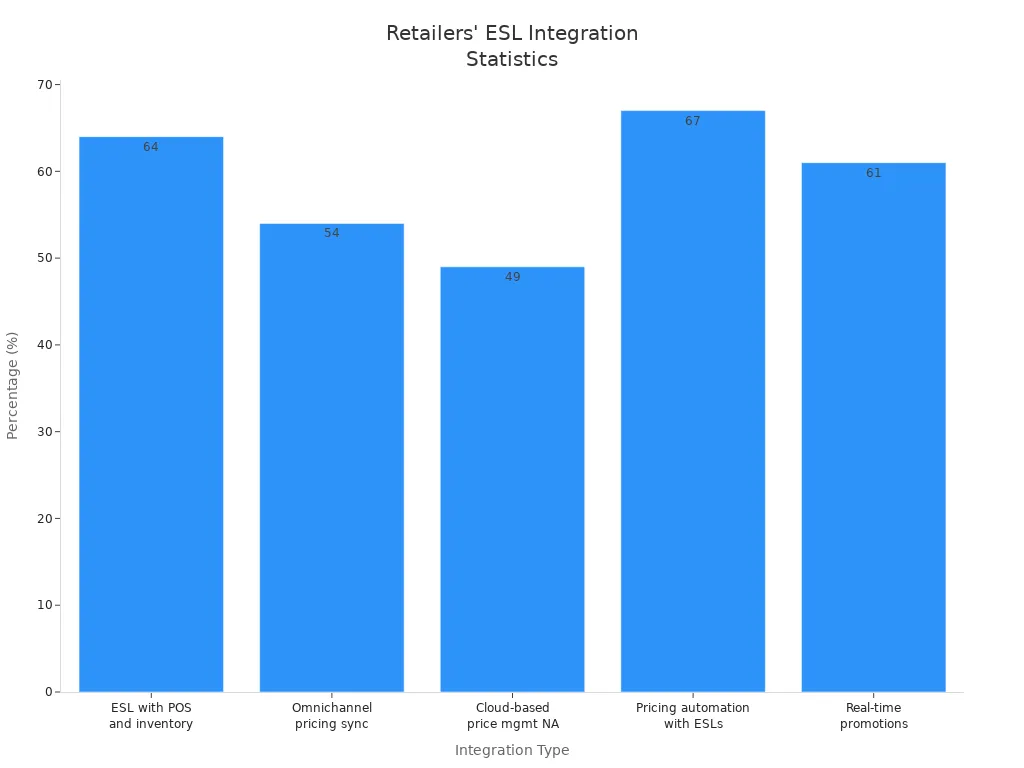
You can transform your retail operations by connecting digital price tags with CRM. This integration gives you real-time updates on pricing and promotions, making every shelf label a personalized touchpoint. With solutions like Electronic Shelf Labels, ESL Gateway AP, and ESL Price Tag, you unlock data-driven insights and boost customer engagement. According to recent data, 64% of retailers have already linked ESLs with POS and inventory systems, and 54% focus on syncing online and in-store pricing—signals that Esl Retail is moving toward seamless customer relationship management integration.
You gain dynamic pricing, operational efficiency, and stronger loyalty when you bridge digital price tags and CRM for real-time updates at the shelf.
Digital Price Tags and CRM: The Direct Link to Customer Engagement
Real-Time Personalized Pricing and Promotions
Dynamic Price Adjustments Driven by CRM Data
You can transform your pricing strategy by connecting digital price tags with your CRM. This integration allows you to deliver real-time updates directly to the shelf, ensuring that every customer sees the most relevant price. When you use CRM data, you can adjust prices based on customer segments, purchase history, or even loyalty status. For example, you might offer a special discount to repeat shoppers or adjust prices during peak hours to match demand. Personalized pricing, tailored to individual behavior, has led to a 25% increase in repeat purchases and is perceived as fairer by customers. This approach builds trust and transparency, which are essential for long-term loyalty.
Digital price tags make these adjustments seamless. You no longer need to rely on manual price changes or static promotions. Instead, you can automate price updates across your entire store network. This not only improves operational efficiency but also ensures that your pricing remains competitive and responsive to market trends.
Targeted Offers at the Shelf
With digital price tags linked to your CRM, you can deliver targeted offers right where purchase decisions happen. Imagine a customer standing in front of a product and seeing a personalized promotion based on their shopping history or loyalty tier. You can use CRM-driven insights to push exclusive deals, bundle offers, or time-limited discounts directly to the shelf. This level of personalization increases the likelihood of conversion and makes customers feel recognized and valued.
Research shows that 81% of consumers appreciate tailored experiences, and 70% feel more satisfied when brands recognize their needs. By leveraging real-time updates, you can ensure that every offer is timely and relevant, driving both sales and satisfaction.
Actionable Insights from Integrated Systems
Customer Behavior Analytics
Integrating digital price tags with your CRM unlocks a wealth of actionable insights. You gain a 360° view of each customer, combining in-store interactions with online behavior. This unified data helps you analyze browsing patterns, purchase frequency, and product preferences. You can identify which promotions drive the most engagement and which products attract repeat buyers. Enhanced analytics allow you to segment customers more effectively and tailor your marketing strategies for maximum impact.
Tip: Use CRM analytics to identify at-risk customers and send personalized re-engagement messages, increasing retention and reducing churn.
Data-Driven Marketing Strategies
When you combine digital price tags and CRM, you empower your marketing team with precise, data-driven strategies. You can run A/B tests on promotions, track real-time updates in customer response, and adjust campaigns based on concrete results. CRM systems help you forecast sales trends, optimize inventory, and allocate resources more efficiently. By analyzing demographic and behavioral data, you can create targeted campaigns that boost conversion rates by up to 50%.
You also benefit from predictive analytics, which help you anticipate customer needs and adjust pricing or promotions proactively. This approach not only increases sales but also enhances customer engagement by making every interaction feel personal and relevant.
Essential Components for Integrating Digital Price Tags with CRM
To build a robust integration between digital price tags and your CRM, you need to understand the core components that make this connection possible. Each element—from hardware to middleware—plays a vital role in ensuring seamless communication and real-time data flow.
Digital Price Tag Hardware and Connectivity
Types of Electronic Shelf Labels
You can choose from several types of digital price tags, each designed for specific retail needs. Most retailers use electronic shelf labels (ESLs) with e-ink, LCD, or LED displays. These tags show pricing and product information clearly and remain readable under various lighting conditions. The technology behind these displays focuses on energy efficiency, which extends battery life and reduces maintenance.
Tip: Select ESLs that support both high visibility and low power consumption to maximize operational efficiency.
Communication Protocols and IoT Integration
Digital price tags rely on wireless communication networks to receive updates. You will often find Wi-Fi, Bluetooth, or RFID modules embedded in each tag. These modules enable real-time updates from a central management system. The system uses radio frequency protocols to ensure seamless communication between your CRM and the shelf labels. This setup allows you to synchronize pricing, inventory, and customer data instantly across your store.
A typical deployment includes: 1. Digital displays (e-ink, LCD, or LED) for product information. 2. Communication modules (Wi-Fi, Bluetooth, RFID) for wireless data transfer. 3. Central management software for real-time control. 4. Wireless networks for seamless communication. 5. Integration with POS and inventory systems. 6. Long-life batteries or wired power. 7. Security features like encryption and tamper-proof designs.
CRM System Capabilities
Customer Data Structure and Profiles
Your CRM must organize customer data efficiently. You need customizable objects and fields to store unique pricing, inventory, and customer profiles. This structure supports accurate targeting and personalization at the shelf. Data quality management tools help you maintain consistency and reliability, which are essential for effective integration.
Integration Readiness and API Support
A CRM with robust integration features is crucial. Look for systems that offer strong API support, allowing seamless communication with digital price tags. APIs enable real-time data exchange, automate pricing updates, and eliminate data silos. You also benefit from reporting tools, mobile accessibility, and administrative support, which streamline both setup and ongoing operations.
- Integration capabilities for external systems
- Data quality management for accuracy
- Custom object associations for unique data
- Reporting and dashboard tools for analysis
- Administrative support for maintenance
Integration Middleware and Tools
API Gateways and Connectors
Integration middleware acts as a translator between your digital price tags and CRM. It ensures smooth, accurate, and real-time data flow. Leading solutions provide pre-built connectors and drag-and-drop interfaces, making it easier to link diverse systems. Middleware supports automation of pricing updates, inventory synchronization, and customer data management, which helps you deliver a personalized experience.
Data Security and Compliance
You must prioritize data security and compliance when integrating digital price tags with your CRM. Middleware solutions offer encryption, access controls, and tamper-proof features to protect sensitive information. Compliance with regulations such as GDPR or HIPAA is essential to maintain customer trust and avoid legal risks.
Note: Middleware automation reduces manual errors and bottlenecks, enabling scalable and efficient business growth.
Step-by-Step Guide to Integrate CPQ with CRM and Digital Price Tags
Assessing System Compatibility
Hardware and Software Evaluation
You need to start by evaluating your current hardware and software landscape. This step ensures that your CPQ, CRM, and digital price tag systems can work together without friction. Begin by defining your integration requirements. Consider what you want to achieve with quote generation, pricing accuracy, and real-time updates at the shelf.
- Define your requirements for integration, including configuration, pricing, quoting, and data flow needs.
- Configure your CPQ tool to match your product catalog, pricing structures, and discount rules.
- Evaluate the capabilities of your CPQ system, focusing on configuration features, pricing rules, and customizable quote templates.
- Choose integration methods that fit your business—native integrations for simplicity, third-party platforms for flexibility, or custom API integrations for full control.
- Test your system rigorously to ensure it aligns with your business needs and delivers accurate quotes.
- Provide comprehensive training for your team to maximize adoption and effective use.
Tip: Avoid common pitfalls such as unclear goals, poor data quality, overcomplicated configurations, and lack of integration. These issues can lead to inaccurate quotes and lost sales.
Identifying Integration Points
You must identify the key integration points between your CPQ, CRM, and digital price tag systems. Map out how data will flow between these platforms. Focus on areas where real-time updates and data synchronization are critical, such as pricing, inventory, and customer profiles.
- Pinpoint where your CPQ system needs to pull customer data from CRM for personalized quotes.
- Determine how pricing changes in CPQ will trigger updates on digital price tags.
- Ensure that quote generation processes can access the latest product and pricing information from all systems.
By clarifying these integration points, you set the foundation for seamless data synchronization and accurate quotes across your retail environment.
Setting Up API Connections
API Authentication and Permissions
Establishing secure API connections is essential for integrating CPQ with CRM and digital price tags. You need to ensure that only authorized users and systems can access sensitive data. Use industry-standard authentication methods such as OAuth 2.0, API keys, and tokens. This approach protects your data and maintains compliance with security standards.
| Challenge Category | Description | Recommendation |
|---|---|---|
| Complexity | Multiple departments and systems increase implementation difficulty. | Prefer out-of-the-box solutions over heavy customization. |
| Data Quality | Inaccurate or outdated data leads to incorrect quotes and lost sales. | Maintain an inventory of product data and documentation. |
| Integration Challenges | Incompatibility with CRM, ERP, and billing systems complicates API connections. | Build API solutions that connect existing systems without restrictions. |
| User Adoption | Difficult-to-use systems cause resistance among sales reps. | Provide continuous training as the system evolves. |
| Cost | Customization can be expensive. | Clearly define ROI before implementation. |
| Right System Integrator | Choosing the wrong partner risks project success. | Select partners who prioritize quality over speed. |
| End User Training | Lack of training leads to technical difficulties for users. | Ensure implementation partners provide thorough end-user training. |
You should also monitor API access and performance. Track response times and error rates to quickly identify and resolve issues that could impact quote generation or real-time updates.
Mapping Data Fields for Synchronization
Mapping data fields is a crucial step in ensuring smooth data synchronization between your systems. You need to align product information, pricing, customer profiles, and quote details across CPQ, CRM, and digital price tags.
- Identify which fields in your CRM correspond to those in your CPQ and digital price tag systems.
- Map customer data, pricing rules, and product attributes to ensure accurate quotes and consistent information.
- Use middleware or integration tools to automate this mapping and reduce manual errors.
Note: Businesses often face challenges with legacy systems and custom pricing models. Tailored API configurations may be necessary to handle unique workflows and ensure that quote generation remains accurate and efficient.
Data Synchronization and Testing
Real-Time Data Flow Setup
You must establish real-time data flow between your CPQ, CRM, and digital price tag systems. Digital price tags enable wireless updates that synchronize instantly with POS, inventory, and CRM platforms. This setup ensures that pricing and product information remain consistent and accurate across all channels.
- Centralized control software allows you to manage pricing, promotions, and product details remotely.
- Automation reduces manual labor and human errors, freeing your staff to focus on customer service.
- Real-time updates improve checkout accuracy and reduce pricing errors by up to 60%, building customer trust.
Retailers like Carrefour, Walmart, and Tesco use dynamic pricing integrated with CRM data to adjust prices instantly based on demand and customer behavior. This approach optimizes stock levels and enhances the customer experience.
Testing and Troubleshooting
Effective testing is vital for successful data synchronization and accurate quote generation. Combine manual and automated testing to cover all scenarios.
- Map critical integration points, such as data flow between digital price tags, CRM, POS, and inventory systems.
- Set measurable outcomes tied to business metrics like data accuracy, sync speed, and transaction success rates.
- Use manual testing for complex workflows and exploratory scenarios.
- Implement automated testing for repetitive data synchronization and API consistency.
- Monitor real-time data flow with specialized tools to detect and resolve issues promptly.
- Collaborate with technical and business teams to ensure testing reflects real-life operational needs.
Example: A mid-sized retailer improved order fulfillment accuracy by 30% within six months by aligning integration testing with business goals. Focused testing can have a significant impact on synchronization and accuracy.
By following these steps, you ensure that your CPQ, CRM, and digital price tag systems deliver accurate quotes, real-time updates, and a seamless customer experience.
Staff Training and Change Management
Training Programs for Store Teams
You play a crucial role in the successful integration of digital price tags with CRM and cpq systems. Effective staff training ensures that your team can use new technology confidently and efficiently. You need to invest in comprehensive training programs that empower every user and prevent underutilization of cpq capabilities.
Start by tailoring your training to different roles within your organization. Sales representatives, pricing analysts, and administrators each interact with cpq and digital price tags in unique ways. Role-specific training helps each group understand their responsibilities and how to use the system to its full potential.
Consider using a variety of training methods to reach all learning styles:
- Host detailed in-person or virtual training sessions for hands-on experience.
- Provide video tutorials that staff can revisit as needed.
- Offer interactive practice scenarios using cpq tools and digital price tags.
- Distribute clear, step-by-step documentation for reference.
Tip: Regularly review and update your training materials. Software and customer expectations change quickly. Keeping your resources current ensures your team stays ahead.
Maintain up-to-date process documentation. Cover workflows, system configurations, pricing rules, and customizations. This documentation supports onboarding new employees and helps your team adapt to changes in cpq or CRM systems.
Ongoing Support and Feedback
Change management does not end after initial training. You need to prepare for resistance and support your staff as they adjust to new workflows. Proactive change management strategies help your team transition smoothly during cpq implementation.
Adopt a continuous improvement mindset. Encourage your staff to share feedback about their experiences with cpq and digital price tags. Use this feedback to identify challenges and opportunities for enhancement.
A structured approach to ongoing support includes:
- Establishing a dedicated support channel for questions and troubleshooting.
- Scheduling regular check-ins to address concerns and reinforce best practices.
- Updating training materials as cpq features evolve or as you integrate new technologies.
- Recognizing and rewarding staff who embrace change and demonstrate proficiency.
Note: Continuous evaluation of your cpq system allows you to optimize pricing and configuration. Integrating emerging technologies keeps your business competitive and responsive.
You build a culture of adaptability when you prioritize staff training and ongoing support. Your team becomes more confident, your operations run more smoothly, and your investment in cpq and digital price tags delivers maximum value.
Loyalty Program Integration with Digital Price Tags and CRM
Personalized Rewards and Offers
Real-Time Loyalty Points at the Shelf
You can transform your loyalty program integration by connecting digital price tags with your CRM. This setup lets you display real-time updates on loyalty points directly at the shelf. Customers see their available points and potential rewards as they shop, which encourages immediate engagement. When you use digital price tags to highlight loyalty balances, you create a transparent and interactive experience. Shoppers can scan QR codes on the tags to access exclusive offers or redeem points instantly. This approach reduces hesitation and speeds up purchase decisions.
- Digital price tags enable real-time, personalized promotions and loyalty offers.
- QR codes on shelf labels link customers to their loyalty accounts and special rewards.
- Customers receive instant feedback on their loyalty status, increasing repeat visits.
Tailored Discounts Based on Customer Profiles
You can use CRM data to deliver tailored discounts through digital price tags. By analyzing purchase history and preferences, you target offers to specific customer segments. For example, you might display a special discount for a frequent shopper or highlight a bundle deal for a customer who often buys related products. This level of personalization increases the perceived value of your loyalty program integration and drives higher spending.
- Personalized content on digital price tags highlights relevant discounts and recommendations.
- Integration with CRM allows you to automate targeted campaigns based on customer profiles.
- Studies show that personalized offers delivered at the shelf boost conversion rates and customer retention.
Enhancing Customer Engagement
Interactive Shopping Experiences
You can create interactive shopping experiences by combining digital price tags, CRM, and loyalty program integration. Features like QR codes and NFC tags on shelf labels let customers access product information, reviews, and video demos. These touchpoints bridge the gap between physical and digital shopping, making the experience more engaging. When customers interact with digital price tags, you collect valuable data that helps refine your marketing strategies.
Tip: Use interactive features to gather feedback and improve your loyalty program over time.
Omnichannel Consistency
You ensure omnichannel consistency by integrating digital price tags with your CRM and loyalty programs. Customers receive the same personalized offers and rewards whether they shop in-store or online. Unified customer profiles allow you to track behavior across channels and deliver seamless experiences. Retailers who adopt this approach see higher engagement and increased spending from cross-channel shoppers.
| Strategy Aspect | Supporting Evidence and Impact |
|---|---|
| Personalized Promotions | Targeted discounts and real-time reward visibility at the shelf enhance loyalty and retention. |
| Interactive Customer Touchpoints | QR codes and NFC tags expand engagement and data collection opportunities. |
| Increased Engagement & Loyalty | Nearly 70% of brands see increased engagement; 58% report more repeat purchases with personalized offers. |
You build a customer-centric culture by leveraging loyalty program integration, digital price tags, and CRM. This strategy empowers your team to deliver consistent, personalized experiences that strengthen customer loyalty and drive long-term growth.
Key Benefits of Integrating Digital Price Tags with CRM
For Retailers: Dynamic Pricing and Operational Efficiency
Automated Price Updates and Campaigns
You gain a significant advantage when you automate price updates with digital price tags and cpq integration. This setup eliminates manual label changes, reducing labor costs and freeing your staff for higher-value tasks like customer service and inventory management. You can launch new campaigns instantly, ensuring every shelf reflects the latest prices and promotions. Real-time updates minimize pricing errors, which improves customer trust and satisfaction. Retailers have seen measurable results, such as increased sales from agile pricing strategies and improved staff morale due to reduced repetitive work.
- Digital price tags automate price changes, saving labor hours.
- You can adjust prices based on demand, location, or customer data from cpq and CRM.
- Accurate pricing reduces discrepancies at checkout, building customer confidence.
- Automated campaigns allow you to respond quickly to market trends.
Streamlined Store Operations
By integrating cpq, digital price tags, and CRM, you streamline store operations. Real-time pricing agility lets you respond instantly to inventory management needs and market fluctuations. Staff no longer spend hours updating paper tags, so they can focus on strategic tasks. Centralized control over pricing and promotions ensures consistency across all locations. Retailers like CR Vanguard have saved millions annually by eliminating manual processes.
Tip: Use cpq and digital price tags to synchronize promotions with inventory management, reducing out-of-stock rates and waste.
For Customers: Personalization and Instant Rewards
Relevant Offers and Recommendations
You can deliver highly relevant offers and recommendations at the shelf by leveraging cpq and CRM data. Digital price tags display personalized promotions based on customer profiles, purchase history, and loyalty status. This approach increases customer engagement and encourages repeat purchases. Customers appreciate seeing offers tailored to their preferences, which strengthens their connection to your brand.
- Personalized promotions encourage loyalty and repeat visits.
- Real-time updates ensure customers always see the most relevant deals.
- CRM-driven insights help you target the right audience with the right message.
Transparent, Up-to-Date Pricing
Customers value transparency and accuracy. Digital price tags ensure that shelf prices always match register prices, reducing confusion and building trust. You can display real-time quotes and loyalty rewards, making the shopping experience seamless. This transparency leads to higher satisfaction and a stronger perception of personalized service.
Customers who experience accurate, up-to-date pricing are more likely to become brand advocates.
Actionable Data Insights
Enhanced Analytics for Decision-Making
You unlock powerful analytics by integrating cpq, digital price tags, and CRM. Real-time data from digital price tags feeds into your analytics platform, providing insights into customer behavior, sales trends, and promotional effectiveness. You can use this information to refine your marketing strategies and optimize quotes for different segments.
| Benefit | Impact |
|---|---|
| Real-time analytics | Faster, data-driven decisions |
| Personalized promotions | Higher conversion rates |
| Improved inventory management | Reduced out-of-stock and overstock issues |
Improved Inventory and Demand Forecasting
Digital price tags and cpq integration support advanced inventory management. You can track stock levels in real time and adjust prices or promotions based on demand. AI-powered analytics help you forecast trends, optimize product placement, and reduce waste. Retailers like T11 have reduced out-of-stock rates by up to 85% using these tools.
- Real-time inventory management enables proactive restocking.
- Dynamic pricing helps balance supply and demand.
- Accurate quotes and promotions align with current inventory, maximizing profitability.
Best Practices for Implementing Digital Price Tags and CRM Integration
Strategic Planning and Project Management
Setting Clear Objectives and Milestones
You set the foundation for a successful integration by defining clear business objectives and CRM goals. Align your digital price tags project with your organization’s needs from the start. Assemble a dedicated implementation team and identify key stakeholders to ensure strong governance. Conduct a thorough needs assessment to understand your requirements. Select a CRM system that fits both your business needs and budget.
Tip: Use an ordered approach to planning. Establish a detailed project timeline with milestones, allocate resources, and plan data migration. Clean, map, and test your data before importing. Customize and configure your CRM to match your business processes and integrate with other systems. Train users with comprehensive materials and sessions to maximize adoption. Roll out the system in a probation stage, then analyze data and gather feedback to refine your integration.
Timeline and Resource Allocation
You improve project outcomes by setting a realistic timeline and allocating resources efficiently. Plan integration workflows by defining data flows, synchronization frequency, triggers, and security measures. Conduct a comprehensive data audit to ensure quality and compliance. Back up all application data regularly to prevent loss during integration. Train staff on data security and proper handling to maintain integrity. Customize and test the integrated system thoroughly before full rollout. Monitor feedback and system performance to drive continuous improvement.
Ensuring Data Security and Privacy
Compliance with Regulations
You must prioritize data security when integrating digital price tags with CRM systems. Regulatory compliance, such as GDPR, requires you to obtain and manage customer consent for data processing. Track consent and provide easy withdrawal mechanisms. Train employees on role-based access and proper data handling to maintain compliance and data integrity.
Customer Consent and Transparency
Transparency builds trust with your customers. Use secure login mechanisms, such as two-factor authentication, and monitor login attempts to prevent unauthorized access. Implement audit trails to log user activities and data changes. Leverage cloud CRM providers’ security measures, including regular updates and disaster protection. Embed security principles into every system component from the start.
| Consideration | Description |
|---|---|
| Data Encryption | Secure data transmission using protocols like HTTPS. |
| Access Controls | Restrict data access to authorized personnel only. |
| Secure Login | Use two-factor authentication and monitor login attempts. |
| Audit Trails | Log user activities and data changes for compliance. |
| GDPR Compliance | Manage customer consent and provide withdrawal mechanisms. |
| Cloud Security | Use providers with strong physical and operational security. |
| Security by Design | Build security into every system component from the beginning. |
Continuous Optimization and Feedback
Monitoring System Performance
You achieve long-term success by continuously monitoring your integration’s performance. Define clear objectives and KPIs, such as reducing error rates or increasing user engagement. Companies using agentic CRM systems have reported a 20% increase in customer satisfaction and a 15% reduction in churn. Use a hybrid feedback mechanism that combines human input and system-generated data for comprehensive insights.
Iterative Improvements Based on Insights
You drive ongoing improvements by analyzing feedback and system data. Select tools with strong AI capabilities and integration options to ensure smooth adoption. Implement feedback tools in phases, providing training and allocating resources to minimize disruption. Continuously optimize your feedback loops to refine customer interactions and improve CRM performance. Active learning and real-time adaptation to customer behavior help you deliver better personalization and engagement with digital price tags.
Note: A phased approach to integration and optimization reduces disruption and allows for incremental improvements, leading to sustained performance gains and better ROI.
Overcoming Challenges in Digital Price Tag and CRM Integration
Integrating digital price tags and cpq with CRM systems can transform your retail operations, but you will face several challenges along the way. Addressing technical and organizational hurdles ensures you maximize the value of your investment and deliver a seamless customer experience.
Technical Hurdles and Solutions
Legacy System Integration
Legacy systems often lack compatibility with modern cpq and digital price tags solutions. Many retailers still rely on outdated platforms that do not support cloud, AI, or real-time analytics. This incompatibility can slow down your integration efforts and increase costs. You can overcome these barriers by adopting a phased upgrade approach. Prioritize critical systems for modernization and partner with integration experts to minimize disruption. Focus on scalable solutions that allow you to add new features without overhauling your entire infrastructure.
Network Reliability and Uptime
Digital price tags and cpq require stable network connections for real-time updates. Network outages or slow connections can disrupt pricing accuracy and customer trust. To ensure reliability, invest in robust wireless infrastructure and backup systems. Regularly monitor network performance and address issues proactively. You can also use redundant communication protocols to maintain uptime during peak hours.
| Technical Hurdle | Description | Effective Solutions |
|---|---|---|
| Data incompatibility issues | Data synchronization problems causing inconsistencies due to format mismatches, manual errors, and poor data quality. | Automate data transfer, standardize data formats, improve data quality controls. |
| Lack of cooperation | Departments not collaborating, leading to inconsistent data standards, delays, and errors. | Engage multiple departments early, foster communication, and align priorities. |
| Project complexity | Unclear scope, underestimated effort, and data migration challenges causing delays and budget overruns. | Conduct detailed requirement workshops, adopt agile methodologies for iterative problem detection and resolution. |
| Data security concerns | Risks of data breaches and non-compliance during data transfer and storage. | Implement encryption, SSL certificates, backups, and choose secure hosting and VPN providers. |
Tip: Break down internal silos by fostering collaboration between IT and business units. This approach helps you deliver a unified, data-driven customer experience.
Organizational Adoption and Change Management
Staff Buy-In and Training
You need your staff to embrace cpq and digital price tags for successful integration. Start by aligning digital adoption initiatives with your business goals. Show your team how these tools improve efficiency and customer satisfaction. Provide role-specific training that matches each employee’s responsibilities and learning style. Use digital adoption platforms to offer in-context guidance and interactive walkthroughs.
- Develop a clear plan for training and phased rollout.
- Create cross-functional teams to oversee implementation.
- Assign change champions to support peers and encourage adoption.
- Address skill gaps with comprehensive, hands-on training.
Managing Resistance to Change
Resistance often arises when employees feel uncertain about new technologies. You can reduce pushback by communicating the benefits of cpq and digital price tags clearly and early. Apply structured change management models, such as the Prosci ADKAR Model, to build awareness and reinforce positive behaviors. Encourage feedback and use it to refine your approach. Leadership sponsorship and visible support from change advocates boost morale and foster a culture of innovation.
Note: Partnering with experienced change management providers gives you access to research-based models and expert coaching, ensuring your change efforts align with organizational culture and goals.
Measuring Success and ROI
Key Performance Indicators
You must track the right metrics to measure the impact of cpq and digital price tags integration. Define KPIs that align with your digital transformation objectives. Establish a baseline before implementation to measure improvements accurately. Consider both tangible and intangible benefits.
| KPI Category | Key Metrics / KPIs |
|---|---|
| Financial KPIs | Operating Margin, Tangible ROI, Impact on Revenue, Revenue from New Digital Channels/Products/Services |
| Customer Experience KPIs | Customer Time-to-Value, CSAT, Customer Retention Rate, Customer Lifetime Value (CLV), CAC, NPS, Self-Serviceability Rate, Support Time-to-Resolution |
| Process Efficiency & Employee Enablement KPIs | Organization Productivity Rates, Process Cycle Time, Business Continuity During Change, Time-to-Value for Transformation, Employee Productivity Rates, Employee Adoption/Utilization Rates, Employee Time-to-Proficiency, Percentage of AI-Enabled Businesses, Process Automation Rate |
- Customer Acquisition Cost (CAC)
- Customer Lifetime Value (CLV)
- Return on Investment (ROI)
- Conversion Rate
- Retention Rate
- Churn Rate
Adjusting Strategies Based on Results
Continuous monitoring allows you to optimize your integration strategy. Use analytics to identify areas for improvement and adjust your approach as needed. Factor in feedback from staff and customers to refine your processes. By tracking KPIs and making data-driven adjustments, you ensure that cpq and digital price tags deliver ongoing value and support your business objectives.
Integrating digital price tags with CRM systems lets you deliver real-time, personalized experiences that boost customer engagement and loyalty. To achieve long-term success, you need to focus on ongoing optimization and staff involvement:
- Use AI and process mining tools to identify and resolve bottlenecks.
- Provide tailored training and ongoing support for your team.
- Align technical solutions with organizational goals for smooth adoption.
You position your business for the future by embracing these trends:
- Automated pricing and CRM integration enable dynamic, data-driven decisions.
- Retail automation supports seamless omnichannel experiences and personalized marketing.
| Aspect | Explanation |
|---|---|
| Dynamic Pricing Optimization | Real-time price adjustments maximize profits and balance supply and demand. |
| Personalized Customer Service | CRM data helps you tailor promotions and improve loyalty. |
| Smart Shelves and IoT Devices | Technologies update pricing and stock information instantly, improving satisfaction. |
FAQ
What are the main benefits of integrating digital price tags with CRM?
You gain real-time pricing, personalized promotions, and improved customer engagement. This integration streamlines operations, reduces manual errors, and provides actionable insights for better decision-making.
How do digital price tags update prices in real time?
You connect digital price tags to your CRM and POS systems through secure wireless networks. When you change a price in your system, the tag updates instantly on the shelf.
Is it difficult to integrate digital price tags with existing CRM systems?
You can simplify integration by choosing CRM platforms with strong API support. Middleware tools and pre-built connectors help you link systems without heavy customization.
How does this integration improve customer loyalty?
You deliver personalized offers and real-time rewards at the shelf. Customers see relevant promotions and loyalty points, which increases satisfaction and encourages repeat visits.
What security measures protect customer data during integration?
You use encryption, access controls, and secure authentication methods. Compliance with regulations like GDPR ensures you handle customer data responsibly and maintain trust.
Can you use digital price tags for both online and in-store promotions?
You can synchronize promotions across all channels. Digital price tags display the same offers as your online store, providing a consistent experience for every customer.