
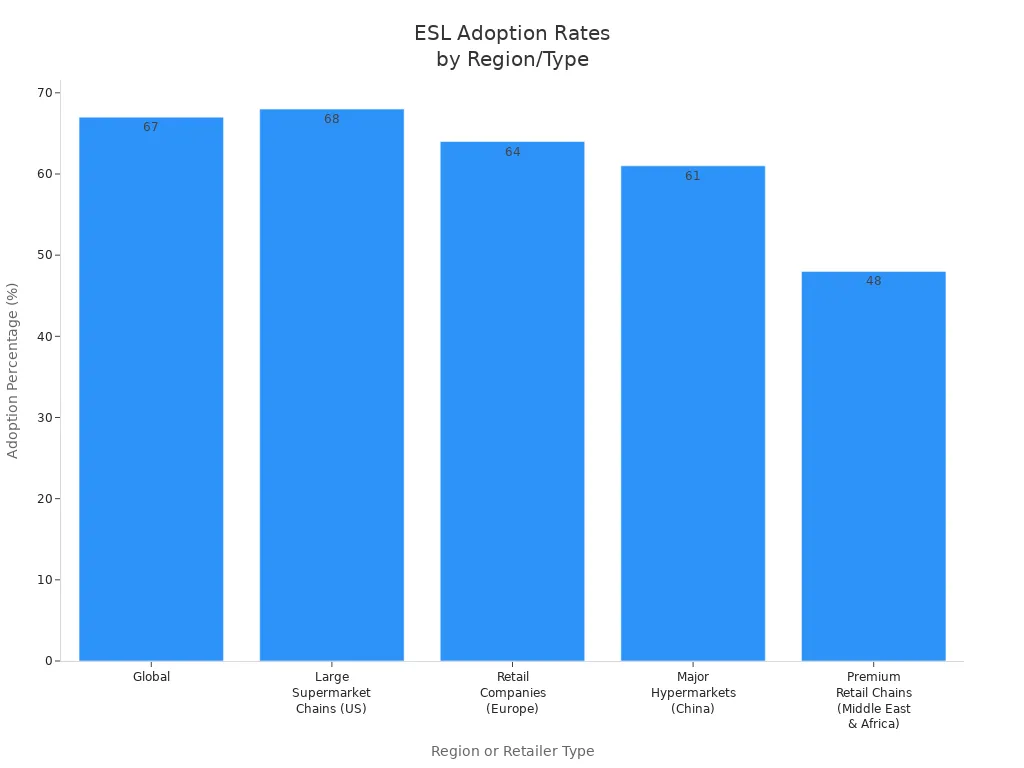
Digital shelf pricing uses electronic shelf labels to display and update prices automatically on retail shelves. You gain improved pricing accuracy and efficiency, as digital labels synchronize with centralized systems like ESL Gateway AP and ESL Price Tag. Retailers such as Kroger and Walmart have adopted Electronic Shelf Labels, driving rapid industry change. Nearly two-thirds of global retailers now use Esl Retail solutions, as shown in the table below.
| Region | Adoption Percentage of Retailers Using ESLs |
|---|---|
| Global | 67% |
| Large Supermarket Chains (US) | 68% |
| Retail Companies (Europe) | 64% |
| Major Hypermarkets (China) | 61% |
| Premium Retail Chains (Middle East & Africa) | 48% |
How Digital Shelf Pricing Works
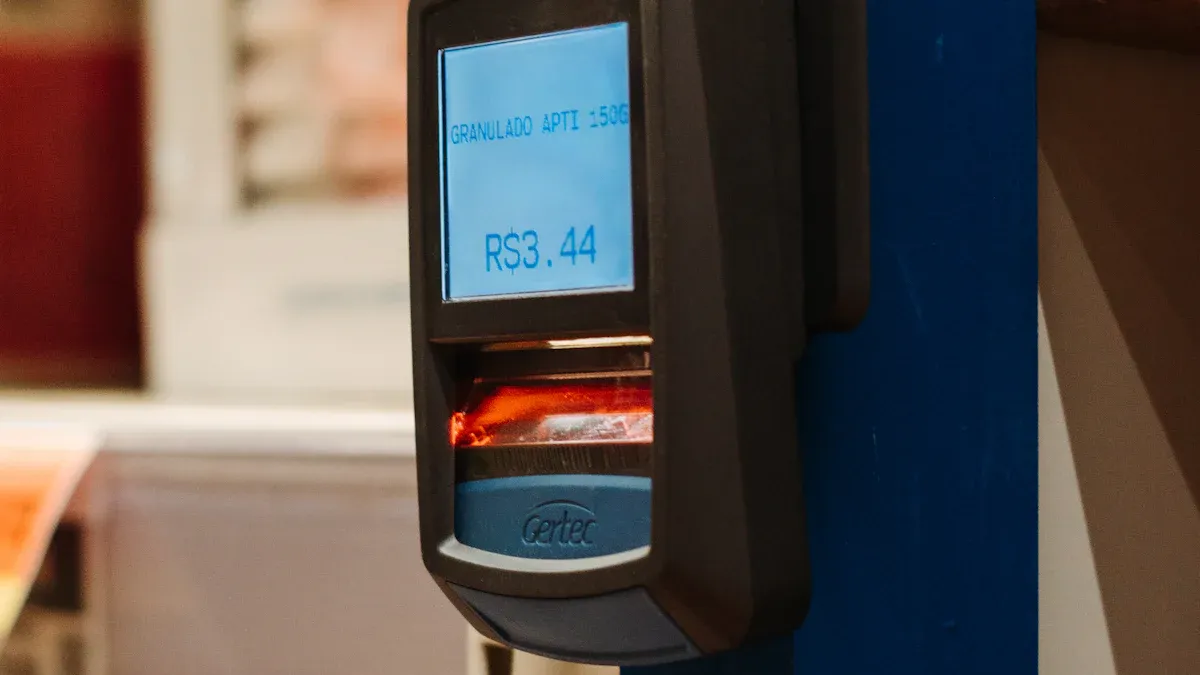
Digital shelf pricing relies on a combination of advanced hardware and software to deliver accurate, efficient, and dynamic price updates across retail environments. You can see how each component works together to create a seamless pricing management system.
Electronic Shelf Labels Technology
Electronic shelf label technology forms the backbone of digital shelf pricing. You will find several key components working in harmony to ensure reliable performance.
E-Paper Displays
E-paper displays, also known as electronic ink, provide clear and energy-efficient price visibility on each electronic shelf label. These displays mimic the appearance of printed paper, making them easy to read under various lighting conditions. E-paper technology consumes power only when updating content, which extends battery life and reduces maintenance. You benefit from crisp, glare-free displays that support both text and graphics, including QR codes and promotional layouts.
Wireless Communication Systems
Wireless communication systems connect each electronic shelf label to the central network. Most retailers prefer radio frequency (RF) solutions for their range and reliability, but Bluetooth has emerged as a global standard due to its scalability and security. The Bluetooth ESL Profile, defined in Bluetooth Core 5.4, enables you to deploy large-scale networks with thousands of labels. Communication stations transmit data packets from the label management software to the terminal display labels, ensuring stable and secure updates. Hardware components, such as ultra-low-power CPUs and RF modules, support efficient and reliable wireless data transmission.
Tip:
The table below summarizes the main components and technologies involved in electronic shelf labels:
| Component | Description | Technologies / Examples |
|---|---|---|
| Label Management Software | Manages system configuration, price database, and data transmission | Network management, data packing |
| Communication Station | Ensures stable wireless data transmission | RF, Bluetooth, infrared, visible light |
| Terminal Display | Receives data and displays pricing information | E-paper, LCD |
| Hardware Components | Core chips and modules for ESL functionality | Ultra-low-power CPUs, RF modules |
| Software Design | APIs and protocols for large-scale ESL networks | Bluetooth 5.4, Bluetooth ESL profile |
| Wireless Communication | Data transmission between components | RF, Bluetooth, infrared, visible light |
| Display Technology | Low power, clear visibility for pricing information | E-paper, LCD |
Centralized Pricing Software
Centralized pricing software acts as the command center for your digital shelf pricing system. This software enables you to manage prices, monitor performance, and ensure consistency across all stores.
Price Management Platforms
Price management platforms allow you to update prices in bulk across multiple locations instantly. You can implement dynamic pricing strategies based on demand, stock levels, and competitor trends. These platforms offer dashboards and mobile-friendly apps, making it easy for employees to monitor and adjust prices. You also gain access to advanced features such as custom fonts, branded layouts, and QR code integration for enhanced shopper engagement.
- Bulk price updates across stores
- Dynamic pricing based on real-time data
- Remote monitoring for price accuracy
- Mobile apps and dashboards for easy use
- Customization options for branding and promotions
- Secure wireless protocols for safe updates
Integration with Inventory Systems
Integration with inventory management systems ensures that pricing remains accurate and aligned with stock levels. You can synchronize price changes with point-of-sale (POS) data and inventory updates, reducing errors and manual intervention. This integration supports automated repricing, assortment intelligence, and price elasticity modeling, helping you optimize profit and maintain compliance with pricing laws. Seamless connections with ecommerce platforms, ERP, and PIM systems further enhance operational efficiency.
Real-Time Price Updates
Real-time pricing updates set digital shelf pricing apart from traditional methods. You can respond to market changes, promotions, and inventory shifts almost instantly.
Automated Synchronization
Automated synchronization ensures that every electronic shelf label reflects the latest price changes within minutes. Advanced ESL technologies deliver price recalculations and updates to shelf labels almost instantly after you make a change in the system. For example, you can complete 1,400 price changes in less than 10 minutes, a process that previously took days. Cloud integration guarantees that updates reach both shelf labels and POS systems simultaneously, reducing errors and delays.
Mobile App Controls
Mobile app controls give you flexibility and convenience in managing your pricing. Store employees can use user-friendly apps to trigger price updates, monitor label status, and resolve issues on the go. These apps support remote management, allowing you to oversee pricing operations from anywhere. With mobile controls, you maintain pricing accuracy and consistency across all retail touchpoints.
Note:
Electronic shelf labels connect wirelessly to a central hub, enabling real-time updates and reducing manual labor. This system ensures that your prices remain accurate, consistent, and responsive to market demands.
Implementation Steps
Implementing digital shelf pricing in your store requires careful planning and execution. You must address both technical and human factors to ensure a smooth transition and maximize the benefits of electronic shelf labels.
Hardware Installation
You begin by evaluating your store’s needs. Identify which product categories will benefit most from dynamic pricing and flexible promotions. This assessment helps you prioritize areas for initial deployment and ensures you target high-impact sections.
Next, select a scalable electronic shelf label (ESL) solution. Choose hardware that integrates seamlessly with your existing pricing management system. Make sure the solution can grow with your business and adapt to future requirements.
You connect the ESL system to a Price & Promotion Optimization tool. This integration automates price adjustments and allows you to analyze promotion performance in real time. You gain the ability to respond quickly to market changes and optimize your pricing strategies.
Start with a pilot deployment in a selected aisle or department. Test the system’s features, collect performance data, and refine your approach before expanding across the store. This step minimizes disruption and helps you address any technical challenges early.
Tip:
Retailers like Naifeh’s Cash Saver have reduced labor hours dramatically by switching to digital shelf tags. You can update thousands of prices in minutes, improving both operational efficiency and pricing accuracy.
Typical Steps for Hardware Installation:
- Assess store layout and product categories for ESL deployment.
- Select compatible ESL hardware and ensure system scalability.
- Integrate ESLs with pricing and inventory management software.
- Conduct a pilot test in a limited area.
- Analyze results and refine deployment strategy.
- Roll out ESLs across the entire store.
Staff Training
You must train your staff to operate and maintain the digital shelf pricing system effectively. Begin by introducing the technology and explaining its benefits. Emphasize how ESLs improve pricing accuracy, reduce manual labor, and enhance customer experience.
Provide hands-on training sessions. Teach employees how to use mobile app controls to update prices, monitor label status, and troubleshoot common issues. Encourage staff to practice updating prices remotely and managing promotions through the centralized platform.
You should also address common challenges that may arise during implementation. Use the table below to highlight potential issues and their impact on store operations:
| Challenge | Description & Impact |
|---|---|
| Inconsistent Pricing Across Channels | Customers may notice price discrepancies between online and in-store channels, leading to dissatisfaction and lost sales. |
| Lack of Standardization Across Retailers | Inconsistent product information and branding can confuse shoppers and weaken promotional efforts. |
| Failing to Monitor Competitor Activity | You risk missing market opportunities and falling behind competitors if you do not track their pricing strategies. |
| Neglecting Customer Reviews | Ignoring feedback can harm your brand reputation and increase product returns. |
| Poor-Quality Product Images | Low-quality images reduce sales and damage your brand’s credibility. |
| Not Updating Product Listings | Outdated product details confuse customers and miss opportunities to showcase improvements. |
| Poor Inventory Management | Stockouts and excess inventory can erode customer trust and increase costs. |
Encourage staff to stay alert for these challenges and report issues promptly. Regular training updates and open communication help you maintain a high standard of pricing accuracy and customer service.
Note:
Walmart’s rollout of digital shelf labels demonstrates the importance of clear staff training and communication. You must ensure your team understands the system’s purpose and limitations to maintain customer trust and operational integrity.
Key Benefits of Digital Shelf Pricing for Retailers
Operational Efficiency
Automated Price Changes
You can transform your store’s efficiency by switching from paper tags to electronic shelf labels. Traditional paper labels require manual replacement for every price change, which slows down updates and increases the risk of errors. With electronic shelf labels, you update prices instantly across thousands of products. This system supports flash sales and promotions in seconds, letting you react quickly to market trends. You also eliminate pricing discrepancies at checkout, which improves customer satisfaction and trust.
- Manual paper tags cause slow updates and frequent errors.
- Electronic shelf labels enable immediate price changes for all products.
- You can highlight promotions visually, such as with color changes.
- Price consistency between shelf and checkout reduces customer frustration.
Reduced Labor Costs
Manual price updates consume significant staff hours and often lead to mistakes. By automating price changes with electronic shelf labels, you reduce the time spent on these tasks from hours to seconds. Your employees can focus on higher-value activities, such as helping customers or managing inventory. This shift leads to lower operational labor costs and more efficient use of your team.
- Automation frees staff from repetitive pricing tasks.
- Employees can spend more time on customer service.
- You save on printing and material costs associated with paper labels.
- Many retailers see a return on investment within the first year, especially in stores with frequent promotions.
Tip:
Automating price updates with electronic shelf labels not only saves time but also supports sustainability by reducing paper waste.
Pricing Accuracy and Compliance
Elimination of Human Error
You gain a significant advantage in pricing accuracy by using electronic shelf labels. These systems link directly to your central database or POS, automating price updates and removing the risk of human error. Every price change reflects instantly on the shelf, ensuring that customers always see the correct price.
- Automated updates prevent mismatched prices at checkout.
- Centralized management keeps pricing consistent across all locations.
- You avoid costly mistakes that can damage your reputation.
Adherence to Pricing Laws
Compliance with local pricing regulations becomes easier with electronic shelf labels. You can program these systems with pre-defined pricing rules, ensuring that all promotions and discounts follow legal requirements. Real-time or scheduled updates help you maintain accuracy and avoid legal penalties.
- Centralized control ensures prices match legal standards.
- Customizable templates support multilingual and compliance-driven formats.
- Consistent pricing information builds customer trust and meets regulatory demands.
Dynamic Pricing Strategies
Real-Time Promotions
You can implement real-time promotions quickly and efficiently with electronic shelf labels. These labels connect to your centralized pricing system, allowing instant updates across all shelves. You eliminate manual delays, so you can launch flash sales or adjust prices during peak hours to maximize sales.
- Real-time pricing adjustments help you respond to market trends.
- Automated updates ensure pricing consistency between physical and online stores.
- You can highlight special offers instantly to attract more customers.
Demand-Based Adjustments
Dynamic pricing gives you the flexibility to adjust prices based on demand, inventory, and competitor activity. You can raise prices during high-demand periods to increase margins or offer discounts during slow times to boost sales. By analyzing real-time data, you make smarter decisions that improve both revenue and customer satisfaction.
- Adjust prices quickly to match demand and inventory levels.
- Use analytics to optimize promotions and product visibility.
- Stay competitive by responding to market changes without delay.
Note:
Dynamic pricing strategies powered by electronic shelf labels help you maximize revenue, improve inventory control, and deliver a better shopping experience.
Advantages of Electronic Shelf Labels for Consumers
Transparent and Consistent Pricing
Real-Time Price Visibility
You benefit from real-time price visibility when stores use electronic shelf labels. These digital tags display current prices and promotions directly on the shelf, so you always see the most accurate information. Retailers can update prices instantly, which means you avoid confusion caused by outdated or incorrect tags. This transparency empowers you to make informed decisions and compare the total cost of ownership before purchasing.
- You see clear, upfront disclosure of all costs and fees.
- Digital shelf labels reduce confusion from hidden charges.
- Frequent, seamless price modifications allow you to spot relevant discounts and promotions.
Transparent pricing not only improves your shopping experience but also reduces the need for support inquiries about pricing discrepancies.
Price Consistency Across Channels
Electronic shelf labels help maintain price consistency between physical stores and online platforms. Retailers use digital shelf analytics to monitor and align prices, so you encounter fewer discrepancies. Consistent pricing builds your trust and satisfaction, as you know you will pay the same price whether you shop in-store or online. This approach also encourages genuine competition based on value, not hidden costs.
- Digital shelf analytics detect and correct price discrepancies.
- Consistent pricing fosters a cohesive shopping experience.
- Transparent pricing enhances brand reputation and attracts ethically-minded shoppers.
Enhanced Shopping Experience
Access to Product Information
Electronic shelf labels do more than display prices. You gain access to detailed product information, such as ingredients, origin, or special offers, right at the shelf. Some electronic shelf label systems integrate with store apps, allowing you to scan QR codes for even more details or personalized recommendations. This feature helps you make better choices and increases your confidence in each purchase.
- Interactive product information supports informed decision-making.
- Personalized offers and suggestions can appear directly on the shelf or through your mobile device.
Easier Price Comparisons
You find it easier to compare prices across products and brands with electronic shelf labels. Clear, consistent displays let you quickly identify the best value. Retailers can highlight promotions or discounts in real time, making it simple for you to spot savings opportunities. This agility in product pricing ensures you always have access to the most relevant deals.
- Real-time updates support quick and accurate price comparisons.
- Automated price changes reduce errors and manual delays.
- Staff can focus more on customer service, improving your overall experience.
With electronic shelf labels, you enjoy a more transparent, efficient, and engaging shopping journey.
Potential Drawbacks and Challenges of Digital Shelf Pricing
Digital shelf pricing offers many advantages, but you should consider several challenges before making the switch. Understanding these drawbacks helps you plan for a smoother implementation and avoid unexpected costs.
Initial Investment and Costs
Electronic Shelf Label Expenses
You face significant upfront costs when you invest in an electronic shelf label system. The main expenses include purchasing the labels, installing them throughout your store, and integrating them with your existing retail systems. Customization and advanced features, such as real-time updates or interactive displays, can drive costs even higher. Many retailers choose to start with a pilot program to test the technology in a limited area, which helps reduce risk and manage expenses. Financing options, such as leasing or vendor financing, can spread out the initial investment, but you still need to budget carefully.
- Purchase of electronic shelf label hardware
- Installation and integration with current systems
- Customization for store-specific needs
- Pilot programs to test before full rollout
- Financing or leasing options to manage cash flow
Software and Integration Fees
You also need to account for the costs of label management software. This software connects your electronic shelf labels to your pricing and inventory systems. Ongoing expenses include software updates, subscription fees, and staff training. If you require integration with other retail technologies, such as ERP or ecommerce platforms, you may see additional charges. Subscription-based models offer lower upfront costs but add recurring fees. One-time purchases require a larger initial outlay but may reduce long-term expenses. You should evaluate your store’s needs and choose a pricing model that fits your budget.
Choosing vendors with transparent pricing and avoiding unnecessary features helps you control costs and maximize your return on investment.
Technical and Maintenance Issues
System Downtime Risks
Technical issues can disrupt your store’s operations. System downtime or display malfunctions may cause inconsistent pricing across shelves, leading to confusion for both staff and customers. Connectivity problems with wireless networks or outdated POS systems can delay price updates. You need a reliable network infrastructure and regular monitoring to minimize these risks. Modern label management software often includes redundant communication protocols and fallback settings, which help maintain price displays during partial outages.
- Downtime can disrupt payment processing and checkout
- Wireless issues may cause price inconsistencies
- Upgrading older systems may increase complexity and cost
Ongoing Maintenance Needs
Maintaining your digital shelf pricing system requires ongoing attention. You must monitor battery life for each electronic shelf label, schedule regular software updates, and provide ongoing support for your staff. Maintenance issues, if left unaddressed, can affect the reliability of your pricing and damage customer trust. Investing in robust, scalable solutions and conducting regular system checks help you minimize operational disruptions.
Regular maintenance and strong backup plans are essential for keeping your label management software and hardware running smoothly.
Consumer Concerns
Privacy and Data Security
Consumers have growing concerns about privacy and data security with digital shelf pricing. When you combine electronic shelf label technology with advanced analytics or facial recognition, you risk collecting sensitive customer data. Regulatory bodies, such as the Federal Trade Commission, have started investigating surveillance-based pricing practices. You must ensure your label management software complies with data privacy laws and ethical standards to protect your customers and your reputation.
- Potential for data collection through integrated technologies
- Regulatory scrutiny of surveillance-based pricing
- Need for compliance with privacy laws
Perceived Price Volatility
Dynamic pricing, enabled by label management software, allows you to change prices rapidly based on demand, time of day, or other factors. While this flexibility benefits your operations, it can create concerns for consumers. Shoppers may worry about sudden price increases on essential goods, especially during emergencies or high-demand periods. Political leaders and consumer advocates have raised concerns about price gouging and loss of trust. You should use dynamic pricing responsibly and communicate changes clearly to maintain customer loyalty.
Transparency in pricing and clear communication help you address consumer concerns and build trust in your digital shelf pricing strategy.
Digital Shelf Pricing in Today’s Retail Environment
Adoption Across Retail Sectors
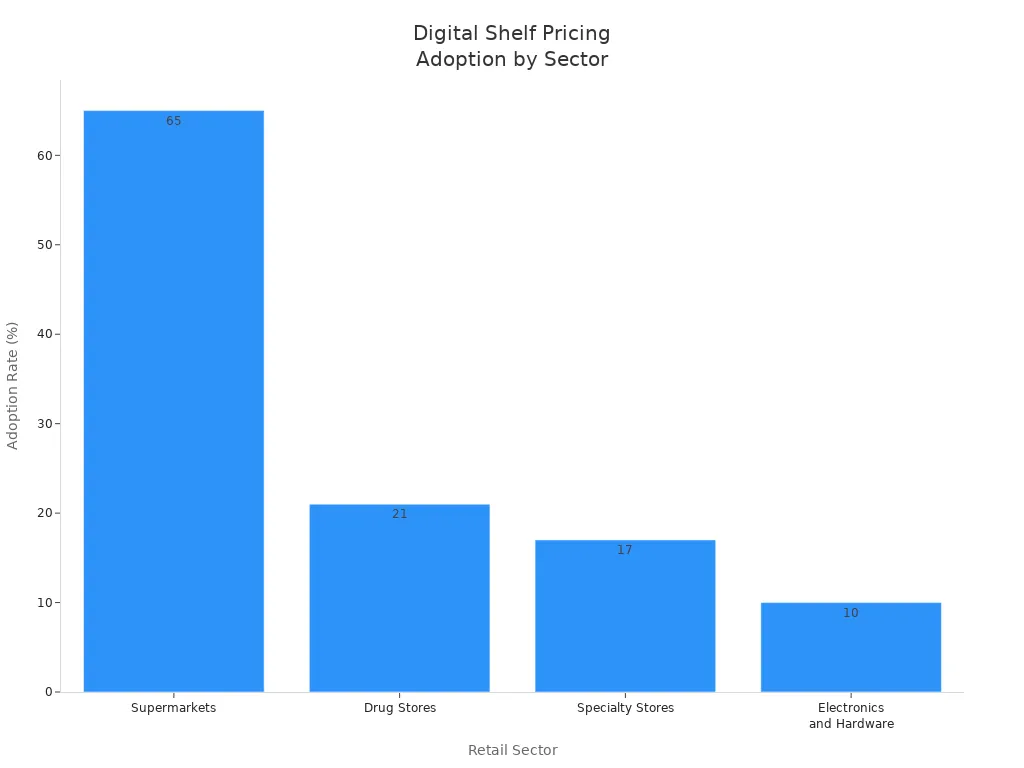
Digital shelf pricing has transformed how you manage prices in different retail sectors. You see the highest adoption in supermarkets, where over 65% of stores now use electronic shelf labels (ESLs). Supermarkets benefit from real-time pricing, a 61% reduction in pricing errors, and a 44% boost in promotional compliance. Drug stores have started to embrace ESLs, with 21% reporting increased operational efficiency and better management of price fluctuations. Specialty stores, including tech and fashion outlets, use ESLs for dynamic branded displays and promotions. Nearly 17% of specialty stores rely on ESLs to enhance their marketing efforts. Electronics and hardware retailers show a 10% adoption rate, focusing on product comparison, inventory tracking, and multilingual interfaces in busy locations.
| Retail Sector | Adoption Rate (%) | Additional Insights |
|---|---|---|
| Supermarkets | Over 65% | Real-time pricing, 61% reduction in pricing errors, 44% boost in promotional compliance |
| Drug Stores | 21% | Manage price fluctuations, 58% report increased operational efficiency |
| Specialty Stores | Nearly 17% | Use ESL for dynamic branded displays, 47% of tech and fashion outlets use ESL for promotions |
| Others (Electronics, Hardware) | 10% | Support product comparison, inventory tracking, multilingual interfaces in high-traffic areas |
Grocery Stores
You experience the most significant impact of digital shelf pricing in grocery stores. ESLs allow you to update prices instantly, reduce errors, and comply with promotional rules. You can run flash sales and adjust prices based on inventory or demand. This technology helps you maintain accurate pricing and build trust with your customers.
Electronics and Specialty Retailers
Electronics and specialty retailers use ESLs to support product comparisons and multilingual displays. You can track inventory more efficiently and highlight special offers. ESLs help you create dynamic branded experiences, especially in high-traffic areas. You gain flexibility in managing promotions and responding to market changes.
Impact on Omnichannel Retail
Digital shelf pricing plays a crucial role in your omnichannel strategy. You align prices and promotions across online and in-store channels, which helps you avoid consumer confusion and build trust. You implement price-matching policies to reassure customers and reduce channel switching. Real-time inventory management systems synchronize stock levels, so you always know what is available. You communicate stock availability clearly and offer fulfillment options like buy-online-pickup-in-store (BOPIS).
- Align pricing and promotions across channels to build trust.
- Implement price-matching policies to reduce channel switching.
- Synchronize inventory levels for accurate stock information.
- Offer omnichannel fulfillment options such as BOPIS.
Online and In-Store Price Alignment
You use ESLs to synchronize prices between your online and physical stores. Dynamic pricing enables you to adjust prices in real time based on market conditions, competitor pricing, and inventory levels. You reduce manual update costs and improve price consistency. Timing price changes carefully helps you maintain fairness for in-store customers. Bridging the pricing gap between channels prevents lost sales and protects customer loyalty.
Personalized Pricing Initiatives
You share digital shelf insights across teams to foster collaboration and data-driven decisions. You understand different fulfillment models and align your assortment and inventory strategies. You measure digital shelf success continuously and adapt your approach to maintain alignment between online and in-store experiences. Consistent investment in both channels creates a unified brand experience for your customers.
- Share digital shelf insights to improve collaboration.
- Align assortment and inventory strategies for all channels.
- Measure and adapt digital shelf strategies for ongoing success.
- Invest in both online and offline channels for a unified brand experience.
Digital shelf pricing helps you deliver a seamless, consistent, and competitive shopping experience across every retail channel.
Market Trends and Future Developments in Electronic Shelf Labels
As you look to the future of retail, you will see rapid changes in how electronic shelf labels shape store operations and customer experiences. Several trends are driving these changes, from advanced technology to new regulations and global adoption patterns.
Technological Advancements
AI and Machine Learning Integration
You now have access to electronic shelf labels that use artificial intelligence and machine learning to optimize pricing and promotions. AI analyzes customer behavior and sales data, allowing you to adjust prices dynamically based on demand, competitor activity, and historical trends. Machine learning algorithms can trigger personalized promotions, helping you target the right shoppers at the right time. These smart systems also monitor inventory in real time, sending automated restocking alerts and reducing the risk of stockouts or overstock. By integrating big data, you gain insights into purchasing patterns, which helps you place products more effectively and boost sales.
IoT and Smart Shelves
IoT-enabled electronic shelf labels connect with inventory sensors and smart checkout systems. This integration lets you automate price updates and synchronize them with stock levels. You can streamline inventory management by linking digital labels directly to your inventory systems, ensuring real-time stock updates. IoT also allows your labels to interact with other smart store devices, creating a connected retail environment. Interactive displays with QR codes or NFC offer customers detailed product information and even augmented reality features, improving engagement and satisfaction.
Tip: Sustainability improvements, such as solar-powered labels and energy-efficient e-paper displays, are making these technologies even more attractive for retailers focused on reducing their environmental impact.
Regulatory and Industry Changes
Pricing Transparency Laws
You face increasing pressure to comply with pricing transparency laws, especially in Europe and North America. These regulations require you to provide accurate, real-time pricing information to customers. Digital shelf label systems help you meet these requirements by enabling instant and consistent price updates across all channels. As regulations evolve, you must stay alert to new rules around digital signage and algorithmic pricing to avoid legal risks and maintain consumer trust.
Sustainability Initiatives
Industry trends now emphasize sustainability. You see more retailers adopting electronic shelf labels that use energy-efficient e-paper and longer-lasting batteries. Some systems even use solar power to further reduce environmental impact. Strategic partnerships and government initiatives support these efforts, encouraging you to choose solutions that align with your sustainability goals.
Global Adoption Patterns
Regional Differences
You will notice that North America and Europe lead in adopting electronic shelf labels. North America benefits from early adoption and advanced retail infrastructure, with large chains driving innovation. Europe, especially Germany, France, and the UK, focuses on sustainability and energy efficiency, supporting steady growth. E-paper digital labels dominate these markets due to their scalability and low energy use.
Emerging Markets
Asia-Pacific stands out as the fastest-growing region, with countries like China and India expanding retail infrastructure and embracing tech-enabled shopping. You see rapid urbanization and rising disposable incomes fueling this growth. In Latin America and the Middle East & Africa, adoption is slower but promising, thanks to increasing smartphone use and investments in retail automation. As these regions develop, you can expect broader adoption of electronic shelf labels and related technologies.
Choosing and Implementing a Digital Shelf Pricing Solution
Key Considerations for Retailers
Scalability and Flexibility
You need a digital shelf pricing solution that grows with your business. Start by identifying which digital shelf metrics matter most, such as search performance, product page accuracy, stock availability, and pricing compliance. A scalable system lets you monitor these metrics across all your stores and channels, including niche marketplaces. Flexible solutions adapt to new product lines, seasonal changes, and evolving retail strategies. You should also consider how often the system collects data. Frequent updates help you catch pricing errors, stockouts, or MAP violations quickly, keeping your operations agile.
Tip:
Choose a platform that covers multiple digital shelf metrics in one place. This approach prevents data gaps and reduces the need for multiple tools.
Vendor Support and Reliability
Vendor reliability plays a critical role in your long-term success. Look for partners who offer strong technical support, regular software updates, and clear communication channels. Reliable vendors help you manage integration with existing inventory and POS systems, reducing the risk of costly disruptions. They also provide guidance on automation rules and security best practices, ensuring your system remains stable and compliant.
| Key Vendor Qualities | Why It Matters |
|---|---|
| Responsive Support | Quick issue resolution and minimal downtime |
| Regular Updates | Keeps your system secure and up-to-date |
| Integration Expertise | Smooth connection with legacy systems |
| Transparent Communication | Builds trust and ensures project alignment |
Best Practices for Implementation
Pilot Programs
Begin with a pilot program to test your digital shelf pricing solution in a controlled environment. Select a specific department or product category for the initial rollout. This approach allows you to identify integration challenges, test automation rules, and verify hardware compatibility before scaling up. Phased implementation helps you manage costs and minimize operational risks. You can also use pilot results to refine your deployment strategy and address any issues early.
- Test integration with inventory and POS systems
- Monitor network stability and security
- Adjust automation rules based on real-world performance
- Gather feedback from staff and customers
Staff Engagement and Training
Your team’s engagement determines the success of your digital shelf pricing rollout. Provide comprehensive, hands-on training sessions that explain the benefits of the new system, such as reduced manual work and faster price updates. Encourage staff to participate in the process and share feedback. Clear communication builds confidence and helps your team adapt to new workflows. Ongoing training ensures everyone stays updated on best practices and system enhancements.
- Offer practical training on mobile apps and dashboards
- Highlight how automation improves daily tasks
- Address concerns about dynamic pricing and transparency
- Foster a culture of continuous learning and improvement
Note:
Strong staff engagement and phased rollouts help you avoid common pitfalls, such as integration issues and resistance to change. This approach supports a smooth transition and maximizes the value of your digital shelf pricing investment.
You have seen how digital shelf pricing transforms retail by automating price updates and improving accuracy. Retailers gain data-driven insights, better product visibility, and streamlined operations, while consumers enjoy clearer information and consistent pricing. However, you may face challenges such as adapting to new technology and managing digital content. As electronic shelf labels continue to shape the future of retail, you can secure a competitive edge by exploring these solutions now.
FAQ
What is the main advantage of digital shelf pricing over traditional paper tags?
You gain instant price updates and reduce manual errors. Digital shelf pricing lets you manage thousands of prices remotely, saving time and improving accuracy. You also support dynamic promotions and compliance with pricing laws.
How long does it take to install electronic shelf labels in a store?
Installation time depends on store size and system complexity. Most retailers complete a pilot installation in a few days. Full rollout across large stores may take several weeks. You can minimize disruption by scheduling installations during off-peak hours.
Can you integrate digital shelf pricing with existing inventory systems?
Yes, you can integrate digital shelf pricing with most inventory and POS systems. Integration ensures real-time price and stock updates. You maintain consistency across all channels and improve inventory management.
Are electronic shelf labels secure from hacking or tampering?
Modern electronic shelf labels use encrypted wireless communication and secure protocols. You reduce the risk of unauthorized access by following best practices for network security and regular software updates.
Tip:
Always choose vendors with strong security credentials and ongoing support.
How do you maintain electronic shelf labels?
You monitor battery life, update software, and check wireless connections regularly. Most labels use energy-efficient e-paper displays, so batteries last several years. Scheduled maintenance and staff training help you prevent issues.
Will digital shelf pricing confuse customers with frequent price changes?
You can avoid confusion by communicating price changes clearly. Use digital labels to display promotions and updates in real time. Transparent pricing builds trust and helps customers make informed decisions.
What happens if the digital shelf pricing system goes offline?
Most electronic shelf labels retain the last updated price during outages. You should have backup procedures and notify staff to monitor prices manually until the system restores connectivity.