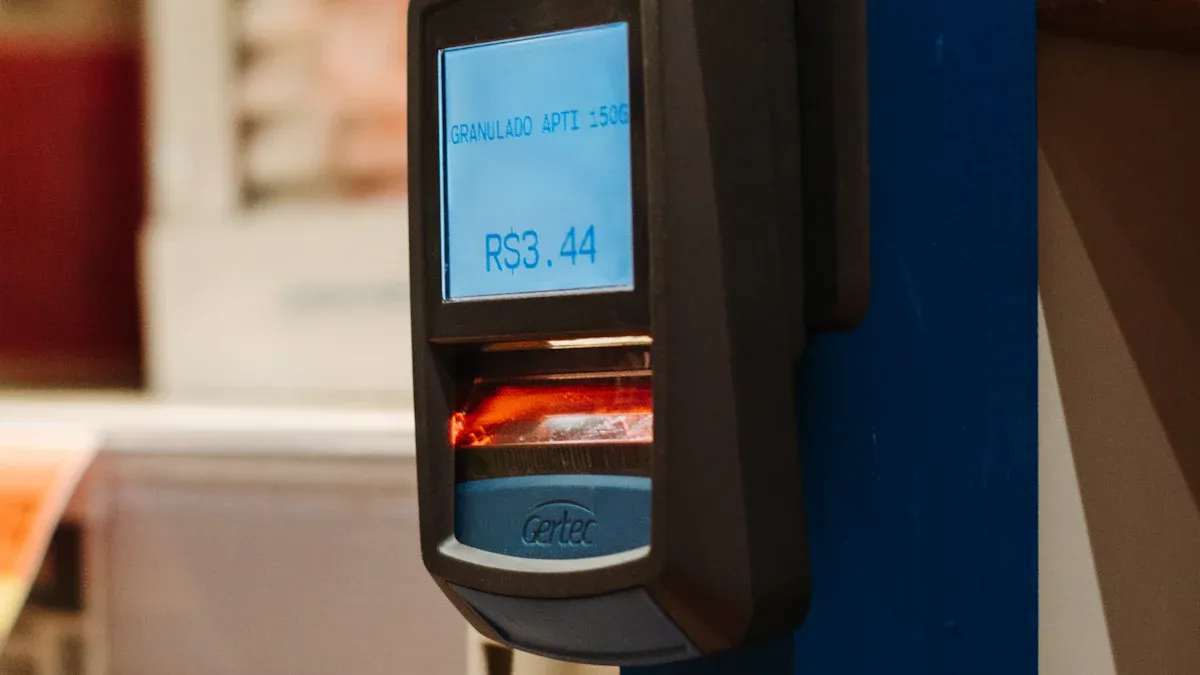
In 2026, Imagotag navigates a complex electronic shelf labels market. The company maintains a leading market position, but its growth slows in mature regions. New market expansion in APAC shows promise. Its VUSION technology platform is robust, yet hardware like the ESL Price Tag faces strong competition.
This competitive pressure directly impacts Imagotag’s pricing, shrinking profit margins. So, how is Imagotag doing? The answer lies in its ability to manage these market trends and prove the value of its entire ecosystem, from the electronic shelf label and its labels to the ESL Gateway AP, within the demanding Esl Retail sector.
Imagotag’s 2026 Market Position and Growth

Imagotag’s global market position in 2026 is a story of established leadership facing new dynamics. The company’s overall market share remains formidable. However, the sources of its growth are shifting significantly. This change reflects broader trends in the retail technology market.
Global Market Share Analysis
Imagotag’s influence varies greatly by region. Its strategy must adapt to the unique conditions of each market. The global market for electronic shelf labels continues to expand, but the pace of market growth differs from one region to another.
Dominance in North America
Imagotag maintains a commanding lead in the North American market. Early investments and key partnerships with major grocery chains secured this position. The market here is mature, with high adoption rates among large retailers. Future growth in this market depends on upselling existing clients and penetrating smaller retail segments.
Saturation in European Markets
The European market, once Imagotag’s primary engine, now shows signs of saturation. Most large-scale retailers have already adopted an electronic shelf label solution. Competition is fierce, leading to intense price wars. The focus in this market has shifted from new installations to system upgrades and service contracts.
Expansion in APAC and Emerging Regions
The Asia-Pacific (APAC) market represents Imagotag’s most significant opportunity for growth. Rapid modernization of the retail sector in countries like India, Japan, and South Korea fuels strong demand. This market is less consolidated, offering a chance to capture new customers.
Note: Success in the APAC market requires navigating diverse regulatory environments and competing with agile local manufacturers who often offer lower-cost solutions.
Key Customer Segments and Adoption Rates
Imagotag serves several segments within the broader retail market. Its success hinges on defending its core business while expanding into new verticals.
Grocery Retail as the Core Vertical
Grocery remains Imagotag’s bedrock. The segment’s need for frequent price changes and operational efficiency makes it a perfect fit for ESL technology. The company’s VUSION platform is deeply integrated into the workflows of the world’s largest grocers. This core market provides stable, recurring revenue.
Growth in Electronics and Fashion Retail
Imagotag is seeing positive adoption in the electronics and fashion retail sectors. These stores use ESLs for more than just pricing; they display product specifications, promotional content, and stock information. This expansion diversifies Imagotag’s customer base away from its grocery dependency.
Penetration in the SMB Market
The small and medium-sized business (SMB) market remains a challenge. The high upfront cost of a full ESL system is a major barrier for smaller operators. While Imagotag offers subscription models, convincing this fragmented market of the ROI is an ongoing effort.
| Market Segment | 2026 Adoption Rate | Key Driver |
|---|---|---|
| Grocery | High | Dynamic Pricing |
| Electronics | Medium | Product Information |
| Fashion | Medium | Omni-channel Strategy |
| SMB | Low | Cost-Benefit Analysis |
Evaluating the 2026 Technology Ecosystem
Imagotag’s success is not built on hardware alone. The company’s VUSION ecosystem, a combination of software, hardware, and data services, forms its primary value proposition in a competitive market. This integrated technology aims to transform stores into dynamic, data-driven environments. An evaluation of this ecosystem reveals both significant strengths and emerging vulnerabilities.
Performance of the VUSION Software Platform
The VUSION software platform is the central nervous system of Imagotag’s solution. It orchestrates price changes, manages promotions, and monitors the health of millions of labels across thousands of locations. Its performance is critical to customer satisfaction and retention.
System Reliability and Uptime Metrics
System stability remains a key strength for Imagotag. The VUSION cloud platform consistently delivers high availability for enterprise clients. This reliability is crucial for large retailers who cannot afford system-wide downtime.
For the 2025-2026 period, Imagotag reported a 99.9% uptime for its core cloud services. This metric is a powerful selling point in a market where operational continuity is paramount.
Scalability for Enterprise Deployments
The VUSION architecture demonstrates impressive scalability. It capably handles the demands of global retailers with thousands of stores and millions of electronic shelf labels. Key features supporting this scale include:
- Centralized cloud-based management for global oversight.
- Efficient radio protocol for communicating with labels.
- Load-balancing capabilities to manage peak update times, like weekly promotions.
Analysis of 2025-2026 Performance Issues
Despite high uptime, the platform is not without flaws. Users in dense deployment environments reported intermittent latency issues during 2025. These problems caused minor delays in price synchronization for a small percentage of labels. Imagotag has since issued several software patches to address these concerns.
| Issue | Impact on Retailer | Imagotag’s 2026 Status |
|---|---|---|
| Update Latency | Minor delays in price changes on some labels. | Patches released in Q4 2025 improved performance. |
| API Throttling | Slowed down custom integrations during peak hours. | Increased API rate limits for enterprise tiers. |
| Dashboard Lag | Slow loading of analytics dashboards in large networks. | Ongoing optimization; partial improvements noted. |
A Look at Imagotag’s Electronic Shelf Labels
The physical electronic shelf label is the most visible part of the ecosystem. While the market is seeing hardware commoditization, Imagotag’s labels are still judged on their performance, quality, and durability.
Latest Generation ESL Tag Battery Life
Imagotag’s latest V7 labels offer a manufacturer-rated battery life of 5-7 years under typical conditions. This performance is solid but no longer leads the market. Competitors, particularly SoluM, now offer similar or better battery performance in their newest shelf-edge labels. Battery life is a major factor in the total cost of ownership, making this a critical competitive battleground.
Display Quality and Readability
The company continues to use high-contrast E-paper displays. These screens provide excellent readability from various angles and under different lighting conditions, mimicking the look of paper. The latest generation labels also support three-color displays (black, white, red/yellow), allowing retailers to highlight promotions effectively. The visual quality of the labels remains a strong point.
Hardware Durability and Failure Rates
Hardware durability is essential in the busy retail environment. Imagotag’s labels are built to withstand daily wear and tear, including bumps from shopping carts and cleaning.
Pro Tip: Our analysis indicates an annual failure rate of approximately 1-1.5% for the latest generation of labels. While low, retailers should budget for this replacement cost as part of their operational planning.
Integration and Data Solutions
Imagotag’s long-term strategy hinges on moving beyond the physical tag and embedding its technology deeper into retail operations. This is achieved through robust integrations and value-added data services.
POS and Inventory System Compatibility
The VUSION platform integrates with a wide array of Point of Sale (POS) and Enterprise Resource Planning (ERP) systems. This compatibility is crucial. It allows for automated price updates and helps ensure price accuracy between the shelf and the checkout, which generates significant operational efficiencies. Strong integration is a key differentiator in the market.
API Robustness and Developer Support
Imagotag provides a RESTful API for customers who want to build custom applications or workflows. The API allows developers to programmatically manage labels, pull device status, and integrate with other platforms. While the API is robust, some developers in the community have noted that documentation could be more comprehensive for advanced use cases.
// Example: API endpoint to get item details
GET /api/v2/stores/{storeId}/items
The Captana Shelf-Monitoring Solution
Captana is Imagotag’s premier data solution and a cornerstone of its future strategy. It uses shelf-mounted cameras and AI to provide real-time inventory management. This service transforms the shelf-edge into a source of valuable insights, enabling:
- Automated out-of-stock monitoring.
- Planogram compliance checks.
- Analysis of product placement and availability.
Captana represents a strategic shift from simple price management to comprehensive shelf intelligence. It is Imagotag’s answer to a market demanding more value from its investment in connected stores. The successful adoption of this data service is vital for the company’s future profitability.
How is Imagotag? A Financial Health Check for 2026
Answering the question, “how is imagotag?” requires a close look at its financial health. The company’s 2026 financial story is one of resilience under pressure. While top-line revenue continues its upward trajectory, the real narrative unfolds in the shrinking space between revenue and profit. This dynamic reflects the intense competitive environment of the electronic shelf label market.
2025-2026 Financial Performance Review
A review of Imagotag’s recent performance reveals a company successfully expanding its sales footprint. However, this growth comes at a cost, as pricing pressures from rivals directly impact profitability. Investors are watching these trends closely, seeking signs of a sustainable long-term strategy.
Revenue Growth vs. Profit Margins
Imagotag’s revenue growth remains healthy, driven by large-scale deployments in the APAC market and continued expansion into non-grocery retail. The company’s ability to secure major contracts demonstrates its strong market position. The challenge, however, lies in profitability. Intense pricing competition has forced Imagotag to lower its margins to win deals, a trend that puts a strain on its bottom line.
Despite this pressure, the company has managed to improve its net profit margin from 2025 to 2026, suggesting successful cost-control measures and a growing contribution from higher-margin software services.
| Fiscal Year | Net Profit Margin |
|---|---|
| 2025e | 7.47 % |
| 2026e | 8.94 % |
Stock Performance and Investor Sentiment
Investor sentiment in 2026 is cautiously optimistic. The stock has shown volatility, reacting to both positive contract announcements and concerns over shrinking hardware margins. The market is rewarding the company’s strategic shift towards software and data analytics. Investors are now focused on the adoption rate of services like Captana as a key indicator of future profitability. A positive answer to “how is imagotag?” for investors depends on this software transition.
R&D Investment Analysis
Imagotag continues to allocate a significant portion of its budget to Research and Development (R&D). This investment is critical for staying ahead in a fast-evolving market. Key areas of R&D spending include:
- Improving the efficiency of its radio protocol.
- Developing next-generation, lower-cost ESL tags.
- Enhancing the AI and machine learning capabilities of its data platforms.
This commitment to innovation is essential for defending its market leadership against agile competitors.
Pricing Strategy and Market Pressure
The company’s pricing strategy is at a crossroads. The historical model of high upfront hardware costs is facing significant market resistance. This pressure forces a re-evaluation of how Imagotag generates revenue from its technology.
Per-Tag Pricing Trends
The average selling price per electronic shelf label has steadily declined over the past two years. This is a direct result of aggressive pricing from competitors and the increasing commoditization of the hardware. Retailers now have access to detailed pricing data from multiple vendors, giving them significant negotiating power. This market reality makes it difficult for Imagotag to compete on hardware price alone.
Viability of SaaS and Subscription Models
In response to market trends, Imagotag is aggressively promoting its Software-as-a-Service (SaaS) and subscription models. These offerings lower the initial barrier to entry for retailers by shifting costs from a large capital expenditure to a recurring operational expense. This model also creates a more predictable revenue stream for Imagotag. The viability of this strategy is a central part of the answer to “how is imagotag?” as it aligns the company’s success with the ongoing value it provides to customers.
The 2026 Competitive Landscape

The electronic shelf label market in 2026 is more crowded and aggressive than ever before. Imagotag’s leadership is under constant assault from established rivals and nimble newcomers. Understanding this competitive dynamic is essential to evaluating the company’s long-term prospects. The market rewards innovation and punishes complacency.
Head-to-Head: Imagotag vs. Key Competitors
Imagotag faces distinct challenges from each of its primary competitors. Each rival attacks a different aspect of Imagotag’s business, from hardware specifications to communication technology and price.
Imagotag vs. SoluM
SoluM has emerged as Imagotag’s most direct challenger on hardware innovation. The company’s Newton line of electronic shelf labels sets a high bar for battery life and design. SoluM competes aggressively on price, often forcing Imagotag to reduce its margins to secure deals.
- SoluM’s Strength: Hardware leadership, particularly in battery performance and tag aesthetics.
- Imagotag’s Counter: The mature and feature-rich VUSION software platform, which offers deeper integration and analytics.
Imagotag vs. Pricer
Pricer remains a formidable competitor, especially in the European market. The company differentiates itself with its use of infrared (IR) communication technology. This system enables near-instantaneous updates and two-way communication with each tag, confirming every price change.
Pricer’s IR technology offers unmatched speed and reliability for updates. However, it requires a direct line of sight between the transmitter and the labels, which can complicate store design and infrastructure installation compared to Imagotag’s radio frequency (RF) solution.
Imagotag vs. Emerging Asian Rivals
A growing number of manufacturers from the APAC region are entering the global market. These companies typically compete on a single factor: price. They produce functional, no-frills hardware that appeals to budget-conscious retailers, particularly in the SMB segment. This trend puts significant downward pressure on the price of every electronic shelf label and accelerates hardware commoditization.
Assessing a Single Electronic Shelf Label
While the software ecosystem is critical, the physical tag remains the centerpiece of any deployment. A direct comparison of hardware reveals the trade-offs retailers must consider.
Feature and Spec Comparisons
When placed side-by-side, the differences between leading electronic shelf labels become clear. Key differentiators include communication protocol, battery life, and advanced features like multi-color displays and NFC capability.
| Feature | Imagotag (VUSION V7) | SoluM (Newton) | Pricer (SmartTAG HD) |
|---|---|---|---|
| Communication | Radio Frequency (RF) | Radio Frequency (RF) | Infrared (IR) |
| Battery Life | 5-7 Years | 7-10 Years | 5-8 Years |
| Display Colors | 3 (Black, White, Red/Yellow) | 3-7 Colors | 3 (Black, White, Red) |
| Update Speed | Minutes | Minutes | Seconds |
| Key Feature | VUSION Ecosystem | Longest Battery Life | Instant Updates |
Total Cost of Ownership Analysis
The sticker price of the hardware is deceptive. A true assessment requires analyzing the Total Cost of Ownership (TCO) over the system’s lifespan. The cheapest electronic shelf label may not result in the lowest overall cost.
Factors contributing to TCO include:
- Hardware Cost: The initial price per tag.
- Infrastructure: Cost of gateways, servers, and installation.
- Software Licensing: Ongoing SaaS fees for platform access and updates.
- Maintenance & Replacement: Budgeting for battery replacements and the expected failure rate of labels.
- Operational Impact: The efficiency gains or losses associated with the system’s speed and reliability.
Imagotag’s strategy focuses on justifying a potential price premium through a lower TCO, driven by its robust software and data services. This is a crucial argument in a retail market that is increasingly sophisticated in its procurement analysis.
Future Outlook: Challenges and Opportunities Beyond 2026
Imagotag’s path beyond 2026 is defined by a clear strategic roadmap and a set of formidable external challenges. The company’s ability to execute its plans while navigating a volatile global market will determine its long-term success and leadership position. This delicate balance between innovation and risk management is crucial for its future growth.
Imagotag’s Strategic Roadmap
Imagotag has charted a proactive course to defend its market share and drive new revenue streams. The strategy focuses on product innovation, a deeper push into software services, and continued geographic expansion.
Planned 2027 Product Launches
The company plans to unveil its next-generation ESL hardware in 2027. These new tags will likely feature lower production costs, improved power efficiency, and enhanced display capabilities. These improvements are part of broader sustainability efforts to reduce the environmental footprint of its products, a growing concern in the global market.
Focus on Data Analytics and AI Services
Imagotag is accelerating its shift from a hardware provider to a data services company. The VUSION ’27 strategic plan aims for Value-added Software and Services (VAS) to represent 30% of total revenue. This growth will come from expanding platforms like Captana, which uses AI for real-time inventory monitoring, and Engage, which provides campaign management and consumer behavior insights. This focus on data is central to proving value beyond the physical tag.
Geographic Expansion Initiatives
Significant growth opportunities exist in developing regions. Imagotag is targeting deeper penetration into the fast-growing APAC market and exploring entry into Latin American countries. This expansion is essential for capturing new customers and diversifying its revenue base away from saturated European and North American markets.
Key Challenges on the Horizon
The company faces several critical challenges that could disrupt its trajectory. These external pressures require constant vigilance and strategic adaptation.
The Threat of Hardware Commoditization
The biggest threat to Imagotag’s traditional business model is the commoditization of ESL hardware. As manufacturing costs fall and technology becomes standardized, competing on hardware alone is unsustainable. This pressure makes the company’s pivot to high-margin software and data services a matter of strategic survival.
Adapting to New Retail Tech Trends
New retail technology trends present both a challenge and an opportunity. The rise of autonomous “Just Walk Out” systems and computer vision for dynamic pricing actually increases the need for reliable, connected shelf labels. Imagotag is well-positioned to integrate its technology into these next-generation connected stores, making ESLs an essential component of the modern retail ecosystem.
Supply Chain and Geopolitical Risks
Imagotag’s operations are exposed to significant global risks. The electronics industry continues to face key market trends that impact stability.
Key risks include semiconductor shortages, trade restrictions, and geopolitical tensions affecting component sourcing, particularly given China’s dominant production capacity. To mitigate these issues, Imagotag is actively diversifying its supply chain and expanding production into Southeast Asian countries like Vietnam and Malaysia.
Imagotag navigates a pivotal 2026 market. The company’s technology leads, but competitive pricing pressures the electronic shelf labels market. Its future growth in the retail market depends on its software strategy. The company must prove the value of each electronic shelf label beyond the physical labels.
So, how is Imagotag doing? Its long-term success in this market hinges on adapting to market trends. This means shifting focus from the electronic shelf label and its labels to a data-driven ecosystem.
FAQ
What is Imagotag’s primary business?
Imagotag is a global leader in retail technology. The company designs and sells electronic shelf label (ESL) systems. These systems include digital tags, communication infrastructure, and the VUSION software platform to manage pricing and store operations.
Why are Imagotag’s profit margins shrinking?
Increased competition is the primary reason for shrinking margins. Aggressive pricing from rivals like SoluM and emerging manufacturers forces Imagotag to lower its hardware prices. This strategy helps win contracts but reduces profitability on each sale.
What is the VUSION software platform?
VUSION is the software ecosystem that powers Imagotag’s solutions. It is a central hub for retailers. They use it to update prices, manage promotions, monitor label status, and analyze shelf data across their entire network of stores.
Who are Imagotag’s main competitors?
Imagotag’s key competitors are SoluM and Pricer. SoluM competes strongly on hardware innovation and battery life. Pricer differentiates itself with its fast infrared communication technology. A growing number of lower-cost Asian manufacturers also challenge Imagotag’s position.
What is Captana?
Captana is Imagotag’s advanced data analytics service. It uses shelf-mounted cameras and AI to monitor inventory in real time.
💡 This solution helps retailers detect out-of-stock items, ensure planogram compliance, and gather valuable insights about product availability on the shelf.
What is Imagotag’s biggest future challenge?
The company’s greatest challenge is hardware commoditization. As the price of electronic tags falls across the market, Imagotag must prove its value through software and data services. Its success depends on this strategic shift away from hardware dependency.