

The retail advertising market will reach an estimated $203.9 billion by 2026. Your success requires a plan built on clear goals and deep audience understanding. This focus on personalization makes your marketing more effective. It requires a strategic blend of digital campaigns and in-store data.
A staggering 71% of consumers demand personalization, making it a baseline expectation for your marketing.
In-store technology, such as Electronic Shelf Labels connected by an ESL Gateway AP, turns an ESL Price Tag into a source of valuable Esl Retail data. This data fuels your data-driven marketing. Your plan must be a dynamic process, adapting to performance data and evolving customer behavior. Your entire marketing effort depends on this data.
Foundation: Setting SMART Goals and Defining Your 2026 Customer
A successful retail advertising plan begins with a strong foundation. You must first define what success looks like for your business. Then, you need to understand the consumer you want to reach. This initial phase aligns your marketing efforts with tangible outcomes and ensures every dollar is spent targeting the right people. Your performance depends on this clarity.
Aligning Advertising Objectives with Business Goals
Your advertising objectives should directly support your larger business goals. If your company aims to increase market share, your marketing goal might be to boost brand awareness in new regions. This alignment ensures your campaigns contribute meaningfully to overall growth.
Defining Your Key Performance Indicators (KPIs)
You must define your KPIs to measure progress accurately. These metrics translate your goals into measurable targets. For an ecommerce-focused goal, you might track Return on Ad Spend (ROAS) and Customer Acquisition Cost (CAC). For a brand awareness campaign, you could measure ad recall and social engagement. Clear KPIs are essential for evaluating performance.
Mapping Goals to the Customer Journey
Effective marketing meets the consumer at each stage of their journey. You should map specific goals to different phases. For the Awareness stage, your goal is reach. For Consideration, it’s engagement. For the Conversion stage, your goal is a direct sale. This approach helps you create a cohesive experience for your target audience and measure performance at each step.
Developing Hyper-Detailed Customer Personas
Knowing your target audience is critical. In 2026, a surface-level understanding is not enough. You need hyper-detailed personas built on rich consumer data. These personas guide your creative strategy, messaging, and channel selection, ensuring you connect with your target audience on a deeper level.
Your goal is to move from broad assumptions to specific, actionable consumer insights. The quality of your marketing depends on the quality of your data.
Moving Beyond Demographics to Psychographics
Demographics like age and gender offer limited insight into your target audience. Psychographic data, however, reveals the “why” behind consumer behavior. This data includes a consumer’s lifestyle, values, interests, and beliefs. Using this data helps you build a genuine connection with your target audience.
- Psychographic-driven campaigns deliver higher engagement and stronger conversions because they speak to a consumer’s core motivations.
- This approach allows for enhanced personalization, reflecting the values and lifestyles of your target audience.
- Ultimately, you gain a competitive advantage by using this data to adapt your marketing to shifting consumer attitudes.
Leveraging CRM and Social Listening Data
You can gather this valuable psychographic data from several sources. Your Customer Relationship Management (CRM) system is a goldmine of purchase history and behavioral data. Social listening tools provide real-time data on what your target audience discusses, what they value, and how they feel about certain topics. Combining these data sources allows you to build a complete picture of the consumer, turning raw data into a powerful marketing asset.
Channel Selection: Building Your Omnichannel Retail Advertising Mix
An excellent retail advertising plan requires a strategic mix of channels. You need to meet your customers where they are, whether online or in-store. This omnichannel approach ensures a consistent and powerful brand message across all touchpoints. Your goal is to create a seamless journey that guides the consumer from discovery to purchase.
Mastering Digital and Ecommerce Marketing Strategies
Digital channels are the backbone of modern retail marketing. Effective ecommerce marketing strategies are essential for driving online sales and building brand presence. You must leverage the latest digital marketing trends to stay competitive. These strategies use data to personalize the consumer experience and optimize performance. A strong focus on ecommerce marketing strategies will increase online sales.
Dominating Social Commerce on TikTok and Instagram
Social commerce is no longer a niche trend; it is a primary sales channel. Platforms like TikTok and Instagram are where a significant number of consumers begin their product searches. Your marketing must capitalize on this behavior. By 2026, TikTok Shop is projected to capture over 24% of US social commerce, with half of all social shoppers expected to make purchases on the platform. Integrating your ecommerce efforts directly into these platforms creates a frictionless path to purchase. This approach to commerce leverages real-time data for better targeting and engagement.
Investing in Programmatic and Connected TV (CTV)
Programmatic advertising automates your media buying, allowing for precise targeting at scale. You can use programmatic platforms to reach specific consumer segments across the web. This data-driven approach optimizes your ad spend for maximum impact. Connected TV (CTV) extends your reach into the living room, combining the broad appeal of television with the targeting capabilities of digital marketing. Investing in programmatic and CTV is crucial for a comprehensive commerce media expansion. These programmatic trends allow you to use data to find your audience efficiently. The use of programmatic advertising is a key part of modern ecommerce marketing strategies.
Creating Shoppable Video and Interactive Content
Passive content is no longer enough to capture consumer attention. You need to create interactive experiences that drive engagement. Shoppable videos allow viewers to purchase products directly from the content they are watching. This transforms passive viewing into an active commerce opportunity. Augmented Reality (AR) tools, like IKEA’s AR app, let customers visualize products in their own space, boosting purchase confidence. This type of marketing uses data to create personalized and immersive online experiences, a core component of effective ecommerce marketing strategies.
Integrating High-Impact Physical and Experiential Ads
Your online presence must connect seamlessly with your physical stores. Experiential marketing creates memorable, in-person events that build strong emotional connections with your brand. These high-impact ads turn your physical locations into powerful marketing assets. This integration of online and offline data is central to successful ecommerce marketing strategies.
Designing Immersive In-Store Experiences
The in-store experience heavily influences where many consumers choose to shop. Over 70% of millennials report that the store environment impacts their purchasing decisions. You can design immersive experiences that make shopping more enjoyable and memorable. Think of Apple’s interactive retail spaces or pop-up shops with exclusive product drops and selfie stations. These experiences use data to understand consumer preferences and drive higher transaction values. This marketing approach fosters brand loyalty and turns your store into a destination.
Utilizing Digital Out-of-Home (DOOH) Advertising
Digital Out-of-Home (DOOH) advertising brings the data-driven precision of online marketing to physical ad placements. You can use digital billboards and screens in high-traffic areas to deliver timely and relevant messages. For example, a campaign like Burger King’s “Whopper Detour” used geofencing to target consumers near competitor locations. This strategy combines location data with creative messaging to drive immediate action and create significant buzz.
Fostering Micro-Community and Influencer Partnerships
Building authentic connections is key to modern marketing. You can partner with micro-influencers who have a dedicated following within your niche. These partnerships feel more genuine to the consumer and often yield higher engagement. Encouraging user-generated content (UGC) by having customers share their experiences also builds trust. This strategy leverages social proof and community data to strengthen your brand’s credibility and expand your reach.
Budgeting: How to Allocate Your Ad Spend for Maximum ROI
A well-defined budget is the engine of your advertising plan. You must allocate funds strategically to maximize your return on investment (ROI). In today’s fast-paced ecommerce environment, a static annual budget is no longer effective. Your approach must be agile, data-driven, and powered by modern technology like AI to ensure every dollar drives performance. This focus on data improves your marketing accuracy.
Adopting a Performance-Based Budgeting Model
You should adopt a performance-based model for your ecommerce marketing. This flexible approach allows you to react to market changes and campaign results in real time. It moves away from fixed allocations and toward a fluid system where money follows success. This model relies on clean data for its accuracy.
Shifting Funds Based on Real-Time Channel Performance
Your team must constantly monitor channel performance. When one channel, like TikTok, delivers a higher ROAS, you shift funds to it from underperforming channels. This dynamic reallocation ensures your budget is always working its hardest. This process requires high-quality data to make informed decisions. The accuracy of your data directly impacts the success of your ecommerce strategy.
Allocating a Budget for Experimental Technologies
Innovation requires investment. You should dedicate a small portion of your budget, perhaps 5-10%, to experimental technologies. This fund allows you to test emerging AI tools, new ad formats, or beta platforms. It keeps your ecommerce marketing strategy ahead of the curve and uncovers new avenues for growth. These experiments provide valuable data for future predictions.
Using AI-Powered Tools for Budget Optimization
Artificial intelligence (AI) revolutionizes budget management for ecommerce. AI platforms process vast amounts of data to optimize your spending with incredible speed and accuracy. Using AI is no longer a luxury; it is essential for competitive marketing. The right AI tools can dramatically improve your programmatic efficiency.
AI-powered optimization delivers significant results. Some ecommerce brands report a 43% increase in ROAS, while others have achieved an 83% ROAS lift by using AI. The AI and data accuracy are critical for these outcomes.
Automating Bid Strategies with AI Platforms
You can use AI to automate your media buying and bid strategies. AI platforms analyze market conditions and user behavior to place bids that maximize your chances of conversion at the lowest cost. This automation improves both your marketing efficiency and your team’s productivity.
- Better Return: AI uses data and smart predictions to place ads in front of the right audience, increasing conversions.
- Less Manual Work: Automation frees your team to focus on high-level marketing strategy instead of manual bid adjustments.
- More Accurate Targeting: AI uses real-time data signals to ensure your ads reach shoppers most likely to buy your ecommerce products.
Analyzing Competitor Spend to Find Opportunities
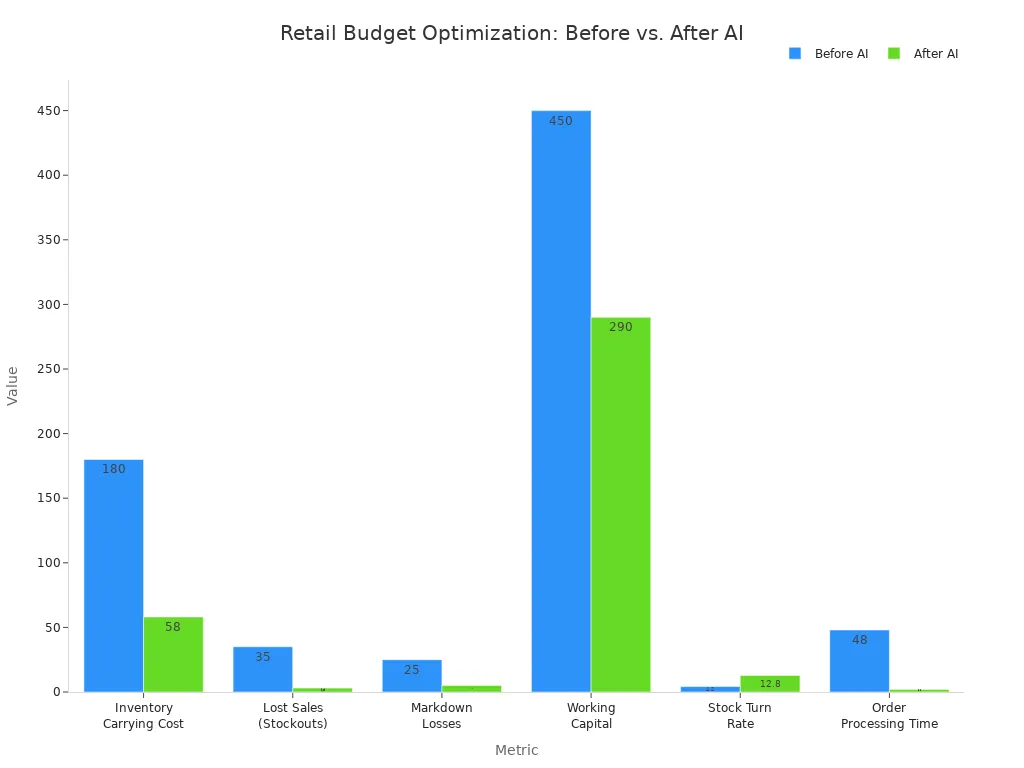
AI tools can analyze your competitors’ advertising strategies. This data reveals their spending patterns, channel mix, and messaging. You can use these insights to identify gaps in the market and find untapped opportunities for your own ecommerce brand. AI makes accurate predictions about market trends based on this competitive data. The financial impact of implementing AI is clear, with data showing massive improvements across key retail metrics. AI-driven predictions help you anticipate changes and adjust your strategy for better performance. The accuracy of these AI predictions is constantly improving.
Creative Strategy: Crafting Ad Content That Converts

Your creative strategy is where your data-driven plan meets compelling execution. Effective ad content connects with consumers on a personal level, builds trust, and guides them toward a specific action. You must combine advanced personalization with authentic messaging to turn impressions into conversions. This approach ensures your marketing efforts resonate deeply with your target audience and drive tangible ecommerce results. The quality of your creative is directly tied to the quality of your underlying data.
Driving Conversions with Personalization and Authenticity
Modern consumers expect relevance. Generic ads get ignored, but content that speaks directly to an individual’s needs and values captures their attention. Personalization and authenticity are the twin pillars of a high-converting creative strategy. You can use data to tailor experiences, while authentic content builds the trust necessary for a purchase. This combination is essential for successful ecommerce marketing.
Did you know? Personalized calls-to-action (CTAs) convert 202% better than generic versions. This highlights the immense power of tailoring your message. Effective personalization strategies rely on accurate customer data.
Using Dynamic Creative Optimization (DCO)
You can use Dynamic Creative Optimization (DCO) to automate ad personalization at scale. This technology uses data to assemble ad components—like images, headlines, and offers—in real time for each individual viewer. DCO ensures every impression is as relevant as possible. For example, it can show a user the exact product they viewed on your ecommerce site, complete with the latest pricing. This level of personalization makes your ads significantly more effective.
- Boosts Performance: DCO can increase campaign performance by up to 40% by serving the most relevant ad creative based on user data.
- Increases Relevance: The technology uses data signals to match ad messaging with user needs, making your marketing more persuasive.
- Improves Efficiency: AI-driven DCO platforms test creative variations automatically, optimizing your ad spend and maximizing your return.
Showcasing User-Generated Content (UGC) for Trust
Authenticity is a powerful currency in ecommerce. You can build trust by showcasing content created by your actual customers. User-generated content (UGC), such as reviews, photos, and videos, acts as powerful social proof. Integrating UGC into your ads shows potential buyers that real people love your products. This authentic marketing approach feels more genuine than traditional advertising and can significantly boost credibility and conversions. Your ecommerce strategy should leverage this valuable data.
Developing Clear, Action-Oriented Messaging
Your ad creative must have a clear purpose. Every element should work together to guide the user toward a single, desired action. Vague or confusing messaging leads to missed opportunities. You need to develop clear, action-oriented copy that communicates value and tells the user exactly what to do next. This clarity is fundamental to effective ecommerce marketing.
Ensuring Every Ad Has a Singular Call-to-Action (CTA)
You should avoid overwhelming your audience with multiple choices. An ad with a singular, focused call-to-action (CTA) dramatically outperforms one with competing messages. Research shows that a single CTA can increase clicks by 371% and sales by a staggering 1617%. Whether your goal is “Shop Now,” “Learn More,” or “Get Your Offer,” you must make the next step obvious and compelling. This focused approach uses data to streamline the user journey and maximize conversion rates for your ecommerce brand.
Communicating Your Unique Value Proposition
Your ad must quickly answer the consumer’s core question: “What’s in it for me?” You need to clearly communicate your unique value proposition (UVP). This is the specific benefit that sets you apart from the competition. Whether it’s superior quality, faster shipping, or exclusive products, your UVP should be at the heart of your messaging. Brands like Sephora effectively use this by promoting “Triple Points Weekend,” combining their loyalty program’s value with a time-sensitive offer. This marketing tactic uses data to create urgency and drive immediate action, reinforcing the brand’s value in the process. Strong personalization enhances the impact of your UVP.
The Role of Data: Measurement, Attribution, and Optimization

Your advertising plan is only as strong as the data that supports it. You must move beyond simply collecting data and start using it to measure results, understand customer behavior, and continuously refine your strategy. This systematic approach turns raw information into a powerful engine for growth, ensuring your marketing efforts produce measurable outcomes. Effective data analysis is the foundation of high-performance ecommerce marketing.
Establishing a Unified Analytics Framework
You need a unified analytics framework to make sense of your advertising data. This system brings together information from all your channels into a single, cohesive view. It allows you to see the complete picture of your marketing performance. This clarity helps you make smarter decisions and connect your spending to real business outcomes.
Tracking ROAS, CAC, and Customer Lifetime Value (CLV)
You should focus on three critical metrics to measure success. Return on Ad Spend (ROAS), Customer Acquisition Cost (CAC), and Customer Lifetime Value (CLV) provide a comprehensive view of your financial performance. This data tells you if your campaigns are profitable. Tracking this ecommerce data is essential for understanding both short-term wins and long-term brand health. Your marketing team can use this data to justify budgets and prove value.
Implementing a Multi-Channel Attribution Model
Customers rarely see one ad and make a purchase. They interact with your brand across multiple touchpoints. You can implement a multi-channel attribution model to understand this complex journey. This model helps you assign proper credit to each marketing channel that influenced a sale. Advanced AI platforms can analyze this journey data, revealing which channels deliver the best results and helping you optimize your media mix for better outcomes. This AI-driven approach provides more accurate insights than traditional models.
Creating a System for Continuous Improvement
Great marketing requires constant refinement. You must create a system for continuous improvement based on performance data. This process involves regular testing and optimization to ensure your campaigns are always operating at their peak. AI tools can accelerate this cycle by providing faster analysis and predictive insights.
Pro Tip: Use AI to analyze test results. AI can identify subtle patterns in user behavior that a human analyst might miss, giving you a competitive edge in your ecommerce marketing. This AI-powered data analysis leads to better outcomes.
A/B Testing Ad Creative, Audiences, and Offers
You should use A/B testing to systematically improve every component of your ads. This method allows you to compare different versions of your creative, audiences, and offers to see what performs best. This data-driven process removes guesswork from your creative strategy.
- Test Your Audiences: You can test different audience segments to find which groups deliver the highest conversion rates. Compare first-party data against third-party data or lookalike audiences against interest-based groups to fine-tune your targeting.
- Test Your Creative: You can experiment with various ad elements to see what resonates most. Test different headlines, descriptive copy, and calls-to-action. You can also compare images, color schemes, and video formats to maximize engagement.
Implementing a Weekly or Bi-Weekly Optimization Cycle
You must turn your test results into action. Implement a regular optimization cycle, either weekly or bi-weekly, to apply what you have learned. This consistent process of analyzing data and making small adjustments creates significant long-term gains. This disciplined approach to ecommerce ensures your marketing stays effective and your performance continually improves. AI can automate parts of this cycle, making your team more efficient.
The Future of Ecommerce: Integrating Your Tech Stack for Success
Your success in modern ecommerce depends on a fully integrated technology stack. You must connect your online and offline systems to create a seamless consumer experience. This integration turns fragmented data points into a powerful, unified view of your customer. A connected tech stack is the engine that drives personalization, efficiency, and growth for your ecommerce business.
Leveraging Your Point of Sale (POS) System
Your Point of Sale (POS) system is more than a cash register; it is a rich source of customer data. You can integrate this system with your broader marketing efforts to bridge the gap between your physical and online stores. This connection unlocks powerful insights and enables a true omnichannel commerce strategy.
Supporting BOPIS and Ship-from-Store
Modern consumers demand flexible fulfillment options. Buy Online, Pick-up In-Store (BOPIS) is a rapidly growing trend, with the global industry projected to reach $703.2 billion by 2027. Your integrated POS system makes these models possible. It provides real-time inventory data, allowing your ecommerce site to offer products available at local stores. This capability improves the online shopping experience and drives foot traffic.
Driving In-Store Results with Digital Ads
You can use the data from your POS system to make your online advertising more effective. By analyzing transaction data, you gain valuable insights into buying patterns and popular products. This information allows you to create highly targeted online campaigns.
- Your POS data, when linked to loyalty programs, reveals individual consumer preferences.
- You can use this data to send personalized online offers for frequently bought items.
- This data-driven marketing approach boosts campaign performance and strengthens customer loyalty.
Building a Single Customer Profile
You need to build a single profile for each consumer to deliver true personalization. This unified view combines all online and offline interactions into one comprehensive record. Companies like Amazon and NatWest use this strategy to power their marketing. NatWest, for example, increased sales by 47% by using a single customer view to target its online ads.
Unifying Online and Offline Customer Data
The biggest challenge in modern marketing is fragmented data. Customer information often sits in separate silos, making it difficult to understand the complete journey. You must break down these barriers. Integrating your ecommerce platform, POS system, and CRM creates a unified data foundation. This allows you to track every interaction, from an online ad click to an in-store purchase.
Enabling Consistent Offers Across All Channels
A single customer profile enables you to deliver a consistent experience everywhere. When your systems are connected, you can recognize a consumer whether they are on your website, using your mobile app, or standing in your store. This unified data allows you to present consistent pricing and personalized offers across all channels. This seamless approach builds trust and makes your ecommerce marketing more impactful.
Your 2026 retail advertising plan is a living document, not a static file. Success hinges on a consistent process fueled by data. You must use data to define goals and select channels. Your budget and creative also rely on accurate data. Relentless optimization using performance data is crucial. This data-driven approach to retail advertising builds sustainable growth, as companies using customer data effectively see improved profitability. Your commitment to this data process, using all available data, ensures your success.
FAQ
How much should I budget for experimental ads?
You should allocate a small portion of your total budget for experimentation. A common practice is dedicating 5-10% to test new technologies and emerging advertising trends. This investment helps you stay ahead of the competition and discover new growth opportunities.
What is the most important metric to track?
While ROAS and CAC are vital, you should prioritize Customer Lifetime Value (CLV). CLV provides a long-term view of profitability. It helps you understand the total value a customer brings to your business, guiding more strategic marketing investments.
Why is a single customer profile so important?
A single customer profile unifies all online and offline data into one record. This complete view allows you to deliver truly personalized experiences. You can create consistent offers across all channels, which builds trust and boosts marketing effectiveness.
How can I keep up with new advertising trends?
You can stay current by dedicating time to industry research. Follow leading marketing publications, attend webinars, and network with peers. Your experimental budget also allows you to test new trends firsthand to see what works for your brand.
What is the first step in creating a retail ad plan?
You must start by setting SMART goals that align with your overall business objectives. This foundational step ensures your advertising efforts have a clear purpose. It also allows you to define the key performance indicators (KPIs) for measuring success.
How do I choose the right advertising channels?
You should select channels based on your customer personas. Analyze where your target audience spends their time. A mix of digital channels like social media and physical touchpoints like in-store events creates a powerful omnichannel strategy that follows consumer trends.
Why is user-generated content (UGC) effective?
UGC builds authenticity and trust. It acts as powerful social proof because it comes from real customers, not your brand. Integrating customer photos, videos, and reviews into your ads makes your marketing feel more genuine and can significantly increase conversions.