

A price tag is a label attached to a product that states its required purchase price. This simple tool serves as a primary communication channel between sellers and buyers. It transparently communicates the final price for an item. Modern Esl Retail settings now utilize an ESL Price Tag for this purpose. This form of Electronic Shelf Labels receives updates through a central ESL Gateway AP, ensuring pricing accuracy across the store.
The price tag fundamentally bridges the information gap, making the transaction process clear and straightforward for every customer.
1. The Core Function of a Price Tag: Stating the Cost

A price tag’s primary role is to state the cost of an item. This number, the retail price, represents the amount a customer must pay to acquire the product. It is the most direct piece of information in a transaction, creating a clear expectation for the buyer. This fundamental function eliminates ambiguity and builds a foundation of trust between the seller and the consumer.
The Selling Price
The selling price, or retail price, is the final amount charged for a product. This figure is not arbitrary; it is subject to regulations that ensure fairness. For instance, the European Union has specific rules to protect consumers from misleading price reductions.
The EU’s Price Indication Directive requires businesses to display the lowest price an item was sold for in the previous 30 days when announcing a sale. This regulation prevents the artificial inflation of a price just before a discount is applied.
This legal framework ensures that the price shown reflects genuine value and that promotional offers are transparent. It holds businesses accountable for their pricing strategies.
Currency and Unit Price
A price tag also specifies the currency (e.g., $, €, £) and often provides a unit price. The unit price breaks down the cost into a standard measurement, such as per ounce, per pound, or per item. This information is incredibly valuable for comparing different-sized products. A prominent unit price helps consumers identify the most cost-effective option, which can lead to significant savings on groceries and household goods. The unit price empowers shoppers to make informed decisions beyond the sticker price. Common examples include:
- Rice (priced per pound)
- Laundry pods (priced per pod)
- Batteries (priced per unit in a multi-pack)
By presenting a clear price and unit price, sellers provide the essential data customers need to evaluate a purchase.
2. Identifying the Product
Beyond just the price, a tag serves as a product’s identity card on the shelf. It provides crucial information that helps customers confirm they have the right item. This function is essential in a crowded retail environment where similar products often sit side-by-side. Clear identification prevents confusion and ensures a smooth shopping experience.
Product Name and Description
The most direct identifier on a tag is the product name. This simple line of text confirms what the item is, such as “Organic Whole Milk” or “Men’s Cotton T-Shirt.” Many tags also include a brief description, offering key details like size, color, or brand. This information helps shoppers quickly differentiate between variations of the same product.
A clear name and description build confidence. They allow a customer to verify an item’s attributes at a glance, ensuring the selected product meets their specific needs without guesswork.
This clarity is fundamental to customer satisfaction and efficient decision-making.
Barcodes and SKU Numbers
For businesses, the most important identifiers are barcodes and SKU numbers. Barcodes are graphical representations of data, often appearing as vertical lines and spaces. Scanners read these patterns to instantly retrieve information like the item’s price and manufacturer details at checkout. They are a universal tool used across the supply chain.
An SKU, or Stock Keeping Unit, is an internal code created by a retailer. It helps the business track its inventory with precision. While a barcode is universal, an SKU is unique to the seller and can encode specific details like color, size, and style. The table below highlights their distinct roles.
| Feature | Barcode (UPC) | SKU (Stock Keeping Unit) |
|---|---|---|
| Purpose | External sales, global product identification | Internal inventory management, tracking |
| Scope | Globally recognized, standardized | Specific to retailer/seller, customized |
| Issuance | Requires company prefix (authorized orgs) | Created internally by individual businesses |
| Function | Point-of-sale systems, supply chain | Tracking inventory levels, categorizing products |
Together, these codes streamline operations from the warehouse to the final sale, making them indispensable tools for modern retail.
3. Communicating Value and Promotions
A price tag does more than state a static cost; it is a dynamic tool for communicating value. By displaying discounts and special offers, it grabs a shopper’s attention and creates a sense of urgency. This function turns the tag into a powerful marketing instrument right at the point of purchase. Promotional price tags signal an opportunity for savings, directly influencing a customer’s decision to buy.
Original vs. Sale Price
One of the most effective promotional strategies is showing a new, lower price next to the original retail price. This visual comparison immediately highlights the savings. However, regulations exist to prevent this practice from being deceptive. For instance, the Federal Trade Commission (FTC) enforces rules requiring businesses to be transparent about their pricing. Businesses must display the total price clearly and prominently.
A transparent price comparison builds consumer trust. It assures shoppers that the advertised discount reflects a genuine reduction from a legitimate retail price, preventing the use of inflated original figures.
This honesty is crucial for maintaining a good reputation. The final price must be the most visible number, ensuring customers know exactly what they will pay.
Special Offers and Discounts
Beyond simple markdowns, price tags communicate a variety of special offers designed to provide value and drive sales. These promotions often encourage customers to buy more than one item. The promotional retail price is presented in a way that makes the deal easy to understand. A lower promotional price can be a key motivator. Common examples of these offers include:
- Buy One, Get One Free (BOGO): A classic offer where a customer receives a second identical item at no cost.
- Multi-Buy Deals: Promotions like “3 for 2” or “Buy two, get one 30% off” encourage bulk purchases.
- Category-Based Offers: A deal such as “Buy any two skincare items, get a free serum” helps boost sales within a specific product line.
- Loyalty-Based Discounts: Special offers may be available only to members, rewarding them with an exclusive promotional price.
These strategies transform a simple price into a compelling call to action.
4. The Price Tag as a Business Tool
Beyond informing customers, the price tag is a powerful instrument for internal business operations. It connects physical products to digital systems, enabling sophisticated management of inventory and pricing strategies. This link is fundamental for a retailer’s efficiency and profitability.
Inventory Management
The codes on a tag, like barcodes and SKUs, are the foundation of modern inventory management. When scanned, these codes feed data directly into a centralized software system. This automation provides businesses with a clear, real-time view of their stock. Barcode inventory software streamlines operations in several key ways:
- It reduces errors by replacing manual data entry.
- It allows staff to locate items quickly across multiple warehouses.
- It automates the information flow from sales to the shop floor.
- It tracks individual items and batches, improving quality assurance.
This system coordinates product tracking from the moment inventory arrives until a customer makes a purchase. A single scan can reveal extensive details, including warehouse location and stock levels, making inventory control both accurate and efficient.
Executing Pricing Strategy
A price tag is the final execution point for a company’s pricing strategy. With the rise of Electronic Shelf Labels (ESLs), retailers can now implement dynamic pricing with incredible speed. Major companies like Walmart and MediaMarkt use digital tags to adjust the price of goods multiple times a day based on demand, competition, and stock levels. This technology allows a business to change a price across thousands of stores in seconds.
Retailers analyze sales data linked to each transaction to measure performance. This analysis helps them understand price elasticity, monitor competitor actions, and calculate gross margins, allowing for data-driven adjustments that maximize profitability.
By examining historical sales and customer behavior, businesses can forecast demand and set the optimal price. This strategic approach turns pricing into a responsive tool that adapts to a constantly changing market.
5. The Importance of Price Tag Placement
A price tag’s effectiveness depends heavily on where it is placed. Strategic placement ensures that customers can find pricing information quickly and easily. This simple detail enhances the shopping experience and prevents frustration, making it a critical component of in-store execution.
Ensuring Visibility for Customers
A price tag is useless if a customer cannot see it. Retailers must ensure that pricing is clearly visible and correct on the shelf. Proper visibility involves more than just attaching a sticker; it requires careful consideration of the customer’s perspective. A price tag should be placed at eye level whenever possible to capture immediate attention.
A key principle is to make pricing effortless for the shopper. A visible tag removes guesswork and allows customers to make purchase decisions confidently and efficiently.
To achieve optimal clarity, businesses follow several best practices:
- Use bold, clear fonts for easy readability from a distance.
- Position tags near the relevant products to avoid confusion.
- Avoid placing stickers over essential details like branding or nutritional information.
- Place promotional tags in high-traffic areas, such as endcaps, to maximize exposure.
These guidelines help ensure that the price is one of the first things a customer notices.
Consistency in Retail Displays
Consistent price tag placement across a store is crucial for building a positive brand perception. When tags are placed erratically, it can erode customer confidence. Shoppers may begin to question the store’s reliability and price image. Every small decision in a store’s layout, including how prices are displayed, contributes to how customers perceive the brand.
Inconsistent displays suggest a lack of attention to detail, which can make a business seem unprofessional. Conversely, a uniform approach to labeling creates a clean, organized environment. This consistency makes it easier for customers to shop and reinforces their trust in the retailer. A stable and reliable pricing presentation is fundamental for maintaining a strong brand identity.
6. Physical vs. Digital Price Tags
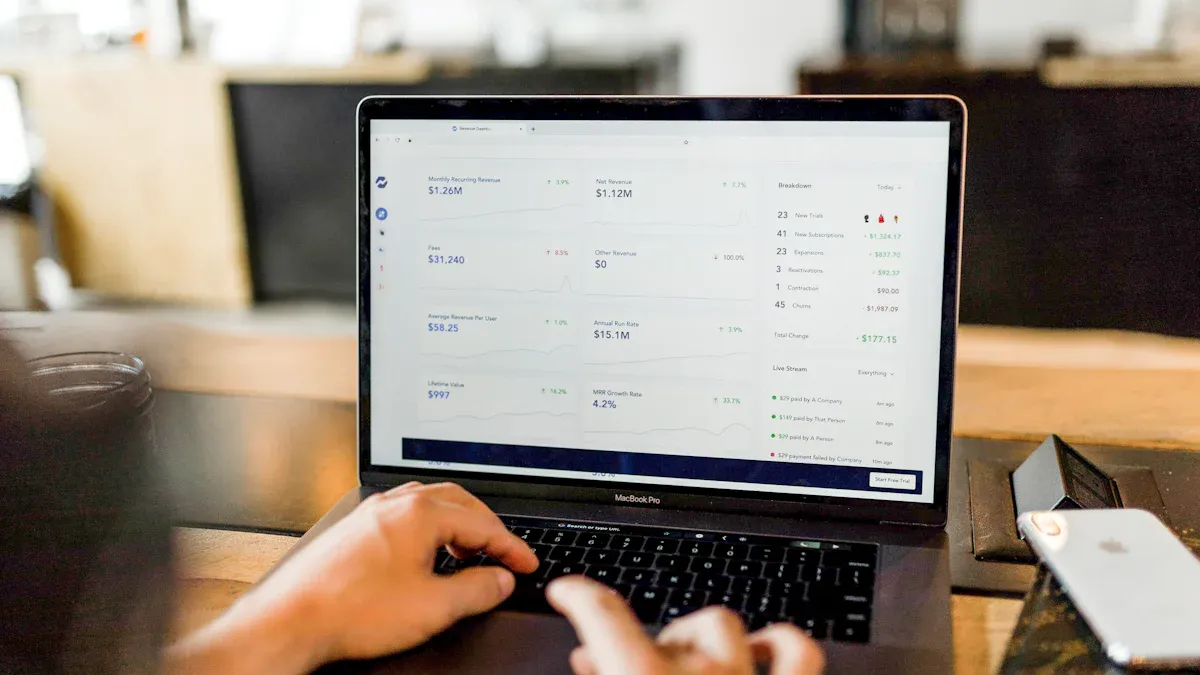
The evolution of retail technology has transformed the simple price tag. Businesses now choose between traditional physical labels and modern digital displays, each offering distinct advantages for store operations and customer experience.
Traditional Physical Tags
Traditional physical tags are the familiar paper or plastic labels manually attached to shelves. For decades, they have been the standard for displaying product information. Their primary benefit is a low initial cost and simple implementation. However, this method requires significant manual labor. Employees must physically print, find, and replace each tag for every price change. This process is time-consuming and prone to human error, which can lead to pricing discrepancies and customer frustration.
Modern Digital Displays
Modern digital displays, or Electronic Shelf Labels (ESLs), represent a major technological leap. These small screens connect to a central server, allowing for instant and accurate updates. This technology is rapidly expanding, with the retail ESL market projected to grow at a compound annual growth rate of 17.24%. The overall market is expected to reach $9.42 billion by 2035.
Digital tags offer incredible efficiency. Retailers can update thousands of labels in minutes, a task that once took hours or days. This allows businesses to implement dynamic pricing strategies and react swiftly to market changes.
The time saved on manual updates translates directly into better store operations. Staff can focus on higher-value activities, such as:
- Improving on-shelf product availability
- Assisting customers directly
- Enhancing the overall in-store experience
While the initial investment for ESLs can be high, the return on investment is compelling. Retailers like Naifeh’s Cash Saver expect to recover the cost in under two years. The long-term benefits of labor savings, pricing accuracy, and improved sales make the digital price tag a powerful tool for modern retail.
A price tag is much more than a number; it is a vital information hub for shoppers. Price tags inform consumers about cost, product details, and special deals, which promotes transparency in retail. This clarity builds significant trust, a factor 39% of consumers consider the most important for a business. For companies, the tag is an essential tool for sales, inventory, and marketing.
Understanding a price tag empowers every individual to be a smarter, more informed consumer in any shopping environment.
FAQ
Why is the unit price important?
The unit price allows shoppers to compare the cost of a product across different sizes. It reveals the most cost-effective option. This information helps consumers make smarter purchasing decisions. A lower unit price often means better value.
How is the unit price found?
The calculation for how is the unit price found is simple. Retailers divide the total price of a product by its quantity, such as ounces, pounds, or count. This process gives a standardized cost per unit, making comparisons easy.
What is the difference between a barcode and an SKU?
A barcode is a universal code for external tracking and sales. An SKU is an internal code a retailer creates for inventory management. Barcodes identify items globally, while SKUs track them within a specific business.
What information must a price tag legally show?
Regulations require tags to show the total price and currency. For many items, a unit price is also mandatory. This transparency protects consumers from misleading information. The unit price is a key part of this protection.