Retail advertising is the process of promoting products directly to consumers. This retail marketing is focused on driving sales through price-oriented offers. Unlike brand-building, retail advertising emphasizes immediate transactions with strong calls-to-action. Modern Esl Retail tools exemplify this focus. An ESL Gateway AP can instantly update an ESL Price Tag or Electronic Shelf Labels for promotions. The scale of this retail advertising is massive. Global investment in retail advertising is projected to hit $196.7 billion in 2026.
What Is the Main Goal of Retail Advertising?

The primary objective of retail advertising is straightforward: to generate immediate sales. This singular focus creates a clear distinction between promoting a specific transaction and building a long-term brand identity. While both are crucial for a healthy business, they operate on different timelines and use different messaging strategies.
Driving Immediate Sales vs. Building Brand Image
Focus on Transactional Messaging
Retail advertising uses direct language. Its focus is on the transaction. It highlights price, promotions, and product availability to persuade a customer to make a purchase now. The messaging is less about the company’s story and more about the customer’s immediate gain, such as saving money or acquiring a desired product quickly. This form of retail advertising is designed to convert interest into revenue without delay.
Emphasis on Aspirational Storytelling
Brand advertising, in contrast, plays the long game. It uses emotional and aspirational storytelling to build a relationship with consumers. The goal is to create loyalty and a positive brand perception over time. While distinct, the most sophisticated strategies often blend both approaches.
- Apple integrates its strong brand identity into every product launch. This reinforces its premium position while driving massive immediate sales.
- Procter & Gamble (P&G) uses detailed consumer data to combine broad brand messaging with highly targeted digital retail advertising, improving marketing efficiency.
- Gucci revitalized its brand by merging its heritage with digital innovation, leading to significant sales growth and stronger brand engagement.
Key Differentiators from Brand Advertising
The differences between retail advertising and brand advertising are clear and functional. Understanding them is key to allocating your marketing budget effectively.
Time-Sensitivity and Urgency
Retail campaigns are almost always time-bound. They create urgency with phrases like “Limited-Time Offer,” “Sale Ends Sunday,” or “While Supplies Last.” This encourages immediate action from consumers who fear missing out on a good deal.
Product and Price Focus
A retail ad puts the product and its price front and center. The advertisement is built around a specific item, its features, and, most importantly, its cost. This directness helps consumers make quick purchasing decisions based on tangible value.
Clear Calls-to-Action (CTAs)
Every piece of retail advertising includes a strong, clear call-to-action. There is no ambiguity about the desired next step.
The language is direct and action-oriented: “Buy Now,” “Shop the Sale,” “Get 50% Off Today,” or “Visit Us In-Store.”
Measuring Success
Success in retail advertising is measured differently than success in brand building. The metrics are tied directly to sales and profitability.
Retail Metrics (Sales Lift, ROI)
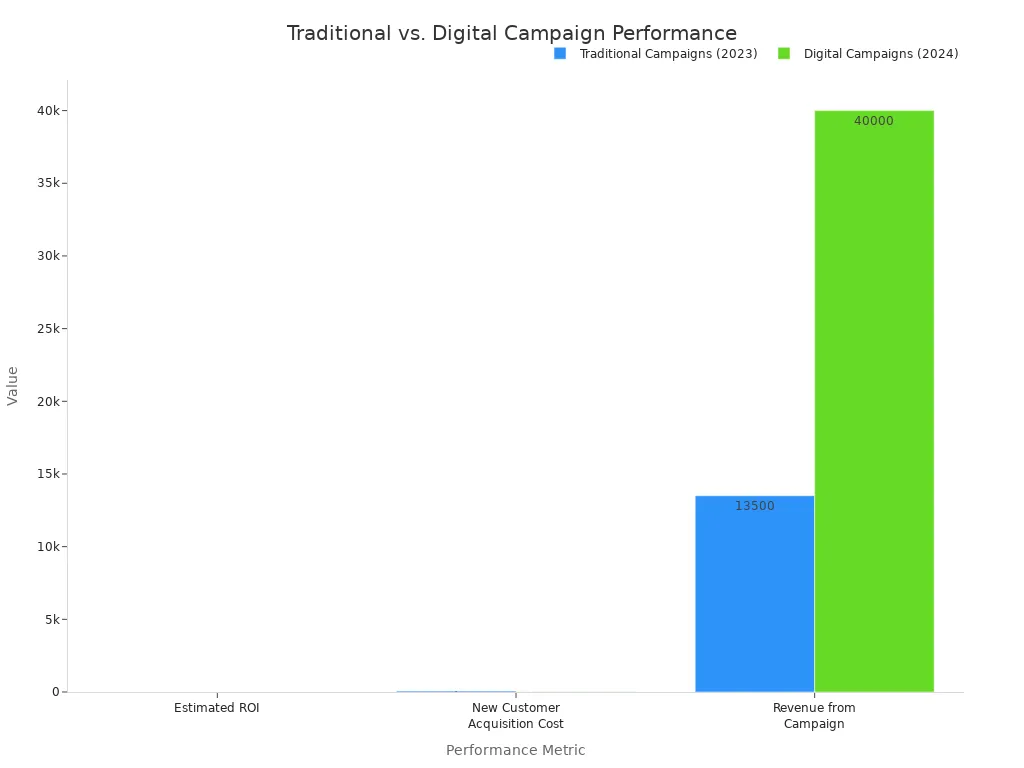
The most important metrics are transactional. Return on Ad Spend (ROAS), conversion rate, and customer acquisition cost (CAC) are paramount. The shift from traditional to digital retail advertising channels has made measuring these metrics more precise. Digital campaigns allow for real-time tracking and optimization, leading to significantly better performance.
| Metric | Traditional Campaigns (2023) | Digital Campaigns (2024) |
|---|---|---|
| Estimated ROI | 1.4x | 4.2x |
| New Customer Acquisition Cost | $68 | $24 |
| Measurable Conversions | Limited | 1,321 |
| Campaign Adjustments | None (static) | Weekly optimization |
| Revenue from Campaign | $13,500 | $40,000+ |
Brand Metrics (Sentiment, Recall)
Brand campaigns are measured with softer metrics. These include brand awareness, audience sentiment, and message recall. These indicators show long-term brand health but do not directly reflect immediate sales figures.
Traditional Retail Advertising Channels
Before digital ads dominated the landscape, traditional channels were the foundation of retail advertising. These methods remain powerful for reaching local customers and influencing decisions at the point of purchase. A successful strategy often blends these proven techniques with modern digital efforts.
In-Store Advertising
The physical store is the final and most critical touchpoint. A staggering 70% of purchase decisions are made in-store, making this environment a prime opportunity for effective retail advertising.
Point-of-Sale (POS) Displays
POS displays are placed near checkout counters to encourage impulse buys. These often feature small, high-margin items, special offers, or last-minute additions that customers can easily add to their carts.
Signage and Banners
Well-placed signs and banners guide customers, announce promotions, and highlight key products. Digital signage offers even greater flexibility. For example, McDonald’s saw a 20% sales increase after implementing digital menu boards, proving the direct impact of dynamic in-store visuals.
In-Store Audio and Announcements
Audio is a subtle yet effective tool. In-store announcements can inform shoppers of promotions without being intrusive. Research shows this method works:
- 76% of shoppers located an advertised product after hearing an in-store ad.
- 73% purchased the advertised product or a similar one.
- 71% said the audio informed them about a sale or promotion.
Print Media
Tangible advertisements can create a lasting impression and drive customers to both physical and online stores. This form of retail advertising targets specific geographic areas or interest groups.
Direct Mail and Flyers
Mailers and flyers sent to local households are a direct way to announce grand openings, seasonal sales, and special events. They often include coupons to track effectiveness and incentivize store visits.
Newspaper and Magazine Ads
Placing ads in local newspapers or special-interest magazines helps retailers reach a specific demographic. This method builds community presence and targets consumers with relevant interests.
Catalogs
Catalogs allow businesses to showcase a wide range of products in a visually appealing format. They serve as both a brand-building tool and a direct sales driver, encouraging customers to place orders or visit a store.
Broadcast and Outdoor Media
Broadcast and outdoor channels excel at building broad, local awareness for your retail business.
Local TV and Radio Spots
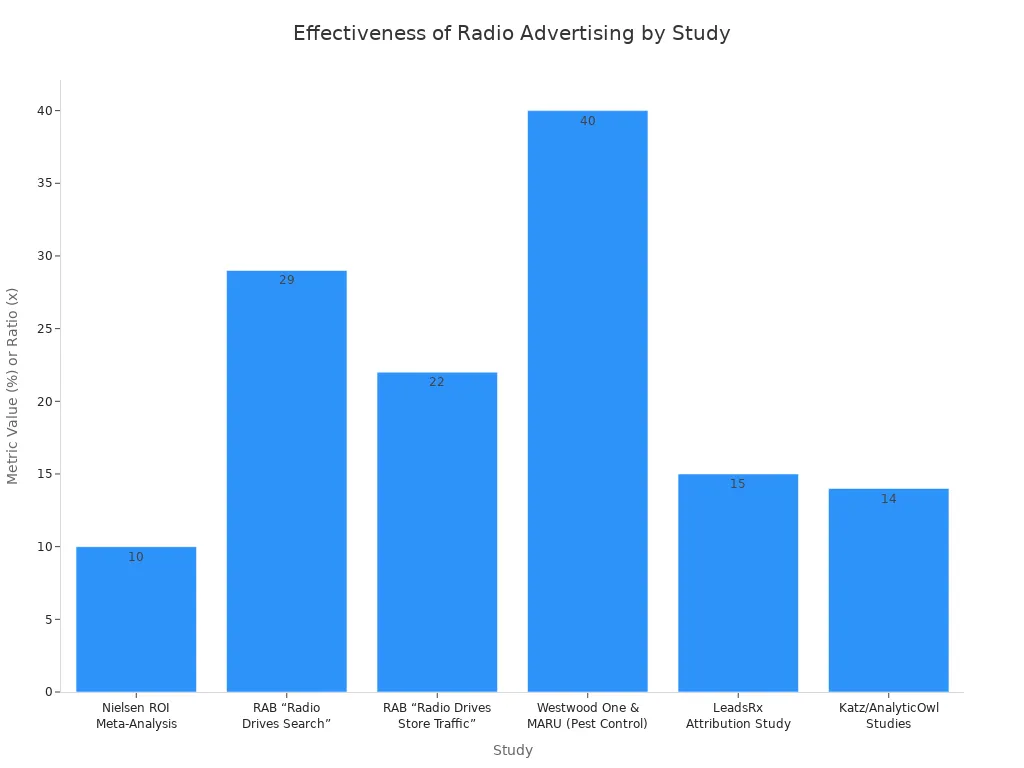
Local TV and radio remain highly effective for reaching a large regional audience. Radio, in particular, delivers a strong return on investment for retail advertising. Studies consistently show its power to drive tangible business results.
| Study (Year) | Key Effectiveness Findings |
|---|---|
| Nielsen ROI Meta-Analysis (~2016–2019) | AM/FM radio ads delivered about $10 in sales for every $1 spent on average. |
| RAB “Radio Drives Search” (2017) | Radio advertising generated an average +29% lift in Google search activity. |
| RAB “Radio Drives Store Traffic” (2018) | On average, radio ads drove a +22% lift in foot traffic to stores. |
| LeadsRx Attribution Study (2019–2020) | Adding radio ads amplified online ad performance, driving an average 15% lift in Google and Facebook ad responses. |
Billboards and Transit Ads
Billboards and ads on buses or subways build brand recognition within a specific geographic area. They serve as constant reminders, reinforcing other retail advertising campaigns and keeping a brand top-of-mind for commuters.
Modern Digital Retail Advertising Channels
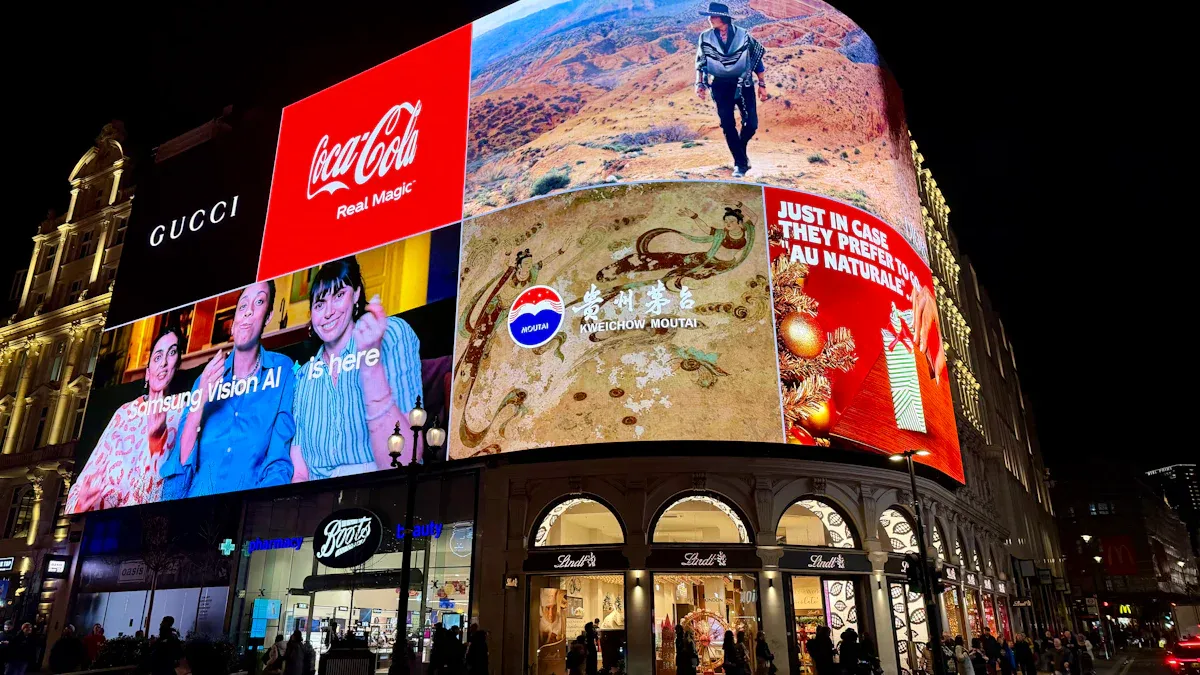
The shift to online shopping has made digital channels essential for modern retail advertising. These platforms offer precise targeting, real-time measurement, and direct paths to purchase, forming the core of a successful online marketing strategy.
Search Engine Marketing (SEM)
SEM places your products in front of customers who are actively searching for them. This high-intent audience makes it a powerful form of digital advertising.
Pay-Per-Click (PPC) for Products
PPC campaigns on platforms like Google Ads allow retailers to bid for top placement on search results pages. These ads are highly effective for driving immediate traffic to product pages. The average click-through rate (CTR) for e-commerce search ads is 2.69%, but this can climb significantly higher for specific categories like ‘Shopping, Collectibles & Gifts,’ which sees an average CTR of 8.92%.
Local SEO for Store Visibility
Local Search Engine Optimization (SEO) is critical for attracting customers to physical stores. Approximately 54% of consumers search online for local options before visiting a store. Optimizing your Google Business Profile is a key first step.
A complete profile with quality photos can receive 42% more direction requests, directly translating online searches into foot traffic. Failing to appear for searches like “running shoes near me” means losing sales to local competitors.
Social Media Advertising
Social platforms have evolved into major commerce hubs. They allow for sophisticated digital retail advertising that targets users based on demographics, interests, and behaviors.
Targeted Ads on Facebook & Instagram
Instagram is a discovery engine for retail. An incredible 87% of users report making purchases based on products they see on the platform. The effectiveness of this retail advertising is clear:
- 83% of consumers use Instagram to discover new products.
- 62% report increased interest in a brand after seeing it in a Story.
- Video ads generate three times more engagement than photo ads.
Shoppable Posts and Product Tags
These features turn social media content into a seamless shopping experience. Brands like Sephora masterfully use shoppable posts and product tags, allowing users to buy directly from an image or video. This strategy helped them achieve a 20% sales increase from their Instagram initiatives.
Influencer Marketing Collaborations
Partnering with influencers can generate authentic buzz and drive sales. COVERGIRL amplified an organic TikTok post from an influencer who identified one of their foundations as a “drugstore dupe.” By boosting the content with paid support, they achieved an Add-to-Cart Rate 5.4x higher than the category benchmark.
Email and Mobile Marketing
Direct communication channels like email and SMS are vital for nurturing customer relationships and driving repeat purchases. This is a cornerstone of effective retail marketing.
Promotional Email Campaigns
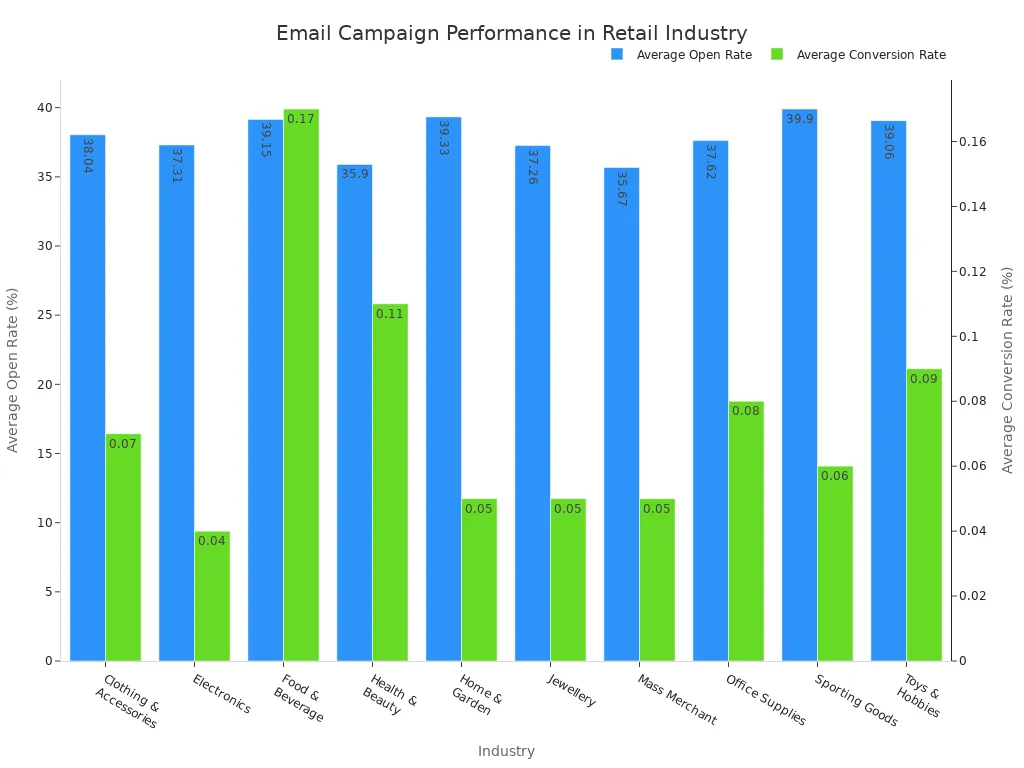
Email remains a high-ROI channel for digital advertising. Open rates and conversions vary by sector, but the data shows consistent performance. The average email conversion rate in e-commerce is around 2%, making it a reliable sales driver.
| Industry | Average Open Rate | Average Conversion Rate |
|---|---|---|
| Food & Beverage | 39.15% | 0.17% |
| Sporting Goods | 39.90% | 0.06% |
| Clothing & Accessories | 38.04% | 0.07% |
| Health & Beauty | 35.90% | 0.11% |
SMS and Push Notifications
Mobile alerts create urgency and cut through the noise. Brands like waterdrop® use personalized SMS messages to announce new products, while online retailer Beyond the Rack used push notifications to boost repeat visits by 50% in just three months. These tactics are perfect for flash sales and time-sensitive offers.
Loyalty Program Communications
These channels are ideal for communicating exclusive offers, rewards, and updates to your most valuable customers. This targeted retail advertising strengthens loyalty and encourages repeat business.
The Rise of Retail Media Advertising
A new frontier in retail advertising is rapidly expanding: retail media advertising. This strategy involves brands placing ads directly on a retailer’s website, app, or other digital platforms. The growth of this sector is explosive, transforming how brands reach consumers. The market for retail media advertising is on a significant upward trajectory.
| Metric | Value |
|---|---|
| Global Market Size (2023) | USD 30.02 billion |
| Projected Market Size (2030) | USD 56.97 billion |
| CAGR (2024-2030) | 10.5% |
What Are Retail Media Networks (RMNs)?
Retail Media Networks are the platforms that facilitate this new form of advertising. They are created and operated by retailers, turning their high-traffic digital properties into valuable ad space.
Definition and Purpose
An RMN is essentially a retailer’s in-house advertising business. Its purpose is to sell digital ad placements to brands that want to connect with the retailer’s customer base. This creates a new revenue stream for the retailer and gives brands a direct line to active shoppers. This evolution marks a significant shift in retail media advertising.
How RMNs Use First-Party Data
The power of retail media advertising comes from first-party data. As third-party cookies disappear, retailers’ direct customer data has become incredibly valuable. RMNs leverage this information for precise ad targeting.
RMNs use purchase history, loyalty program status, and browsing behavior to show relevant ads. A brand can target “frequent buyers” of a certain product category instead of guessing at user interests.
This process enables “closed-loop measurement,” where ad views are directly linked to sales. Brands receive concrete metrics on performance, justifying their ad spend with real sales data.
Major Retail Media Platforms
The retail media advertising landscape is dominated by a few major players who leverage their massive customer bases. Amazon holds a commanding lead, but other large retailers are quickly building their own powerful networks.
| Platform | 2025 US Market Share |
|---|---|
| Amazon Ads | 79.7% |
| Walmart Connect | 8.0% |
| Target Roundel | 1.5% |
Amazon Advertising
As the market leader, Amazon Advertising sets the standard for retail media advertising. It uses its unparalleled data on shopping and search behavior to offer highly effective campaigns on its platform.
Walmart Connect
Walmart Connect leverages the company’s immense physical and online footprint. It connects brands with millions of shoppers, both online and in-store.
Target’s Roundel
Target’s Roundel is known for its sophisticated use of first-party data. It allows brands to reach Target shoppers not only on Target.com but also across 150 other premium websites.
Instacart Ads
Instacart holds a unique position in the grocery sector. Its retail media advertising platform allows brands to place sponsored products in front of customers as they are actively building their digital shopping carts.
Benefits for Brands and Retailers
This form of retail advertising offers distinct advantages for both the brands buying the ads and the retailers selling the space.
Advertising at the Point of Purchase
Retail media advertising places a brand’s message at the most crucial moment in the customer journey: the point of purchase. Ads appear alongside product listings and search results, influencing decisions when buying intent is highest. This digital shelf space enhances visibility and drives sales.
Access to Valuable Shopper Data
For brands, the primary benefit is access to rich, transaction-based data. This allows for:
- Precise Targeting: Campaigns can be aimed at specific shopper segments based on actual buying habits.
- Enhanced Personalization: Ads are more relevant to the consumer, improving the shopping experience.
- Clear Measurement: Real-time analytics provide clear insights into return on ad spend (ROAS) and conversion rates, enabling continuous campaign optimization.
This data-driven approach makes retail media advertising a highly efficient and measurable component of any modern retail advertising strategy.
How to Create Effective Retail Advertising Strategies
An effective retail advertising strategy requires more than just placing ads; it demands a holistic approach that integrates every customer touchpoint. Success hinges on creating a seamless journey, leveraging data for personalization, and implementing compelling promotional tactics. These advertising strategies are designed to convert interest into sales while building lasting customer relationships.
Develop an Omnichannel Approach
Omnichannel retailing is a cross-channel marketing strategy focused on creating excellent customer experiences. It recognizes that modern consumers research online before buying offline, use mobile devices in-store, and shop across multiple platforms. A successful omnichannel approach ensures these transitions are smooth and consistent.
Integrating Online and Offline Touchpoints
The modern customer journey is not linear. A staggering 73% of consumers use multiple channels for shopping. Integrating these touchpoints is essential. This means connecting your website, mobile app, social media, and physical store into one cohesive ecosystem. A failure to create a high-quality omnichannel experience can lead to a 10% loss in revenue.
Several brands excel at this integration:
- Sephora complements its strong in-store experience with a powerful mobile app. Customers can track orders, find products in-store, and choose various delivery or pickup options.
- Amazon has mastered the online experience and successfully integrated it with offline touchpoints. It gives customers control over their post-checkout journey with options like Amazon Hub for package pickup.
- The Warehouse Group (TWG), a New Zealand retailer, used a data-driven omnichannel strategy for a major toy sale. By consolidating ad buys across video, audio, and display, they achieved a 157% return on ad spend (ROAS) and a massive 50.25x increase in conversions.
Creating a Seamless Customer Journey
A seamless journey is built around customer intent, not channel limitations. When a customer moves from your Instagram feed to your website and then to your physical store, the experience should feel like a single, continuous conversation. This journey-centric approach builds trust and increases customer lifetime value.
Campaigns using three or more channels achieve an average engagement rate of 18.96%, far surpassing the 5.4% rate of single-channel campaigns. The impact on revenue is direct. For example, orchestrating an omnichannel journey can lead to a 178% increase in cross-channel revenue. Furthermore, 64% of consumers are willing to spend more if their issues are resolved on their initial communication channel, proving that a smooth journey boosts both sales and loyalty.
Leverage Personalization and Data
Personalization is no longer a luxury; it is an expectation. According to Forbes, 81% of customers prefer to do business with companies that deliver a personalized experience. This involves using customer data to create tailored offers and recommendations that make shoppers feel understood and valued.
Using Customer Data for Tailored Offers
Leveraging first-party data is the key to effective personalization. By analyzing purchase history, browsing behavior, and demographic information, retailers can create highly relevant offers. This level of personalization drives significant results. For instance, 62% of business leaders report that personalization has improved customer retention.
Note: Brands that unify customer data create powerful 360-degree profiles. This allows for personalized marketing campaigns across all channels, from email and SMS to in-store interactions. Fashion retailer NA-KD achieved a 72x ROI and increased customer lifetime value by 25% after implementing this strategy.
Here are how leading brands use data for tailored offers:
- Amazon uses its A9 algorithm to analyze buying habits, delivering personalized product recommendations on its homepage and through email.
- ASOS offers personalized discounts based on customer type (new, returning, regular) and uses social media data to tailor messages.
- Nike provides a customized shopping experience through its SNKRs app, giving loyalty members exclusive access and fostering deep customer engagement.
Dynamic Product Recommendations
Dynamic product recommendations are a powerful tool in retail advertising. These suggestions, often displayed as “Customers also bought” or “You might also like,” use algorithms to show shoppers items relevant to their current interests. The impact is substantial, with product recommendations contributing up to 31% of e-commerce revenue.
The data speaks for itself:
- Customers who interact with product recommendations have a 5.5 times higher conversion rate.
- 56% of shoppers are more likely to return to a site that offers personalized recommendations.
- A home goods store increased its Average Order Value (AOV) by 10.5% in just eight weeks by adding “Recently viewed” and “Frequently bought with” carousels.
This tactic enhances the shopping experience and directly boosts key metrics, making it a cornerstone of any data-driven retail marketing strategy.
Implement Strong Promotional Tactics
Promotional tactics are the engine of retail advertising. They create urgency, provide tangible value, and motivate immediate purchases. Effective advertising strategies use a mix of discounts, bundles, and loyalty programs to drive sales and encourage repeat business.
Discounts and Limited-Time Sales
Discounts and time-sensitive offers are classic retail tactics that tap into powerful psychological principles like scarcity and loss aversion. Phrases like “Sale Ends Sunday” or “Limited-Time Offer” create a sense of urgency, compelling shoppers to act quickly to avoid missing out. This approach is highly effective for clearing inventory and driving short-term revenue spikes.
Bundles and BOGO Offers
Buy-One-Get-One (BOGO) offers and product bundles are psychologically potent. The word “free” makes shoppers feel they are gaining something for nothing, which is often more appealing than a simple percentage discount. This taps into several key principles:
- Perceived Value: Customers mentally separate the “free” item, reducing spending guilt.
- Loss Aversion: The thought of missing out on a free item feels like a loss, driving faster decisions.
- Fairness: Getting something for free feels like a smart, justified purchase, minimizing buyer’s remorse.
Loyalty and Rewards Programs
Loyalty programs are essential for fostering long-term customer engagement and driving repeat purchases. They reward your most valuable customers, making them feel appreciated and giving them a reason to choose your brand over competitors. Innovative programs move beyond simple discounts to offer exclusive experiences.
| Program Type | Description | Example |
|---|---|---|
| Points-Based | Customers earn points with each purchase, redeemable for rewards. | 7-Eleven Rewards |
| Tiered | Customers advance through levels to unlock better benefits. | ALDO Crew |
| Subscription | A recurring fee provides access to exclusive perks. | Amazon Prime |
| Experiential | Top-tier members receive unique experiences, not just discounts. | Adidas adiClub |
The Adidas adiClub is a prime example of an innovative program. It offers members early access to product drops, tickets to sporting events, and even meet-and-greets with athletes, aligning rewards with the brand’s core identity of fashion and sport. These programs transform a transactional relationship into a loyal community.
Measuring Retail Advertising Performance
Effective retail advertising is data-driven. Tracking the right metrics is essential to understand campaign performance, justify spending, and optimize for better results. This requires a focus on specific Key Performance Indicators (KPIs) and the right technology stack.
Key Performance Indicators (KPIs) to Track
These metrics provide a clear picture of your advertising effectiveness and its impact on the bottom line.
Return on Ad Spend (ROAS)
ROAS measures the gross revenue generated for every dollar spent on advertising. It is a fundamental measure of profitability.
A common benchmark for healthy eCommerce operations is a 4:1 ROAS, meaning $4 in revenue for every $1 spent. However, this varies by channel. Google Search campaigns often deliver higher returns of 4-8x, while email marketing can generate an impressive 36:1 ROAS.
Customer Acquisition Cost (CAC)
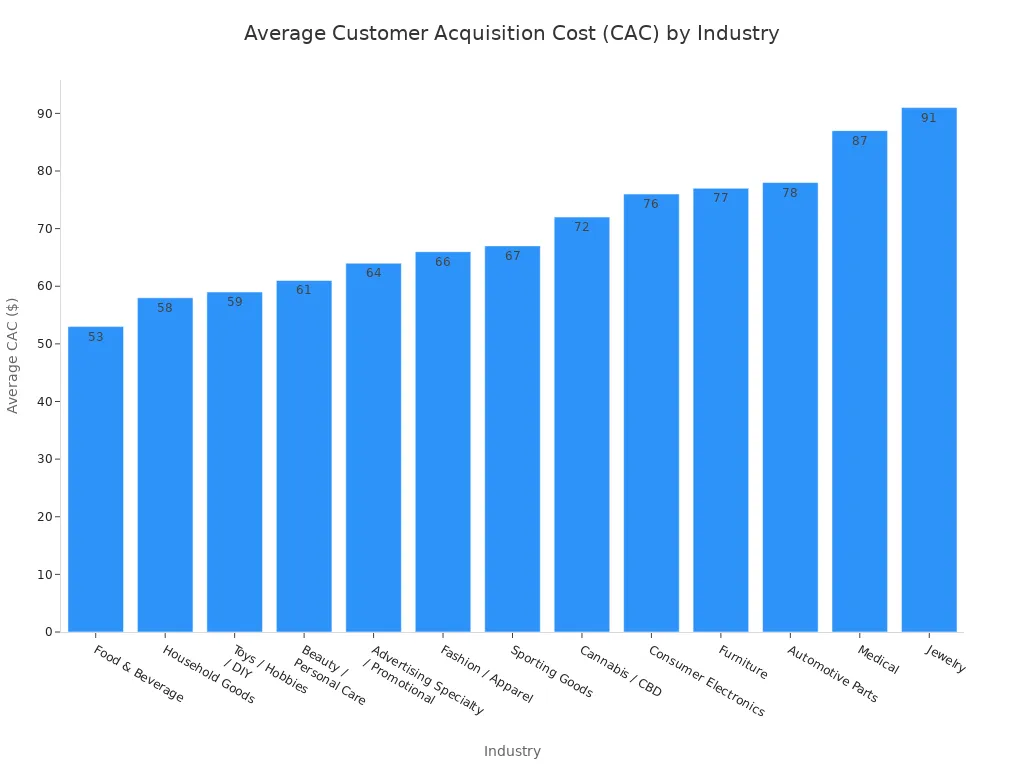
CAC is the total cost of acquiring a new customer. A low CAC is crucial for sustainable growth. The average CAC for online retail is around $68–$78, but it differs significantly by industry. For example, the food and beverage sector has a relatively low CAC of $53, while jewelry is much higher at $91.
Conversion Rate (Online and In-Store)
This KPI measures the percentage of users who complete a desired action, such as making a purchase. It can be tracked for both online transactions and in-store sales driven by digital campaigns.
Average Order Value (AOV)
AOV tracks the average amount spent each time a customer places an order. Increasing AOV is a key strategy to maximize revenue without necessarily increasing ad spend.
Foot Traffic and In-Store Sales Lift
For retailers with physical locations, measuring the impact of digital ads on in-store visits is critical. Technologies like geofencing can track when a user exposed to an ad enters a store. This allows you to calculate “Visit Lift,” or the percentage increase in visits from an ad-exposed group versus a control group.
Essential Tools and Technologies
The right tools are necessary to track KPIs and execute a data-driven retail advertising strategy.
Analytics Platforms (e.g., Google Analytics)
These platforms are the command center for measuring digital performance. They track website traffic, user behavior, conversion rates, and ROAS from various channels, providing the data needed for informed decision-making.
Customer Relationship Management (CRM) Systems
A CRM provides a centralized database for all customer information. It enables personalized messaging by segmenting audiences based on purchase history and behavior. This tool is vital for building a complete view of the customer journey across online and offline touchpoints.
A/B Testing Software
A/B testing software allows retailers to compare two versions of an ad, landing page, or email to see which performs better. You can test different calls-to-action (CTAs), images, or ad copy to systematically improve conversion rates and lower customer acquisition costs.
The primary goal of retail advertising is to convert interest into immediate sales. A successful modern strategy requires an integrated blend of traditional, digital, and retail media advertising. Effectiveness hinges on using data to create a seamless, personalized journey for each customer. Continuously measuring key performance indicators ensures all retail advertising, including emerging retail media advertising, is optimized to maximize return on investment.
FAQ
What is the main difference between retail and brand advertising?
Retail advertising focuses on driving immediate sales with product- and price-focused messages. Brand advertising, in contrast, builds a long-term company image and customer loyalty through storytelling. Retail ads want you to “Buy Now,” while brand ads want you to “Remember Us.”
What are retail media networks (RMNs)?
Retail Media Networks (RMNs) are advertising platforms created by retailers like Amazon or Walmart. They allow brands to place ads directly on the retailer’s website and app, reaching customers at the point of purchase. This is a fast-growing area of retail advertising.
Why is first-party data so important now?
First-party data is information a retailer collects directly from its customers. It is highly valuable because it provides accurate insights into real shopping behavior. This data allows for precise ad targeting and personalization, which boosts campaign effectiveness as third-party cookies are phased out.
What is a good ROAS for retail advertising?
A common benchmark for a healthy Return on Ad Spend (ROAS) is 4:1, meaning $4 in revenue for every $1 spent. However, this can vary.
- Search Ads: Often achieve 4x to 8x ROAS.
- Email Marketing: Can generate an exceptional 36:1 ROAS.
What is an omnichannel retail strategy?
An omnichannel strategy integrates a retailer’s online and offline channels to create a single, seamless customer experience. It ensures a consistent journey whether a customer is shopping on a mobile app, a website, or in a physical store. This approach boosts engagement and sales.
Can small businesses use retail advertising effectively?
Yes. 🎯 Small businesses can leverage digital channels like social media ads, local SEO, and email marketing for effective retail advertising. These platforms offer affordable, highly targeted options to reach local customers and drive sales without the budget required for large-scale traditional campaigns.