
In 2025, your consumer engagement strategy must be a hyper-personalized relationship, driven by community and advanced technology. Esl Retail systems use an ESL Gateway AP to update every ESL Price Tag, showcasing this integration. This new era of engagement creates real-time, two-way interactions with your customers. You must unify digital and physical channels for a consistent customer experience. The modern consumer demands more than simple transactions; success is no longer just about sales. Your goal is shifting from transactions to building lasting brand loyalty. True customer engagement, powered by innovative solutions like Electronic Shelf Labels, creates authentic dialogue and shared value. This powerful consumer engagement builds deep loyalty between a brand and its customers.
The Core Pillars of 2025 Consumer Engagement
To thrive in 2025, you must build your strategy on three core pillars. These pillars transform the traditional retail model into a dynamic, relationship-focused ecosystem. Mastering them is essential for creating meaningful consumer engagement and securing a competitive edge.
Hyper-Personalization at Scale
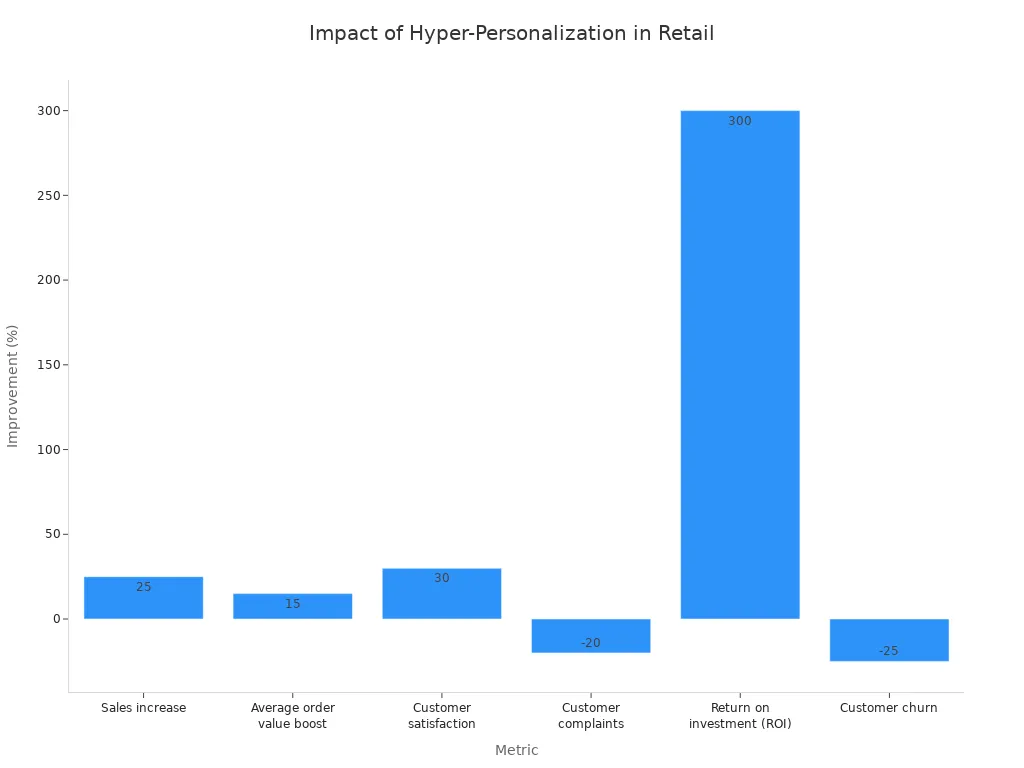
Generic marketing no longer works. The modern consumer expects you to understand their individual needs and preferences. Hyper-personalization at scale is the practice of using data and AI to deliver unique interactions to every single customer. This approach makes each consumer feel seen and valued. Successful implementation delivers significant returns.
| Metric | Improvement/Result |
|---|---|
| Sales increase | 25% |
| Average order value boost | 15% |
| Customer satisfaction | 30% increase |
| Customer complaints | 20% reduction |
| Return on investment (ROI) | 300% |
| Customer churn | 25% reduction |
AI-Powered Customer Journeys
You can use AI to map and influence every step of the customer journey. AI analyzes behavior across your website, app, and physical stores. It then automates communications, sending the right message at the right time. For example, a brand like Sculpted by Aimee uses unified data to target campaigns by a consumer’s purchase history or even their preferred product shade. This level of personalization drives powerful engagement.
Predictive Product Recommendations
Your systems should anticipate what your customers want before they do. AI algorithms analyze past purchases, browsing history, and items left in carts. This allows you to showcase highly relevant products on your homepage, in emails, and even on in-store digital displays. This predictive personalization makes the shopping process easier and more enjoyable for the consumer.
Dynamic Pricing and Promotions
Static pricing is becoming a relic of the past. You can now offer dynamic prices and promotions based on individual customer data. This could mean providing a special discount to a loyal customer or creating a unique bundle for a first-time buyer. For instance, a retailer like Tecovas equips its store associates with shopper data at the counter. This enables them to offer personalized rewards and build stronger relationships.
Seamless Omnichannel Experiences
Your brand must exist as a single, unified entity in the mind of the consumer. A seamless omnichannel strategy breaks down the silos between your physical and digital channels. Research shows that 38% of retailers are actively working on their unified commerce initiatives for 2025, highlighting the urgency of this transition.
Unifying Digital and Physical Storefronts
Your website, mobile app, and physical store should work together flawlessly. A customer should be able to start their journey on one channel and finish it on another without any friction. Brands like Nike and Sephora excel at this. They use their mobile apps to enhance the in-store visit with features like product reservations and exclusive content, creating a cohesive brand world.
The Evolution of BOPIS and Curbside
Buy-Online-Pickup-In-Store (BOPIS) and curbside pickup are now standard expectations. In 2025, you must refine these services for maximum convenience. This means providing real-time inventory visibility, clear communication about order status, and a fast, frictionless pickup process. Leading brands like Lenskart integrate these services by allowing customers to schedule appointments online and pick up their orders in-store seamlessly.
Consistent Brand Voice Across All Touchpoints
Your brand’s personality must be consistent everywhere. The tone you use in your social media posts should match the language on your website and the way your in-store staff interacts with customers. This consistency builds trust and makes your brand more recognizable. A unified voice is a critical component of effective consumer engagement.
Community and Value Alignment
Transactions are temporary, but community and shared values build lasting loyalty. The most successful brands in 2025 will be those that create a sense of belonging. This pillar of customer engagement moves beyond what you sell to focus on what you stand for.
Note: Building a community is not just a marketing tactic; it is a long-term business strategy. Brands like Harley-Davidson and LEGO have cultivated passionate communities that drive innovation and brand advocacy.
Leveraging User-Generated Content (UGC)
You should encourage your customers to become your storytellers. User-generated content, such as photos, videos, and reviews, is authentic social proof. Feature your customers’ content on your product pages, social media feeds, and marketing campaigns. This not only provides you with a stream of fresh content but also strengthens the bond with your community.
Championing Shared Social and Ethical Values
Today’s consumer, especially Gen Z, makes purchasing decisions based on values. They actively support brands that demonstrate a genuine commitment to social and environmental causes.
- Authenticity is key: Your actions must align with your words. Gen Z can quickly detect insincere ethical claims.
- Transparency matters: Be open about your supply chain, labor practices, and sustainability efforts.
- Take a stand: Brands like Patagonia build deep connections by engaging their audience in environmental activism.
This alignment transforms a purchase into a statement of personal belief, which is a powerful driver for long-term loyalty.
Building Brand Loyalty Beyond Transactions
True brand loyalty is an emotional connection. You can foster this connection by creating value outside of the purchase itself. This includes offering exclusive content, hosting community events, or providing access to expert advice. The goal is to make your customers feel like members of an exclusive club. This deepens the relationship and ensures your brand remains top-of-mind, solidifying a robust consumer engagement strategy.
Key Technologies Shaping Customer Engagement
The engine driving modern consumer engagement is technology. To build the personalized, seamless, and value-driven relationships that today’s consumer demands, you must invest in the right digital tools. These technologies are not just add-ons; they are the fundamental infrastructure for your entire engagement strategy.
Artificial Intelligence (AI) and Machine Learning (ML)
Artificial intelligence is the brain of your 2025 retail operation. It processes vast amounts of information to make intelligent, automated decisions that enhance every facet of the customer journey. The AI in retail market is projected to reach USD 14.49 billion by 2025, signaling a massive industry-wide shift. You must leverage this technology to stay competitive.
The Engine for Predictive Analytics
You can use AI and ML to move from reactive to predictive analytics. These systems analyze past behaviors to forecast future actions. This allows you to anticipate a consumer’s needs, identify customers at risk of churning, and trigger re-engagement campaigns with personalized offers. This proactive approach deepens your connection with customers.
Real-Time Personalization with Chatbots
Your customers expect instant support. AI-powered chatbots deliver this through real-time personalization. Using natural language processing, these bots access customer data to provide tailored, 24/7 assistance. They can answer product questions, track orders, and even suggest items, creating a helpful and consistent touchpoint for consumer engagement.
AI for Inventory and Supply Chain Optimization
Effective engagement also depends on operational excellence. You can use AI to optimize your inventory and supply chain. For example, fast-fashion retailers like Zara use advanced data analytics to analyze real-time sales data from thousands of stores. This allows them to spot trends instantly, adjust production, and reduce the time from design to shelf to just a few weeks, ensuring the right products are always available for the right consumer.
Immersive Commerce Technologies
Immersive technologies like Augmented and Virtual Reality are erasing the line between online and in-store shopping. They provide rich, interactive ways for a consumer to connect with your products. With 71% of shoppers stating they would shop more often if a retailer offered AR, you cannot afford to ignore this trend.
Augmented Reality (AR) for Virtual Try-Ons
You can bring the fitting room directly to your customer’s living room with AR. Virtual Try-On (VTO) technology allows a consumer to see how makeup, glasses, or apparel will look on them through their smartphone camera. Brands like Sephora have used this to boost customer confidence and reduce return rates. This powerful form of personalization makes the purchasing decision easier and more fun.
Virtual Reality (VR) for Store Experiences
You can use VR to create fully immersive brand worlds and virtual showrooms. This technology allows customers to explore product collections, attend virtual events, or tour a flagship store from anywhere. The return on investment is significant, as it drives a higher level of engagement and purchase intent.
| AR/VR Application | Primary Business Goal | Projected ROI Metric |
|---|---|---|
| Virtual Try-On (VTO) | Reduce Returns, Increase Conversion | 20% to 50% reduction in returns |
| Virtual Showrooms (VR) | Increase Engagement, Boost AOV | Up to 94% increase in conversion |
| AR In-Store Navigation | Improve Customer Experience | 30% faster decision-making |
Interactive 3D Product Visualization
Static 2D images are no longer enough. You should provide interactive 3D models that let customers view products from every angle. This is especially crucial for furniture and home goods. IKEA’s “IKEA Place” app, which lets users place virtual furniture in their homes, proves the model’s success. This technology increases conversion rates by up to 94% because it gives the consumer total confidence in their purchase.
Advanced Data Analytics Platforms
Data is the fuel for all modern engagement strategies. Advanced analytics platforms are the systems that collect, process, and activate this data. They provide a complete picture of your customer, enabling you to make smarter decisions that drive growth and loyalty.
Tip: Leading retailers use a variety of platforms to manage their analytics. Some popular choices include Acumen, Tableau, Microsoft Power BI, and Qlik. Your choice of platform should align with your specific data needs and business goals.
Unifying Cross-Channel Behavioral Data
Your customers interact with you across multiple channels. Your analytics platform must unify this data to create a single, coherent customer profile. This 360-degree view is essential for delivering the consistent and personalized consumer engagement that defines the 2025 retail landscape.
Anticipating Customer Needs and Market Trends
Powerful analytics help you stay ahead of the curve. You can analyze data from social media, search trends, and your own customer communities to predict the next big thing. For instance, Nike leverages its data to forecast fashion trends and inform product development, ensuring it meets consumer demand before it even peaks.
Measuring Engagement ROI and Lifetime Value
Ultimately, your technology investments must deliver measurable results. You can use analytics to track the ROI of your engagement efforts and calculate customer lifetime value (CLV). Studies show that personalization driven by analytics can lift sales by 10% to 30%. Amazon famously attributes 35% of its revenue to its recommendation engine, demonstrating the immense financial power of data-driven customer engagement.
The Evolution from Transactional to Relational Commerce
In 2025, you must shift your focus from single transactions to building long-term relationships. Relational commerce transforms one-time buyers into loyal advocates. This evolution requires you to create continuous value that extends far beyond the initial purchase. By doing so, you foster deep consumer engagement and secure sustainable growth.
The Rise of Subscription Models
Subscription models are a powerful tool for creating recurring revenue and predictable customer relationships. The subscription e-commerce market is projected to reach an incredible $536.72 billion in 2025, highlighting a massive consumer shift toward convenience and curation. You can leverage this trend to build lasting loyalty.
Curated Subscription Boxes
You can offer curated boxes that deliver a delightful and personalized unboxing experience to your consumer. These subscriptions introduce customers to new products and make them feel like they are part of an exclusive club.
Subscribe-and-Save Programs
You can provide subscribe-and-save options for essential products. This model offers your consumer convenience and value, automating repurchases and locking in their loyalty. It is a simple yet effective way to ensure repeat business.
Membership-Based Exclusive Access
You can create paid VIP programs that offer exclusive perks. This model is not limited to physical products.
- Entertainment: Offer tiered access to content like Netflix.
- Fitness & Wellness: Provide flexible access to services like ClassPass.
- Software: Grant access to premium features for a monthly fee.
This strategy makes your best customers feel valued and gives them a compelling reason to stay engaged.
Loyalty Programs as Value Ecosystems
Modern loyalty programs are more than just point-based systems; they are ecosystems that provide ongoing value. You should design your program to foster an emotional connection, which is the foundation of true brand loyalty.
Experiential rewards, such as VIP access to new products or invitations to exclusive events, create memorable moments. These interactions build a much stronger bond than simple transactional discounts can achieve.
Tiered Rewards and Gamification
You can structure your loyalty program with tiers that customers unlock as their engagement increases. This gamified approach encourages repeat purchases and makes the path to higher status feel rewarding and fun.
Experiential Rewards and Perks
You should move beyond discounts and offer rewards that cannot be bought. These perks transform a customer relationship into a genuine connection, leading to powerful advocacy and long-term loyalty.
Personalized Offers within Loyalty Apps
You can use your loyalty app to deliver highly relevant offers. This level of personalization shows each customer you understand their unique preferences, strengthening their connection to your brand.
Effective Post-Purchase Engagement
Your opportunity for customer engagement does not end at checkout. The post-purchase phase is a critical time to reinforce a consumer’s decision and build momentum for their next purchase.
Proactive Order Updates and Support
You must keep your customers informed with proactive and clear communication about their order status. Providing free shipping and ensuring on-time delivery can increase repeat purchase rates by up to 20%.
Personalized Follow-Up Content
You can send personalized follow-up content that enhances a consumer’s self-image related to their purchase. This strategy has been shown to increase satisfaction and repurchase intentions more effectively than product-focused messages.
Soliciting Reviews and Feedback
You should actively ask for feedback to continue the dialogue with your customers.
| Best Practice | Why It Works |
|---|---|
| Keep it short | Micro-surveys with one question get higher completion rates. |
| Time it right | Ask 3-7 days post-purchase when the experience is fresh. |
| Make it easy | A single click to a review site amplifies positive feedback. |
Remember, adding just one review to a product page can increase its conversion rate by an average of 65%. This feedback loop is essential for building trust and improving your offerings.
The New Role of the Physical Store in Consumer Engagement Strategies

Your physical store is no longer just a point of sale. In 2025, you must transform it into a dynamic experience hub. This ‘phygital’ approach blends physical interaction with digital services, creating a platform where technology and human engagement converge. The modern consumer seeks shared experiences and social connection, making your store a critical component of your consumer engagement strategies.
Stores as Experience and Community Hubs
You need to position your store as a destination for more than just shopping. It should be a place where your community gathers and connects with your brand on a deeper level. This shift from consumption to meaningful engagement is essential for building loyalty.
Hosting In-Store Events and Workshops
You can build a strong community by hosting events that provide real value. These gatherings transform your store into a lively hub and strengthen your bond with customers. Consider offering:
- DIY classes related to your products, like styling techniques or jewelry making.
- Educational seminars on topics like nutrition or wellness.
- Pop-up markets that showcase local artists and makers.
Creating Instagrammable Moments
You should design your physical space to be visually compelling. Create unique, shareable moments that encourage customers to post on social media. This user-generated content provides authentic marketing and broadens your reach. A well-designed backdrop or an interactive display can turn a casual shopper into a brand advocate.
Showcasing Brand Storytelling
You can use your store’s physical environment to tell your brand’s story. Immerse each consumer in your mission and values through thoughtful design, historical displays, and interactive exhibits. This narrative approach creates an emotional connection that a website alone cannot replicate, boosting consumer engagement.
In-Store Technology Integration
You must integrate smart technology to create a seamless and personalized in-store journey. The hardware segment, including smart POS systems and interactive kiosks, is a dominant force in retail technology. You can leverage these tools to enhance every customer touchpoint.
Smart Mirrors and Interactive Displays
You can use smart mirrors and displays to offer a futuristic and convenient shopping experience. This technology allows a consumer to virtually try on items or access detailed product information with a simple touch. This form of engagement makes the decision process faster and more enjoyable for the customer.
Mobile POS and Clienteling Apps
You should equip your team with mobile POS systems and clienteling apps. These tools free your staff from the cash wrap, allowing them to assist customers anywhere on the floor. They also provide access to customer data for personalized recommendations.
Beacon Technology and Geofencing
You can use beacon technology to send targeted promotions to a consumer’s smartphone as they move through your store. This location-based marketing delivers relevant offers at the perfect moment, increasing the likelihood of a purchase.
Empowering Staff as Brand Ambassadors
Your employees are the most important asset in your consumer engagement strategies. You must empower them with the right training and tools to foster genuine human-to-human connections.
Note: Salespeople who actively use performance enablement platforms can see a 3X increase in their average order size. Investing in your team directly impacts your bottom line.
Training on Product and Brand Values
You need to ensure every team member is an expert on your products and a true believer in your brand’s values. This training equips them to answer any customer question with confidence and passion.
Equipping Staff with Customer Data Tools
You should provide your staff with tools that offer real-time insights into customer preferences and purchase history. This data enables them to tailor recommendations and build trust, which directly improves customer engagement and drives sales.
Fostering Human-to-Human Connection
Ultimately, technology should support, not replace, the human element. Encourage your staff to build authentic relationships with customers. A friendly conversation and a personalized recommendation create a memorable interaction that builds lasting loyalty for every consumer.
The Impact of Social Commerce and the Creator Economy

Social platforms are no longer just for discovery; they are the new storefronts. You must integrate social commerce and the creator economy into your strategy to meet the modern consumer where they spend their time. This fusion of content, community, and commerce is a powerful driver for consumer engagement.
The Dominance of Social Commerce
Social commerce is where your customers are shopping now. The path from inspiration to purchase has become instantaneous. You need to make your products available directly within social feeds to capture this impulse. The market growth is explosive, and you must be part of it.
- The global social commerce market is expected to hit US$1.2 trillion by 2025.
- In the U.S. alone, revenue is projected to reach over $100 billion in 2025.
This trend shows a fundamental shift in consumer behavior that you cannot ignore.
In-App Shopping on TikTok and Instagram
You should leverage the native shopping features on platforms like TikTok and Instagram. These tools allow a consumer to buy products without ever leaving the app. TikTok Shop is a rising force, projected to capture nearly 20% of the social commerce market by 2025. Instagram remains a powerhouse for visual discovery and direct shopping. Your presence on these platforms is essential for modern customer engagement.
The Growth of Livestream Shopping
You can use livestream shopping to create urgency and excitement. This format blends entertainment with e-commerce, allowing you to demonstrate products in real time and interact directly with your audience. A host can answer questions from a consumer, offer limited-time deals, and build a dynamic shopping experience that drives high engagement and immediate sales.
Creating Shoppable Content and Ads
You must make every piece of content an opportunity to shop. Tag products in your posts, stories, and video ads. This allows a consumer to tap on an item they like and proceed directly to checkout. This frictionless process removes barriers to purchase and capitalizes on the moment of inspiration, boosting your conversion rates.
The Creator Economy’s Influence
Creators are the new tastemakers. You should partner with them to build authentic connections with your target audience. Their influence stems from the trust they have cultivated with their community. This trust is a valuable asset for your brand.
Note: Target’s influencer campaigns show that micro-creator content achieves significantly higher engagement. In some cases, niche creators generate engagement rates up to 60% higher than mega-influencers, proving that a smaller, dedicated following can deliver a greater impact.
Shifting from Mega-Influencers to Niche Creators
You should focus your efforts on niche and micro-creators. These individuals have smaller but highly dedicated followings. Their recommendations feel more like a trusted friend’s advice than a paid advertisement. This authenticity leads to deeper consumer engagement and a more loyal community. A consumer is more likely to trust a creator who shares their specific interests.
Building Authentic, Long-Term Partnerships
You can achieve better results by building long-term partnerships instead of one-off campaigns. When a creator genuinely uses and loves your products over time, their endorsements become more believable. This sustained relationship builds credibility for your brand and fosters a stronger connection with their audience.
Co-Creating Products with Creators
You can take your partnerships a step further by co-creating products with creators. This strategy involves your most passionate advocates in the product development process. It guarantees you a product that resonates with a specific consumer base and generates organic buzz from a built-in community.
Sustainability and Trust as Cornerstones of Engagement
In 2025, your consumer engagement strategy rests on two fundamental pillars: sustainability and trust. A consumer no longer separates your products from your principles. You must prove your commitment to ethical practices and data privacy to earn their business and loyalty. This foundation is non-negotiable for building meaningful relationships.
Sustainability as a Non-Negotiable
You must treat sustainability as a core business function, not a marketing campaign. Today’s consumer actively seeks out brands that align with their values. Your environmental and social impact directly influences their purchasing decisions and your overall customer engagement.
Consumer Demand for Eco-Conscious Brands
A significant portion of your customer base prioritizes sustainability. You need to recognize this powerful market force.
- 78% of consumers believe sustainability is important.
- 62% of individuals ‘always or often’ seek out products specifically because they are sustainable.
However, you must also address consumer skepticism. Recent research shows a decline in the number of people who feel their actions can make a difference. This means you have to work harder to prove your brand’s positive impact. Your engagement efforts must be authentic and transparent.
The Importance of a Transparent Supply Chain
You can build credibility by being transparent about your entire supply chain. A modern consumer wants to know where products come from and how they are made. You should provide clear information about your sourcing, manufacturing processes, and labor practices. This openness demonstrates integrity and builds a deep level of trust.
The Circular Economy and Resale Markets
You can extend your engagement beyond the first sale by embracing the circular economy. Implement buy-back programs or create a branded resale market. These initiatives show your commitment to reducing waste. They also create new touchpoints for consumer interaction and reinforce your brand’s sustainable identity.
The Centrality of Customer Data Privacy
Your ability to personalize experiences depends entirely on the data you collect. However, a consumer is increasingly protective of their personal information. Building trust is essential, as 88% of consumers base their willingness to share information on how much they trust a company.
Note: A staggering 63% of consumers believe most companies are not transparent about how their data is used. You can stand out by making data transparency a core part of your consumer engagement strategy.
Building Trust Through Data Transparency
You must be explicitly clear about what data you collect and how you use it. Communicate the value the consumer receives in exchange for their information. When you use data to create genuinely better experiences, you build a foundation of trust that encourages further engagement.
Prioritizing First-Party Data Strategies
You should focus on collecting first-party data directly from your customers. This approach is more ethical and effective than relying on third-party sources. You can gather this information through account creations, newsletter sign-ups, and loyalty programs. This strategy respects consumer privacy and provides you with more accurate insights.
General Data Protection Regulation (GDPR) and California Consumer Privacy Act (CCPA) Compliance
You must view data privacy regulations like GDPR and CCPA as the minimum standard for operation. Compliance is not just a legal requirement; it is a clear signal to every consumer that you respect their privacy. Adhering to these rules is a fundamental step in building and maintaining trust.
How to Build Your 2025 Engagement Strategy
Building your 2025 consumer engagement strategies requires a deliberate, three-pronged approach. You must first audit your current state, then invest in the right technology, and finally, cultivate a deeply customer-centric culture. This roadmap will guide you in creating the framework for effective consumer engagement.
Auditing Your Current Engagement Model
You must begin by understanding your current performance. A comprehensive audit reveals what works, what does not, and where your opportunities lie. This process provides the foundational analytics for your future strategy.
Mapping the Omnichannel Customer Journey
You should trace every possible path a consumer takes when interacting with your brand. Follow their journey from initial social media discovery to website browsing, in-store visits, and post-purchase communication. This map visualizes the complete customer experience.
Identifying Friction Points and Gaps
You need to pinpoint where your customers struggle. Use analytics and direct feedback to find these gaps. A thorough audit of your online presence is critical.
- Gather customer insights: Use surveys, interviews, and social listening to understand how a consumer perceives your brand.
- Review your website and SEO analytics: Analyze web analytics to evaluate traffic, engagement, and conversion metrics.
- Analyze social media sentiment: Assess key metrics across your social profiles to gauge how well your brand connects with its audience.
- Benchmark against competitors: Compare your messaging, pricing, and consumer engagement strategies to key competitors.
Evaluating Your Current Tech Stack
You must assess if your current technology can support a modern engagement model. Your existing tools for data collection and analytics may be outdated. This evaluation determines if your stack can handle the demands of real-time personalization and omnichannel coordination.
Investing in the Right Technology
Your strategy needs the right engine. Investing in modern technology is not an expense; it is a requirement for creating meaningful engagement and staying competitive.
Selecting a Customer Data Platform (CDP)
You should select a CDP to unify your customer data. This platform becomes your central source of truth. To choose the right one, you must:
- Define your specific CDP use cases.
- Gather requirements for your request for proposal (RFP).
- Align your team on scoring criteria for evaluation.
- Start with a Proof-of-Concept (POC) to test capabilities.
Implementing AI-Powered Personalization Engines
You can use your unified data to power AI engines. These systems analyze information in real time to deliver personalized content, product recommendations, and offers to each consumer.
Adopting Scalable AR/VR Solutions
You should adopt immersive solutions that align with your business goals. Start with scalable applications like virtual try-ons that offer a clear return on investment before expanding into more complex VR experiences.
Fostering a Customer-Centric Culture
Technology alone is not enough. Your entire organization must be obsessed with the customer. This cultural shift empowers your team to build genuine relationships.
Empowering Frontline Employees with Tools
You need to equip your employees with access to customer data and analytics. These tools allow them to provide personalized service that makes customers feel seen and valued.
Integrating Customer Feedback Loops
You must create systems to consistently collect, analyze, and act on customer feedback. This continuous loop ensures your consumer engagement strategies evolve with your audience’s needs.
Training Teams for a Hybrid Retail World
You should train your teams to excel in both physical and digital environments. This preparation ensures they can deliver a consistent, high-quality experience no matter how a customer chooses to interact with your brand.
To succeed in 2025, you must view consumer engagement as an ongoing, authentic dialogue. Your consumer engagement strategies must focus on radical personalization and genuine building community to secure brand loyalty. The future belongs to agile brands that adapt to the evolving consumer in real time. This real-time engagement connects you with every consumer.
A deep understanding of the human element behind your data is the ultimate key to effective consumer engagement. This approach builds deep loyalty with your customers and community, turning each consumer and customer into an advocate. This engagement with the community of customers is vital for your consumer engagement strategies and overall consumer engagement.
FAQ
What is the first step to improve consumer engagement?
You should start by auditing your current model. Map the complete customer journey to identify friction points and gaps. This analysis provides the data you need to build a more effective strategy and improve the consumer experience.
Why is first-party data so important now?
You must prioritize first-party data to build trust. Consumers are protective of their privacy. Collecting data directly from your customers respects their boundaries and provides you with more accurate insights for personalization, which is key for consumer engagement.
Can small businesses use these advanced technologies?
Yes. You can start with scalable and affordable solutions. Many platforms offer tiered pricing for AI-powered personalization or AR features. Focus on tools that provide a clear return on investment, such as virtual try-ons or a robust Customer Data Platform (CDP).
How do I measure the ROI of my engagement efforts?
You can use advanced analytics platforms to track key metrics. Focus on measuring improvements in:
- Customer Lifetime Value (CLV)
- Conversion rates
- Average order value
- Customer retention
These indicators show the direct financial impact of your consumer engagement strategies.
What is the biggest mistake to avoid in 2025?
You must avoid treating your engagement efforts as separate campaigns. Your strategy needs to be a single, unified system. Inconsistency between your digital and physical channels breaks trust and creates a poor experience for the consumer.
Is the physical store still relevant for consumer engagement?
Absolutely. Your physical store is a vital hub for experiences and community. You can use it to host events, tell your brand story, and foster human-to-human connections. It provides a powerful platform for deep consumer engagement that digital channels cannot replicate.