Retail intelligence software is a strategic tool. It collects and analyzes data from various retail sources to provide actionable insights. The primary purpose of this software is to empower retailers with data-driven decision-making, optimizing operations for profitable growth. The global market for this type of software is expanding, reflecting its growing importance as one of the key business intelligence solutions.
Note: Modern retail intelligence software often uses ai to process complex data sets. This ai can analyze information from sources like customer behavior patterns or an Esl Retail system, which includes the ESL Gateway AP, Electronic Shelf Labels, and the ESL Price Tag. The ai in the software helps transform this raw data into clear strategies. This application of retail business intelligence ultimately enhances the customer experience.
What Core Functions Does Retail Intelligence Software Perform?
Retail intelligence software serves as the central nervous system for a modern retail operation. It performs several critical functions that transform raw data into strategic advantages. These functions range from foundational data aggregation to advanced predictive analytics, giving businesses a clear view of their performance. The core purpose is to centralize information, automate analysis, and deliver actionable insights for smarter decision-making.
Data Collection and Integration
A primary function of retail intelligence software is to unify disparate data sources into a single, coherent system. This integration eliminates information silos, ensuring that all departments work from the same set of facts. The software acts as a hub, connecting various operational platforms to create a comprehensive data ecosystem.
Point-of-Sale (POS) System Integration
The software connects directly to in-store and mobile POS systems. This link allows it to capture every transaction in detail. It collects information on what was sold, when, where, and for how much, forming the bedrock of sales analytics.
E-commerce Platform Connectivity
For omnichannel retailers, the software integrates with e-commerce platforms like Shopify or Magento. This connectivity merges online sales data with in-store transaction records. It provides a complete picture of customer purchasing behavior across all channels.
Customer Relationship Management (CRM) Data Sync
Retail intelligence software syncs with CRM systems to consolidate customer information. This creates a 360-degree customer view by linking purchase histories with contact details and loyalty program activity. This unified data supports highly targeted marketing campaigns and improves customer service interactions by providing support teams with accurate, real-time data.
Inventory and Supply Chain System Links
Connecting to inventory and supply chain systems is crucial for operational efficiency. This integration provides a live view of stock levels, supplier lead times, and logistics. Modern solutions use sophisticated methods to ensure data accuracy across these connected systems.
These integration methods include:
- ETL (Extract, Transform, Load): This process extracts data from sources like POS systems, transforms it into a standard format, and loads it into a central warehouse for consistent analysis.
- API-Based Integration: APIs enable direct, real-time communication between different software, allowing for instant updates on inventory levels and customer profiles.
- Cloud-Based Data Integration: Cloud solutions offer scalable integration across multiple locations, which is ideal for retail businesses with both physical and online stores.
- Data Synchronization: This ensures that a change in one system, such as a sale, is immediately reflected in all other connected systems, preventing discrepancies.
Performance Analytics and Reporting
Once data is collected, the retail intelligence software begins the work of analysis. It processes vast amounts of information to uncover trends, measure performance, and present findings in an easy-to-understand format. This function turns numbers into a narrative about the business’s health.
Sales Trend Analysis
The software identifies patterns in sales data over days, weeks, months, or years. It can highlight peak shopping hours, reveal seasonal demand shifts, and track the performance of promotional events. These analytics help retailers anticipate future sales cycles.
Product Performance Tracking
This function provides detailed reports on individual products or categories. Retailers can see which items are best-sellers, which are slow-moving, and which contribute most to profitability. This information is vital for making smart merchandising and inventory decisions.
Store-Level and Regional Analytics
For businesses with multiple locations, the software compares performance across different stores or regions. This analysis can uncover geographic trends and identify high-performing and underperforming locations, guiding decisions on resource allocation and local marketing strategies.
Customizable KPI Dashboards
A key feature of many business intelligence solutions is the customizable dashboard. These dashboards provide an at-a-glance view of the most important Key Performance Indicators (KPIs). Retailers can tailor these to focus on the metrics that matter most to their goals. Common KPIs tracked include:
- Sales per Square Foot
- Gross Margin Return on Investment (GMROI)
- Average Transaction Value (ATV)
- Sell-Through Rate
- Customer Conversion Rate
- Inventory Turnover
Inventory and Supply Chain Optimization
Effective inventory management is a cornerstone of retail profitability. Retail intelligence software offers powerful tools to optimize the entire supply chain, from forecasting demand to managing stock levels. These solutions help prevent costly errors like stockouts and overstocking.
Demand Forecasting
Accurate demand forecasting is one of the most valuable functions. The software uses advanced algorithms and ai to analyze historical sales data, market trends, and external factors. This ai-driven approach filters out irrelevant information and focuses on critical variables to improve prediction accuracy. By processing large volumes of real-time data, the ai can instantly identify shifts in demand, enabling retailers to adjust inventory and pricing strategies proactively. AI pulls information from various sources for its forecasts:
- Historical sales data to predict future trends.
- Market trends from industry reports.
- Customer behavior from online searches and social media.
- Competitor activity like new promotions or pricing.
- External data such as weather forecasts or economic shifts.
Automated Reorder Point Management
The software can automate the reordering process. It calculates the optimal time to reorder products based on sales velocity, supplier lead times, and safety stock levels. This automation reduces manual effort and ensures timely replenishment of inventory.
Stockout and Overstock Prevention
By leveraging precise demand forecasts, the software helps retailers maintain ideal inventory levels. This leads to optimized inventory management, minimizing lost sales from stockouts and reducing capital tied up in excess products. This function is essential for maintaining both customer satisfaction and financial health.
Supplier Performance Analysis
The retail business intelligence platform also provides tools for evaluating supplier reliability. It tracks metrics like lead time accuracy, order fill rates, and cost consistency. This analysis helps retailers negotiate better terms and build a more resilient and efficient supply chain through better inventory tracking.
Customer Behavior Analysis
Understanding the customer is the ultimate goal of modern retail. Retail intelligence software provides deep insights into customer behavior by analyzing how, when, and why they make purchases. This function helps businesses move from broad assumptions to precise, data-backed knowledge, enabling them to predict customer behavior and tailor experiences effectively.
Purchase Pattern Identification
The software excels at identifying recurring patterns within transactional data. It can pinpoint the most popular shopping days of the week, peak hours of the day, and seasonal purchase trends. For example, analytics might reveal that a specific product sells best on weekend mornings. Retailers use these insights to optimize staff schedules, plan targeted promotions, and ensure key products are always in stock during high-demand periods.
Customer Segmentation
Not all customers are the same. This software automatically groups customers into distinct segments based on shared characteristics. These segments allow for more effective and personalized marketing strategies. Common segmentation criteria include:
- Demographics: Age, location, and gender.
- Purchase History: High-spenders, frequent shoppers, or one-time buyers.
- Engagement Level: Customers who open emails, participate in loyalty programs, or browse online frequently.
Customer Lifetime Value (CLV) Calculation
Calculating Customer Lifetime Value (CLV) helps a retail business understand the total net profit it can expect from a single customer over the entire duration of their relationship. Retail intelligence software automates this complex calculation using several methods.
| CLV Method | What It Does | Best For | Example |
|---|---|---|---|
| Simple CLV | Provides a quick estimate using averages. | Fast calculations, small businesses. | (Avg. spend × Purchase frequency) × Lifespan |
| Gross Margin CLV | Factors the cost of goods sold (COGS) into the calculation. | Profitability analysis. | (Avg. Revenue per Customer × Gross Margin) × Lifespan |
| Predictive CLV | Uses data to predict future customer spending. | Large data sets, advanced analytics. | Machine learning algorithms forecast future value. |
Predictive CLV models are the most powerful solutions. They employ machine learning algorithms to forecast future purchasing habits with high accuracy. These advanced analytics consider past purchases, browsing behavior, and market trends to project future value. Many solutions also use cohort analysis, grouping customers by their sign-up date to track how their value evolves over time.
Market Basket Analysis
This function discovers associations between products by analyzing items that customers frequently purchase together. It answers the question: “Customers who bought Product A also bought which other products?” This information is invaluable for creating effective cross-selling and up-selling strategies.
🛒 For example: A market basket analysis might show that customers who buy gourmet coffee often purchase artisanal pastries. A retailer can use this insight to place these items near each other in-store or create a “morning essentials” product bundle online.
Competitive and Market Analysis
Success in retail requires a keen awareness of the competitive landscape. Retail intelligence software acts as a vigilant observer, collecting and analyzing external data to give businesses a strategic edge. These solutions provide a clear picture of competitor actions and broader market shifts.
Competitor Price Tracking
Manually tracking competitor prices is an impossible task in today’s dynamic market. This software automates the process using sophisticated technology. These solutions deploy web scrapers and APIs to extract pricing data from competitor websites and marketplaces in real time. A key feature is automated product matching, which intelligently links identical or similar products across different retailers for accurate, apples-to-apples comparisons. This provides complete visibility into a competitor’s pricing strategy.
Key capabilities of these software solutions include:
- Competitive price monitoring across SKUs and platforms.
- Tracking for Minimum Advertised Price (MAP) compliance.
- Dynamic pricing recommendations based on market changes.
- Historical pricing data to inform long-term strategy.
Promotion and Campaign Monitoring
Beyond just price, the software monitors competitor promotional activities. It tracks discounts, “buy one, get one” offers, and loyalty campaigns. This allows a retail business to understand what tactics competitors are using to attract customers. With this intelligence, a company can design more compelling offers and avoid being outmaneuvered by a competitor’s marketing push.
Market Trend Identification
Effective retail intelligence software looks beyond direct competitors to identify emerging market trends. It analyzes industry reports, consumer publications, and economic data to spot shifts in consumer preferences, new product categories, and technological advancements. This foresight enables retailers to adapt their product assortments and business models proactively, ensuring they stay relevant and ahead of the curve.
Social Media Sentiment Tracking
The public conversation about a brand is a rich source of data. Some advanced retail intelligence software solutions include tools for social media sentiment analysis. They scan social platforms and review sites to gauge public opinion about a brand, its products, and its competitors. This qualitative data provides context for quantitative sales figures, helping retailers understand the “why” behind their performance.
What Are the Key Benefits for Your Retail Business?
Adopting retail intelligence software delivers transformative benefits that extend far beyond simple data reporting. These platforms translate complex analytics into tangible outcomes, driving profitability, streamlining operations, and creating superior customer experiences. By leveraging these powerful solutions, a retail business can build a significant competitive advantage in a crowded marketplace.
Increased Profitability
The primary goal of any retail business is to increase its bottom line. Retail intelligence software directly contributes to this objective by uncovering opportunities to boost revenue and cut costs. It provides the data-driven insights necessary to make smarter financial decisions.
Price Optimization Strategies
This software empowers retailers to move beyond static or gut-feel pricing. It analyzes competitor prices, market demand, and historical sales data to recommend optimal price points for every product. These dynamic pricing strategies help businesses maximize profit margins on popular items and strategically discount slow-movers to increase sales velocity, ensuring every pricing decision supports profitability.
Waste Reduction Through Better Forecasting
Overstocking is a major drain on profits, especially for perishable goods. Advanced forecasting models within these software solutions use AI to predict customer demand with remarkable accuracy. For example, improved demand forecasting can reduce perishable food waste in the grocery sector by 37%. One US grocery chain achieved this by using an AI solution to generate precise orders based on real-time regional demand, minimizing spoilage and protecting its margins.
Higher Sales Conversion Rates
Understanding what customers buy together is key to increasing average transaction value. The software’s market basket analysis identifies these product associations, enabling retailers to create effective cross-selling and up-selling opportunities. These insights inform product bundling, in-store placement, and online recommendations, encouraging customers to add more to their carts and boosting overall sales conversion rates.
Improved Marketing ROI
Blanket marketing campaigns are expensive and inefficient. Retail intelligence software segments customers based on their purchase history and behavior, allowing for highly targeted promotions. A retail business can send personalized offers to specific customer groups, increasing engagement and conversion rates. This precision reduces wasted marketing spend and delivers a significantly higher return on investment (ROI).
Enhanced Operational Efficiency
Efficiency is the engine of a successful retail operation. These specialized solutions automate manual tasks, streamline complex processes, and provide clarity across the entire organization. The result is a leaner, more agile business that can operate at a lower cost.
Streamlined Inventory Management
Manual inventory counts are slow, costly, and prone to error. Modern retail intelligence software automates this entire process. A large-scale Italian retailer, for instance, transformed its operations by adopting a Fast Data solution. The company went from a manual inventory process that took three months to a fully automated system providing real-time stock availability. This shift to optimized inventory management eliminated manual updates and enabled a seamless omnichannel strategy.
Automated Reporting and Analysis
Managers often spend hours manually collecting data and building reports. This software automates data aggregation and visualization, freeing up valuable time for strategic decision-making. The difference is dramatic, with automated solutions reducing report generation time from days to minutes.
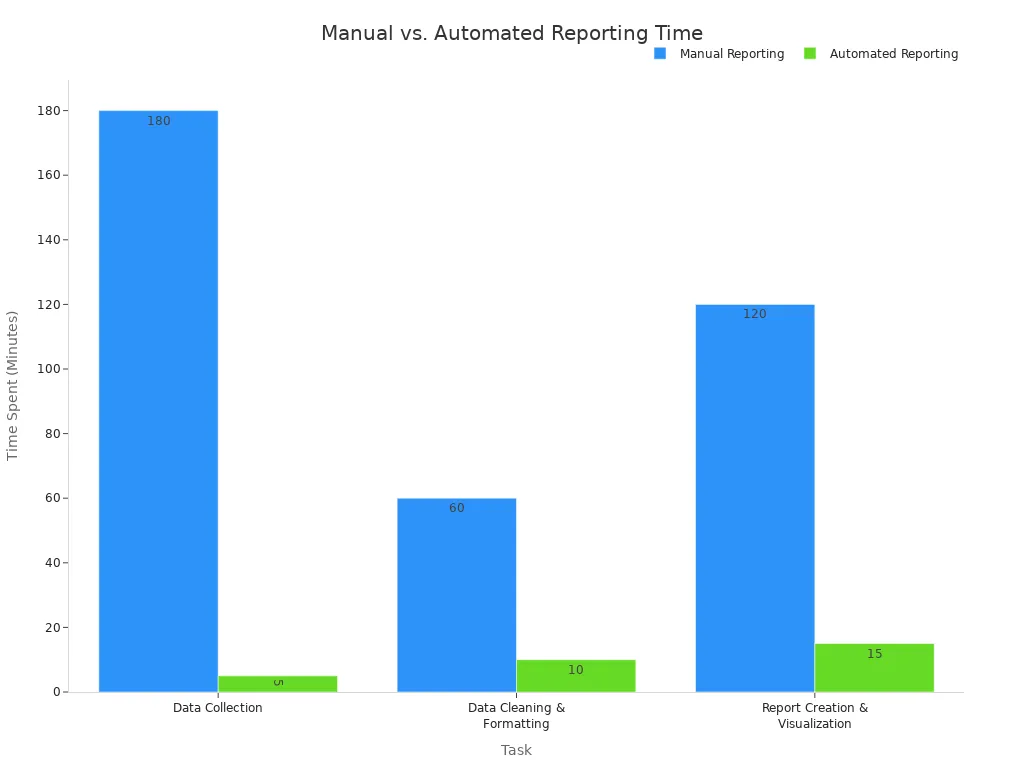
Time Savings Breakdown: A typical manual reporting process can take over six hours per week. In contrast, an automated system completes the same tasks in about 30 minutes. This saves over 280 hours annually per manager, time that can be reinvested into growing the business.
Optimized Staff Scheduling
Aligning staffing with customer traffic is a constant challenge. The software analyzes foot traffic patterns and historical sales data to predict a store’s busiest and quietest periods. This allows managers to create data-driven staff schedules, ensuring enough employees are on the floor during peak hours to provide excellent service and preventing overstaffing during lulls to control labor costs.
Efficient Supply Chain Logistics
A smooth supply chain is critical for maintaining inventory and controlling costs. The retail business intelligence platform tracks key supplier metrics like lead times and order fill rates. This data helps retailers identify and resolve bottlenecks, negotiate better terms with vendors, and build a more resilient and cost-effective supply chain. Better inventory tracking ensures products move efficiently from the warehouse to the sales floor.
Superior Customer Experience
In today’s competitive retail landscape, customer experience is a key differentiator. Retail intelligence software provides the tools to understand and cater to customer needs on a deeper level, fostering loyalty and driving repeat business. These business intelligence solutions help turn casual shoppers into brand advocates.
Personalized Marketing and Offers
Generic marketing no longer works. This software uses customer data to deliver highly personalized experiences that resonate with shoppers. Research shows that 60% of consumers are more likely to become repeat buyers after a personalized experience.
- Starbucks, for example, used its personalized rewards program to increase customer retention by 15%.
- This level of personalization makes customers feel understood and valued, strengthening their connection to the brand.
Improved Product Availability
Nothing disappoints a customer more than an out-of-stock item. By improving demand forecasting and inventory management, the software ensures that popular products are consistently available. This reliability meets customer expectations and prevents lost sales, building trust and encouraging shoppers to return. Proper inventory management is a cornerstone of customer satisfaction.
Optimized Store Layouts
The physical layout of a retail store significantly impacts the shopping experience. The analytics platform studies in-store foot traffic and purchase data to reveal how customers navigate the space. Retailers use these insights to optimize store layouts, place complementary products together, and ensure a logical, enjoyable shopping journey that guides customers toward a purchase.
Enhanced Customer Service
Excellent service depends on having the right information at the right time. The software provides customer service teams with a 360-degree view of each shopper, including their purchase history and preferences. This allows agents to resolve issues quickly, make relevant product recommendations, and provide a level of personalized support that makes customers feel truly valued.
Data-Driven Strategic Decision-Making
A fundamental benefit of retail intelligence software is its ability to anchor business strategy in hard evidence. These advanced solutions empower leaders to move beyond intuition and make choices with confidence. The platform transforms raw information into a strategic asset, providing the foundation for sustainable growth and long-term success. This shift toward data-driven decision-making is a hallmark of modern, competitive retail organizations.
Shift from Intuition to Factual Strategy
Historically, many retail decisions relied on a manager’s experience and gut feelings. While valuable, this approach carries inherent risks and biases. Retail intelligence software replaces guesswork with objective, verifiable facts. The software provides clear insights into business performance, customer preferences, and market dynamics. Leaders can test their hypotheses against real-world data before committing to a course of action.
This process creates a culture of accountability and continuous improvement. Every strategic choice, from a new product launch to a marketing campaign, becomes a measurable event. The software tracks the outcome, allowing teams to learn what works and refine their strategies over time.
Predictive Analytics for Future Planning
Effective planning requires looking forward, not just backward. Retail intelligence software uses predictive analytics to forecast future trends and outcomes. These powerful solutions analyze historical data to identify patterns that signal what is likely to happen next. This capability allows a retail business to prepare for future demand, anticipate market shifts, and proactively manage its operations.
Leading retail companies use predictive analytics to guide major business decisions. The software helps them optimize everything from inventory to customer engagement.
| Company | Retail Decision Guided by Predictive Analytics | Outcome/Benefit |
|---|---|---|
| Walmart | Inventory Management (forecasting demand, optimizing stock levels) | Avoids overstock and stockouts, ensures optimal stock levels during specific seasons. |
| Sephora | Business Intelligence (customer personalization, tailored product recommendations) | Enhances customer experience, improves customer engagement and loyalty through personalized marketing campaigns. |
| Starbucks | Customer Segmentation (loyalty program enhancement, personalized promotions) | Identifies customer preferences, tailors rewards to encourage repeat purchases, and drives engagement to increase overall sales. |
These examples show how predictive analytics transforms planning from a reactive exercise into a proactive strategy, giving businesses a distinct competitive advantage.
Confident Market Expansion Choices
Expanding into a new market or opening a new store represents a significant financial investment. Retail intelligence software minimizes the risk associated with these decisions. The software analyzes demographic data, local competitor density, and regional sales trends to identify high-potential areas for growth.
By modeling potential revenue and operational costs, these solutions provide a clear picture of a new location’s viability. This data-backed approach allows a retail company to make expansion choices with a much higher degree of confidence, ensuring that capital is invested where it will generate the greatest return.
Agile Response to Market Changes
The retail landscape is in constant flux. Consumer tastes evolve, new competitors emerge, and economic conditions shift. The ability to respond quickly to these changes is crucial for survival. Retail intelligence software provides the real-time analytics needed to maintain agility.
These software solutions act as an early warning system, flagging important developments as they happen. This enables a retail business to:
- Quickly adjust pricing in response to a competitor’s new promotion.
- Reroute inventory to meet a sudden surge in demand in a specific region.
- Modify marketing messages to align with emerging social trends.
- Pivot product strategy based on real-time sales performance.
This agility allows a company to seize opportunities and mitigate threats faster than its competitors, turning market volatility into a strategic advantage.
What Types of Data Does Retail Intelligence Software Analyze?
Retail intelligence software derives its power from the diverse types of data it analyzes. These solutions consolidate information from every corner of a retail business to create a single, unified view of performance. The software processes four primary categories of data: sales, customer, inventory, and market information. This comprehensive analysis provides the foundation for strategic insights.
Sales and Transactional Data
This is the most fundamental data a retail business collects. Retail intelligence software transforms raw transaction numbers into a clear story about revenue health and sales dynamics.
Sales Volume and Revenue
The software analyzes sales volume and revenue to pinpoint growth opportunities. It achieves this by:
- Examining sales performance metrics to find stages with high drop-off rates.
- Identifying missed upsell and cross-sell opportunities by analyzing past purchases.
- Tracking where opportunities exit the sales funnel to optimize the process.
- Evaluating the impact of promotions and discounts on deal volume and margins.
Transaction Details by Time and Location
These solutions capture the specifics of each sale, including the time of day and the store location. This data helps identify peak shopping hours and high-performing branches.
Average Transaction Value (ATV)
The software calculates the average amount spent per transaction. Tracking ATV helps a retail business measure the effectiveness of its up-selling and cross-selling initiatives.
Product and Category Performance
This analytics function shows which products and categories are driving sales. Retailers use this information to make smarter merchandising and inventory decisions.
Customer Data
Understanding the customer is essential for growth. Retail intelligence software analyzes customer data to reveal purchasing habits and preferences, which is key to understanding customer behavior.
Demographics and Geographics
The software organizes customer information by age, gender, and location. This allows for targeted marketing campaigns that resonate with specific audience segments.
Purchase History and Frequency
Analyzing what customers buy and how often they return provides powerful insights. This data helps a retail business:
- Identify its most popular products and seasonal trends.
- Create effective product bundles and recommendations.
- Forecast future demand for better inventory management.
- Design personalized marketing messages and loyalty rewards.
Loyalty Program Activity
This data reveals how engaged a brand’s most loyal customers are. The software tracks reward redemptions and activity levels to help refine loyalty programs.
Online Browsing Behavior
For e-commerce, the retail intelligence software tracks how users navigate the website. It monitors page views, time spent on pages, and cart abandonment rates to optimize the online experience.
Inventory and Operational Data
Efficient operations depend on accurate inventory and performance metrics. This software provides real-time data to streamline internal processes and manage stock effectively.
Stock Levels and Turnover Rates
The software provides a live view of stock levels and calculates inventory turnover rates. This is crucial for maintaining a healthy balance of inventory and avoiding costly overstocks. Effective inventory tracking is a core function of these solutions.
Supplier Lead Times and Fill Rates
This data helps a retail business evaluate vendor performance. By monitoring lead times and order accuracy, companies can build a more reliable supply chain and ensure proper inventory levels.
In-Store Foot Traffic Patterns
Modern solutions use sensors to collect foot traffic data. This information generates heatmaps showing where customers spend the most time, helping managers optimize store layouts and staff scheduling for peak hours.
Staff Performance Metrics
The software can also track key performance indicators for staff, such as sales per employee or transaction speed. This helps managers identify top performers and areas for training, which can improve tasks like inventory restocking.
Market and External Data
A retail business does not operate in a vacuum. Effective retail intelligence software gathers external data to provide a complete market picture. These advanced solutions analyze information beyond a company’s internal operations. This external focus helps retailers anticipate market shifts and understand their competitive position. The software integrates this market data with internal metrics for comprehensive strategic planning.
Competitor Pricing and Promotions
This software tracks competitor activities in real time. The solutions monitor pricing changes and promotional campaigns across the web. This gives a retail business a clear view of its rivals’ strategies. Retailers can then adjust their own prices and offers to stay competitive. This function is vital for maintaining market share in a fast-paced retail environment.
Industry Trends and Benchmarks
Retail intelligence software identifies emerging industry trends. It analyzes trade publications, market reports, and consumer behavior data to spot new opportunities. The software also provides performance benchmarks. Retailers can compare their key metrics against industry averages. This comparison helps them identify areas for improvement and set realistic performance goals. These solutions offer a clear path to strategic growth.
Consumer Sentiment and Reviews
Understanding public perception is crucial for brand health. Many retail intelligence software solutions analyze online reviews and social media conversations. This process, known as sentiment analysis, gauges customer feelings toward a brand and its products.
🗣️ This qualitative data provides context for sales figures. A sudden drop in sales might correlate with a wave of negative reviews. This insight allows a retail company to address customer concerns proactively. These software solutions turn public opinion into actionable business intelligence.
Macroeconomic Data Analysis
Broader economic conditions directly impact consumer spending. Retail intelligence software analyzes key macroeconomic indicators to forecast future demand. This forward-looking analysis helps a retail business prepare for economic shifts. For example, Mastercard SpendingPulse™ is a macroeconomic indicator that provides retail sales estimates based on actual spending data. These powerful solutions use this type of data to inform their predictions. Key data points include:
- Consumer spending indices
- Inflation rates
- Employment data
This analysis enables retailers to make smarter inventory and marketing decisions based on the economic outlook. The retail intelligence software turns complex economic data into a strategic advantage.
Real-World Applications: How Retailers Use This Software

Retail intelligence software is not just a theoretical tool; it delivers tangible results across various retail sectors. Different industries leverage these powerful solutions to solve unique challenges, from forecasting fashion trends to reducing food spoilage. These real-world applications demonstrate how the software translates data into a competitive advantage.
Fashion and Apparel
The fast-paced fashion industry relies on retail intelligence software to stay ahead of trends and manage complex inventory. These solutions provide the agility needed to meet rapidly changing consumer demands.
Trend Forecasting for Seasonal Collections
Leading fashion retailers use real-time data for trend forecasting. Zara, for example, uses analytics to inform its design process. The company produces limited quantities of new styles and uses sales feedback to refine its collections continuously. This data-driven approach allows Zara to achieve 12 inventory turns annually, far outpacing competitors. This model, powered by retail intelligence software, ensures new collections align with customer preferences.
Size and Style Inventory Optimization
This software helps retailers optimize their size and style inventory. By analyzing sales data, a retail business can identify which sizes sell fastest and which styles are most popular in specific regions. This insight prevents overstocking unpopular items and ensures best-sellers remain available, leading to fewer markdowns and a healthier inventory.
Personalizing Online Recommendations
Fashion e-commerce sites use retail intelligence software to power personalized recommendations. The software analyzes a customer’s browsing history and past purchases. It then suggests similar items or complementary products, creating a more engaging shopping experience and increasing the likelihood of a sale.
Grocery and Supermarkets
For grocers, profitability hinges on operational efficiency and waste reduction. Retail intelligence software provides essential tools for managing perishable goods and analyzing promotional campaigns.
Freshness and Spoilage Reduction
Grocers use these solutions to minimize spoilage. The software’s demand forecasting capabilities predict how much fresh produce is needed, reducing over-ordering. This precise inventory management helps protect thin profit margins by cutting down on waste.
Promotion Effectiveness Analysis
Supermarkets use this software to measure the impact of their promotions. They track the promotional rate, which is promotional sales as a percentage of total sales, and compare it against profit margins.
By analyzing sales data before, during, and after a campaign, a retail store can determine an offer’s true effect on sales volume. This analysis helps them adjust future promotions for better results.
Optimizing Shelf Placement
Market basket analysis helps grocers optimize store layouts. The software identifies products that customers frequently buy together. A retail store can then place these items near each other to encourage additional purchases and improve the shopping experience.
Electronics and Consumer Goods
In the high-value electronics sector, managing inventory and pricing is critical. These specialized software solutions help retailers protect assets and compete effectively.
Managing High-Value Inventory
Electronics retailers use retail intelligence software for precise inventory tracking. For expensive items like smartphones and laptops, accurate inventory data is crucial to prevent loss and theft. The software provides real-time visibility into stock levels across all locations.
Competitive Price Matching
Companies in this retail space often engage in competitive pricing. Gaming giants like Microsoft and Sony adjust prices or create bundles in response to each other’s moves. This software automates the monitoring of competitor prices, enabling retailers to implement price-matching guarantees and stay competitive.
Analyzing Product Bundling Success
These solutions analyze the performance of product bundles. A retailer can see if bundling a gaming console with a new game increases overall sales and profitability. This data helps them create attractive offers that drive revenue.
E-commerce and Direct-to-Consumer (DTC)
E-commerce and DTC brands operate in a purely digital environment where data is abundant. Retail intelligence software is essential for these businesses to translate clicks into customers. These specialized solutions analyze online behavior to optimize the digital storefront and drive conversions. For any online retail business, this software provides a critical competitive edge.
Cart Abandonment Analysis
Cart abandonment is a major challenge for online retail. Retail intelligence software directly addresses this issue by analyzing why shoppers leave without buying. The software identifies friction points in the checkout process. E-commerce businesses lose an estimated $18 billion in sales revenue annually from this issue. However, powerful recovery strategies can reclaim a significant portion of this lost income.
These software solutions enable automated recovery campaigns. They trigger personalized emails to shoppers who abandoned their carts. The effectiveness of these campaigns is well-documented.
- Abandoned cart emails see an average open rate of 44.76%.
- These emails convert at a rate of 10.7%.
- Automated email sequences can generate significant revenue per recipient, with top performers achieving over $28.
This data-driven approach helps a retail company recover lost sales and improve its checkout experience.
A/B Testing for Website Layouts
The layout of an e-commerce website directly impacts sales. Retail intelligence software facilitates A/B testing to determine the most effective designs. A retail business can test different versions of a webpage to see which one performs better. The software measures key metrics like click-through rates and conversion rates for each version. This process removes guesswork from web design. It allows companies to make informed decisions based on real user data. These solutions ensure the website is optimized for maximum engagement and sales.
Customer Journey Mapping
Understanding the path a customer takes from discovery to purchase is vital. Retail intelligence software helps create detailed customer journey maps. The software tracks every touchpoint a customer has with the brand, from social media ads to website visits. This analysis reveals how different channels contribute to a sale. It also identifies where customers might be dropping off. These powerful solutions provide a holistic view of the customer experience. This insight allows a retail brand to refine its marketing strategies and create a smoother path to purchase. The retail intelligence software turns complex behavioral data into a clear, actionable map for growth.
Key Types of Retail Intelligence Software
The market offers a diverse range of retail intelligence software, each designed to meet different business needs. These solutions fall into three main categories: comprehensive platforms, specialized tools, and customizable business intelligence solutions. Understanding these types helps a retail business select the right software for its specific goals.
All-in-One Platforms
These platforms provide a single, unified system for managing retail operations. They are powerful solutions designed for scalability.
Comprehensive Suites for Large Retailers
Large retail enterprises often choose comprehensive suites. These platforms combine multiple functions into one integrated software package. They offer end-to-end visibility across the entire organization. This type of retail intelligence software is ideal for complex operations with many departments.
Integrated Analytics, CRM, and SCM
All-in-one solutions integrate analytics, Customer Relationship Management (CRM), and Supply Chain Management (SCM). This integration ensures seamless data flow between sales, marketing, and inventory operations. A business can manage customer interactions and its inventory from a central hub.
Specialized Tools
Some companies prefer specialized tools that excel at a single function. These focused software solutions offer deep capabilities in a specific area of retail.
Pricing Intelligence Solutions
These tools help retailers optimize their pricing strategies. The software uses AI to automate competitive price monitoring and recommend optimal prices. Key features include dynamic pricing strategies and tools for price optimization. Leading solutions in this space include:
- Prisync
- Pricefx
- Intelligence Node
- Minderest
Customer Analytics Platforms (CAP)
CAPs focus exclusively on customer data. This software provides deep insights into customer behavior, segmentation, and lifetime value. They help marketing teams create highly personalized campaigns.
Inventory Optimization Software
This specialized software is dedicated to managing inventory. It uses advanced analytics to forecast demand, automate reordering, and prevent stockouts. The goal is to maintain a healthy inventory level and improve supply chain efficiency.
Business Intelligence (BI) Tools with Retail Templates
General business intelligence solutions can be adapted for retail use. These platforms offer flexibility for companies that want to build their own analytics environment. This retail business intelligence approach leverages powerful, well-established software.
Tableau for Retail
Tableau provides powerful data visualization tools. Retailers use it to create custom dashboards for sales performance, inventory tracking, and customer analytics.
Power BI for Retail
Microsoft Power BI connects to various data sources, including e-commerce platforms. Retailers can use pre-built templates to get started quickly. Common dashboards include:
- Shopify orders dashboard
- Sales dashboard
- Inventory dashboard
Looker for E-commerce
Looker is a popular choice for e-commerce businesses. It helps companies analyze online customer journeys and marketing funnel performance. This retail intelligence software provides the data needed to optimize the digital shopping experience.
How to Choose the Right Retail Intelligence Software
Selecting the right retail intelligence software is a critical decision that impacts every part of a retail operation. A thoughtful evaluation process ensures a business invests in a tool that aligns with its unique challenges and strategic objectives. This process involves a deep assessment of internal needs, a careful evaluation of software features, and a practical look at implementation.
Assess Your Business Needs and Goals
Before exploring any software, a retail business must first understand its own requirements. This internal audit provides a clear framework for evaluating potential solutions.
Identify Key Pain Points
A business should begin by identifying its most significant operational challenges. These might include inaccurate inventory counts, inefficient reporting processes, or a poor understanding of customer behavior. Pinpointing these issues helps define what the new software must solve.
Define Your Desired Outcomes
With pain points identified, the next step is to define clear, measurable outcomes. A company can create a scorecard that divides criteria into ‘must-have’ and ‘nice-to-have’ categories. This focuses the search on business needs rather than just product features, ensuring the chosen retail intelligence software delivers tangible results.
Consider Your Business Size and Scale
The needs of a small boutique differ greatly from those of a large retail chain. The chosen software must match the company’s current size and be able to grow with it. Assessing the solution’s ability to handle increasing data volumes and user loads is essential for long-term success.
Evaluate Key Software Features
Once a business understands its needs, it can evaluate the technical capabilities of different business intelligence solutions. A hands-on trial with the company’s own data is the best way to test these features.
Integration Capabilities with Existing Systems
The new retail intelligence software must integrate seamlessly with existing systems.
Compatibility with current hardware, POS systems, and CRM platforms is crucial. This avoids costly customizations and ensures a smooth flow of data across the entire retail ecosystem.
Ease of Use and User Interface (UI)
A powerful software is useless if no one can use it. An intuitive interface and clear documentation enable teams to adopt the tool quickly and complete tasks efficiently. The software should be responsive and easy to navigate.
Reporting and Visualization Tools
Effective retail business intelligence depends on clear reporting. The software should allow users to drill down from high-level overviews to granular data. Strong filtering, search functions, and visualization tools turn complex information into actionable insights.
Scalability for Future Growth
A business must choose a software solution that can sustain performance as the company evolves. The architecture of the retail intelligence software should support future growth in data, users, and locations.
Consider Implementation and Support
The final stage of the selection process involves looking at the vendor and the total investment required.
Onboarding and Training Process
A smooth onboarding and training process is vital for successful adoption. A business should evaluate the vendor’s training materials and support structure to ensure its team can get up to speed quickly.
Customer Support Availability
Ongoing assistance is critical. A retail company should assess the provider’s track record for customer service. Reliable tech support ensures that any issues are resolved promptly, minimizing disruption.
Total Cost of Ownership (TCO)
The price of the software goes beyond the initial license fee.
The Total Cost of Ownership (TCO) includes implementation, training, maintenance, and potential upgrade fees. Factoring in all these costs provides a realistic picture of the long-term investment.
Vendor Reputation and Case Studies
Finally, a business should scrutinize the vendor’s reputation. Reviewing case studies and industry standing helps verify the provider’s credibility and the effectiveness of their solutions.
The Future of Retail Intelligence: AI and Automation
An automated retail intelligence software solution is the future of the retail industry. These powerful solutions are evolving rapidly, driven by advancements in artificial intelligence (AI) and automation. The next generation of retail intelligence software moves beyond historical reporting. It actively shapes future outcomes. This shift promises to make retail operations more intelligent, responsive, and personalized than ever before. AI is at the core of this transformation, enabling capabilities that were once considered science fiction.
The Role of Generative AI
Generative AI is revolutionizing how retail intelligence software processes information. This technology creates new content and summaries from existing data. It makes complex analytics accessible to everyone in a retail organization.
Automated Insight Summaries
Generative AI excels at analyzing large volumes of unstructured text data. It can process customer reviews, social media posts, and support tickets to extract meaningful insights. The AI models summarize key points and generate reports from this information. This capability helps retailers understand complex emotions and sarcasm within customer feedback. The software can generate detailed summaries from review datasets, explaining customer sentiments and identifying emerging trends. This allows a retail business to adapt its products and messaging to diverse customer bases.
Natural Language Queries for Data
This technology allows users to ask questions about their data in plain English. Instead of building complex queries, a manager can simply ask the retail intelligence software, “What were our top-selling products in the Northeast last quarter?” The AI interprets the question, retrieves the relevant data, and presents the answer in an easy-to-understand format. This feature democratizes data access across the retail enterprise.
Predictive and Prescriptive Analytics
The future of retail intelligence software lies in its ability to not only predict the future but also recommend the best course of action. This evolution marks a significant leap from descriptive analytics to more advanced forms of AI-driven guidance.
Moving Beyond What Happened to What Will Happen
Predictive analytics uses historical data and modeling techniques to forecast potential future outcomes. In retail, predictive analytics can forecast sales trends and help predict customer behavior. This AI-powered function provides probability estimates of future events. It helps a retail business anticipate demand and manage inventory effectively. The software uses real-time data to refine its predictions, making them increasingly accurate.
Recommending Specific Actions
Prescriptive analytics takes predictive analytics a step further. It recommends specific actions to optimize outcomes. While predictive analytics might forecast a sales dip, prescriptive analytics will suggest a targeted promotion to counter it. This AI-driven software considers interdependencies across the business to provide actionable recommendations.
| Characteristic | Predictive Analytics | Prescriptive Analytics |
|---|---|---|
| Purpose | Forecasts potential future outcomes | Recommends specific actions to optimize outcomes |
| Output | Provides probability estimates | Determines the best decision variables |
| Optimization | Models optimize a single function | Models consider business-wide trade-offs |
Hyper-Personalization at Scale
AI enables retail intelligence software to deliver individualized experiences to millions of customers simultaneously. This capability, known as hyper-personalization, is a key driver of customer loyalty and growth.
Real-Time Individualized Offers
The software analyzes real-time data on a customer’s browsing behavior and purchase history. It can then generate a unique offer for that individual in the moment. For example, a customer lingering on a product page might receive a pop-up with a small discount for that specific item. This level of personalization makes marketing efforts far more effective.
Dynamic Pricing Based on Behavior
Advanced retail intelligence software uses AI to implement dynamic pricing. The software adjusts prices based on individual behavior, demand, and competitor pricing. This AI-driven strategy helps a retail business maximize its profit margins while remaining competitive. The software ensures that pricing decisions are always aligned with market conditions and business goals.
Retail intelligence software is an essential strategic asset for modern retail. This software transforms raw data into clear, actionable insights. A retail business uses this data to understand customers and drive sustainable growth. The right software empowers companies to optimize every facet of their operations. Adopting these business intelligence solutions is a critical step. This retail intelligence software is a powerful software that helps build a resilient, data-driven retail future.
FAQ
What is the difference between retail intelligence and business intelligence?
Business intelligence (BI) is a broad term for data analysis tools. Retail intelligence (RI) is a specialized form of BI. It focuses specifically on the data, challenges, and key performance indicators unique to the retail sector.
Is retail intelligence software suitable for small businesses?
Yes, many solutions serve small businesses. Cloud-based platforms and specialized tools offer affordable, scalable options. A business can choose a software that fits its budget and can grow with the company over time.
How much does retail intelligence software cost?
The cost varies significantly. It depends on the vendor, the number of features, and the scale of the business. All-in-one platforms typically cost more than specialized tools. Many providers use a subscription-based pricing model.
How long does implementation take?
Implementation time depends on the software’s complexity and integration requirements. A simple cloud-based tool might take a few days to set up. A comprehensive, enterprise-level platform could take several weeks or months to fully deploy.
Can this software integrate with my existing systems?
Most modern retail intelligence software offers robust integration capabilities. They use APIs to connect with common POS systems, e-commerce platforms, and CRM software. A business should always confirm compatibility with a vendor before making a purchase.
How does the software keep our data secure?
Reputable vendors prioritize data security. They use strong measures like data encryption, secure cloud hosting, and strict access controls. These companies comply with data privacy regulations, such as GDPR, to protect sensitive business and customer information.
What kind of training is required to use the software?
The amount of training depends on the software’s user interface and complexity. Most vendors provide comprehensive onboarding, online tutorials, and support documentation. Solutions with intuitive dashboards require less training for staff to become proficient.