
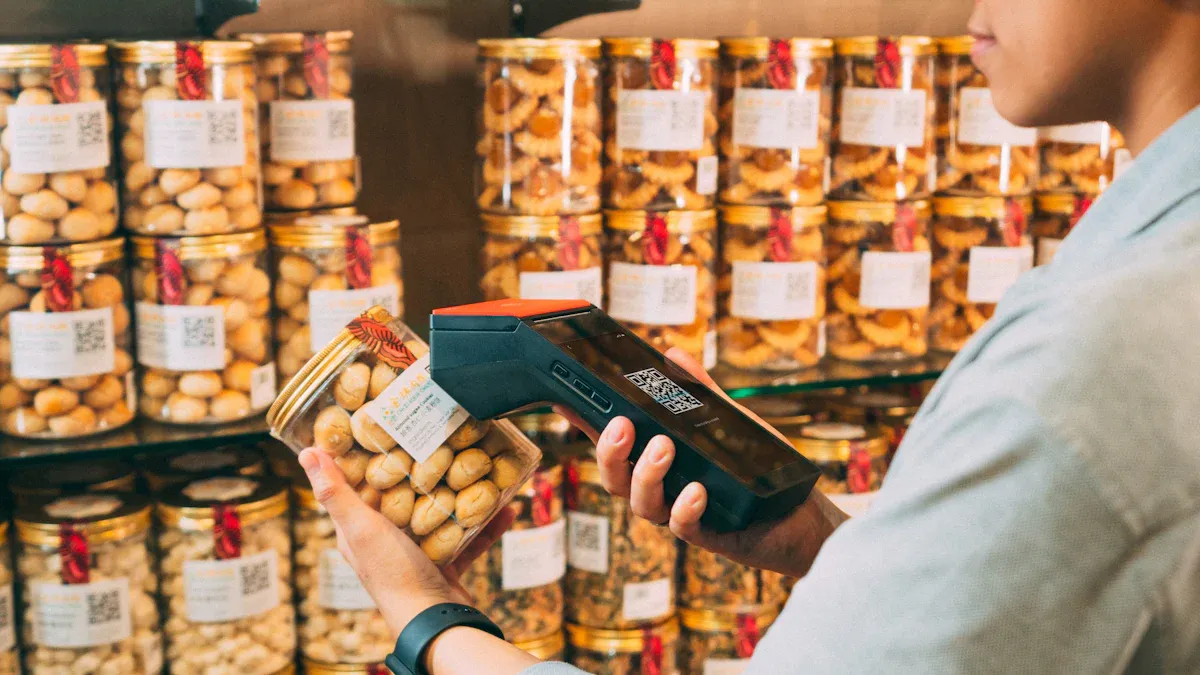
You see digital price tags with QR codes transforming the retail checkout process, but they cannot fully replace cashiers yet. Electronic Shelf Labels, ESL Price Tag, and ESL Gateway AP offer real-time updates and automation, yet you encounter challenges like staff training, customer learning curves, and privacy concerns. Esl Retail continues to improve efficiency as retailers adopt QR codes for dynamic pricing, interactive product details, and sustainability. The path toward full cashier replacement depends on advancements in technology, accessibility, and customer trust.
How Digital Price Tags Enable QR Code Payments

Electronic Shelf Labels and Their Role
What Are Electronic Shelf Labels
You encounter electronic shelf labels as digital displays that replace traditional paper price tags in retail stores. These labels operate through a central management system that wirelessly transmits product data and pricing updates to each tag. The system uses wireless technology such as radio-frequency, infrared, or visible light to ensure fast and reliable communication. Electronic shelf labels display not only prices but also product specifications, stock availability, and qr codes. You can scan these qr codes to access payment portals or product information. This approach supports real-time updates and reduces the need for manual intervention, making store operations more efficient.
- VusionGroup ESLs feature media-rich displays that show qr codes for local product info, digital promotions, and loyalty campaigns.
- These labels operate wirelessly, using existing store networks for seamless integration.
- Centralized cloud management allows you to update pricing and promotional content instantly.
- ESLs support interactive qr code payments directly at the shelf edge.
Integration with Retail Systems
You benefit from electronic shelf labels that integrate with inventory management and mobile payment systems. This integration supports omnichannel retail strategies and streamlines store operations. ESLs commonly use e-paper displays combined with wireless technology such as NFC, Wi-Fi, Bluetooth, and RFID. NFC and qr codes play a key role in payment integration. Cloud-based centralized control and integration with POS or ERP systems are typical features. You experience long battery life and dynamic pricing updates, which are important for operational efficiency. ESLs link qr codes to interactive content, digital coupons, AR experiences, and mobile transactions, enhancing your shopping experience.
QR Code Payment Process on Digital Price Tags
Generating and Displaying Dynamic QR Codes
Digital price tags generate and display dynamic qr codes in real time. When you walk through a store, you see these qr codes on the shelf next to each product. The system updates these codes instantly to reflect current prices, promotions, or inventory changes. You can scan the qr code to access a payment page or product details. This process supports qr code payments and enables you to complete purchases without waiting in line.
Step-by-Step Customer Payment Journey
You follow a straightforward process when using qr code payments on digital price tags:
1. You scan the qr code displayed on the digital price tag using your smartphone camera or payment app. 2. The scan directs you to a payment page or prompts authorization through your mobile wallet or payment app. 3. You enter or confirm the payment amount. 4. You authorize the payment transaction. 5. The payment completes, and the merchant receives the payment.
This journey allows you to experience fast, contactless, and secure payment processing. You avoid traditional checkout lines and enjoy a streamlined transaction processing experience.
Real-Time Updates and Security
Price and Promotion Synchronization
You rely on electronic shelf labels for real-time price and promotion synchronization. The central management system updates all digital price tags instantly, ensuring that you always see accurate prices and current offers. This synchronization reduces pricing errors and supports automated price management. You benefit from dynamic pricing and timely promotions, which enhance your shopping experience and support digital payment technologies.
Data Protection and Fraud Prevention
You expect robust security measures when using qr code payments. Retailers implement secure access credentials with strong authentication methods such as OAuth2 and multi-factor authentication. Role-based access control limits permissions to necessary users only. End-to-end encryption protocols like HTTPS protect your data during payment transactions. Hardware-level security features, including secure boot and hardware-accelerated cryptography, prevent tampering. Regular software and firmware updates patch vulnerabilities and improve security. Network monitoring and auditing detect unusual activity and maintain synchronization integrity. Backup and recovery mechanisms, such as battery backups and automatic retry systems, ensure data accuracy during outages. Secure communication channels and strict access controls maintain data integrity during real-time synchronization. Continuous monitoring with automated alerts allows retailers to respond quickly to security incidents. Redundant network paths and failover systems maintain continuous operation, even during network disruptions. These measures protect your data and ensure safe payment qr code transactions.
Advantages of Digital Price Tags with QR Codes
Efficiency and Speed in Retail
Faster Checkout and Reduced Wait Times
You notice a dramatic improvement in checkout speed when you use digital price tags with qr codes. These systems let you scan and pay directly at the shelf, which reduces transaction times by nearly 50% compared to traditional cash or card methods. Global coffee chains have reported up to a 30% drop in wait times after adopting qr code payments. You no longer need to wait in long lines, as you can complete your payment instantly using your smartphone. The process also bundles multiple items into a single scan, minimizing errors and making your payment experience smoother.
| Aspect | Evidence Supporting Efficiency and Speed Improvements |
|---|---|
| Faster Transactions | QR code payments reduce transaction times by nearly 50% compared to cash or card swiping; global coffee chains saw wait times drop by up to 30%. |
| Reduced Cashier Involvement | Customers scan and pay directly, freeing staff from processing payments and allowing focus on other tasks like bagging or customer assistance. |
| Dynamic QR Codes | Bundle orders and payments into a single scan, minimizing errors and wait times. |
| Real-Time Integration | Payments link directly to back-office systems for instant inventory updates and sales data, streamlining store operations. |
| Contactless & Self-Serve | Enables customers to scan, pay, and leave without cashier interaction, speeding up checkout and improving hygiene. |
| Lower Costs & Simplified Workflow | QR payments reduce transaction fees and simplify reconciliation, benefiting retailers operationally. |
| Enhanced Customer Experience | Real-time product info, instant discounts, and loyalty program integration improve engagement and reduce checkout friction. |
Streamlined Store Operations
You help streamline store operations by using qr code payments. Staff can focus on customer service and inventory management instead of manual payment processing. Real-time integration with back-office systems ensures instant updates for inventory and sales data. This approach simplifies workflows and reduces operational bottlenecks, making your store more efficient.
Cost Savings and Accuracy
Lower Labor Costs and Fewer Errors
You benefit from significant cost savings when you implement digital price tags. These tags automate price updates, eliminating the need for manual changes and reducing labor costs. Wireless connectivity keeps prices synchronized with store databases, which minimizes pricing errors and discrepancies. Automation allows your staff to focus on higher-value tasks, such as customer service.
- Digital price tags automate price updates, eliminating manual price tag changes and reducing labor costs.
- Wireless connectivity enables real-time synchronization with store databases, minimizing pricing errors and discrepancies.
- Automation frees staff to focus on higher-value tasks like customer service and inventory management.
- Agile pricing capabilities help reduce waste, especially for perishable goods, by allowing dynamic price adjustments.
- Improved pricing accuracy and timely promotions increase sales performance and customer satisfaction.
Automated Price Management
You see a dramatic reduction in pricing errors after adopting electronic shelf labels. A study found a 90% decrease in pricing mistakes, as centralized and automated price updates ensure every item displays the correct price. Real-time synchronization between online and in-store pricing prevents discrepancies and customer complaints. You can execute price changes instantly and error-free across multiple locations, which enhances operational efficiency.
- Digital price tags eliminate human error by enabling centralized and automated price updates.
- Synchronization between online and in-store pricing is maintained in real time, preventing discrepancies.
- Retailers experience fewer customer complaints and pricing disputes due to accurate and instant price updates.
Enhanced Customer Experience
Self-Service and Contactless Shopping
You enjoy greater control and convenience with self-service and contactless shopping. Digital price tags ensure accurate and consistent pricing, which builds trust and eliminates frustrating mismatches at checkout. You can access clear product details, allergy warnings, and promotions directly from the shelf. Interactive qr features let you compare items, read reviews, and receive instant offers. During the COVID-19 pandemic, you likely preferred contactless payments to reduce human interaction and enhance safety. Surveys show that most shoppers want technology to speed up checkout and prefer using their own devices for in-store shopping and payment.
Tip: Self-checkout and contactless payments not only save time but also improve hygiene and safety in busy retail environments.
Access to Product Details and Offers
You gain instant access to detailed product information, reviews, and exclusive discounts by scanning qr codes on digital price tags. These tags display not only prices but also product videos, how-to guides, and special offers. You navigate the store more easily, as digital price tags highlight inventory levels, product locations, and current promotions. Real-time updates and personalized offers create a more engaging and tailored customer experience. Staff also benefit from improved access to product information, enabling better service and faster assistance.
Limitations and Challenges of Electronic Shelf Labels
Security and Privacy Risks
Protecting Customer Data
You face significant privacy risks when using electronic shelf labels in retail. These systems often collect sensitive data, such as shopping behavior and even biometric information like facial scans. Many retailers do not always obtain proper consent, which can violate privacy laws and damage your trust. Data collection without transparency may lead to regulatory scrutiny and harm a brand’s reputation. You should expect clear communication about what data is collected and how it is used. Businesses must implement strong internal guidelines, conduct regular audits, and stay updated on evolving regulations to protect your information.
| Risk Category | Description |
|---|---|
| Privacy Risks | ESLs collect biometric data (e.g., facial scans) often without proper consent, risking violations of biometric privacy laws. Broader consumer data collection (shopping behavior, demographics) raises concerns about data security, transparency, and consent, potentially leading to regulatory scrutiny and reputational damage. |
| Antitrust Risks | Use of algorithmic pricing with ESLs can mimic collusion, triggering competition investigations. High costs and complexity may exclude smaller retailers, causing market consolidation and reduced competition, which regulators like FTC and DOJ monitor closely. |
| Brand Risks | ESL errors can cause inconsistent pricing, damaging consumer trust and promotional strategies. Discriminatory or coordinated pricing via ESLs may implicate brands in legal violations. Associations with invasive data collection can erode brand reputation and provoke regulatory backlash. |
| Mitigation | Businesses should implement internal guidelines, conduct audits, and monitor evolving regulations to minimize legal and reputational risks related to ESL deployment. |
Preventing Payment Fraud
You expect secure qr payment processing at every step. However, digital price tags can become targets for fraud if not properly protected. Hackers may attempt to tamper with qr codes or intercept payment data. To reduce these risks, retailers should use end-to-end encryption, secure authentication, and regular software updates. You should look for visible security assurances and trust only reputable providers. Businesses must also monitor for unusual activity and respond quickly to any threats.
Customer Adoption Barriers
Technology Comfort and Accessibility
You may find qr payment systems confusing, especially if you are not comfortable with technology. Older shoppers often struggle with scanning qr codes or navigating digital menus. Clear instructions, staff guidance, and visible signage help you adapt. Some customers worry that qr payments require downloading an app, but most modern systems allow scanning with a phone camera. You benefit from “No App Needed” messaging and simple, step-by-step directions.
- Many customers hesitate to use qr payments due to perceived complexity.
- Staff reluctance can slow adoption if they fear extra work or tip loss.
- Reliable internet is essential for qr payment processing; poor connectivity disrupts transactions.
- Group payments or split bills can be challenging without clear features and instructions.
Support for Non-Smartphone Users
You may not own a smartphone or prefer not to use one for qr payments. Retailers should maintain traditional payment options, such as cash or card, to ensure everyone can complete their purchases. Staff should remain available to assist with qr scanning or offer alternative payment methods. This approach ensures inclusivity and avoids alienating any customer group.
Technical and Operational Issues
System Reliability and Maintenance
You rely on electronic shelf labels for accurate pricing and qr payment functionality. System outages or network failures can disrupt both pricing updates and payment processing. Retailers must invest in reliable infrastructure, regular maintenance, and backup systems to minimize downtime. Staff training helps address technical issues quickly, ensuring you experience minimal inconvenience.
Integration with Legacy Systems
You may notice integration challenges when retailers add electronic shelf labels to older store systems. Legacy point-of-sale platforms may not support real-time qr payment updates or contactless payments. Businesses need to choose compatible solutions and plan for gradual upgrades. Testing and phased rollouts help prevent disruptions and ensure smooth operation as you transition to more advanced retail technology.
Note: Successful adoption of qr payment and contactless solutions depends on robust infrastructure, clear communication, and ongoing support for both customers and staff.
Business Implications of Digital Price Tags
Impact on Staffing and Store Roles
Evolving Job Descriptions
You see a shift in employee responsibilities as digital price tags become standard in retail. Automation eliminates the need for staff to manually replace paper price tags. Employees now focus on tasks that require human interaction and expertise. You use features like LED pick-to-light to locate products quickly, which improves stocking and fulfillment. QR codes on shelf labels let customers access product information and availability themselves, reducing your involvement in answering routine questions. Integration with inventory management and robotic shelf scanning automates repetitive work, so you spend more time on customer-focused activities.
- Manual labor for price updates decreases.
- Employees use technology to enhance stocking and fulfillment.
- Customers rely on QR codes for product details, reducing basic inquiries.
- Staff roles shift toward customer service and tech-supported functions.
Training and Support Requirements
You need new skills to thrive in this environment. Your focus moves from repetitive manual tasks to customer service and product assistance. You must become familiar with digital tools and integrated systems that link price tags to inventory and point-of-sale platforms. Technical proficiency becomes essential. As you engage in more meaningful work, your job satisfaction improves.
“A price change that used to take an associate two days to update now takes only minutes with the new DSL system. This efficiency means we can spend more time assisting customers and less time on repetitive tasks.” — Daniela Boscan, Walmart Food & Consumable Team Lead
You receive training on digital workflows, troubleshooting, and customer engagement. This training ensures you can support both the technology and the people using it.
Store Design and Customer Flow
Optimizing for Self-Checkout
You notice that digital price tags support dynamic digital signage and flexible promotions. Store layouts now feature modular displays and adjustable shelving, which you can reconfigure quickly for changing product cycles. Wide, clear pathways guide customer movement and improve traffic flow. You see impulse purchase items placed strategically along these routes, increasing engagement and convenience.
- Dynamic signage enables real-time promotions.
- Modular shelving adapts to new product cycles.
- Wide pathways and clear flooring guide customers efficiently.
- Impulse items placed along main routes boost engagement.
Managing In-Store Navigation
You benefit from improved navigation as digital price tags enable dynamic product positioning and wayfinding. Customers can search for product locations using kiosks or QR codes, making it easier to find what they need. The reduction in static signage allows for more flexible layouts. Staff allocation improves, as you spend less time on manual updates and more time helping customers. Real-time updates streamline the customer journey and reduce bottlenecks.
- Customers use QR codes and kiosks for wayfinding.
- Flexible layouts adapt to changing needs.
- Staff focus shifts to customer engagement.
- Real-time updates enhance the shopping experience.
Compliance and Legal Considerations
Payment Regulations and Standards
You must ensure that your payment systems comply with security and regulatory requirements. Integrating secure QR codes with trusted payment networks reduces fraud risk. You use threat detection services, abuse APIs, and digital certificate verification to protect customer data. These measures help you maintain compliance and safeguard your reputation.
Consumer Rights and Protections
You also need to meet local and regional regulations that require digital access to product or ingredient information. Standards like GS1 support transparency and traceability, especially for high-risk products. You include batch numbers, freshness dates, and recall information in barcodes or QR codes. Linking these codes to online resources gives consumers easy access to critical compliance data. This approach ensures you protect consumer rights and maintain trust in your digital price tag and payment systems.
Customer Perspectives on Electronic Shelf Labels

User Experience and Feedback
Insights from Early Adopters
You see retailers adopting electronic shelf labels to streamline operations and improve accuracy. Early adopters report that digital price tags reduce manual labor and speed up price changes. For example, Naifeh’s Cash Saver cut labor hours from 50 per week to just minutes by sending price updates electronically. You benefit from features like color-coded promotions and eligibility displays for government programs. These improvements show that digital price tags can solve operational challenges and deliver a clear return on investment.
Common Challenges and Solutions
You may encounter several user experience issues when using electronic shelf labels. The table below highlights the most common challenges and their impact:
| User Experience Issue | Description and Impact |
|---|---|
| Display Quality | Resolution, brightness, and readability under different lighting conditions affect clarity and usability. |
| Update Speed | Slow updates can delay price adjustments and inventory management. |
| System Compatibility | Integration with POS and retail platforms is essential for smooth operation. |
| Wireless Communication | The choice of Bluetooth, Wi-Fi, or Zigbee affects performance and ease of use. |
| Installation and Maintenance | Easy installation and maintenance, such as battery replacement, improve usability. |
| User Interface | Simple software interfaces reduce training needs and boost efficiency. |
| Battery Life | Longer battery life lowers maintenance costs. |
| Environmental Adaptability | Reliable operation in extreme conditions ensures stability. |
| Durability | Robust design extends lifespan and system stability. |
| Data Security | Encryption and secure transmission prevent unauthorized access. |
| Physical Security | Anti-theft features protect labels from damage or loss. |
| Technical Support | Good supplier support and training improve satisfaction. |
| After-Sales Service | Warranties and quick repairs build trust. |
Retailers address these challenges by planning integrations carefully, investing in staff training, and scheduling updates during off-peak hours. You see phased rollouts and clear communication with staff and customers, which help ease transitions and improve acceptance of digital price tags.
Demographic and Accessibility Factors
Age, Tech Savviness, and Inclusivity
Younger, tech-savvy shoppers, especially Gen Z, drive the adoption of electronic shelf labels. You expect seamless, efficient, and personalized shopping. Your familiarity with digital and omnichannel retail encourages retailers to integrate physical and online inventories. You value sustainability and transparency, which pushes stores to adopt eco-friendly practices, including digital price tags. Retailers adjust marketing and store experiences to match your preferences, supporting the shift to digital modernization.
Accommodating Disabilities
You need inclusive solutions when using electronic shelf labels. Retailers must ensure that digital price tags are readable for everyone, including those with visual impairments. High-contrast displays, large fonts, and clear qr codes help you access information easily. Stores should provide alternative payment options and staff assistance to support customers who cannot use smartphones or have other accessibility needs.
Building Trust in Digital Price Tags
Transparency and Communication
You want transparency about how your data is used when you scan a qr code. Retailers build trust by publishing clear FAQs, explaining what data they collect, and reassuring you about privacy. Staff training ensures that employees can answer your questions and address concerns confidently. You appreciate upfront communication, which helps you feel secure using digital price tags and qr payments.
Customer Support Channels
You rely on responsive customer support when you face issues with qr payments or digital price tags. Retailers provide multiple support channels, such as in-store assistance, online chat, and phone support. You benefit from quick responses and clear instructions, which help resolve problems and maintain your confidence in the system. Reliable support and ongoing education encourage you to adopt qr payments and trust digital price tags for your shopping needs.
Practical Steps for Implementing Digital Price Tags
Cost and Investment Considerations
Initial Setup and Ongoing Expenses
When you plan to implement digital price tags, you must consider both upfront and recurring costs. The initial investment includes purchasing electronic shelf labels, which typically range from $5 to $20 per unit depending on size and features. You also need to budget for a robust wireless network, such as Wi-Fi or Bluetooth Low Energy, to ensure reliable connectivity throughout your store. A centralized pricing management system must integrate with your POS and inventory platforms. Battery management protocols, security measures like encryption and authentication, and regular software updates are essential for protecting pricing and payment data. Staff training and contingency plans for operational disruptions add to your ongoing expenses, but these investments are critical for a secure and efficient deployment.
Return on Investment Analysis
You can expect to see a return on your investment within 12 to 24 months. Retailers who frequently update prices or operate large stores often recoup costs even faster. Labor costs for price updates typically drop by 30-50%, and you reduce operational expenses by automating manual tasks. Some stores have reported a 15% increase in sales during promotions after adopting real-time pricing adjustments. You also benefit from improved pricing accuracy, fewer disputes, and enhanced customer trust. The long-term savings and increased revenue from dynamic pricing and efficient payment processing justify the initial outlay.
Integration and Vendor Selection
Compatibility with Existing Systems
You should ensure that your digital price tag solution integrates seamlessly with your current ERP, POS, and inventory systems. Real-time price updates from a central database help maintain consistency between shelf displays and payment points. This integration supports dynamic pricing strategies and allows you to respond quickly to market changes or demand fluctuations. You also improve inventory management by signaling product availability directly at the shelf.
Choosing the Right Technology Partner
Selecting the right vendor is crucial for long-term success. Consider these factors:
- Type of display: Choose between LCD for vibrant visuals or e-paper for readability and low power use.
- Compatibility: Ensure the system works with your existing platforms to avoid costly modifications.
- Lifespan and durability: Look for tags with long battery life and robust materials, especially if you operate in challenging environments.
- User-friendliness: The system should be intuitive for staff, requiring minimal training for price updates and payment management.
- Installation and maintenance: Opt for easy-to-install, lightweight tags with clear support options.
Tip: Prioritize vendors who offer strong customer support and proven integration experience with payment systems.
Transition and Training Strategies
Pilot Programs and Testing
You should start with a pilot program to test digital price tags in a controlled environment. This approach allows you to identify integration challenges, gather feedback, and refine your processes before a full rollout. Use analytics and continuous feedback to optimize training and tool usage. Align your digital adoption efforts with business outcomes to demonstrate the value of the new system to your team.
Educating Staff and Customers
Effective training ensures a smooth transition. Tailor your training to different roles, using in-app guidance and role-specific materials. Provide opportunities for staff to practice with the system before going live. Communicate clearly with customers using concise materials and explanation videos. Incentivize early adoption with rewards and ensure staff can assist customers with payment questions. Automation of price changes reduces manual errors, allowing your team to focus on customer service and payment support.
The Future of Retail with Digital Price Tags
Trends in Retail Automation
AI, Machine Learning, and Smart Stores
You see retail automation advancing rapidly. AI and machine learning now drive smart stores, transforming how you interact with products and prices. When you enter a store, AI-powered personalization tailors your experience. You receive product recommendations, real-time digital signage, and smart loyalty programs. These features can boost sales by up to 40%. You notice that hybrid shopping models combine scan-and-go, smart carts with AI tracking, and traditional cashier assistance. This approach accommodates your preferences and shopping habits.
Retailers deploy biometric payment methods such as facial recognition and palm scanning. These technologies, like Amazon One, speed up transactions and enhance security. You benefit from AI-powered sensors and IoT devices. Cameras and weight sensors embedded in shelves track your movements and item selections in real time. Electronic shelf labels with e-paper or LCD displays allow remote, real-time updates of pricing and promotions. You see dynamic digital price tags that support instant qr payments and seamless shopping.
Note: Autonomous inventory robots use AI sensor data to restock shelves efficiently, reducing labor needs and ensuring products remain available for you.
Contactless and Frictionless Shopping
You experience a shift toward contactless and frictionless shopping. Cashierless checkout systems let you scan a barcode or qr code with a store app before entering. This process enables seamless payment when you exit. You interact with qr-enabled digital price tags that display current prices, promotions, and product details. AI-powered cameras and sensors track your selections, so you do not need to wait in line.
Retailers use qr codes to link you directly to payment portals, product reviews, and special offers. You enjoy a streamlined journey from shelf to payment. The integration of qr technology with ecommerce platforms allows you to shop in-store and online with the same convenience. You see cashierless stores expanding beyond convenience stores into supermarkets and fashion outlets. Hybrid models combine automation with traditional checkout, giving you flexibility.
You benefit from reduced labor costs, increased efficiency, and data-driven insights from shopper behavior analytics. Retailers use these insights to improve your experience and optimize store operations.
Potential for Full Cashier Replacement
What Needs to Change for Full Adoption
You recognize that digital price tags with qr codes have not yet fully replaced cashiers. Several factors must change for complete adoption. Implementation costs remain high, especially for advanced AI and sensor systems. Retailers must address data privacy concerns and ensure robust cybersecurity. You need assurance that your personal and payment data stays secure during qr transactions.
Customer adoption barriers persist. Not everyone feels comfortable with qr payments or biometric authentication. Retailers must provide clear instructions, support for non-smartphone users, and hybrid checkout options. You expect seamless integration with legacy systems and reliable infrastructure. Retailers must invest in staff training and customer education to build trust in qr-based cashierless systems.
Tip: Partnerships between technology providers and retailers can help lower costs and accelerate adoption of qr-enabled digital price tags.
Timeline and Industry Predictions
You can expect the transition to full cashier replacement to unfold gradually. Early adoption occurs in high-traffic urban areas and tech-forward retail chains. Over the next five years, you will see more supermarkets, department stores, and specialty retailers implementing qr-enabled digital price tags and cashierless checkout systems. Market trends highlight hyperautomation, computer vision integration, smart cart technology, and predictive analytics as key drivers.
Industry leaders such as Zebra Technologies, Honeywell, Pricer AB, SES-imagotag, and Hanshow continue to innovate in this space. You will see cashierless formats expand as costs decrease and customer comfort with qr payments grows. Ecommerce integration will further blur the lines between online and offline shopping, giving you more options and flexibility.
The future of retail centers on qr-driven automation, smart stores, and seamless shopping experiences. You play a vital role in shaping this evolution by embracing new technologies and providing feedback to retailers.
You see that digital price tags with QR codes cannot fully replace cashiers today. You gain faster checkouts, lower labor costs, and real-time pricing. However, you still face challenges like privacy risks, technology barriers, and system reliability.
As retail evolves, you should stay informed and adaptable. Embrace new tools, but expect a gradual shift toward cashierless shopping. Your feedback and willingness to learn will shape the future of retail checkout.
FAQ
What are the main benefits of digital price tags with QR codes?
You gain faster checkout, real-time pricing, and fewer errors. Digital price tags help you access product details instantly. Retailers save on labor costs and improve store efficiency.
Can digital price tags fully replace cashiers today?
You still need cashiers for support and to help customers who prefer traditional payment methods. Digital price tags with QR codes cannot fully replace cashiers yet.
How secure are QR code payments on digital price tags?
You benefit from strong encryption and secure authentication. Retailers use regular software updates and network monitoring to protect your payment data.
What happens if a customer does not have a smartphone?
You can still pay with cash or card at a staffed checkout. Retailers keep traditional payment options available for customers without smartphones.
Do digital price tags work with all retail systems?
You may see integration challenges with older systems. Most modern digital price tags support popular POS and inventory platforms, but you should check compatibility before deployment.
How do digital price tags help with promotions and discounts?
You see instant updates for sales and special offers. QR codes on digital price tags link you to exclusive deals and loyalty rewards.
Are digital price tags accessible for people with disabilities?
You find high-contrast displays and large fonts on many digital price tags. Retailers also provide staff assistance and alternative payment options for accessibility.
What should retailers consider before switching to digital price tags?
You should evaluate costs, system compatibility, and staff training needs. Pilot programs and customer education help ensure a smooth transition.