
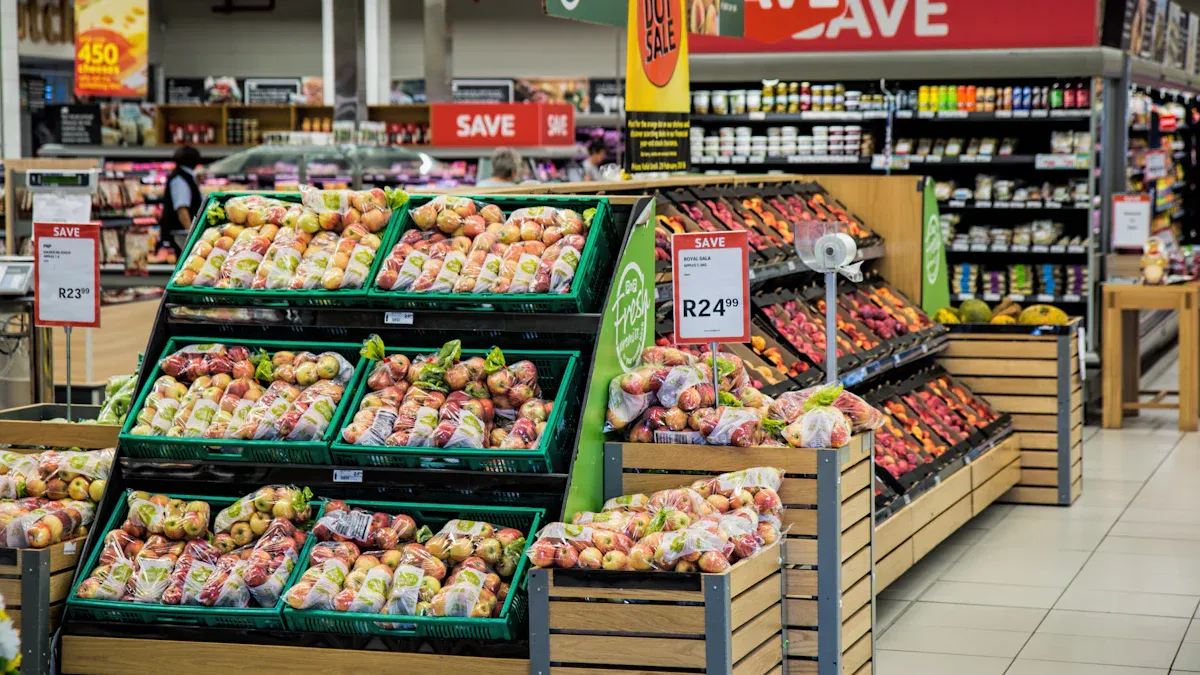
You can reduce price disputes in your store by using digital price tags. These digital solutions deliver real-time, accurate price updates, giving you consistency between the shelf and the register. Electronic Shelf Labels and ESL Price Tag systems automate price changes and remove human error. With ESL Gateway AP and Esl Retail platforms, you support dynamic pricing and display extra product information, which builds customer trust.
- Digital price tags cut staff workload by automating price adjustments.
- Real-time updates and clear displays make price information transparent for every customer.
- LED indicators and integration with inventory systems boost operational efficiency and compliance.
Main Causes of Pricing Disputes in Traditional Retail
Manual Price Updates and Human Error
Inconsistent Shelf and POS Pricing
You often face pricing errors when you rely on manual price updates. Staff may enter prices incorrectly at the shelf or the point of sale (POS), leading to discrepancies between what customers see and what they pay. Even a misplaced decimal or a forgotten update can create confusion. In traditional retail, these pricing discrepancies are common and can result in significant financial losses. For example, a global supermarket chain reported a 0.5% pricing discrepancy across thousands of stores, which led to millions in annual losses. When you switch to Electronic Shelf Labels, you can reduce pricing errors by up to 90%, highlighting how frequent and impactful manual mistakes are.
Outdated Promotional Tags
You may also encounter outdated promotional tags that remain on shelves after a sale ends. When customers see a lower price on a tag but get charged a higher price at checkout, disputes arise. Staff may struggle to keep up with frequent promotions, especially during busy periods. This lag in updating tags not only causes pricing errors but also damages your reputation. Customers expect accurate price information, and repeated mistakes can erode their trust in your store.
Communication Gaps and Delayed Price Changes
Lack of Real-Time Coordination
Communication gaps between your teams, suppliers, and distributors can delay price changes. Without real-time coordination, you risk having different prices in different locations or systems. These gaps often lead to pricing variations, backdated contract pricing, and even chargeback or rebate denials. You can improve accuracy by adopting standardized communication protocols and timely notifications.
Delayed Implementation Across Stores
When you roll out new prices or promotions, delays in implementation across your stores can cause confusion. Inconsistent timing leads to costly rework and errors. Consider these common issues:
- Pricing variations and errors due to delayed updates.
- Inconsistent contract activation and rushed pricing changes.
- Disrupted inventory and replenishment from mismatched price data. Providing at least 45 days’ notice before contract price changes take effect helps eliminate negotiation delays and errors. Standardized electronic data interchange formats and identifiers also enhance communication and reduce mistakes.
Customer Trust and Perception Issues
Visible Price Mismatches
When customers see visible price mismatches between shelf tags and checkout totals, their trust in your store declines. Satisfaction and perceived value play a major role in building trust. If customers perceive prices as unfair or inconsistent, they may question your brand reputation and hesitate to make purchases. This dissatisfaction often leads to more pricing disputes.
Impact on Brand Reputation
Your brand reputation depends on delivering fair and transparent pricing. Both trust in your staff and trust in your products influence purchase intentions. If customers believe your prices are unfair, their trust does not always translate into sales. Negative perceptions of price fairness can offset trust and damage your brand reputation. Over time, repeated pricing errors and disputes can undermine your reputation and reduce customer loyalty.
How Digital Price Tags Ensure Pricing Accuracy
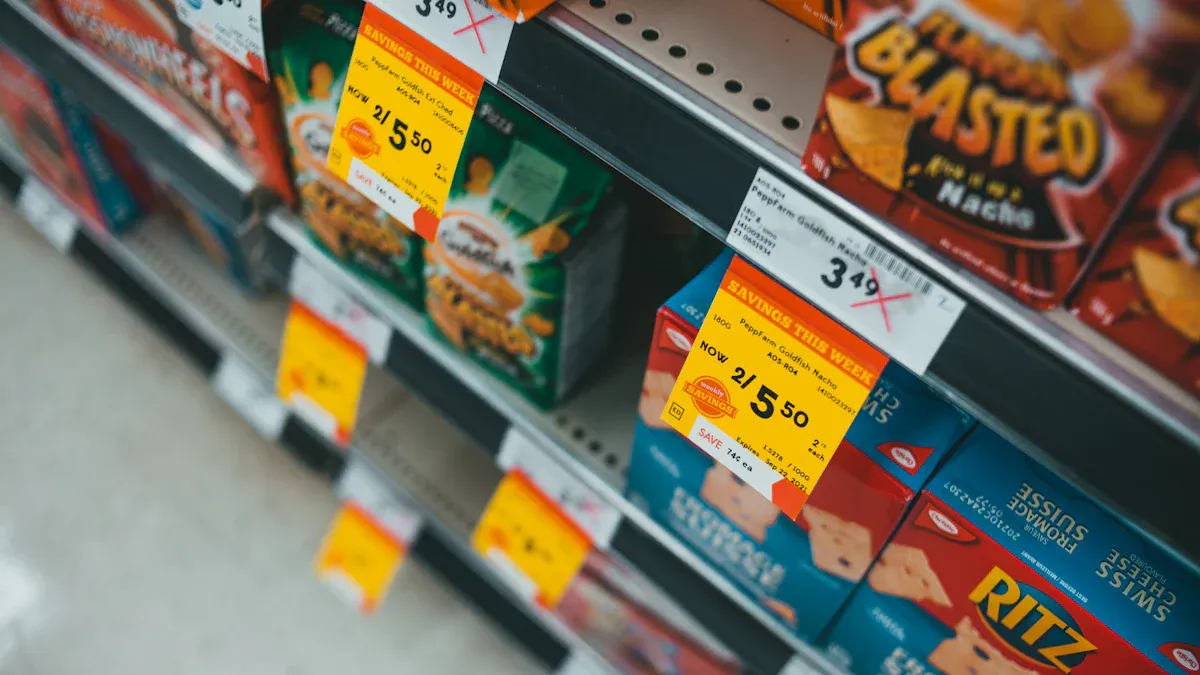
Real-Time Synchronization with POS Systems
Automated Price Updates
You gain a significant advantage when you use digital price tags that synchronize in real time with your POS systems. Digital labels connect wirelessly to a central management system, allowing you to push instant price updates from your POS to every shelf within seconds. Technologies like Wi-Fi, Bluetooth Low Energy, and proprietary RF ensure reliable and low-latency data transmission. You can rely on APIs or middleware platforms to facilitate real-time data exchange, so your pricing accuracy remains high. Cloud-based POS platforms often support automatic synchronization, making it easy to scale and manage your stores. With digital price tags, you eliminate the need for manual price label changes and reduce pricing errors across all sales channels.
Elimination of Manual Entry Errors
Digital price tags remove the risk of human error from your pricing process. You no longer need to worry about staff entering incorrect prices or missing updates. Real-time synchronization ensures that every digital label displays the correct price, every time. Security measures such as encrypted communication protocols and secure authentication protect your data during updates. Backup systems and exception handling keep your pricing accurate, even during network disruptions. You can test and monitor API performance to confirm that updates propagate instantly and accurately.
Tip: Automated pricing with digital labels not only saves time but also boosts your store’s reputation for accurate pricing.
Centralized Price Management
Consistent Pricing Across All Locations
Centralized price management gives you the power to implement pricing changes and promotions simultaneously across all your retail locations. A single database acts as the source of truth, providing every store with up-to-date pricing information. This approach reduces discrepancies and supports consistency, so your customers always see the same price, no matter where they shop. Centralized systems also improve operational efficiency by reducing manual updates and errors. You can use analytics to optimize your pricing strategies and support scalable growth.
- Centralized POS systems enable real-time updates across all stores.
- Unified pricing logic at the corporate level eliminates discrepancies.
- Data-driven analysis helps you build consistent and profitable pricing strategies.
Remote Control and Monitoring
You can control and monitor your digital price tags remotely, making it easy to manage pricing across multiple locations. Integration with competitor pricing data and customer segmentation enables you to optimize your strategies. Centralized control supports compliance and financial management, while automation streamlines your pricing processes.
Transparent and Up-to-Date Price Displays
Clear Digital Signage
Digital labels provide clear, easy-to-read displays for your customers. Electronic price tags and electronic shelf labels ensure that every shopper sees the most current price and product information. This transparency builds trust and reduces confusion at checkout.
Instant Promotional Adjustments
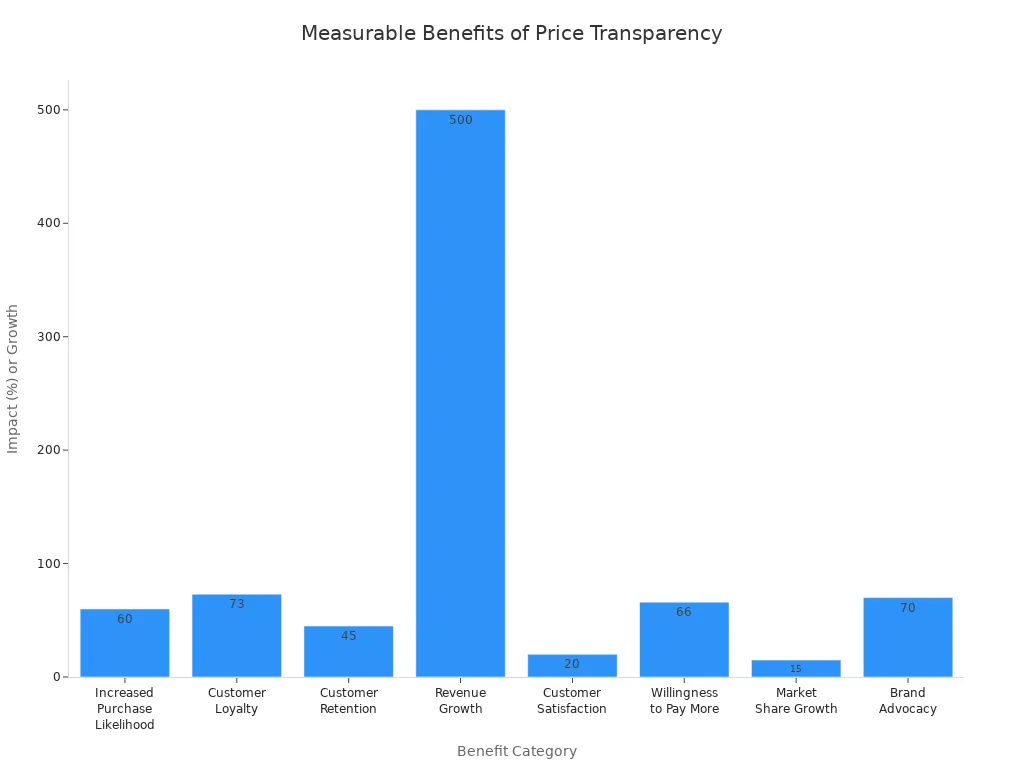
You can launch or end promotions instantly with digital price tags. Real-time pricing updates allow you to adjust prices across all stores without delay. Transparent and up-to-date price displays deliver measurable benefits for both you and your customers:
| Benefit Category | Measurable Impact / Statistic | Supporting Example / Source |
|---|---|---|
| Increased Purchase Likelihood | 60% more likely to purchase when prices are transparent | University of California, Berkeley study |
| Customer Loyalty | Up to 73% increase in loyalty | Harvard Business Review study |
| Customer Retention | 30-60% increase in retention rates | Elliance research, Warby Parker, Everlane examples |
| Revenue Growth | 500% revenue growth reported by Everlane | Everlane case study |
| Customer Satisfaction | 20% higher satisfaction scores | Harvard Business Review |
| Willingness to Pay More | 46-86% consumers willing to pay more for transparent pricing | Deloitte report, PwC survey |
| Market Share Growth | 15% increase in market share | McKinsey research |
| Brand Advocacy | 70% more likely to recommend brand | Harvard Business Review |
| Reduced Cognitive Dissonance | Transparent pricing reduces anxiety about overpaying | Journal of Consumer Research |
| Enhanced Perception of Fairness | Consumers perceive transparency as respect and integrity | University of California, Berkeley study |
| Better Pricing Decisions | Enables retailers to make informed, strategic pricing choices | Expert guidance and data analysis |
Digital price tags and digital labels help you achieve pricing accuracy, consistency, and transparency. You reduce pricing errors, improve customer satisfaction, and support your brand’s growth with automated pricing and real-time synchronization.
Mechanisms to Reduce Price Disputes with Digital Price Tags
Eliminating Pricing Discrepancies
Unified Shelf and Checkout Pricing
You can eliminate pricing discrepancies by using digital price tags that synchronize instantly with your POS system. These electronic price tags connect to a centralized platform, which updates prices wirelessly in real time. When you change a price in your retail management system, the update appears on every shelf and at checkout within seconds. This integration ensures that the price displayed on the shelf always matches the price at the register. You reduce price disputes because customers see the same price throughout their shopping journey. Digital labels also support scheduled promotions and bulk price adjustments, making it easy to maintain consistency across all locations.
- Centralized control integrates shelf and checkout pricing.
- Wireless updates reduce manual labor and human error.
- Real-time synchronization prevents mismatches and confusion.
Note: Electronic shelf labels accessed by staff allow remote updates, so you never need to worry about manual price changes causing errors.
Prevention of Outdated Price Displays
You prevent outdated price displays by leveraging the instant update capabilities of digital price tags. During promotions or flash sales, you can adjust prices across all stores immediately, without waiting for staff to replace physical tags. This automation ensures that every electronic price tag reflects the current offer, reducing the risk of customer disputes. Integration with inventory and POS systems supports dynamic promotions and synchronized pricing, which builds trust and transparency.
- Real-time updates prevent delays and errors.
- Automation reduces the risk of outdated or incorrect prices.
- Synchronized systems ensure consistent promotions and discounts.
Digital price tags prove especially valuable for large chains with frequent price changes, but even smaller stores benefit from the reduction in manual errors and improved pricing accuracy.
Enhancing Pricing Accuracy and Compliance
Automatic Audit Trails and Logs
You gain a powerful compliance tool with digital price tags through automatic audit trails and logs. Every price change creates a timestamped record, including who made the change and when. These records support quick investigations if you encounter pricing errors or disputes. Audit trails simplify internal audits and help you meet industry standards by documenting every update and approval. Secure access controls protect sensitive data, while continuous monitoring ensures only authorized changes reach the shelf.
- Comprehensive logs provide accountability and traceability.
- Searchable histories support regulatory reviews and third-party audits.
- Accurate records demonstrate due diligence and help you avoid fines.
Tip: Automated audit trails not only enhance operational efficiency but also build consumer trust by ensuring transparency in your pricing process.
Regulatory Price Accuracy
Digital price tags help you comply with strict pricing regulations. You must ensure that shelf prices match checkout prices to avoid penalties. Real-time updates and centralized control make this possible. The following table summarizes how digital labels support compliance:
| Compliance Benefit | Regulatory Requirement Description | How Digital Price Tags Support Compliance |
|---|---|---|
| Real-time Price Updates | Prices must be updated instantly to avoid outdated info. | Wireless connectivity enables immediate price changes ensuring accuracy. |
| Centralized Control | Consistent pricing across all products and locations. | Centralized software allows store-wide price monitoring and control. |
| Audit Trails and Reporting | Track price changes and provide compliance evidence. | ESL systems generate transparent audit trails and detailed reports. |
| Price Accuracy | Shelf prices must match checkout prices to avoid penalties. | Digital displays reduce manual errors and discrepancies. |
| Dynamic Pricing Regulations | Price adjustments must comply with demand-based rules. | ESLs support dynamic pricing within regulatory limits. |
| Sales and Marketing Compliance | Sales ads must meet rules on price reductions and disclosures. | Digital labels clearly display sale info to comply with advertising laws. |
| Specific Price Regulations | Laws on minimum/maximum prices, unit pricing, price ceilings. | Digital labels help implement and display compliant prices efficiently. |
You can use these features to maintain pricing accuracy, reduce compliance risks, and respond quickly to regulatory changes.
Building Customer Confidence and Reducing Disputes
Transparent Pricing Information
You build customer confidence by providing transparent and accurate pricing information. Digital price tags enable real-time updates, so shelf prices always match checkout prices. This consistency reduces confusion and complaints. When you synchronize prices between online and physical stores, you prevent the discrepancies that often frustrate shoppers. Automated updates also ensure that promotions and discounts remain consistent, improving the overall shopping experience.
- Real-time updates reduce customer complaints.
- Consistent pricing builds trust and loyalty.
- Transparent information encourages repeat visits.
Tip: Retailers using electronic price tags have reported a 90% reduction in pricing errors, which leads to fewer disputes and higher satisfaction.
Immediate Resolution of Pricing Issues
You resolve pricing issues immediately at the point of sale with digital price tags. Integration with POS systems means any price change appears instantly at checkout. Automated alerts and centralized control let you adjust prices quickly, preventing disputes before they escalate. Staff can identify and correct discrepancies on the spot, saving time and improving service.
- Real-time synchronization eliminates manual errors.
- Quick adjustments prevent customer frustration.
- Staff can focus on service instead of resolving disputes.
Digital price tags and digital labels give you the tools to reduce price disputes, enhance pricing accuracy, and deliver a transparent, reliable shopping experience.
Operational Benefits Beyond Reducing Disputes
Labor Savings and Efficiency Gains
Reduced Time on Price Changes
You can dramatically reduce the time spent on price changes by switching to digital price tags. In the past, your staff might have spent hours or even days updating thousands of shelf labels by hand. Now, you can update prices across your entire store in just minutes. For example, Naifeh’s Cash Saver reduced 50 hours of weekly manual labor to only three minutes per week after adopting digital shelf labels. Walmart also reports that price changes that once took two days now take only minutes. This efficiency frees up valuable time and reduces operational costs.
Staff Reallocation to Customer Service
With less time spent on repetitive tasks, you can reallocate your staff to focus on customer service and inventory management. Your team can spend more time assisting shoppers, answering questions, and keeping shelves stocked. This shift not only improves productivity but also enhances the overall shopping experience. When your staff engages more with customers, you build stronger relationships and increase satisfaction.
Tip: Automating price updates allows your employees to focus on high-value tasks that drive sales and loyalty.
Faster and More Accurate Promotions
Real-Time Campaign Launches
You gain the ability to launch promotions instantly with digital price tags. Real-time updates ensure that every shelf reflects the correct promotional price as soon as a campaign starts. You no longer need to worry about missed or delayed promotions. AI-powered shelf tracking platforms confirm that every tag displays the right information, reducing errors and ensuring compliance with campaign schedules.
Immediate End-of-Sale Adjustments
When a promotion ends, you can revert to regular pricing immediately. This prevents confusion and eliminates the risk of outdated promotional tags lingering on shelves. Digital price tags allow you to adapt quickly to market changes, competitor pricing, or inventory levels. You maintain accurate pricing and avoid customer disputes caused by inconsistent promotions.
- Real-time monitoring ensures compliance and accuracy.
- Dynamic updates support fast, flexible promotional strategies.
Improved Store Compliance and Audit Readiness
Automatic Record Keeping
Digital price tags automatically create audit trails for every price change. Each update is timestamped and logged, providing a transparent record for internal reviews or regulatory inspections. You can access these records instantly, making it easy to resolve disputes or demonstrate compliance.
Simplified Regulatory Reporting
You simplify regulatory reporting by using digital systems that align shelf tags with billing systems. Cloud-based compliance reports and automated monitoring help you detect discrepancies before they become costly issues. During inspections, you can verify pricing accuracy in real time, reducing the risk of fines and ensuring your store meets all legal requirements.
| Operational Benefit | Description and Impact |
|---|---|
| Labor Savings | Up to 50 hours saved weekly per store by automating price updates, reducing manual labor significantly. |
| Productivity Improvement | Staff can be reallocated to customer service and inventory management, enhancing overall store efficiency. |
| Operational Efficiency | Real-time price updates and automation reduce errors and speed up price changes, improving store operations. |
| Reduction in Manual Errors | Digital synchronization with POS systems eliminates pricing mistakes and inconsistencies. |
| Streamlined Label Management | Centralized control allows updating thousands of products instantly, reducing delays and errors. |
| Faster Market Response | Immediate price adjustments based on demand, inventory, or competitor pricing enable dynamic pricing. |
| Cost Savings on Materials | Eliminates recurring expenses on paper, ink, and printing, reducing operational costs. |
| Sustainability Benefits | Reduces waste and energy consumption, supporting eco-friendly retail practices. |
| Improved Customer Experience | Accurate, up-to-date pricing builds trust and speeds checkout, enhancing shopper satisfaction. |
| Marketing Opportunities | Enables targeted promotions, QR codes, and interactive product information to engage customers. |
Note: Digital price tags not only streamline your operations but also support sustainability and improve your brand image.
Customer Experience Improvements from Digital Price Tags

Seamless Omnichannel Pricing Consistency
Unified Online and In-Store Pricing
You achieve seamless pricing across all channels when you implement digital price tags. These systems synchronize prices in real time between your online store and physical locations. This integration eliminates manual errors and ensures that customers see the same price whether they shop online or in person. By connecting digital price tags to your POS and inventory systems, you maintain consistent pricing information at every touchpoint. Retailers have reported that this approach not only reduces confusion but also supports personalized promotions and click-and-collect services. NFC and QR code features on digital labels allow shoppers to interact with products, bridging the gap between digital and physical retail.
Enhanced Shopping Experience
Digital price tags transform the shopping journey by providing real-time information and accurate price visibility. Customers benefit from instant updates on promotions and discounts, which creates a more engaging and satisfying experience. You can offer combined promotions and localized pricing, making each visit unique. Retailers have observed increased employee productivity and a more convenient customer journey after adopting these solutions. The result is a smoother, more enjoyable shopping process that drives satisfaction and loyalty.
Reduced Customer Frustration and Disputes
Fewer Checkout Surprises
You eliminate common sources of frustration by ensuring that the price displayed on the shelf matches the price at checkout. Digital price tags synchronize instantly with your POS system, preventing discrepancies that often lead to disputes. Automation reduces manual errors by over 58% and improves pricing accuracy by 60% in some stores. Customers no longer face unexpected charges or outdated promotions, which increases their trust in your store.
Increased Customer Loyalty
When you provide transparent and consistent pricing, you build trust and encourage repeat business. Research shows that price discrepancies can damage emotional loyalty, even if customers believe in your competence. By using digital price tags, you demonstrate fairness and reliability, which are essential for long-term customer satisfaction. The table below highlights how these improvements support loyalty and retention:
| Impact Aspect | Explanation |
|---|---|
| Pricing Transparency | Accurate, consistent pricing information builds trust and reduces confusion. |
| Customer Experience | Real-time updates and clear pricing foster satisfaction and repeat business. |
| Long-term Benefits | Investment in digital price tags leads to improved competitiveness and customer retention. |
Transparent and Accessible Pricing Information
Easy-to-Read Digital Displays
You enhance price visibility with digital price tags that feature clear, easy-to-read displays. Customers can quickly compare prices and understand cost breakdowns, which empowers them to make informed decisions. Multilingual support and additional product information, such as allergen warnings, further improve accessibility and satisfaction for diverse shoppers.
Real-Time Updates for Shoppers
Digital price tags provide real-time information, ensuring that every price change appears instantly for your customers. This transparency eliminates hidden fees and surprises, fostering trust and satisfaction. Features like QR codes and NFC technology allow shoppers to access detailed product information, reviews, and exclusive discounts. As a result, you create a shopping environment where satisfaction and loyalty thrive.
Tip: Transparent pricing and real-time updates not only improve customer satisfaction but also give your store a competitive advantage through enhanced price visibility.
Cost and ROI Considerations for Digital Price Tags
Upfront Investment vs. Long-Term Savings
Hardware and Implementation Costs
When you consider digital price tags, you face a significant upfront investment. The average price per unit ranges from $15 to $50, depending on features like e-paper or LCD displays. You also need to budget for:
- Integration with your existing POS and inventory systems
- IT infrastructure upgrades
- Compliance with data privacy regulations
Large retail chains often encounter higher total costs due to scale, but they benefit from economies of scale and operational efficiencies over time. Integration complexity, technical glitches, and the need for robust IT support can add to your initial expenses. Major providers such as SES-imagotag, Pricer, and Samsung offer a range of products, which gives you flexibility but also requires careful vendor selection.
Ongoing Maintenance and Support
You must plan for ongoing maintenance and support. This includes software updates, hardware replacements, and technical support contracts. While these costs are recurring, they remain predictable and manageable compared to the labor and error costs of manual price updates.
Note: Despite the high initial investment, you can expect improved efficiency, enhanced customer experience, and long-term cost savings to justify the expense.
Quantifying the Value of Fewer Pricing Disputes
Reduced Lost Sales and Compensation
Digital price tags help you minimize lost sales and compensation payouts by reducing pricing errors and disputes. When you maintain accurate shelf and checkout prices, you avoid customer dissatisfaction and revenue loss. Retailers have reported up to a 40% reduction in pricing errors and a 60% improvement in pricing accuracy after implementing digital price tags.
Lower Staff Training and Error Costs
You also lower staff training and error costs. Automated price updates reduce the need for extensive staff training on manual processes. Labor time spent on price changes drops by up to 80%, freeing your team for higher-value tasks. The table below highlights the quantifiable benefits:
| Benefit Description | Quantifiable Value |
|---|---|
| Reduction in pricing errors | Up to 40% |
| Labor cost savings | Up to $200,000 annually |
| Pricing accuracy improvement | 25% to 60% |
| Labor time saved on price updates | Up to 80% reduction |
Real-World ROI and Industry Benchmarks
Case Studies from 2025
You can look to recent case studies for clear ROI benchmarks. Grocery stores typically see a payback period of 1.5 to 2.5 years, while electronics retailers often recover their investment within a year. Large supermarkets have reported annual labor cost savings of up to $200,000, and small stores have cut price update times by 80%.
Measurable ROI Metrics
Digital price tags deliver measurable improvements across key metrics:
| Metric | Reported Benchmark / Result | Impact |
|---|---|---|
| Payback Period | 1–2.5 years | Faster ROI for electronics and large chains |
| Labor Cost Savings | Up to $200,000 annually | Significant reduction in expenses |
| Pricing Errors Reduction | Up to 40% decrease | Improved accuracy, less revenue loss |
| Sales Increase via Dynamic Pricing | Up to 13% rise in average order value | Higher revenue and profit margins |
| Price Update Speed | From days/weeks to minutes | Greater responsiveness and consistency |
Tip: By focusing on labor savings, improved accuracy, and dynamic pricing, you can justify your investment and achieve a strong return within a short timeframe.
Overcoming Implementation Challenges for Pricing Accuracy
Change Management and Staff Training
Onboarding Employees
You face several challenges when onboarding employees to digital price tag systems. Success starts with engaging your sales managers as primary trainers. Their buy-in influences team adoption. You should integrate training with your communication plan, repeating key concepts for better retention. Focus your training not only on how to use the system but also on why it matters for your business. Piloting the technology with a small group helps you create advocates and identify issues early. Monitor usage closely during rollout and address resistance by understanding specific concerns. Align sales incentives with adoption goals to motivate your team. Break down complex KPIs into manageable steps so your staff can measure progress and build confidence.
- Engage sales managers as trainers.
- Integrate training with communication plans.
- Focus on both system use and underlying concepts.
- Pilot with a small group first.
- Monitor usage and address resistance.
- Align incentives with adoption goals.
- Break down KPIs for easier tracking.
Addressing Resistance to New Technology
Employee resistance often arises from fear, lack of trust, and uncertainty about how digital price tags will affect roles. You may encounter digital skills gaps that require ongoing training. Clear, consistent communication with all stakeholders prevents frustration and misinformation. Leadership buy-in remains critical. Without executive support, employee engagement can decline. Manage the pace of change to avoid fatigue and maintain performance. Training should be continuous, with refresher sessions and opportunities for questions. Involve respected peers in training and use incentives or gamification to motivate adoption. Address awareness, role clarity, and support at all levels to reduce resistance and ensure success.
Research shows that 41% of resistance is avoidable with better communication and support. Continuous upskilling and clear incentives help overcome barriers.
Integration with Existing Retail Systems
Compatibility with POS and ERP
You must ensure that digital price tags integrate smoothly with your existing POS and ERP systems. The process typically involves several steps:
- Headquarters servers send updated pricing data wirelessly to store base stations.
- Base stations communicate with electronic shelf labels (ESLs) using Bluetooth or similar protocols.
- ESL software integrates with POS and ERP systems via APIs for automatic price updates.
- Middleware or SDKs connect base stations with your retail systems.
- The system eliminates manual price changes and keeps shelf labels synchronized with POS cashier systems.
This integration reduces labor costs and enables flexible, fast marketing activities. You benefit from centralized price management, dynamic pricing, and real-time inventory updates.
Data Security and Privacy Considerations
You must prioritize data security and privacy when integrating digital price tags. Secure wireless networks and encrypted communication protect sensitive pricing and inventory data. Regular audits and compliance checks help you maintain trust and meet regulatory requirements. Always ensure that your integration partners follow industry best practices for data protection.
Scaling Digital Price Tags Across Multiple Locations
Centralized vs. Decentralized Management
You need to decide between centralized and decentralized management for scaling digital price tags. Centralized systems offer unified control and consistency, while decentralized approaches allow for store-level flexibility. Your choice depends on store size, layout, staff readiness, and integration with existing systems.
| Management Approach | Advantages | Considerations |
|---|---|---|
| Centralized | Consistent pricing, easier control | May require robust IT support |
| Decentralized | Store-level flexibility | Risk of inconsistencies |
Lessons from Early Adopters
Early adopters highlight the importance of careful planning, phased rollouts, and investment in staff training. You should align your strategy with long-term business goals and tailor your approach to each store’s resources. Large urban supermarkets often achieve significant labor savings and operational improvements, while smaller stores may face integration and cost challenges. Preparation, clear communication, and strategic alignment remain key to successful scaling.
Innovations like cost-effective displays, improved wireless protocols, and modular deployments help you overcome common barriers and scale digital price tags effectively across your retail network.
You can future-proof your retail operations by adopting digital price tags. These solutions ensure pricing accuracy, consistency, and transparency across your stores. You gain operational efficiency, improve compliance, and deliver a better customer experience.
Consider digital price tags as a strategic investment. You will enhance efficiency, meet regulatory standards, and build customer trust in 2025.
FAQ
How do digital price tags reduce pricing errors in your store?
Digital price tags update automatically from your central system. You eliminate manual entry mistakes and keep shelf prices consistent with checkout prices. This automation ensures accuracy and reduces disputes.
Can you integrate digital price tags with your existing POS system?
Yes, most digital price tag solutions support integration with modern POS and ERP systems. You can synchronize prices across all channels using APIs or middleware, which streamlines your operations.
What maintenance do digital price tags require?
You need to monitor battery levels and update software periodically. Most systems offer remote diagnostics and alerts for maintenance needs. Routine checks help you maintain reliability and performance.
Are digital price tags secure for your pricing data?
Digital price tags use encrypted communication and secure networks. You protect sensitive pricing and inventory data by following best practices for cybersecurity and regular system audits.
How quickly can you update prices with digital price tags?
You can update prices across your entire store in seconds. Real-time synchronization lets you launch promotions or adjust prices instantly, which keeps your pricing accurate and competitive.
What is the typical ROI period for digital price tag investments?
Most retailers see a return on investment within 1 to 2.5 years. You save on labor, reduce pricing errors, and improve efficiency, which accelerates your payback period.
Do digital price tags support promotions and dynamic pricing?
Yes, you can schedule promotions and adjust prices dynamically. Digital price tags let you respond to market changes, inventory levels, or competitor pricing in real time.
Will digital price tags improve your customer experience?
You provide clear, accurate pricing and reduce checkout surprises. Customers trust your store more when they see consistent prices, which increases satisfaction and loyalty.