
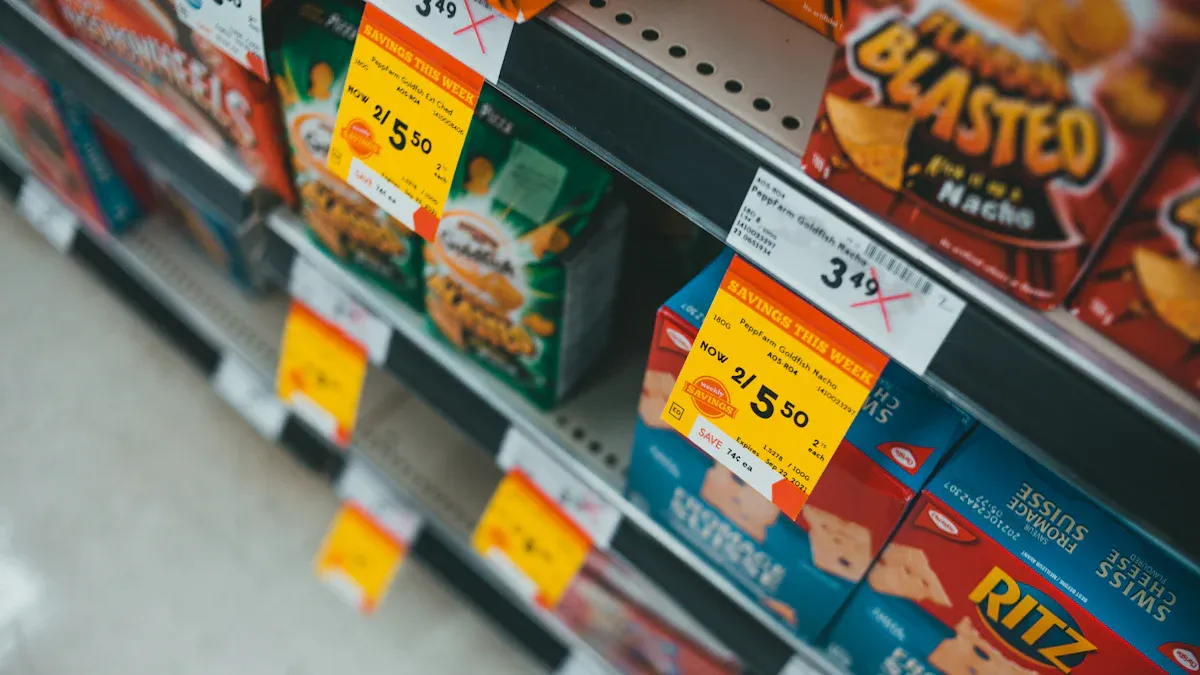
Digital price tags help you improve brand image by making your store look modern and trustworthy. You present innovation and sophistication with high-resolution displays that fit seamlessly into your in-store experience. Customers notice your commitment to accuracy and transparency, which reduces confusion and builds trust.
- Consumer research shows that digital price tags make brands appear unique, reliable, and more appealing.
- Features like QR codes and NFC on Electronic Shelf Labels and ESL Price Tag systems let customers access product details and sustainability information.
- Esl Retail solutions, including ESL Gateway AP, support retailers in offering real-time price updates and personalized experiences.
Retailers who use digital price tags set themselves apart as industry leaders and strengthen customer perception.
Improve Brand Image with Digital Price Tags

Modernizing the In-Store Experience
Visual Appeal and Store Ambiance
You create a visually striking environment when you introduce digital price tags and digital shelf labels. These displays offer adjustable brightness and high-resolution screens that enhance product visibility and make your shelves look organized and modern. Digital shelf labels can highlight promotions with flashing indicators, drawing attention to special offers and improving the overall ambiance. This modern look signals to your customers that your store values innovation and efficiency.
- Digital price tags allow you to display additional product details, making it easier for customers to find the information they need.
- Multilingual and accessible displays promote inclusivity, showing your commitment to serving all shoppers.
- Features like QR codes and NFC links provide instant access to product reviews, videos, and sustainability information, creating a more interactive shopping experience.
By upgrading your store’s visual appeal, you improve brand image and set your business apart from competitors.
Signaling Innovation to Shoppers
Digital price tags send a clear message to your customers: your brand embraces technology and continuous improvement. When shoppers see digital shelf labels, they recognize your commitment to operational excellence and transparency. You demonstrate that your store keeps pace with retail trends and prioritizes customer convenience.
Tip: Use digital price tags to showcase dynamic promotions and real-time stock updates. This approach appeals to tech-savvy shoppers and reinforces your reputation as an innovative retailer.
Retailers who adopt digital shelf labels often report increased customer engagement and higher revenue per square foot, further strengthening their brand image.
Enhancing Pricing Accuracy and Consistency
Eliminating Human Error
Manual price updates often lead to mistakes, such as outdated or misplaced tags. These errors can frustrate customers and damage your brand’s reputation. Digital price tags automate the update process, reducing the risk of human error and ensuring that prices remain accurate at all times.
| Price Update Method | Typical Error Rate | Key Factors and Notes |
|---|---|---|
| Manual Paper Price Tags | 5% to 10% | Errors due to human mistakes like missed, misplaced, or outdated tags; slower updates; manual labor. |
| Digital Price Tags (ESLs) | Approximately 30% fewer errors | Automated real-time synchronization; errors are manageable, measurable, and often corrected instantly. |
You benefit from fewer pricing mismatches and less manual labor, which allows your staff to focus on delivering better customer service.
Building Trust Through Reliable Pricing
Accurate pricing builds trust with your customers. When prices on the shelf match those at checkout, you demonstrate fairness and transparency. Research shows that pricing discrepancies can erode customer trust and reduce repeat business. By using digital price tags, you maintain price compliance across all channels, which reassures your customers and improves brand loyalty.
Digital shelf labels enable agile pricing adjustments for seasonal discounts and real-time promotions. Customers appreciate this transparency and responsiveness, which encourages them to return to your store. Consistent and reliable pricing strengthens your brand’s reputation and fosters long-term customer relationships.
Supporting Sustainability and Eco-Friendly Initiatives
Reducing Paper Waste with Digital Shelf Labels
Switching to digital price tags eliminates the need for constant reprinting and disposal of paper labels. This change reduces paper waste and helps your store operate more efficiently. Digital shelf labels have a long service life and consume energy only during updates, which further lowers your environmental impact.
Retailers who adopt digital price tags report significant reductions in paper consumption and waste. This operational improvement supports your sustainability goals and demonstrates your commitment to responsible business practices.
Aligning with Eco-Conscious Consumers
Modern consumers care about sustainability and expect retailers to do the same. Digital price tags help you meet these expectations by reducing waste and using reusable materials. Many shoppers prefer brands that align with their values, especially when it comes to environmental responsibility.
- 82% of shoppers prefer brands whose values match their own.
- 74% say environmental concerns influence their purchasing decisions.
- 79% want easier ways to identify environmentally friendly companies.
- 88% prioritize buying from companies that practice ethical sourcing.
By adopting digital shelf labels, you position your brand as a leader in eco-friendly retail. You attract environmentally conscious customers and improve brand image by demonstrating ethical responsibility and innovation.
Digital Price Tags and Customer Perception
Increasing Customer Trust and Transparency
Real-Time, Accurate Pricing Information
You build customer trust when you provide real-time pricing with digital price tags. Customers see the exact price on the shelf, which matches the checkout total. This transparency reduces confusion and increases confidence in your brand. Research shows that 87% of consumers prefer brands with clear, upfront pricing, and 76% associate transparent pricing with ethical business practices. When you use digital price tags, you demonstrate honesty and fairness, which strengthens your reputation and encourages repeat visits.
- Customers value brands that prioritize transparency.
- Harvard Business Review reports that transparent pricing boosts loyalty, with loyal customers 70% more likely to recommend your store.
- Millennials, in particular, seek out brands that openly share pricing details.
A University of California, Berkeley study found that clear pricing increases purchase likelihood by 60%. You reduce cognitive dissonance and enhance perceptions of price fairness, which leads to higher customer satisfaction.
Fewer Discrepancies at Checkout
Digital price tags eliminate pricing mismatches between shelves and registers. You synchronize prices instantly across all locations, reducing human error and ensuring accuracy. Integration with inventory and POS systems means that the price customers see is always the price they pay. Retailers report a 90% reduction in pricing errors after adopting digital price tags, resulting in fewer complaints and disputes. This consistency improves customer experience and strengthens your brand’s credibility.
Improving the Shopping Experience
Faster Price Updates During Promotions
You can implement faster price changes during sales events with digital price tags. Price updates that once took days now happen in minutes. Store staff can send updates remotely, ensuring that promotions and discounts appear instantly on every shelf. This agility allows you to respond quickly to market trends and inventory needs, maximizing sales and creating excitement for your customers.
- Digital price tags automate and accelerate price changes.
- LED indicators help staff manage stock and prepare orders efficiently.
Retailers using digital price tags report a 20% increase in sales during flash promotions, thanks to real-time pricing and immediate visibility.
Clearer Product Information and Navigation
Digital price tags enhance shopping experience by displaying detailed product information, reviews, and even sustainability data. Customers can access this information through QR codes or NFC, making it easier to compare products and make informed decisions. This clarity reduces frustration and helps customers navigate your store with confidence. Retailers like Walmart and Carrefour have seen significant improvements in customer satisfaction and engagement after adopting digital price tags.
Boosting Customer Engagement and Interaction
Interactive Features with QR Codes and NFC
You increase customer engagement by offering interactive features on digital price tags. QR codes and NFC links let customers access product videos, reviews, and personalized offers right from their smartphones. Nielsen studies show that interactive digital displays can boost sales volume by up to 32% and increase dwell time near featured products. Customers enjoy a more engaging and informative shopping journey, which leads to higher satisfaction and loyalty.
- Interactive content encourages customers to spend more time exploring your products.
- Integration with omni-channel marketing ensures consistent messaging and engagement across platforms.
Personalized Offers and Recommendations
Digital price tags enable you to deliver personalized offers based on customer preferences and shopping behavior. By analyzing purchase history and location data, you can present targeted discounts and recommendations directly on the shelf. This approach increases the relevance of your promotions and encourages repeat purchases. Studies show that personalized offers can boost upselling and cross-selling, improving both customer engagement and sales. However, you must balance personalization with fairness and privacy to maintain trust and brand loyalty.
Note: Personalized pricing strategies can increase sales but may also raise concerns about fairness. Always communicate clearly to maintain customer trust and satisfaction.
Digital price tags transform customer perception by making your store more transparent, interactive, and responsive. You create a modern retail environment that prioritizes customer engagement, satisfaction, and loyalty.
Operational Excellence and Brand Reputation
Streamlining Store Operations with Digital Shelf Labels
Labor Savings from Automated Updates
You gain significant operational efficiencies when you implement digital shelf labels. These systems automate price updates, eliminating the need for manual label changes. This automation reduces labor costs and frees your staff from repetitive tasks. You can integrate digital price tags with your inventory management system, allowing real-time syncing and automatic price adjustments based on stock levels.
- Real-time synchronization of price updates with your product database eliminates manual price changes.
- You save on material costs by removing the need for paper, ink, and printing supplies.
- Employees can focus on higher-value activities, such as customer service and shelf replenishment.
Digital price tags also support dynamic pricing strategies, helping your store stay competitive with online retailers.
Reducing Pricing Errors and Disputes
Manual price changes often lead to errors, which can frustrate customers and damage your brand reputation. Digital price tags minimize these mistakes by ensuring accurate, real-time price updates across all locations. This accuracy reduces pricing disputes at checkout and builds customer trust. You also benefit from instant activation of promotions and discounts, which enhances your responsiveness to market trends.
Empowering Staff for Enhanced Service
Freeing Up Time for Customer Interaction
When you automate price updates with digital shelf labels, your staff spends less time on routine tasks. This shift allows employees to focus on helping customers, managing inventory, and maintaining store appearance. As a result, you improve the overall shopping experience and strengthen your brand.
Enhancing Employee Satisfaction and Morale
Digital price tags contribute to a better work environment for your team. The table below highlights key impacts:
| Impact Area | Benefit |
|---|---|
| Labor Time Saved | Automation saves up to 50 labor hours weekly, reducing manual workload. |
| Speed of Price Changes | Updates that took days now take minutes, freeing staff from repetitive tasks. |
| Staff Redeployment | Employees focus more on customer service and inventory management. |
| Error Reduction | Automation leads to a 58% decrease in pricing errors and a 60% increase in accuracy. |
| Operational Benefits | Fewer pricing disputes and stressful interactions improve the work environment. |
You create a more positive atmosphere, which can boost employee satisfaction and morale. Staff members feel valued when they spend more time engaging with customers and less time on tedious tasks.
Minimizing Compliance Risks and Ensuring Consistency
Meeting Regulatory Requirements
You must comply with strict regulations regarding pricing accuracy and transparency. Digital price tags help you meet these requirements by enabling real-time price updates and centralized control. These systems maintain detailed records of every price adjustment, including timestamps and user information. This audit trail simplifies regulatory audits and helps resolve disputes quickly. Digital shelf labels also support dynamic pricing within legal limits and display clear sale information to comply with advertising laws.
Ensuring Consistent Pricing Across Channels
Digital price tags ensure that your customers see the same prices in-store and online. Integration with inventory management systems allows you to synchronize pricing data in real time. You can modify prices remotely and instantly across all locations, providing a unified shopping experience. This consistency builds customer trust and reinforces your brand reputation.
Tip: Use digital shelf labels to bridge your online and offline channels, ensuring seamless and transparent pricing for every customer.
Leveraging Digital Price Tags for Marketing and Omnichannel Integration

Real-Time Promotions and Dynamic Pricing
Instantly Launching Flash Sales
You can launch flash sales instantly with digital price tags. These systems allow you to update prices across your store in seconds, creating excitement and urgency for your customers. When you highlight discounts with vibrant digital shelf labels, you encourage impulse purchases and boost customer engagement.
| Aspect | Impact on Sales Performance and Retail Operations |
|---|---|
| Real-Time Pricing Updates | Attracts price-sensitive customers and boosts sales through rapid price changes. |
| Dynamic Product Promotions | Uses dynamic displays to highlight discounts, increasing sales volume and engagement. |
| Brand Recognition & Engagement | Enhances visibility and interaction, fostering loyalty and repeat purchases. |
Research shows that electronic shelf labels (ESLs) lower the average price per unit sold and increase sales volumes when you use them for dynamic promotions. You also reduce labor costs by over 80% and speed up promotional response from hours to minutes.
Adapting Prices to Market Trends
Digital price tags help you adapt prices quickly to market trends and competitor activity. You can respond to changes in demand, inventory, or competitor pricing in real time. This flexibility improves profitability and keeps your store competitive. Retailers like Walmart use IoT-enabled digital price tags to make incremental price adjustments, optimizing revenue and minimizing customer frustration.
Note: Transparency and clear communication remain critical for customer trust when you implement dynamic pricing strategies.
Seamless Omnichannel Experiences
Synchronizing Online and In-Store Pricing
You deliver a seamless experience when you synchronize online and in-store pricing with digital price tags. Customers see consistent prices across all channels, which reduces confusion and builds trust. Electronic price tags update instantly to reflect changes, minimizing mismatched prices and manual errors. Survey data shows that 72% of consumers prefer stores with clear digital pricing, and 68% feel more confident when prices are displayed digitally.
- Digital shelf labels enable accurate, real-time inventory management across all sales channels.
- You reduce out-of-stock situations and improve customer engagement by providing up-to-date information.
Enabling Click-and-Collect and BOPIS
Digital price tags support flexible fulfillment options such as buy online, pick up in-store (BOPIS), curbside pickup, and same-day delivery. You can manage inventory and pricing centrally, making it easier for customers to shop the way they prefer. These features enhance convenience and drive customer engagement, while also improving operational efficiency.
Data-Driven Insights for Personalization
Tracking Customer Preferences and Behavior
You gain valuable insights into customer preferences and behavior with digital price tags. These systems collect data on purchasing patterns, allowing you to optimize marketing strategies and personalize offers. Retailers use analytics to build a 360-degree view of each customer, which supports more effective marketing and engagement.
Tailoring Offers Based on Data
You can tailor offers and recommendations based on real-time data from digital shelf labels. Dynamic pricing considers variables like time of day, demand, and competitor prices to create personalized promotions. This approach increases customer engagement and satisfaction, while also driving sales growth. Product intelligence tools help you monitor thousands of SKUs and adjust marketing tactics instantly.
Tip: Move beyond reactive price-matching and use proactive, personalized pricing to align with shopper intent and omnichannel behaviors.
Digital price tags transform your marketing by enabling real-time promotions, seamless omnichannel experiences, and data-driven personalization. You strengthen your brand and maximize customer engagement at every touchpoint.
Addressing Concerns and Demonstrating ROI for Brand Reputation
Cost and Investment Considerations
Upfront Costs vs. Long-Term Savings
When you consider digital price tags, you must weigh the initial investment against long-term savings. The main costs include tag hardware, communication hubs, and installation. The table below outlines typical expenses:
| Cost Component | Typical Cost Range (USD) | Notes |
|---|---|---|
| Tag Hardware | $5 to $15 per tag | Varies by display type and features |
| Communication Hubs | $500 to $2,000 per store | Depends on store size and coverage |
| Installation | $1,000 to $5,000+ per store | Influenced by store complexity |
You also need to budget for software licensing, integration, and ongoing maintenance. E-paper tags last up to five years, which reduces battery replacement costs. Large retail chains often see faster returns because they spread costs over many stores and SKUs. Small boutiques may experience slower ROI due to higher per-unit costs. Fast fashion retailers benefit from frequent price changes, while specialty stores with stable pricing may see slower returns. Your store’s location, customer demographics, and operational readiness also affect ROI.
Scalability for Different Store Sizes
Digital price tags and digital shelf labels scale to fit any retail environment. E-paper tags work well for supermarkets and pharmacies, offering low power use and long battery life. LCD tags suit multi-store chains that need vibrant displays for dynamic promotions. The table below compares these technologies:
| ESL Type | Use Case | Pros & Cons | Cost & Maintenance |
|---|---|---|---|
| E Ink ESLs | Static pricing in supermarkets, pharmacies | Pros: Low power, long battery life. Cons: Limited colors. | Medium cost, low maintenance |
| LCD ESLs | Dynamic promotions in large chains | Pros: Vibrant visuals. Cons: Higher power use. | High cost, medium maintenance |
You can tailor your investment in digital shelf labels to your store’s size, layout, and customer needs. This flexibility helps you maximize value and control costs.
Implementation and Integration with Digital Shelf Labels
Compatibility with Existing Systems
You ensure a smooth transition by integrating digital price tags with your current POS and inventory systems. Best practices include:
- Seamless integration to prevent data errors.
- Choosing user-friendly interfaces for easy management.
- Careful installation planning to avoid disrupting operations.
- Using real-time updates for pricing and product information.
- Adding advanced features like NFC and encryption for security.
- Strategic labeling based on store layout and promotions.
- Connecting with analytics and product information systems.
- Leveraging data for dynamic pricing and better decision-making.
These steps help you maintain operational efficiency and deliver a consistent customer experience.
Training and Change Management
You prepare your staff for success by providing training on digital shelf labels. Focus on hands-on learning and clear communication. Change management ensures your team adapts quickly and uses the new technology effectively. Well-trained employees help you realize the full benefits of your investment in digital shelf labels.
Measuring Return on Investment and Brand Impact
Quantifying Labor and Error Reduction
You can measure ROI by tracking labor savings and error reduction. Digital price tags automate updates, saving hours each week and reducing manual mistakes by up to 30%. You spend less time resolving pricing disputes, which improves efficiency and customer satisfaction.
Impact on Sales, Customer Loyalty, and Reputation
You boost sales by enabling real-time promotions and dynamic pricing. Customers trust your brand when they see accurate, consistent prices. Improved efficiency and transparency enhance your brand reputation. Over time, your investment in digital shelf labels leads to higher customer loyalty and a stronger market position.
Case Studies: Digital Price Tags Transforming Brand Image
Wegmans Grocery Chain Example
Modernizing Store Perception and Customer Trust
You see how Wegmans uses digital price tags to transform store perception. These tags help you project a modern, tech-forward image. Customers notice the shift right away. When you walk through the aisles, you see clear, accurate prices that update in real time. This approach builds trust and shows your commitment to transparency. You also reduce pricing errors, which means fewer disputes at checkout. Customers feel confident that the price they see is the price they pay. This trust leads to stronger customer engagement and loyalty.
Achieving Sustainability Goals with Digital Shelf Labels
Wegmans also uses digital price tags to support sustainability. You eliminate the need for paper labels, which reduces waste. Digital shelf labels last longer and require fewer resources to maintain. You show customers that you care about the environment. This commitment attracts eco-conscious shoppers and improves your reputation. You also streamline operations, which helps you respond quickly to market changes. As a result, you see better inventory management and fewer out-of-stock situations.
Best Buy Specialty Retail Example
Enhancing Brand Reputation Through Innovation
Best Buy uses digital price tags to stay ahead in a competitive market. You can match competitor prices instantly, which keeps your store relevant. Digital tags let you adjust prices in real time, so you never miss an opportunity. You also display service recommendations and user-generated content, which boosts customer engagement. This innovative approach strengthens your brand and sets you apart from other retailers.
Improving Customer Engagement and Satisfaction
You improve customer engagement by offering interactive features. Digital price tags at Best Buy provide instant access to product information and reviews. Customers enjoy a seamless experience, which increases satisfaction. You also see faster returns on investment, often within one year. By integrating digital tags with your POS and inventory systems, you ensure accurate pricing and efficient operations. This integration leads to higher customer engagement and better satisfaction scores.
Tip: Track key performance indicators like conversion rates and pricing error frequency to measure the impact of digital price tags on customer engagement and satisfaction.
Measurable Outcomes and Customer Feedback
Increased Customer Satisfaction Scores
You notice a clear rise in customer satisfaction after adopting digital price tags. Customers appreciate accurate pricing and real-time updates. You reduce confusion and create a smoother shopping experience. This improvement leads to higher satisfaction scores and more positive feedback.
Enhanced Brand Reputation Metrics
You also see gains in reputation metrics. Digital price tags help you build trust and demonstrate innovation. You foster a culture of continuous improvement and customer engagement. Both Wegmans and Best Buy report labor savings, fewer pricing errors, and faster payback periods. You can review the table below for a summary of key uses and outcomes:
| Retailer | Key Digital Price Tag Uses | Benefits and Outcomes |
|---|---|---|
| Best Buy | Instant competitor price matching; service recommendations; user-generated content | Enables real-time price adjustments, enhances customer engagement, supports competitive pricing, and improves customer satisfaction. Returns on investment often within 1 year in electronics retail. |
| Wegmans | AI-driven demand forecasting, dynamic pricing, inventory optimization | Improves agility and responsiveness to market changes, optimizes inventory, reduces pricing errors, and supports operational efficiency. |
You strengthen customer engagement at every touchpoint. Digital price tags help you modernize your store, improve satisfaction, and elevate your reputation.
You can transform your store by adopting digital price tags. Retailers who invest in this technology gain immediate and long-term advantages. You project modernity, build trust with every customer, and streamline operations. Many retailers see improved efficiency and a stronger brand image. Take action now to lead the market and deliver a better customer experience.
Digital price tags help retailers set new standards for innovation and reliability.
FAQ
What are digital price tags, and how do they improve brand image?
You use digital price tags to display real-time pricing on shelves. These tags modernize your store, enhance visibility, and improve brand image by showing your commitment to innovation and accuracy. Customers notice your dedication to a better in-store experience.
How do digital shelf labels enhance customer experience and satisfaction?
Digital shelf labels provide clear, up-to-date information. You help customers find accurate prices and product details, which enhances shopping experience and increases customer satisfaction. This technology supports customer trust and builds brand loyalty.
Can digital price tags support faster price changes during promotions?
Yes. You can update prices instantly across your store. Faster price changes allow you to react quickly to market trends and customer demand. This flexibility improves customer engagement and keeps your brand competitive in the fashion retail industry.
How do digital price tags impact customer perception and trust?
Digital price tags ensure real-time pricing accuracy. You reduce errors and discrepancies, which builds customer trust. Customers see your brand as transparent and reliable, improving overall perception and supporting long-term customer retention.
Are digital shelf labels a good investment for retailers?
Investment in digital shelf labels offers long-term benefits. You save on labor and materials, streamline operations, and improve brand reputation. Retailers in the fashion sector and beyond see enhanced customer engagement and marketing opportunities.
How do digital price tags help with marketing and customer engagement?
You use digital price tags to display promotions, product information, and personalized offers. This approach increases engagement and visibility. Customers interact more with your brand, which boosts customer experience and supports your marketing strategy.
What role do digital shelf labels play in enhancing shopping experience in fashion retail?
Digital shelf labels provide real-time updates and clear product information. You create a seamless in-store experience that appeals to fashion-conscious customers. This technology improves satisfaction and strengthens your brand’s reputation in the fashion retail industry.
How do digital price tags contribute to brand loyalty and customer retention?
You build brand loyalty by offering accurate pricing and a modern shopping experience. Digital price tags foster trust and satisfaction, which encourages repeat visits and supports customer retention. Your brand stands out for reliability and innovation.