

Retail advertising connects you with consumers by promoting products and services directly, whether in-store or online. You can boost your brand visibility and drive sales using tools like Electronic Shelf Labels, ESL Gateway AP, and ESL Price Tag. The global retail media platform market reached USD 16.77 billion in 2024, with forecasts predicting USD 36.53 billion by 2033. Retail advertising influences consumer decisions; 69% value immediate purchases, and 50% appreciate tactile experiences. Esl Retail strategies help you engage consumers, making it easier for them to compare prices and discover new products.
Why Retail Advertising Matters
Benefits for Businesses
Retail advertising gives you a powerful way to reach consumers at the right moment in their shopping journey. When you use retail marketing, you can target shoppers based on their actual behavior and location. This precision targeting helps you stand out from competitors and increase brand awareness. You also gain access to affordable campaign options, making it easier for both small and large retailers to compete.
Here is a table showing some key benefits:
| Benefit | Description |
|---|---|
| Precision Targeting | Leverages shopper behavior for accurate targeting. |
| Increased Visibility | Puts your brand in front of consumers in digital storefronts. |
| Affordable Campaigns | Offers flexible budgeting for all business sizes. |
| Closed-Loop Measurement | Tracks ad performance and links it to sales. |
| Omnichannel Reach | Builds credibility and extends your reach across multiple channels. |
Retail advertising also increases your brand awareness by combining branding and performance. In-store audiences often respond to brand messages as strongly as TV audiences, especially when ads appear near the point of purchase.
How Customers Benefit
You help consumers discover new products and make informed choices through retail advertising. When retailers use familiar technologies and non-disruptive ad experiences, you enjoy a smoother shopping experience. Retail marketing strategies that focus on customer engagement lead to higher satisfaction and customer loyalty.
| Evidence Type | Description |
|---|---|
| Customer-Centric Strategies | Retailers see greater satisfaction when they prioritize customer needs. |
| Familiar Technologies | Using familiar tech increases customer engagement. |
| Non-Disruptive Experiences | Seamless ads foster customer loyalty. |
Retailers who invest in personalized content at the point of purchase can address the needs of over 90% of consumers who feel dissatisfied with current in-store experiences. This approach not only improves your shopping journey but also encourages you to return.
Impact on Sales and Growth
Retail advertising drives real growth for retailers. In 2024, US retail media spending is forecasted to grow by 30%. Nearly half of advertisers now coordinate retail media with other digital channels, and 85% of brands recognize its growing impact. As more retailers adopt retail marketing networks, you see more relevant ads and offers during your shopping trips.
| Statistic Description | Value |
|---|---|
| US retail media spending growth forecast for 2024 | 30% |
| Projected percentage of digital advertising spend attributed to retail media in 2025 | 23.5% |
| Percentage of brands/agencies recognizing the growing impact of retail media | 85% |
| Percentage of US retailers planning to implement a retail media network by 2024 | 64% |
Retail advertising also builds long-term customer loyalty by creating immediate and relevant connections with consumers at the point of purchase. When you see tailored messages that match your needs, you are more likely to trust and return to those retailers.
Types of Retail Advertising
Traditional Retail Advertising
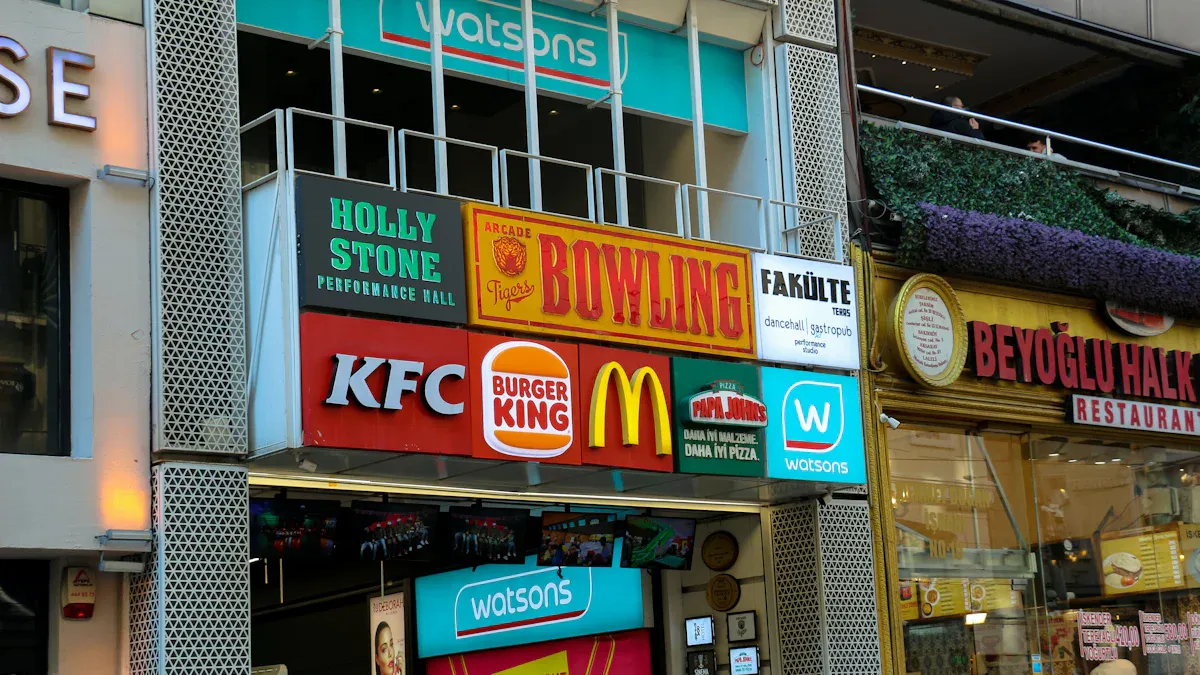
You encounter traditional advertising every day. Businesses use print media, broadcast media, outdoor billboards, and event-based promotions to reach broad audiences. These methods include newspaper ads, radio spots, and TV commercials. In-store displays also play a key role in traditional advertising, capturing your attention as you shop.
Traditional advertising remains a staple for many retailers, especially when you want to build brand awareness in your local community or reach a wide demographic.
Here is a quick overview of common traditional advertising channels:
| Type of Advertising | Examples |
|---|---|
| Traditional Advertising | Print Media, Broadcast Media, In-Store Displays, Outdoor Advertising, Event-Based Advertising |
Although traditional advertising offers broad reach, it often comes with higher costs and limited targeting options. You may notice that tracking results is more challenging compared to digital methods.
Digital Retail Advertising
Digital advertising has transformed how you interact with brands. Retailers now use online ads, social media marketing, and influencer partnerships to connect with you on multiple platforms. Retail media advertising leverages retail media networks to deliver hyper-targeted messages based on your interests and shopping behavior.
- Generative AI creates personalized content and optimizes campaigns in real time.
- Retail media networks provide transparency and sophisticated strategies for B2B marketing.
- Video advertising continues to grow, especially on platforms like TikTok and Connected TV.
You benefit from digital advertising because it offers interactive experiences and instant access to product information. Retailers can adjust campaigns quickly and measure results using real-time analytics.
| Factor | Traditional Marketing | Digital Marketing |
|---|---|---|
| Cost | High | Flexible |
| Targeting | Broad | Hyper-targeted |
| Tracking | Limited | Real-time metrics |
| Engagement | One-way | Two-way, interactive |
| Personalization | Low | High |
| Adjustability | Difficult mid-campaign | Instant changes |
| Measurable ROI | Estimations | Direct attribution |
In-Store Retail Advertising
When you shop in-store, you see advertising designed to influence your decisions at the point of purchase. Retailers use shelf labels, digital screens, and product displays to engage you when you are ready to buy. These techniques boost brand awareness and drive impulse purchases.
| Evidence Type | Description |
|---|---|
| Captures attention when it matters | Engages shoppers at the moment they are ready to buy, increasing the likelihood of purchases. |
| Boosts brand awareness | Keeps brands top-of-mind as shoppers navigate the store, influencing their choices. |
| Provides targeted messaging | Places ads strategically to reach specific audiences effectively, enhancing relevance. |
| Drives impulse buys | Compelling visuals and strategic placements trigger spontaneous purchases, increasing sales. |
Tip: You can compare prices and discover new products easily with in-store advertising, especially when retailers use digital shelf labels and interactive displays.
Retailers select advertising types by understanding their target audience, exploring available options, and setting clear goals. You experience the benefits through relevant messaging and engaging shopping environments.
Local and Community Retail Advertising
Local and community retail advertising gives you a unique opportunity to connect with customers in your area. You can reach people who live, work, and shop nearby. This approach helps you build strong relationships and position your business as a trusted part of the community.
You can use local newspapers, radio stations, community events, and social media groups to promote your products or services. Sponsoring local sports teams or participating in charity events increases your visibility. You show your commitment to the community and encourage customers to support your business.
Tip: You can boost your brand’s reputation by engaging with local influencers and joining neighborhood online forums. These platforms allow you to interact directly with potential customers and answer their questions in real time.
Small businesses benefit from local advertising because it targets customers who are most likely to visit your store or website. You can optimize your marketing budget and focus on strategies that deliver results. Local advertising also helps you stand out from larger competitors who may not have a strong presence in your area.
Here are some key advantages of local and community retail advertising:
| Advantage | Description |
|---|---|
| Cost-Effectiveness | Local advertising is more affordable, allowing you to optimize your marketing budget by targeting customers likely to engage with your products or services. |
| Building Local Relationships | Focusing on local advertising helps you build strong community relationships, leading to increased sales and a loyal customer base. |
| Enhanced Customer Trust | Local businesses often enjoy greater trust from customers, especially when you have positive online reviews and engage actively with your audience. |
| Improved Search Engine Rankings | Targeted local advertising enhances search engine visibility, making it easier for nearby customers to find your business. |
| Community Engagement | Engaging with the local community through advertising positions your business as a staple in the area, fostering a sense of community and real-time interaction with customers through social media platforms. |
You can improve your search engine rankings by using location-based keywords and encouraging satisfied customers to leave positive reviews. When you engage with your community, you create lasting connections and inspire loyalty. You become a familiar face, and customers feel confident choosing your business over others.
Local and community retail advertising helps you grow your business by focusing on the people who matter most. You build trust, increase sales, and create a loyal customer base that supports you year after year.
How Effective Retail Advertising Works
The Advertising Process
You drive successful retail advertising by following a clear process. Industry experts recommend a series of steps that help you maximize your campaign’s impact and efficiency. When you start, you define your objectives. You set specific goals, such as increasing foot traffic, boosting online sales, or raising brand awareness. Next, you identify your target audiences. You analyze customer demographics, interests, and shopping behaviors to understand who will respond best to your message.
You develop creative assets that capture attention and communicate your value. These assets include images, videos, and compelling copy tailored to your audience. You leverage programmatic advertising to automate ad placements and optimize delivery. Aligning your campaigns with the retailer’s calendar ensures your ads appear during peak shopping periods and special events.
You set up tracking and analytics before launching your campaign. This step allows you to monitor performance and gather data. After launching, you monitor your campaigns closely. You use real-time insights to make adjustments and improve results. You optimize and iterate based on what works best, refining your advertising strategies for future campaigns.
Tip: You can boost results by using data analytics to personalize ads and recommendations. When you analyze customer behavior and preferences, you create marketing messages that resonate and drive loyalty.
Key Steps in the Retail Advertising Process:
- Define Your Objectives
- Identify Target Audiences
- Develop Creative Assets
- Leverage Programmatic Advertising
- Align with Retailer’s Calendar
- Set Up Tracking and Analytics
- Launch and Monitor Campaigns
- Optimize and Iterate
Choosing the Right Channels
You select advertising channels by understanding your customers and the competitive landscape. Successful retailers analyze consumer needs and values to create messaging that stands out. You study your competitors to find opportunities for differentiation. You measure advertising effectiveness to refine your approach and ensure your campaigns resonate with your audience.
You focus on three pillars when choosing channels: fascinate, imprint, and trigger. Fascinate captures interest, imprint leaves a lasting impression, and trigger prompts action. You target your audience and measure results to optimize your media investment and maximize reach.
Consumer demographics play a major role in channel selection. You consider age, gender, income, education, and location to tailor your retail advertising. For example, younger shoppers may respond better to social media ads, while older customers might prefer print or radio. Income levels influence whether you highlight affordability or prestige. Education affects how you present product information, and location shapes your advertising strategies.
| Demographic Factor | Influence on Retail Advertising Choices |
|---|---|
| Age | Different age groups have varying interests, affecting product display and advertising strategies. |
| Gender | Emotional and functional factors influence buying decisions, guiding targeted advertising. |
| Income | Income levels dictate the messaging around affordability or prestige in advertising. |
| Education | Education impacts shopping behavior and product research, influencing how products are marketed. |
| Location | Geographic location affects consumer preferences and access to products, shaping advertising strategies. |
You use tools like RFID tags and beacons to monitor customer movements in-store. These technologies help you determine popular items and optimize store layouts. You also use data analytics to deliver personalized ads and promotions based on customer choices and past purchases.
Note: You can increase engagement by choosing channels that match your audience’s preferences and shopping habits.
Measuring Success
You measure the success of retail advertising by tracking key metrics. You start with marketing performance metrics, such as impressions, click-through rates (CTR), website visits, and video completion rates (VCR). These numbers show how many people see and interact with your ads.
You gather consumer metrics through surveys, interviews, and focus groups. These methods help you measure brand awareness, perception, and purchase intent. You assess commercial metrics like incrementality and Marketing Return on Investment (MROI) to determine the value of your campaigns.
Most US agency and marketing decision-makers use Return on Ad Spend (ROAS) or incremental ROAS to evaluate retail media campaigns. You also track business impact metrics, including Customer Acquisition Cost (CAC), Customer Lifetime Value (CLV), and Revenue Attribution. Campaign performance metrics, such as conversion rate, Cost Per Acquisition (CPA), and Marketing Qualified Leads (MQLs), help you understand how well your advertising strategies work. Audience behavior metrics, like session duration, pages per visit, and return visitor rate, reveal how customers engage with your content.
You calculate ROI by comparing your investment costs with the earnings generated from your ads. The formula is simple: (Net Profit / Investment Costs) x 100 = Your ROI %. Alternatively, you can use (Growth in Sales – Advertising Costs) / Advertising Costs x 100 to find your advertising ROI percentage.
Common Metrics for Measuring Retail Advertising Success:
- Marketing Performance Metrics: Impressions, CTR, website visits, VCR
- Consumer Metrics: Brand awareness, perception, purchase intent
- Commercial Metrics: Incrementality, MROI
- Business Impact Metrics: CAC, CLV, ROMI, Revenue Attribution
- Campaign Performance Metrics: Conversion Rate, CPA, MQLs, Channel Attribution
- Audience Behavior Metrics: Session Duration, Pages Per Visit, Return Visitor Rate, Content Preferences
Tip: You can improve your advertising strategies by analyzing these metrics and making data-driven decisions. When you track results, you identify what works and adjust your campaigns for better outcomes.
Building a Retail Advertising Strategy
Setting Clear Goals
You lay the foundation for a successful retail advertising strategy by setting clear goals. Start by understanding your business objectives and defining your target audience. Select a goal framework that fits your needs, such as the SMART method. Your goals should be:
- Specific
- Measurable
- Attainable
- Relevant
- Time-bound
Prioritize your objectives and create an action plan. Set key performance indicators (KPIs) to track your progress. Monitor and measure results regularly. Adapt and optimize your approach as you learn what works best. Communicate your goals with your team and celebrate achievements when you reach them.
Tip: Use the “Reach, Act, Convert, Engage” model to guide your retail advertising strategy. This approach helps you focus on attracting new customers, encouraging action, converting leads, and building loyalty.
Understanding Your Audience
You strengthen your retail advertising strategy by truly understanding your audience. Define who your customers are and study their behaviors and preferences. Set specific research goals to gather focused data. Use market research to bridge the gap between insights and action, ensuring your campaigns resonate.
- Retailers who use data stay ahead of trends and adapt quickly.
- Market research reduces risks in product launches and campaigns.
- You can identify new opportunities and improve your messaging by analyzing customer feedback and shopping patterns.
When you know your audience, you create messages that speak directly to their needs and interests.
Creating Compelling Messages
You capture attention with compelling messages in your retail advertising strategy. Use proven techniques to make your ads stand out:
- Apply color psychology to evoke emotions.
- Choose clear and attractive typography.
- Embrace minimalism to avoid clutter.
- Appeal to emotions and use storytelling.
- Highlight facts, statistics, or endorsements.
- Use landmark images to focus attention.
- Incorporate body language for nonverbal cues.
Minimalist designs help your message shine without overwhelming your audience. Repetition keeps your brand memorable. When you combine these elements, your retail advertising strategy becomes more effective and engaging.
Budgeting and Planning
You set the foundation for successful retail advertising by establishing a clear budget and a detailed plan. Budgeting helps you allocate resources efficiently and avoid overspending. Planning ensures that every dollar you invest supports your business goals.
Retail and e-commerce companies often dedicate a portion of their revenue to marketing. You can use these industry averages to guide your own budget decisions:
- Retail and e-commerce businesses typically allocate between 5% to 10% of their revenue to marketing.
- Your allocation may change based on profit margins and customer acquisition strategies.
You start by reviewing your financial statements. Identify how much revenue you generate each month. Decide what percentage you want to invest in advertising. Consider your profit margins and the cost of acquiring new customers. If you operate in a competitive market, you may need to invest more to stand out.
Tip: Track your spending regularly. Adjust your budget as you learn which channels deliver the best results.
A well-structured plan outlines your advertising objectives, target audience, and preferred channels. You set timelines for each campaign and assign responsibilities to your team. Use a table to organize your plan:
| Step | Action Item | Responsible Party | Deadline |
|---|---|---|---|
| Set Objectives | Define campaign goals | Marketing Lead | Week 1 |
| Allocate Budget | Assign funds to channels | Finance Manager | Week 2 |
| Select Channels | Choose advertising platforms | Marketing Team | Week 2 |
| Launch Campaign | Execute advertising plan | Marketing Team | Week 3 |
| Monitor Results | Track performance metrics | Data Analyst | Ongoing |
You maximize your return on investment by planning ahead. Review past campaigns to identify what worked. Use those insights to refine your strategy. Stay flexible and adjust your plan as market conditions change.
Note: A clear budget and a solid plan help you avoid surprises and keep your advertising efforts on track.
Effective Retail Advertising Strategies and Pitfalls
Best Practices for Success
You achieve strong results in retail advertising by following proven strategies. Successful campaigns often use direct mail, home try-on programs, and advanced optimization techniques. The table below highlights effective approaches from recent case studies:
| Campaign | Strategy | Results |
|---|---|---|
| Retail Postcards | Direct Mail | Increased new sales |
| Warby Parker | Home Try-On | Enhanced customer convenience and sales |
| CPG Brand | iROI Optimization | Doubled sales through optimization |
You maximize your impact by continuously optimizing your campaigns. Regularly monitor key performance indicators, such as clicks and sales, and adjust your strategy. Refine your audience targeting to reach the right customers. Align your online advertising with in-store promotions to create a seamless experience. You enhance engagement by leveraging data for personalization and building an omnichannel presence.
- Create engaging store layouts and displays.
- Use consumer data to tailor marketing efforts.
- Ensure a consistent shopping experience across all channels.
Tip: You improve results when you combine digital and in-store strategies for a cohesive customer journey.
Mistakes to Avoid
You avoid common pitfalls in retail advertising by staying aware of frequent missteps. Many businesses struggle with poor alignment between sales and marketing teams. Foster collaboration and set shared goals to keep campaigns on track. Outdated data can derail your efforts, so invest in data management solutions. Relying on a single channel limits your reach; use a multi-channel approach to connect with more customers.
- Not defining your target market leads to ineffective campaigns. Conduct market research to understand your audience.
- Neglecting SEO reduces online visibility. Invest in SEO to boost website traffic.
- Failing to measure results wastes resources. Set clear goals and analyze data to guide decisions.
- Lack of clear goals and KPIs makes tracking progress impossible.
- Inadequate account selection wastes resources.
- Insufficient personalization fails to engage customers.
Note: You strengthen your retail advertising by setting SMART goals and using data-driven insights.
Tips for Beginners
You start strong in retail advertising by following practical steps. Begin by identifying your broad audience and focus on the problem your product solves. Narrow your target to specific groups, such as parents for baby products. Consider what makes your offering unique and how it matches your audience’s motivations. Understand your customers’ journey from awareness to purchase. Implement seasonal marketing strategies to leverage key events. Use a multi-channel approach to maximize visibility. Explore emerging programmatic channels to stand out.
- Identify your broad audience and their needs.
- Narrow your target to specific groups.
- Highlight your product’s unique value.
- Map the customer journey to inform your strategy.
- Plan seasonal campaigns around key events.
- Use multiple channels for greater reach.
- Test new programmatic channels for differentiation.
Tip: You build confidence by starting with simple strategies and expanding as you learn what works.
Retail advertising helps you attract customers and grow your business. You can see strong results by combining digital and traditional strategies, as shown below:
| Advertising Strategy | Effectiveness in Attracting Customers |
|---|---|
| Digital Marketing | 85% believe it expands customer base |
| Traditional Advertising | Effective for local shoppers |
| Combined Strategies | Best results from both methods |
You improve your outcomes by tracking website traffic, conversion rates, and customer lifetime value. Adapting your approach to market changes, such as using social media ads or focusing on repeat customers, keeps your strategy effective. Start with simple steps, learn the basics, and refine your retail advertising as you gain experience.
FAQ
What is the main goal of retail advertising?
You aim to attract customers and increase sales. Retail advertising helps you promote products or services directly to shoppers. You can build brand awareness and encourage repeat business by delivering the right message at the right time.
How do you choose the best advertising channel?
You analyze your target audience and their preferences. Consider where your customers spend time, such as online platforms or local media. Test different channels and track results. Adjust your strategy based on what delivers the highest engagement and sales.
How can you measure the success of a retail advertising campaign?
You track key metrics like impressions, click-through rates, and sales. Use analytics tools to monitor performance. Compare results against your goals. Regularly review data to identify trends and optimize future campaigns.
Tip: Set clear objectives before launching your campaign. This makes it easier to measure success.
What budget should you set for retail advertising?
You base your budget on your business goals and revenue. Many retailers allocate 5% to 10% of revenue to marketing. Start small, monitor results, and increase spending on channels that show strong returns.