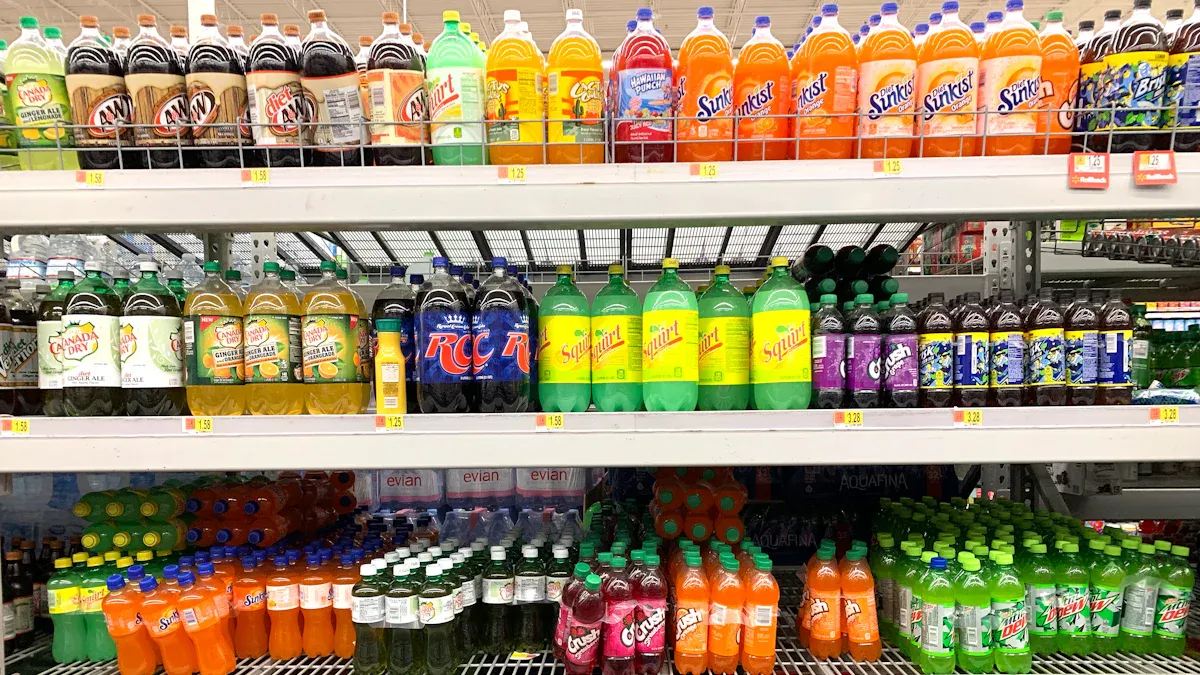
Electronic shelf labels are advanced digital price tags that automate product information. Retailers use this technology to replace traditional paper labels. The global electronic shelf label market is projected to reach approximately USD 2.75 billion in 2025, showing its growing importance. An ESL Price Tag connects wirelessly to a central server through an ESL Gateway AP. This connection allows for instant, store-wide updates. Esl Retail technology enables dynamic pricing strategies and reduces operational costs. These electronic shelf labels offer retailers a clear path to modernizing store operations and enhancing efficiency.
How Do Electronic Shelf Labels Work?
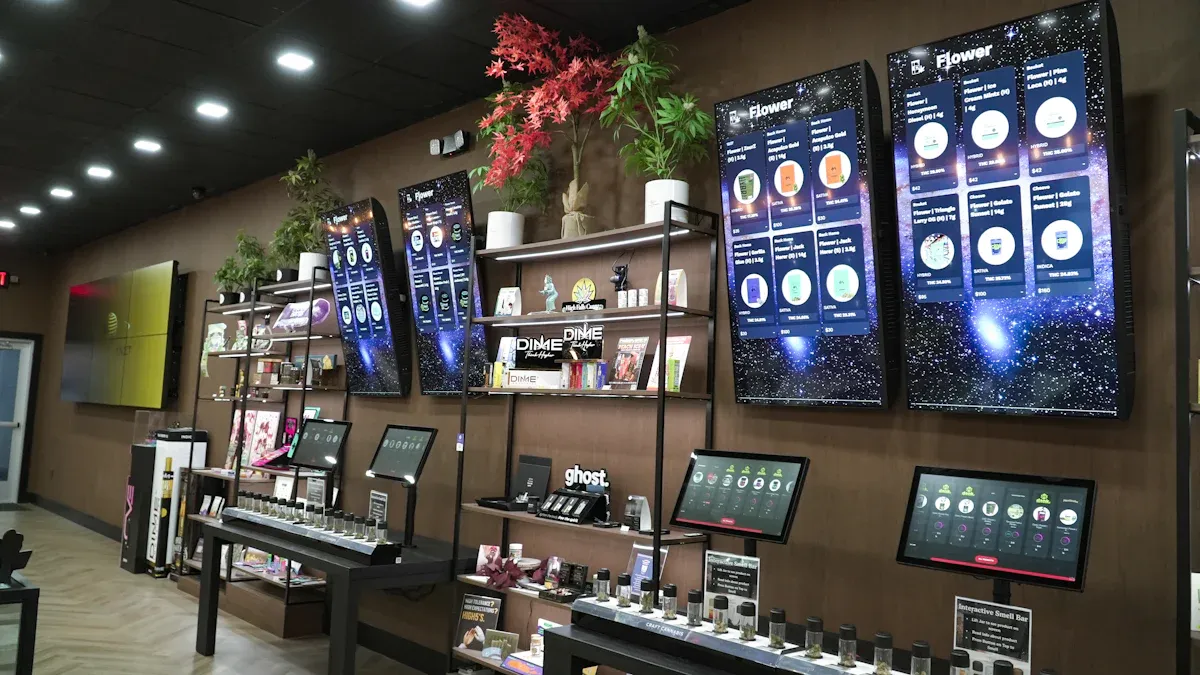
An ESL system operates through the seamless interaction of three primary elements: the physical labels on the shelf, a central software platform, and a wireless communication network. Each component plays a distinct role in delivering automated, real-time information to the retail floor.
The Core Hardware Components
The most visible hardware is the digital price tags themselves. Retailers primarily choose between two display technologies: E-paper (or E-ink) and Liquid Crystal Display (LCD). E-paper displays dominate the market. They consume power only when updating, giving them a remarkable battery life of up to five years.
Note: The lifespan of an ESL battery depends on factors like update frequency and environmental conditions. A typical label updated four times daily can last for years.
The table below compares the two main display types.
| Specification | E-paper Display ESLs | LCD ESLs |
|---|---|---|
| Power Consumption | Very low | Moderate to high |
| Display | Black and white/Two color | Full color |
| Readability | Excellent in bright light | Good, but can have glare |
The second hardware piece is the access point or gateway. These devices connect the labels to the central server, relaying commands and receiving status updates.
The Central Management Software
The central software platform is the brain of the entire ESL operation. This software integrates with a retailer’s existing Enterprise Resource Planning (ERP) and Point of Sale (POS) systems. This integration ensures price and product data remains consistent across all channels. Key software features often include:
- Centralized Control: Manage updates for one store or hundreds from a single dashboard.
- Template Design: Create and deploy custom label layouts with text, images, and QR codes.
- Data Analytics: Gather insights on pricing effectiveness and customer interactions.
- System Monitoring: Remotely track battery levels and label operational status.
Wireless Communication Methods
Electronic shelf labels receive information wirelessly from the access points. The system uses specific low-power communication protocols to transmit data efficiently. This two-way communication allows labels to not only receive price changes but also send back status information. Common protocols include:
Sub-GHz frequencies are particularly effective in large stores. They offer superior signal penetration through shelves and walls, ensuring reliable communication across the entire retail environment.
Key Business Benefits of Electronic Shelf Labeling
Adopting electronic shelf labeling is more than a technological upgrade; it is a strategic investment that delivers substantial business advantages. Retailers who implement this technology gain a competitive edge by optimizing pricing, cutting operational expenses, and elevating the customer journey. These benefits create a clear and compelling return on investment.
Enable Dynamic Pricing Strategies
Electronic shelf labels empower retailers to implement dynamic pricing with unparalleled speed and precision. Dynamic pricing allows businesses to adjust prices in real-time based on demand, competitor pricing, inventory levels, or promotional schedules. This agility moves pricing from a static, labor-intensive task to a strategic, responsive tool.
Retailers can execute several dynamic strategies:
- Time-Based Promotions: Automatically launch and end sales events, like happy hour discounts or flash sales, without manual intervention.
- Competitor Matching: Respond instantly to price changes from competing stores to maintain a competitive position.
- Waste Reduction: Implement markdowns on perishable items nearing their expiration date, encouraging sales and reducing spoilage.
Leading retailers already leverage dynamic pricing solutions to great effect. Their strategies demonstrate the power of real-time price adjustments.
| Retailer | Dynamic Pricing Strategy | Revenue Impact / Other Benefits |
|---|---|---|
| Amazon | Updates prices 2.5 million times daily; AI adjusts prices 250k+/day | Drives 35% of revenue; outpaces competitors |
| Walmart | Tests grocery dynamic pricing with digital tags; updates prices up to 6 times per minute | Reduced price-checking time by 70%, freeing staff |
| Hema Fresh | Uses ESLs for real-time markdowns | Reduced food waste by 25%; increased sales by 15% |
While some consumers worry about unpredictable pricing, research suggests these fears are largely unfounded in the grocery sector. A study from UC San Diego found no evidence of surge pricing in supermarkets after ESL installation. Most short-term price fluctuations are driven by manufacturer promotions, not arbitrary hikes. Grocery retailers operate on thin margins and rely on customer loyalty, making it unlikely they would risk alienating shoppers with unfair pricing tactics.
Reduce Labor and Material Costs
One of the most immediate benefits of ESLs is the drastic reduction in operational costs. Traditional paper labeling is a constant drain on resources. It requires significant employee hours for printing, cutting, and manually replacing thousands of tags across a store. This process is not only slow but also prone to human error.
By automating price updates, retailers can redirect staff from tedious labeling tasks to more valuable, customer-facing activities like assisting shoppers or managing inventory.
The material savings are equally impressive. Electronic shelf labels eliminate the recurring expenses of paper, ink, and printer maintenance. For a large supermarket, this transition can save over 200 metric tons of paper annually. This shift not only cuts costs but also supports corporate sustainability goals by reducing waste.
Improve Customer Experience with Accurate Info
Accurate pricing is fundamental to customer trust. ESLs ensure the price displayed on the shelf is always the same price that scans at the checkout. This synchronization eliminates frustrating discrepancies, which are a common source of customer complaints. When shoppers trust the pricing, they feel more confident in their purchasing decisions.
Modern electronic shelf labels further enhance the in-store experience by acting as interactive digital touchpoints. Many labels feature QR codes or Near-Field Communication (NFC) technology, bridging the gap between the physical aisle and the digital world. This technology offers several advantages:
- Customers can access detailed product information, reviews, and specifications by scanning a label with their smartphone.
- Retailers can integrate coupons and promotions directly into the display, making shopping more engaging.
- Some systems enable mobile self-checkout, allowing shoppers to pay directly at the shelf and skip long checkout lines.
This enriched experience resonates with consumers. A KPMG survey found that two-thirds of shoppers believe stores using ESLs offer a better customer experience. By providing accurate, transparent information and interactive features, retailers create a smoother and more satisfying shopping journey.
Boost Staff Productivity and Morale
Electronic shelf labels significantly enhance workforce efficiency and job satisfaction. The technology automates one of the most time-consuming manual tasks in retail, freeing employees to focus on higher-value activities. This shift not only boosts productivity but also cultivates a more positive and engaging work environment.
Digital shelf labels eliminate the need for store employees to physically print and replace price tags. The system updates labels automatically, thousands at a time, which drastically reduces labor requirements. This automation creates faster workflows and allows staff to redirect their efforts toward customer service and operational excellence.
One person can make a change from the POS and update thousands of labels on store shelves in minutes, reducing the operational costs to next-to-nothing.
This newfound efficiency directly translates to improved employee morale. Many retailers report positive feedback from associates after implementing ESLs. The technology removes a repetitive and error-prone task from their daily responsibilities. This change empowers employees and improves their job satisfaction. A case study from BAUHAUS Denmark noted that ESLs led to “Improved associate morale” because staff were “released to do what they are best at, and actually trained in – customer service.”
A well-designed ESL system further contributes to a better work environment. Key factors include:
- Reduced Frustration: A simple and intuitive interface reduces the likelihood of errors that employees would otherwise need to correct.
- Minimal Disruption: A straightforward implementation process minimizes downtime and disruption to daily operations.
- Greater Focus: Employees can concentrate on engaging with shoppers and managing inventory, which are more rewarding and impactful roles.
Ultimately, ESLs create a win-win scenario. The business benefits from increased productivity, while employees gain a more fulfilling work experience. This makes the technology a strategic tool for modern retailers looking to optimize both operations and human capital.
Using ESLs to Enhance Stock and Inventory Management
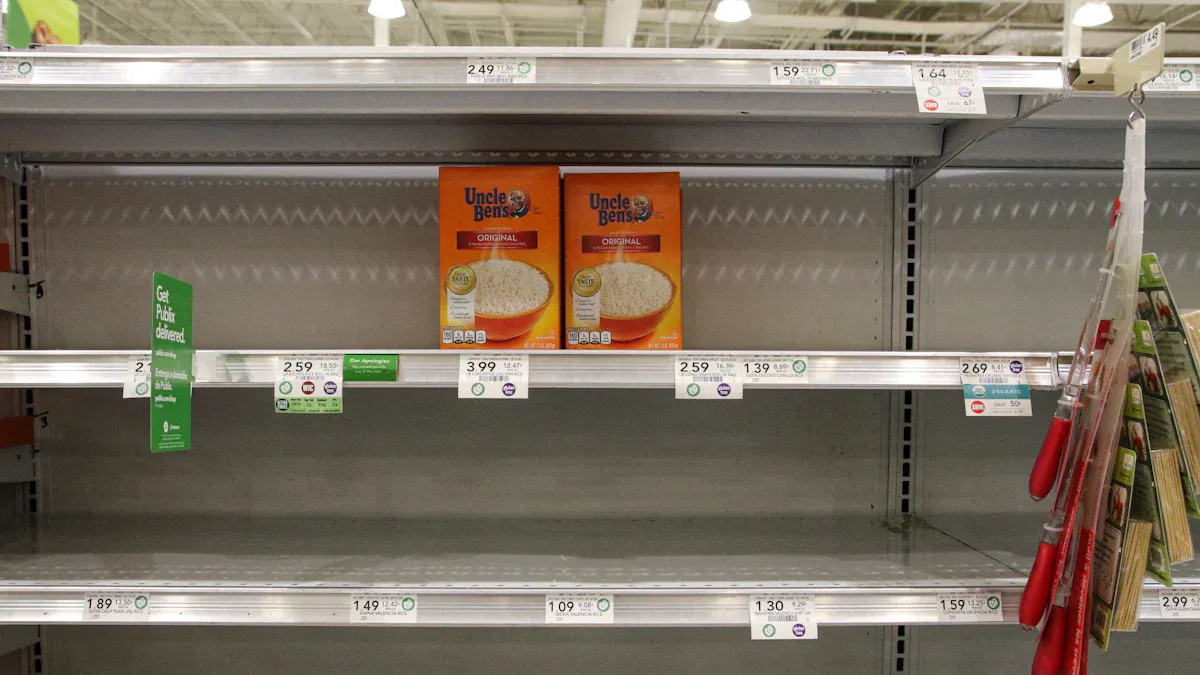
Beyond pricing, electronic shelf labels transform the entire inventory management process. This technology provides real-time visibility into stock, automating key tasks and boosting operational accuracy. Retailers gain a powerful tool to monitor products, streamline workflows, and ensure shelves remain full.
Displaying Real-Time Stock Levels
Electronic shelf labels display real-time stock information directly at the shelf edge. This feature offers powerful transparency for both associates and shoppers. An employee can instantly confirm stock availability without leaving the customer’s side. This immediate access to data helps maintain correct inventory levels. The system can even show current inventory levels, giving everyone a clear view of the available stock and improving the overall shopping experience.
Streamlining Replenishment Processes
The technology streamlines replenishment with visual guidance systems. Many ESLs feature flashing LEDs, a ‘Pick-by-Light’ function that directs employees to the exact shelf location needing more stock.
A worker scans a product, and the corresponding label flashes, eliminating guesswork and saving time.
This process significantly increases efficiency. Retailers can also configure the system to trigger reorder requests automatically when stock hits a predetermined threshold, such as a PAR level. This ensures a consistent flow of stock to the sales floor.
Reducing Out-of-Stock Scenarios
A well-managed system drastically reduces instances of products out of stock. By linking with POS and inventory tools, the system sends alerts when stock runs low. This proactive management prevents empty shelves and lost sales. For ultimate accuracy, some systems integrate with autonomous scanning robots. These robots verify current inventory levels against the database, flagging discrepancies and ensuring the correct inventory levels are always maintained. This automation nearly eliminates scenarios where products out of stock disappoint customers.
How to Implement an ESL System in Your Store
Implementing a shelf labeling system is a strategic project that requires careful planning. Retailers must assess their unique needs, integrate the technology with existing infrastructure, and select a reliable provider to ensure a successful rollout and maximize return on investment.
Choosing the Right ESL Technology
Selecting the right technology starts with a thorough assessment of business goals. Key factors include the scale of operations, the desired level of customer engagement, and budget constraints. A small boutique may prioritize cost management with basic labels, while a large grocery chain might focus on speed and efficiency for dynamic pricing. The financial considerations vary significantly based on store size.
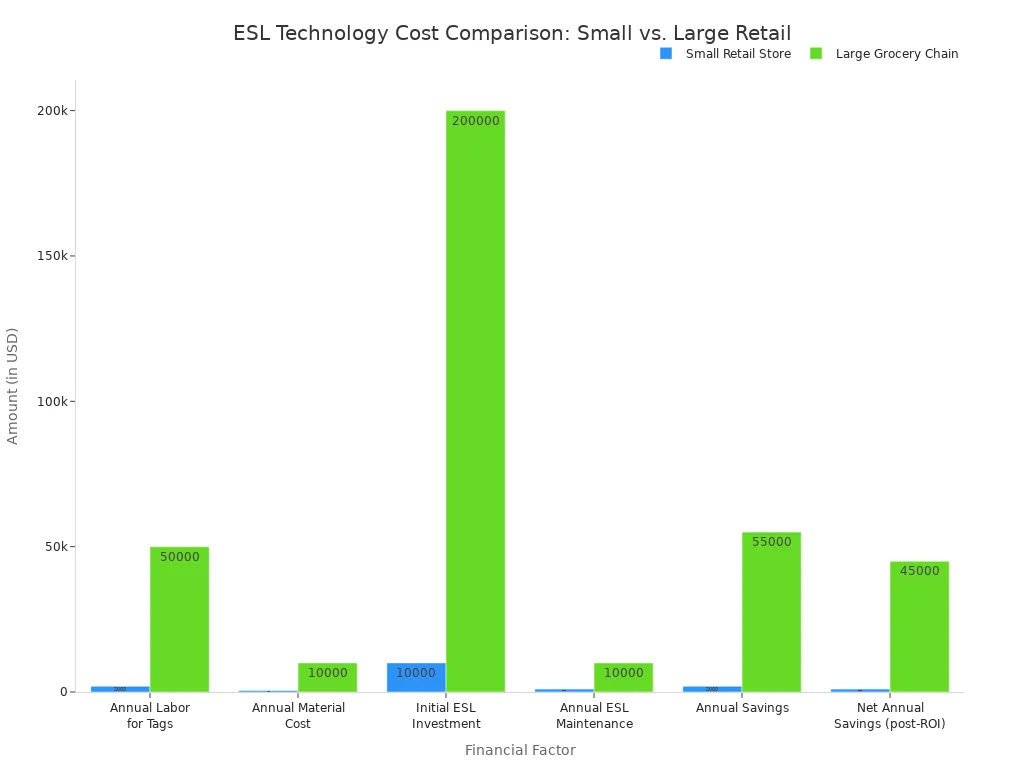
Integrating with POS and ERP Systems
A primary challenge is integrating the new system with existing Point of Sale (POS) and Enterprise Resource Planning (ERP) software. Many retailers use legacy systems that lack modern APIs, which can complicate the process. Ensuring seamless data synchronization between the labels, checkout scanners, and online channels is critical to prevent price discrepancies. This often requires a robust wireless network and sometimes middleware to bridge compatibility gaps. Proper planning for these technical hurdles is essential for a smooth transition.
Evaluating and Selecting a Provider
Choosing the right provider is as important as choosing the technology itself. When evaluating potential partners, businesses should consider several key criteria to ensure long-term success.
- Display and Durability: Look for E-ink displays that offer excellent readability and are durable enough to withstand the retail environment.
- Battery Life: A minimum battery life of five years is the industry standard and significantly reduces maintenance costs.
- Software and Integration: The provider’s software should be user-friendly and integrate easily with your current systems.
- Total Cost of Ownership (TCO): Request a full TCO calculation that includes hardware, software, maintenance, and support costs to understand the complete financial picture.
Adopting electronic shelf labeling is a strategic move to modernize retail operations and gain a competitive edge. The technology offers a clear return on investment, often realized within 12 to 36 months, through cost savings and dynamic pricing agility. Beyond 2025, these labels will become foundational for intelligent retail, integrating AI and IoT to create data-driven ecosystems.
Retailers should begin evaluating their needs now to determine how this powerful technology can future-proof their business.
FAQ
How long does it take to update prices with ESLs?
Retailers can update thousands of labels across a store in just a few minutes. The central system sends new pricing data wirelessly to the shelves. This process ensures rapid and accurate price changes without manual labor, making pricing adjustments nearly instantaneous.
Can ESLs handle complex promotions?
Yes, ESL systems manage complex promotions effectively. Retailers can schedule multi-buy offers, percentage discounts, and other special promotions. The labels automatically display the correct information for the duration of the event, helping with promotions to sell more products.
What happens if the network goes down?
The labels will retain their last displayed information. E-paper displays require no power to hold an image, so the current pricing and product data remain visible. Updates will resume automatically once the network connection is restored, ensuring data integrity.
How do ESLs support dynamic pricing?
ESLs are the core technology for dynamic pricing. The system allows retailers to adjust pricing automatically based on real-time data. Factors like competitor prices, demand, or current stock levels can trigger these changes, enabling responsive and strategic pricing.