

Retailers’ marketing is the process you use to promote products directly to consumers. This retail marketing includes all strategies that generate interest and drive sales. Unlike general marketing, this approach focuses on the final point of sale. Your marketing efforts convince customers to purchase from your physical or online retail store.
Modern Tip: Modern retail marketing leverages technology. You can use tools like Electronic Shelf Labels for dynamic pricing. An ESL Gateway AP manages each ESL Price Tag, a key part of Esl Retail innovation.
Effective retailers’ marketing connects your retail brand directly with the end consumer.
Why Retailers’ Marketing Is Crucial for Business Success
Effective retailers’ marketing is the engine that powers your business growth. Your marketing efforts directly influence how many people visit your store, how they perceive your brand, and how much they spend. A well-executed strategy is not just an expense; it is a direct investment in your success.
Drives Foot and Web Traffic
Your primary goal is to attract shoppers to your sales channels. A strong retail marketing plan accomplishes this by guiding customers along their purchasing journey.
Attracting New Customers
You need a constant flow of new customers for sustainable growth. Marketing strategies like hyperlocal ads and community events introduce your brand to potential shoppers. You can analyze mobile location data to launch promotions during peak traffic times. This data-driven approach to customer acquisition helps you reach new audiences and turn them into first-time buyers. Tracking foot traffic before and after a campaign shows you if your marketing successfully increased store visits.
Encouraging Repeat Visits
Bringing a customer back is just as important as acquiring a new one. Your marketing should create a compelling reason for shoppers to return. You can use email campaigns, loyalty programs, and personalized offers to maintain engagement. These tactics transform a one-time purchase into a long-term relationship, making your store a regular stop in the customer journey.
Builds Brand Awareness and Recognition
In a competitive retail landscape, you must be memorable. Your brand is more than just a logo; it is the entire experience you offer shoppers.
Creating a Unique Brand Identity
Your marketing communications define who you are. You build a distinct identity through consistent messaging, visual design, and customer service. This identity helps shoppers connect with your brand on an emotional level. It tells them what you stand for and why they should choose you over others.
Standing Out in a Crowded Market
Strong brand positioning is a powerful competitive advantage. Companies with clear brand recognition can achieve a two to three times increase in market share. Your marketing helps you carve out a unique space in the minds of shoppers, making your retail brand the preferred choice.
Boosts Sales and Revenue
Ultimately, your marketing activities must translate into financial results. The right retail marketing plan directly impacts your ability to increase sales and improve profitability.
Increasing Average Transaction Value
Targeted campaigns are highly effective at boosting revenue. For example, some targeted retail campaigns have produced a 112% average revenue uplift in specific store locations. You can use marketing to encourage shoppers to add more items to their carts. Techniques like upselling, cross-selling, and bundled offers can significantly raise the average amount each customer spends.
Promoting High-Margin Products
Your marketing can strategically guide customers toward your most profitable items. You can feature high-margin products in advertisements, email newsletters, and in-store displays. Successful brands also leverage partnerships to drive growth. For instance, Sephora generated $7.4 million in revenue from its partners, achieving a three-fold increase in revenue growth. This journey shows how a focused marketing strategy can directly boost your bottom line.
Fosters Customer Loyalty and Retention
Your retailers’ marketing strategy does more than attract new shoppers; it is essential for keeping the ones you already have. Acquiring a new customer can cost five times more than retaining an existing one. Loyal customers spend more over time and become powerful advocates for your brand. This focus on retention creates a stable foundation for your retail business.
Building Strong Customer Relationships
You must move beyond simple transactions to build lasting loyalty. Your goal is to create genuine connections that make customers feel valued. This process involves understanding their needs and preferences throughout their entire customer journey. Your marketing should show that you are listening.
You can build these strong relationships through several key actions:
- Personalize Communications: Use data to send relevant offers and content. Address customers by name in emails and acknowledge their past purchases.
- Gather Feedback: Actively ask for reviews and opinions. Show customers you value their input by making visible improvements based on their suggestions.
- Provide Excellent Service: Ensure every interaction, from online chat to in-store assistance, is positive and helpful.
A robust customer relationship management (CRM) system helps you track these interactions. It provides a complete view of each customer’s journey, empowering you to create a more personalized and engaging experience.
Reducing Customer Churn
Customer churn is the rate at which shoppers stop doing business with you. A high churn rate can cripple your growth. Effective retail marketing directly combats this by giving customers compelling reasons to stay. You can proactively identify at-risk customers and re-engage them before they leave for good.
Your marketing efforts are your best defense against churn. A simple 5% increase in customer retention can boost your profitability by 25% to 95%. This demonstrates the immense financial impact of keeping your customer base happy and engaged.
A well-planned retail marketing calendar helps you maintain consistent contact. You can use targeted promotions, exclusive content, and loyalty rewards to remind customers of the value you provide. This consistent engagement reinforces their decision to choose your retail brand, turning a potential one-time buyer into a lifelong fan.
The Core Components: The Retail Marketing Mix
To build a successful retail business, you must master the foundational elements of your marketing. The retail marketing mix, often called the four Ps of retail marketing, provides a framework for your decisions. This framework includes Product, Price, Place, and Promotion. Each component works together to create a cohesive experience for your customers.
Product: The Goods You Sell
Your products are the heart of your retail operation. What you sell, and how you present it, directly defines your brand and attracts your target audience.
Product Assortment and Variety
You must carefully curate the products you offer. A well-planned assortment meets customer needs and maximizes sales. You can analyze sales data to see which items are popular and which are overstocked. For example, a bicycle retailer boosts sales by also stocking complementary items like pumps and lights. Many shoppers now also demand sustainable and ethical options, making it vital to evaluate your product lines for environmental impact, a strategy used by brands like Patagonia.
Quality and Unique Features
The quality of your products builds trust and justifies your pricing. You should highlight unique features that solve customer problems or offer superior benefits. These differentiators give shoppers a compelling reason to choose you over a competitor.
Packaging and Branding
Your product’s packaging is a critical marketing tool. It protects the item, communicates your brand identity, and grabs attention on a crowded shelf. Effective packaging makes your product instantly recognizable and reinforces its perceived value.
Price: Your Pricing Strategy
Your pricing strategy directly impacts your profitability and customer perception. You must find the right balance between covering costs, staying competitive, and communicating value.
Competitive Pricing Models
You have several models to choose from for your pricing strategy. Some common approaches include using the Manufacturer Suggested Retail Price (MSRP) for standardized goods or Keystone pricing, where you double the wholesale cost. You can also use psychological pricing to influence how shoppers perceive your prices.
| Pricing Tactic | Goal | Example |
|---|---|---|
| Odd-Even Pricing | Make a price seem lower | $19.99 feels cheaper than $20.00. |
| Charm Pricing | Create an emotional appeal | “3 for $20” encourages bulk buying. |
| Premium Pricing | Signal luxury and quality | A price of $199 implies higher quality than $179. |
Discounting and Promotional Pricing
You can use discounts and promotions to drive traffic and clear inventory. Tactics like sales codes, coupons, or loss-leading pricing (offering a discount on one item to encourage other purchases) are effective at creating urgency and attracting bargain-hunters.
Communicating Perceived Value
Your price sends a powerful message. A higher price can signal premium quality, while a lower price can attract budget-conscious consumers. Your goal is to align your price with the value customers believe they are receiving.
Place: Where You Sell Your Products
“Place” refers to every location where customers can browse and buy your products. This includes both your physical and digital storefronts.
Physical Store Location and Layout
A physical store is more than a point of sale; it is a powerful marketing asset. Opening a new store can increase your website traffic by as much as 37% due to the “halo effect.” Key factors like accessibility, nearby anchor tenants, and foot traffic patterns are crucial for success. The right location makes your brand visible and serves as a convenient hub for sales and returns.
E-commerce Website and User Experience
Your website is your digital flagship store. You must ensure it is easy to navigate, visually appealing, and mobile-friendly. A slow or confusing website will quickly drive potential customers away.
Online Marketplace Presence
You can expand your reach by selling on established online marketplaces. Platforms like Amazon, Etsy, or eBay give you access to a massive, built-in customer base, extending your brand’s presence far beyond your own channels.
Promotion: How You Communicate with Customers
Promotion is the final, crucial component of the four ps of retail marketing. This element covers all the methods you use to tell customers about your products, brand, and value proposition. Your promotional strategy is how you capture attention, generate interest, and persuade shoppers to make a purchase. A well-rounded approach combines different tactics to reach your audience at multiple touchpoints.
Advertising and Public Relations
You use advertising to broadcast your message through paid channels. This includes digital ads on social media, search engine marketing, and traditional media like print or radio. Your advertising campaigns should be targeted and measurable, allowing you to track your return on investment. Public relations (PR), in contrast, focuses on earning media coverage and building a positive brand image.
PR activities like sponsoring local events, issuing press releases about new products, or securing positive media mentions build credibility. This earned trust can be more influential than a direct advertisement because it comes from a third-party source.
Your advertising and PR efforts should work together. They build awareness and shape how the public perceives your retail brand.
Sales Promotions and Events
Sales promotions are short-term incentives designed to stimulate immediate demand. These tactics create a sense of urgency that encourages customers to buy now. The effective promotion of retail products often relies on these time-sensitive offers to boost sales and clear out old inventory.
You can implement several types of sales promotions:
- Discounts and Coupons: Offer a percentage off, a fixed dollar amount, or free shipping.
- Buy-One-Get-One (BOGO): Encourage customers to purchase more than they originally intended.
- In-Store Events: Host workshops, product demonstrations, or exclusive shopping nights to create a memorable experience.
- Contests and Giveaways: Generate excitement and collect customer contact information for future marketing.
Direct Marketing
Direct marketing involves communicating one-on-one with your customers. This personalized approach helps you build stronger relationships and drive repeat business. You can use data from your CRM to send highly relevant messages that resonate with individual shoppers. This targeted retail marketing strategy often yields a high response rate.
| Channel | Primary Goal | Best Use Case |
|---|---|---|
| Email Marketing | Nurture relationships, announce sales | Sending weekly newsletters, abandoned cart reminders, and personalized offers. |
| SMS Marketing | Deliver time-sensitive information | Announcing flash sales, sending order updates, and sharing exclusive coupon codes. |
| Direct Mail | Stand out from digital noise | Mailing catalogs, sending special invitations, or distributing high-value coupons. |
By choosing the right promotional mix, you ensure your message reaches the right people at the right time, driving both sales and loyalty for your retail business.
Key Types of Retail Marketing Channels
You must choose the right channels to connect with your customers. Your retail marketing techniques will fall into three main categories: digital, in-store, and omnichannel. A successful plan blends these strategies to create a complete customer experience. The most effective digital marketing initiatives often combine several of these approaches.
Digital Retail Marketing Techniques
Your digital marketing efforts are essential in today’s market. The majority of ad spending in retail is now allocated to digital media, with over 80% of budgets focused on digital advertising. This shift highlights the importance of a strong online presence. These retail marketing techniques help you reach shoppers where they spend their time.
Social Media Marketing
You can use social platforms to build a community around your brand. It allows you to engage directly with customers, share user-generated content, and run targeted digital advertising campaigns.
Email Marketing Campaigns
Email is a powerful tool for nurturing customer relationships. You can send personalized offers, announce new products, and share valuable content to encourage repeat purchases and build loyalty.
Search Engine Optimization (SEO)
SEO helps your online store appear in search engine results. When shoppers look for products you sell, a good SEO strategy ensures they find your website first. This is a fundamental part of online retail marketing.
Content Marketing for Retail
You can build trust by creating useful and engaging content. Brands like UNIQLO use storytelling in their digital marketing to form emotional connections with customers, enhancing brand loyalty through their digital marketing initiatives.
Paid Advertising (PPC)
Pay-per-click (PPC) digital advertising places your brand in front of motivated buyers on search engines and social media. This form of digital advertising allows you to target specific demographics and measure your return on digital advertising spend precisely. Your digital advertising budget is a key part of your growth.
In-Store (Offline) Retail Marketing
Your physical store is a powerful marketing channel. Effective offline retail marketing transforms your space into an experience that drives sales and strengthens your brand identity.
Visual Merchandising and Store Layout
The way you present products has a massive impact on sales.
Well-planned visual merchandising can boost sales by as much as 30%. In contrast, disorganized displays and confusing layouts cause significant frustration, costing mid-market retailers over $5 billion annually from shoppers who leave without buying.
In-Store Events and Product Demos
You can host events like workshops or product demonstrations to create memorable experiences. These activities draw people into your store and build a stronger community around your retail brand.
Signage and Window Displays
Your signs and window displays are your store’s first impression. They must be eye-catching and clear, communicating your current promotions and brand identity to attract passersby.
Point-of-Sale (POS) Promotions
You can use the checkout area to encourage impulse buys. Offer small, complementary items or last-minute deals to increase the final transaction value.
Omnichannel Retail Marketing
Modern retail success depends on blending your digital and physical channels seamlessly. Omnichannel marketing strategies create a unified experience for customers, no matter how they choose to shop.
Integrating Online and Offline Experiences
You must connect your digital storefront with your physical one. Brands with strong omnichannel marketing strategies retain nearly 89% of their customers, a massive increase compared to those with weak integration.
Buy Online, Pick Up In-Store (BOPIS)
Offering services like BOPIS meets modern customer expectations for convenience. This single feature can increase the likelihood of a purchase by nearly 20%, bridging the gap between online retail marketing and your physical store.
Consistent Brand Messaging Across Channels
Your brand’s voice, visuals, and offers must be consistent everywhere. This consistency builds trust and reinforces your identity. Omnichannel shoppers deliver a 30% higher lifetime value, making these integrated retail marketing techniques crucial for long-term growth.
Developing a Winning Retail Marketing Strategy
A powerful retail marketing strategy does not happen by accident. You must build it with a clear plan that connects your brand to the right customers. This structured approach turns your marketing efforts into measurable results for your retail business. Your marketing strategy is the roadmap that guides every decision you make.
Define Your Target Audience
You cannot effectively market to everyone. Your first step is to identify your ideal customer. A deep understanding of your target market allows you to create messages and offers that truly resonate. This focus ensures your marketing budget is spent efficiently, reaching the people most likely to buy from you.
Creating Customer Personas
You can bring your target market to life by creating detailed customer personas. These fictional profiles represent your key customer segments. Successful retail brands use personas to guide their entire marketing strategy.
For example, you can look at how major brands define their specific audience:
- Sephora’s “Beauty Junkie” persona represents an enthusiast who seeks new products and values quality. This profile shapes Sephora’s loyalty program and personalized recommendations.
- Patagonia’s “The Activist” persona is an environmentally conscious consumer. This focus on sustainability helps Patagonia build a loyal customer base for its eco-friendly products.
Creating a persona for your specific audience helps you tailor every aspect of your retail marketing.
Understanding Customer Behavior
Beyond demographics, you need to understand how your target market behaves. You should analyze what influences their purchasing decisions, which channels they use to shop, and what content they engage with. This insight helps you refine your strategy to meet customers where they are.
Set Clear Marketing Goals
Your retail marketing strategy needs specific objectives. Vague goals like “increase sales” are not actionable. You must define exactly what you want to achieve and how you will measure success.
Using the SMART Framework
You should use the SMART framework to set effective goals. Your objectives must be Specific, Measurable, Achievable, Relevant, and Time-bound. This method transforms broad ambitions into a clear action plan. For instance, a SMART goal could be to “Increase ecommerce Average Order Value (AOV) in Q3 by 10% by adding an upselling feature” or to “Recover 15% of abandoned shopping carts in Q4 by creating a compelling email automation.”
Aligning Goals with Business Objectives
Your marketing goals must support your overall business objectives. If your company’s primary goal is to increase profitability, your marketing should focus on promoting high-margin products or reducing customer acquisition costs. This alignment ensures your marketing efforts directly contribute to the health of your retail business.
Choose the Right Marketing Channels
With a clear audience and goals, you can select the best channels to deliver your message. The right mix of channels is essential for an effective retail marketing strategy. These are the platforms where you will execute your marketing strategies.
Aligning Channels with Your Audience
You must choose channels where your target market is most active. If your persona is a young professional, you might focus on LinkedIn and email marketing. If you are targeting hobbyists, niche forums and Instagram could be more effective.
Budgeting for Each Channel
Finally, you need to allocate your budget. Your financial plan should support your chosen channels and goals. A well-planned budget ensures you have the resources to execute your strategy effectively and measure your return on investment.
Create a Content and Promotion Calendar
Your marketing strategy needs a timeline to be effective. A content and promotion calendar is the tool that organizes your activities, ensuring you deliver a consistent and timely message. This calendar acts as the blueprint for your execution, turning your retail marketing strategy from a plan into action. It helps you allocate resources, prepare creative assets, and coordinate your team’s efforts.
Planning for Seasonal Campaigns
You can build campaigns around major holidays like Black Friday and Christmas. However, you can also find unique opportunities by looking at less conventional dates. This approach helps your brand stand out when competitors are quiet. Your marketing strategy should include a mix of major and minor events to maintain customer engagement throughout the year.
You can leverage a wide variety of observances for creative promotions.
| Date | Event | Potential Promotion Idea |
|---|---|---|
| Oct 29 | National Cat Day | Feature pet-related products or partner with a local shelter. |
| Nov 13 | World Kindness Day | Run a “pay it forward” campaign or donate a portion of sales. |
| Nov 28 | Small Business Saturday | Highlight your local roots and offer special deals for shoppers. |
| Dec 14 | National Free Shipping Day | Offer free shipping to capture last-minute holiday shoppers. |
By planning for these dates, you create more touchpoints with your audience and keep your brand top-of-mind.
Scheduling Regular Promotions
A successful retail marketing strategy relies on consistency, not just seasonal spikes. You must schedule regular promotions and content to keep your audience engaged between major campaigns. This steady drumbeat of communication builds brand loyalty and drives continuous traffic.
You can develop your calendar by following a clear process:
- Analyze Historical Data: Look at your past performance. Identify which products and promotions generated the most traffic and sales. You can recycle or refresh successful campaigns.
- Identify Key Events: Choose the holidays and seasons most relevant to your brand and customers.
- Tailor Your Messaging: Customize your content for each campaign. Your message for a summer sale should feel different from a Black Friday promotion.
- Leverage Social Media: Use social platforms to amplify your message. Engage with trends and relevant hashtags to expand your reach.
A well-organized calendar ensures you never miss an opportunity. This proactive strategy allows you to prepare high-quality content in advance, avoiding last-minute rushes and maintaining a professional brand image.
Actionable Retail Marketing Strategies That Work
A plan is only as good as its execution. You can transform your retail marketing strategy from a document into a powerful growth engine with the right tactics. These actionable strategies focus on building relationships, creating personalized experiences, and empowering your customers to become your best advocates. Implementing these approaches will help you increase sales and foster lasting loyalty.
Implement a Customer Loyalty Program
A customer loyalty program is a cornerstone of modern retail. It gives shoppers a compelling reason to return to your store instead of a competitor’s. This strategy moves your relationship beyond simple transactions and builds a community around your brand. A well-designed program makes customers feel valued at every stage of their journey.
Points-Based and Tiered Systems
You can structure your loyalty program in several effective ways. Points-based systems are straightforward: customers earn points for every dollar they spend, which they can redeem for discounts or products. Tiered systems reward your most loyal customers with escalating benefits as they spend more.
Leading Loyalty Programs in Retail Many top brands use these models to drive retention. Successful programs include:
- IKEA Family: Offers member-only discounts and perks.
- LEGO VIP: A classic points-for-rewards system.
- The Nordy Club (Nordstrom): A tiered system with increasing benefits like early access to sales.
- GameStop PowerUp Rewards Pro: A paid tier offering exclusive deals and trade-in values.
You can also innovate within these frameworks. For example, KFC UK uses gamification to engage its members, while Benefit Cosmetics focuses on a mobile-first personalization strategy.
Exclusive VIP Perks and Rewards
Your rewards must feel valuable and exclusive. Generic discounts are common, but unique perks create a stronger emotional connection. You can offer benefits that money cannot buy.
Consider providing your best customers with:
- Early Access: Let VIPs shop new arrivals or sales events before the general public.
- Exclusive Products: Create limited-edition items available only to loyalty members.
- Special Services: Offer free shipping, complimentary gift wrapping, or personalized styling sessions.
- Invitations to Events: Host member-only workshops or appreciation nights.
These perks reinforce a customer’s decision to be loyal, making them feel like a true insider.
Leverage Personalization at Scale
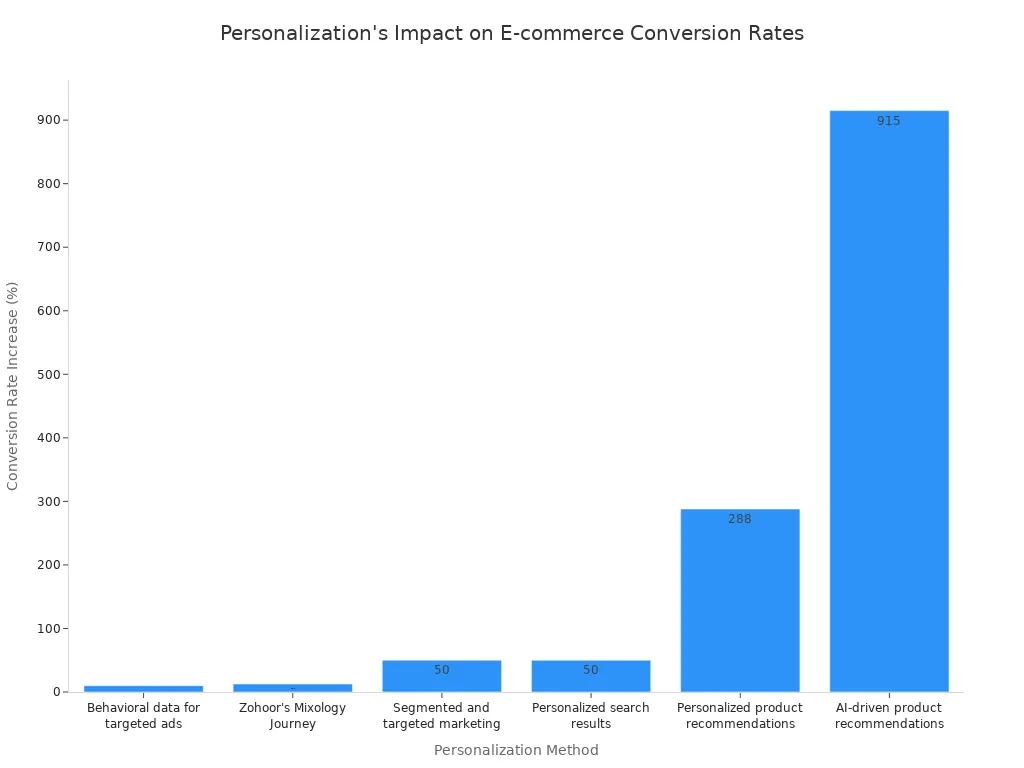
Today’s shoppers expect you to understand their needs. A customer-oriented retail marketing approach uses data to deliver relevant experiences at every touchpoint. Personalization is no longer a luxury; it is a fundamental expectation that directly impacts your conversion rates.
| Personalization Method | Potential Conversion Rate Increase |
|---|---|
| AI-Driven Product Recommendations | Up to 915% |
| Personalized Search Results | Up to 50% |
| Segmented and Targeted Marketing | 50% |
| Personalized Product Recommendations | 288% |
Personalized Product Recommendations
You can use customer data to suggest products they are likely to love. This tactic improves the customer journey by making discovery easier and more relevant. AI-driven tools can analyze browsing history, past purchases, and even real-time behavior to generate hyper-relevant suggestions. As the data shows, this single strategy can dramatically lift conversions.
Targeted Email and SMS Campaigns
You should move beyond generic email blasts. You can segment your audience based on their purchase history, loyalty status, or engagement level. This allows you to send highly targeted messages that resonate.
- Welcome Offers: Greet new subscribers with a personalized discount on products related to their initial browsing.
- Abandoned Cart Reminders: Send automated emails or texts that remind shoppers what they left behind, perhaps with a small incentive to complete the purchase.
- Post-Purchase Follow-ups: Suggest complementary products or ask for a review after a customer receives their order. Starbucks excels at this by using its app to track orders and send AI-driven messages.
Customized Offers and Discounts
You can use personalization to make your promotions more effective. Instead of offering the same discount to everyone, you can tailor offers to individual shoppers. For example, you can use dynamic promotions based on a customer’s loyalty tier, giving your best customers better deals. Brands like Nike use their NikePlus loyalty program to provide members with personalized product recommendations and exclusive benefits, creating a unique retail experience. This targeted approach makes your marketing spend more efficient and strengthens customer relationships.
Harness the Power of User-Generated Content
Your most powerful marketing asset is often your own customers. User-generated content (UGC) refers to any brand-related content—photos, videos, reviews, or social media posts—created by consumers rather than the brand itself. This form of social proof is incredibly effective.
Consumers are 2.4 times more likely to view UGC as authentic compared to content created by brands. A staggering 92% of consumers trust word of mouth and UGC more than traditional brand advertising.
Your retail marketing strategy must include ways to encourage and amplify these authentic voices.
Encouraging Customer Reviews and Testimonials
Reviews are a critical part of the modern purchasing journey. You should make it easy for customers to leave feedback. You can send a follow-up email a week after a product is delivered, asking for a review. You can also offer a small incentive, like a discount on a future purchase, to thank customers for their time. Displaying these reviews prominently on your product pages builds trust and helps new shoppers make confident decisions.
Running Social Media Photo Contests
You can proactively generate a wealth of UGC by running contests and campaigns. Encourage your customers to share photos or videos of themselves using your products with a specific hashtag. This not only creates authentic content for you to reshare but also builds a vibrant community around your brand.
| Brand | Campaign Highlight | Key UGC Tactic |
|---|---|---|
| GoPro | #GoProHeroChallenge | Sharing user-captured photos and videos of experiences. |
| Starbucks | #RedCupContest | Using AR filters to encourage user-designed cup photos. |
| Coca-Cola | Share a Coke | Printing names on bottles to inspire social sharing. |
| Stanley | Viral Tumbler Videos | Embracing organic influencer and user videos on TikTok. |
Campaigns like Coca-Cola’s “Share a Coke” led to a 7% rise in consumption among young adults, while Stanley’s embrace of organic UGC turned a utility item into a cultural phenomenon. These strategies prove that empowering your customers to tell your story is one of the most effective forms of retail marketing.
Collaborate with Influencers
You can amplify your brand’s reach by partnering with trusted voices in your industry. Influencer collaborations move beyond traditional advertising to leverage the power of authentic, third-party endorsements. This approach builds credibility and drives sales by connecting with consumers through creators they already follow and trust. The return on investment (ROI) for these partnerships is often significant.
Many businesses see substantial returns from their influencer campaigns. In fact, 70% of businesses that use influencer marketing report doubling their initial investment.
A well-executed influencer program can be one of your most profitable growth strategies. You should aim for a strong return, as many campaigns achieve impressive results.
| Data Source | Average ROI per $1 Spent |
|---|---|
| Tomoson Study | $6.50 |
| City Girl Strategy | $5.78 |
| Stack Influence | $5.20 |
Partnering with Niche and Micro-Influencers
You do not need a massive budget or a celebrity endorsement to succeed. Partnering with niche and micro-influencers (creators with smaller, highly engaged followings) often yields better results. These influencers have built deep trust with their audience, making their recommendations feel more like a genuine suggestion from a friend than a paid advertisement. Their followers share specific interests, ensuring your product reaches a relevant and receptive audience.
Many successful brands have built powerful campaigns around micro-influencers:
- Sperry engaged 100 micro-influencers who were already fans of their shoes. This authentic campaign led to a 66% increase in website traffic from Instagram.
- Gillette sent its Venus products to female micro-influencers for its #ChooseToSmooth campaign. The effort reached over 476,000 followers with an impressive 2.2% engagement rate.
- Coca-Cola worked with travel and food influencers in Belgium to share authentic moments of enjoyment, helping the brand connect with the European market on a local level.
These examples show that authenticity and relevance are more powerful than follower count alone.
Managing Product Seeding and Gifting
Product seeding is a cost-effective way to initiate influencer relationships. You send your products to carefully selected creators for free, with no strings attached. This tactic allows influencers to experience your brand organically. If they love the product, they may share it with their audience, generating authentic user-generated content that money cannot buy.
Pro Tip: Brands like La Croix and Gymshark effectively use product seeding. La Croix sends vouchers for free cases of its drinks, while Gymshark provides workout wear to fitness creators. This approach builds goodwill and results in genuine, relatable content.
You can manage your product seeding program with a clear process:
- Identify Potential Partners: Find influencers whose values and audience align with your brand. Look for creators who are already producing high-quality content in your niche.
- Personalize Your Outreach: Craft a personalized message explaining why you think they would love your product. Avoid generic, copy-paste emails.
- Ship the Product: Send the product with thoughtful packaging. You can include a handwritten note to add a personal touch.
- Follow Up Gently: After they receive the product, you can send a brief follow-up message. Ask for their honest feedback without pressuring them to post.
This low-pressure approach helps you build lasting relationships and turn creators into genuine brand advocates. Brands like Banana Republic have successfully run multiple campaigns this way, reaching millions of consumers by welcoming creators of all sizes.
Measuring the Success of Your Retail Marketing
You cannot improve what you do not measure. A data-driven approach is essential for optimizing your retail marketing efforts and proving their value. By tracking the right metrics, you can make informed decisions that boost performance and maximize your return on investment. This process turns your marketing activities into a predictable engine for growth.
Key Performance Indicators (KPIs) to Track
Key Performance Indicators (KPIs) are the specific metrics you use to gauge the effectiveness of your campaigns. These numbers tell you whether you are meeting your objectives. You should focus on a handful of vital KPIs that align directly with your business goals.
Customer Acquisition Cost (CAC)
Your Customer Acquisition Cost (CAC) is the total expense required to gain a new customer. You calculate it by dividing your total marketing and sales costs by the number of new customers acquired in a specific period. This metric reveals the efficiency of your customer acquisition strategies. A lower CAC indicates a more profitable marketing operation.
| Metric | Industry | Average Value |
|---|---|---|
| CAC | Retail | $87 |
| CAC | Fashion Brands | $129 |
| CLV | Retail | $168 |
Customer Lifetime Value (CLV)
Customer lifetime value (CLV) predicts the total revenue your business can expect from a single customer account. It is a critical metric for understanding long-term profitability. You should aim for a high customer lifetime value, as it shows that you are successfully retaining shoppers who make repeat purchases. A healthy business model ensures your customer lifetime value is significantly higher than your CAC.
Conversion Rate (Online and In-Store)
Your conversion rate is a fundamental measure of your marketing effectiveness. It tells you how well you turn visitors into buyers. A low rate might signal issues with your website design, product pricing, or in-store experience.
Conversion rate measures the percentage of visitors who make a purchase. For a physical store, it’s the number of buyers divided by total foot traffic. For an eCommerce site, it’s buyers divided by total site visitors. A low conversion rate can indicate problems with pricing, product selection, or customer experience.
Conversion Rate = (Number of Sales / Number of Visitors) * 100
Return on Ad Spend (ROAS)
Return on Ad Spend (ROAS) measures the gross revenue generated for every dollar spent on advertising. This KPI directly evaluates the profitability of your paid campaigns. A high ROAS means your ads are performing well and contributing positively to your bottom line. You calculate it by dividing the revenue from an ad campaign by its cost.
Foot Traffic and Dwell Time
For a physical retail store, foot traffic is the total number of people who enter your location. Dwell time measures how long, on average, shoppers stay inside. These metrics help you understand your store’s drawing power and the level of customer engagement. Increased foot traffic after a promotion shows your campaign was successful at driving visits. Longer dwell times often correlate with higher sales.
Essential Tools and Technologies
You need the right technology stack to track your KPIs accurately. These tools collect and analyze data, providing the insights necessary to refine your strategies and prove your marketing impact.
Google Analytics and Other Analytics Platforms
Web analytics platforms are essential for any online retail presence. Tools like Google Analytics allow you to monitor website traffic, track user behavior, and measure online conversion rates. You can see which marketing channels are driving the most visitors and sales, helping you allocate your budget more effectively.
Customer Relationship Management (CRM) Systems
A customer relationship management (CRM) system is the central hub for all your customer data. It tracks every interaction a shopper has with your brand, from their first website visit to their latest purchase. This technology is crucial for personalizing communications and calculating complex metrics like customer lifetime value. A robust customer relationship management platform empowers you to build stronger, more profitable relationships.
Marketing Automation Software
Marketing automation software helps you execute and measure campaigns at scale. These platforms allow you to schedule emails, manage social media posts, and run targeted ad campaigns. They provide detailed performance reports, making it easy to track metrics like open rates, click-through rates, and campaign-specific ROAS.
Point-of-Sale (POS) Data Systems
Your Point-of-Sale (POS) system is a rich source of in-store data. It captures every transaction, providing critical information on sales volume, average transaction value, and product popularity. You can integrate this data with foot traffic counters to calculate your in-store conversion rate. Modern POS systems are vital for understanding customer purchasing habits in your physical retail environment.
Your retailers’ marketing is the engine that drives your retail success. Successful retail marketing skillfully combines the core elements of your marketing. You must integrate digital and in-store strategies to create a seamless omnichannel journey for shoppers. Future retail marketing strategies will use AI to personalize the digital journey for shoppers. Your digital marketing must tell authentic stories across multiple digital platforms, as shoppers now expect this level of digital engagement. The effective promotion of retail products in this digital landscape is key.
FAQ
What is the main difference between retailers’ marketing and general marketing?
Retailers’ marketing focuses specifically on driving sales at the final point of purchase, whether online or in-store. You aim to convert shoppers directly. General marketing builds broader brand awareness that may not be tied to an immediate transaction.
How can a small retail business start with marketing?
You can begin with low-cost, high-impact strategies. First, define your target audience. Next, you can create social media profiles and build an email list. These foundational steps help you connect directly with potential customers without a large budget.
Why is omnichannel marketing so important for retailers?
Omnichannel marketing creates a seamless shopping experience across all your channels. You integrate your physical store with your website and social media. This consistency builds loyalty and increases customer lifetime value, as shoppers can interact with your brand however they prefer.
What are the “four Ps” of retail marketing?
The four Ps provide a framework for your marketing strategy. You must make key decisions about each element to create a cohesive plan.
| “P” | Description |
|---|---|
| Product | What you sell. |
| Price | Your pricing strategy. |
| Place | Where you sell your items. |
| Promotion | How you communicate with customers. |
How do you measure the success of your marketing efforts?
You track Key Performance Indicators (KPIs) to measure success. These metrics show the direct impact of your campaigns.
Key metrics to monitor include:
- Customer Acquisition Cost (CAC)
- Customer Lifetime Value (CLV)
- Conversion Rate
- Return on Ad Spend (ROAS)
Is in-store marketing still relevant in a digital world?
Yes, in-store marketing is crucial. Your physical store is a powerful channel for creating immersive brand experiences. You can use visual merchandising, events, and point-of-sale promotions to engage customers and drive sales in a way digital channels cannot replicate.