
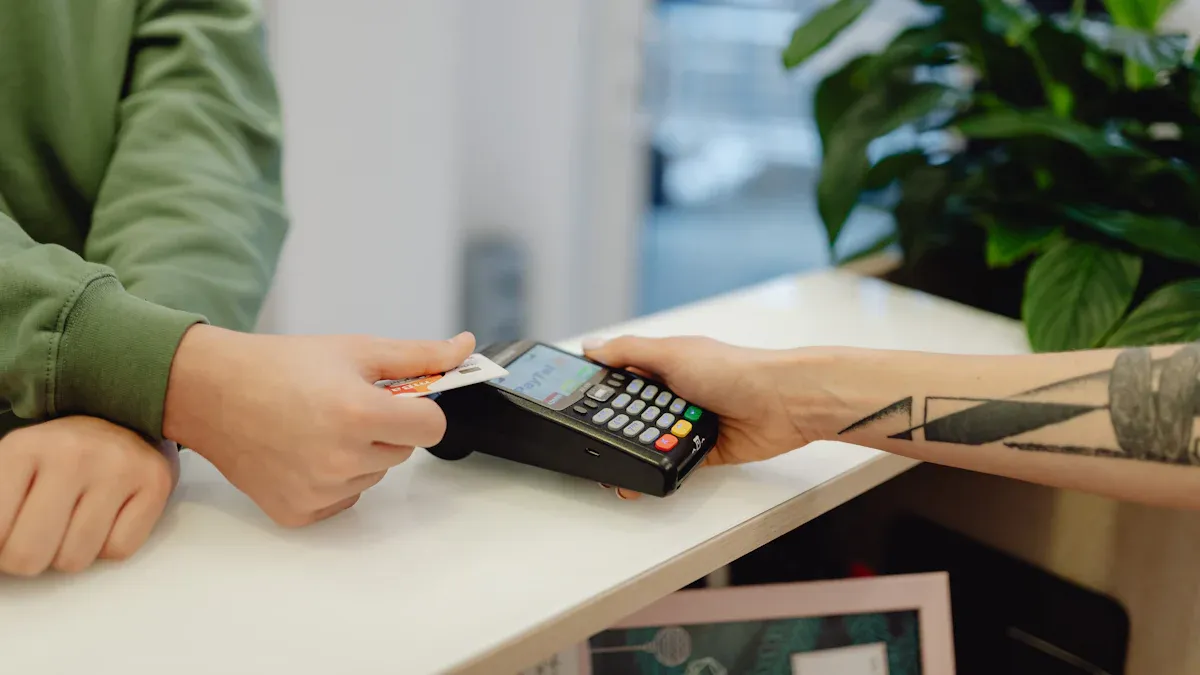
You benefit from digital price tags because they deliver real-time, accurate pricing every time you shop. Unlike traditional tags, Electronic Shelf Labels and ESL Price Tag systems allow instant price updates, so you never face mismatched prices at checkout. With Esl Retail solutions and ESL Gateway AP, stores can synchronize prices across shelves and registers, minimizing errors and disputes. This automation supports a smoother customer shopping experience and lets staff spend more time assisting you.
Digital Price Tags Eliminate Price Discrepancies
Accurate Pricing at Checkout
No Manual Price Checks Needed
You no longer need to worry about price mismatches at checkout when stores use digital price tags. These systems connect wirelessly to a central database, allowing retailers to update prices instantly across every shelf. This eliminates the need for staff to walk the aisles and manually check or change paper tags. As a result, you see the same price on the shelf and at the register, which reduces confusion and speeds up your shopping experience.
Digital price tags at retailers like Pulsure.dk keep product information and prices synchronized between online and physical stores. This real-time update capability ensures you always pay the correct amount at checkout.
Consistent Pricing Across Store and Register
Digital price tags guarantee that the price you see on the shelf matches the price at the register. The system automatically syncs with inventory and point-of-sale (POS) systems, so any price change updates everywhere at once. This consistency builds trust and prevents the frustration of discovering a different price at checkout.
Here’s a comparison of traditional price tags and digital price tags:
| Metric/Aspect | Traditional Price Tags | Digital Price Tags (Electronic Shelf Labels) |
|---|---|---|
| Frequency of Pricing Errors | High due to manual updates and overlooked tags; 24% of prices unchecked in 2024 audit | 50% fewer pricing errors reported (e.g., Carrefour) due to automated syncing |
| Update Speed | Slow, manual updates often delayed during busy sales events | Instant, automated updates across all products |
| Time to Update Prices | Lengthy, labor-intensive process | 95% reduction in time needed to update prices |
| Impact on Customer Trust | Negative due to mismatched prices and frustration | Improved customer satisfaction from accurate pricing |
| Cost Impact | Billions lost annually from pricing mistakes | Labor cost savings and reduced errors reported |
| Operational Efficiency | Lower due to manual labor and error correction | Higher due to integration with POS and inventory systems |
You benefit from this technology because it nearly eliminates human error and ensures real-time pricing accuracy.
Reducing Customer Frustration
Fewer Price Disputes
Digital price tags help you avoid the hassle of price disputes at checkout. Automated price updates reduce human errors, such as missed or incorrect price changes. Retailers have seen a 58% decrease in pricing and inventory marking mistakes, which leads to fewer disagreements at the register. Real-time synchronization between shelf prices and POS systems ensures you always pay the correct price.
| Impact Metric | Description | Effect on Price Disputes |
|---|---|---|
| 58% Decrease in Pricing and Inventory Marking Mistakes | Automated price updates reduce human errors such as missed or incorrect price changes. | Leads to fewer price discrepancies at checkout, reducing disputes. |
| 60% Improvement in Pricing Accuracy | Real-time synchronization between shelf prices and POS systems ensures consistent pricing. | Builds customer trust and minimizes complaints. |
| 40% Reduction in Pricing Errors (European Supermarket Chain) | Adoption of digital price tags led to significant error reduction in a real-world retail environment. | Results in smoother checkout experiences and fewer disputes. |
| Faster Price Updates | Automation allows rapid price changes across all locations. | Reduces operational headaches and customer complaints related to pricing. |
| Qualitative Impact | Customers trust accurate pricing, leading to higher satisfaction and less time spent resolving disputes. | Staff can focus more on customer service rather than price conflict resolution. |
Smoother Checkout Flow
You experience a smoother checkout flow because digital price tags eliminate the need for staff to pause transactions and verify prices. Electronic Shelf Labels update instantly, so the price you see is always the price you pay. This accuracy reassures you and makes the buying process more transparent. Studies show that improved price accuracy and real-time updates foster greater customer confidence and satisfaction, leading to a better in-store shopping experience.
- Digital price tags provide real-time pricing updates and detailed product information, improving transparency and customer trust.
- Integration with inventory and sales systems enables dynamic pricing and quick markdowns, supporting price accuracy.
- RFID technology complements digital price tags by enabling faster, more accurate checkout processes, reducing manual scanning errors.
With fewer interruptions and disputes, you move through the checkout line faster, and store staff can focus on helping you rather than resolving pricing issues.
Real-Time Updates and Retail Efficiency
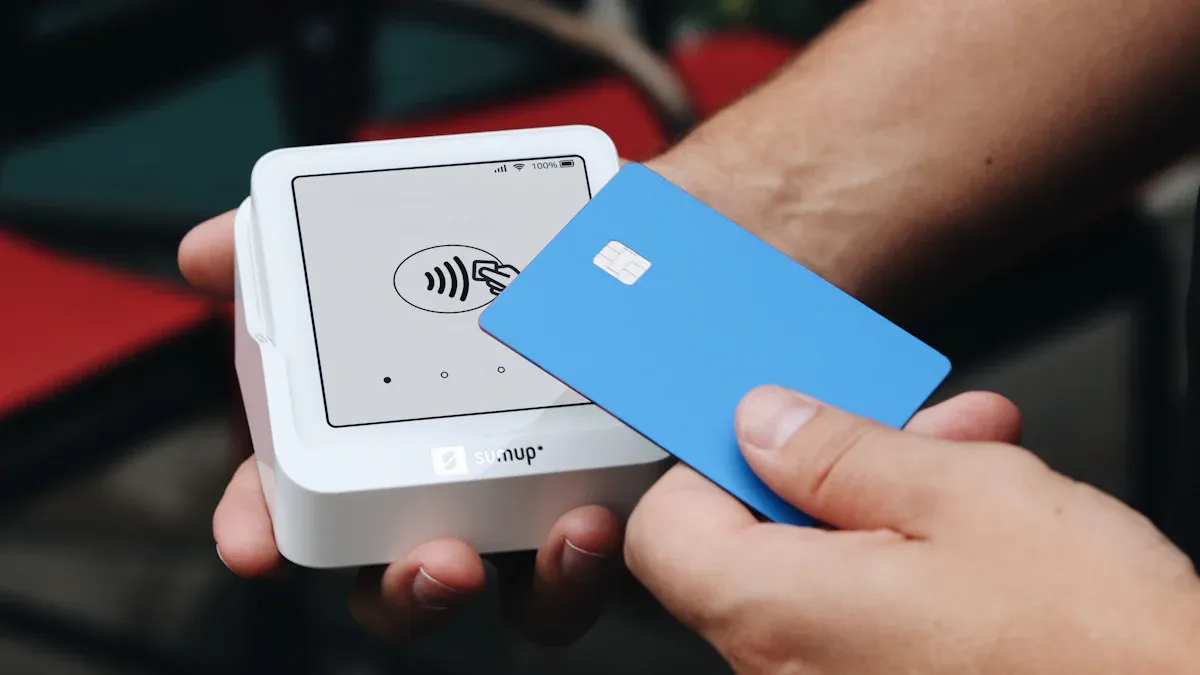
Instant Price Modifications
Promotions and Discounts Applied Instantly
You gain a major advantage when stores use digital price tags to apply promotions and discounts in real time. With real-time updates, retailers can launch flash sales, markdowns, or special offers across every shelf in seconds. This flexibility allows you to benefit from timely deals, especially on products nearing expiration or during peak shopping hours. Research shows that digital price tags help stores reduce food waste by enabling instant markdowns, which also improves access to affordable products. You always see the most current price, so you never miss out on a promotion.
Retailers use real-time synchronization to coordinate discounts across multiple locations. This approach supports dynamic pricing strategies that respond to inventory levels, demand, or local market trends. As a result, you experience transparent and competitive pricing, which increases your trust and satisfaction.
No Outdated Price Tags
With digital price tags, you never encounter outdated prices on the shelf. Real-time updates ensure that every price change appears instantly, eliminating confusion and reducing the risk of paying more than expected. Stores no longer need to print and replace thousands of paper tags, which saves time and reduces errors.
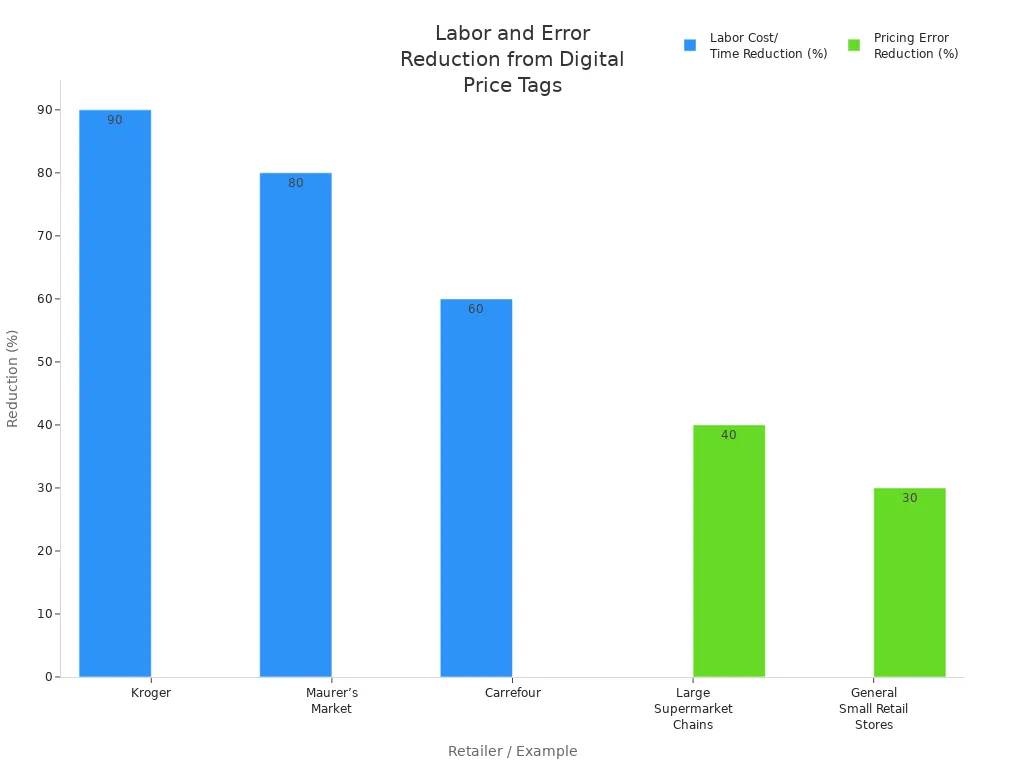
The measurable benefits of instant price modifications are clear. The table below highlights how leading retailers have improved efficiency and reduced costs by adopting real-time price updates:
| Retailer / Example | Labor Cost/Time Reduction Details | ROI / Payback Period |
|---|---|---|
| Kroger | Repricing time reduced from 2 weeks to 5 minutes; up to 90% labor cost reduction | N/A |
| Maurer’s Market | Price update time cut from 4 days to under 10 minutes; ~80% labor time saved | 1.5 to 2.5 years |
| Large Supermarket Chains | Annual labor cost savings of $200,000; up to 40% reduction in pricing errors | Faster ROI due to scale |
| Carrefour | Labor costs reduced by 60%; staff freed for other tasks | N/A |
| Electronics Retailers | Thousands of price updates in minutes; improved efficiency | Within 1 year |
| General Small Retail Stores | Labor and material cost savings; up to 30% reduction in pricing errors | 1 to 3 years |
Seamless POS Integration
Automatic Sync with Checkout Systems
You benefit from seamless integration between digital price tags and checkout systems. Real-time synchronization ensures that the price you see on the shelf matches the price at the register. This eliminates manual price changes, which often cause errors and delays. When stores use automated pricing, every update flows directly from a central system to both the shelf and the checkout, so you always pay the correct amount.
Retailers report that real-time synchronization with POS and inventory systems reduces pricing errors by up to 60%. This improvement leads to fewer disputes at checkout and a smoother shopping experience for you. Wireless connectivity supports instant updates, so you never face discrepancies between shelf and register prices.
Fewer System Errors
Digital price tags help stores avoid system errors that can disrupt your shopping. By removing manual updates, retailers see a dramatic drop in pricing mistakes. Studies show a 90% reduction in pricing errors after implementing electronic shelf labels. This accuracy builds your trust and reduces complaints.
You also benefit from improved inventory management. Real-time updates allow stores to sync stock levels and pricing instantly, which helps prevent stockouts and ensures you find what you need. Staff can focus on helping you instead of fixing pricing issues, which further improves retail efficiency.
Tip: Real-time updates and real-time synchronization not only improve pricing accuracy but also enhance your overall shopping experience by making every transaction faster and more reliable.
Digital Price Tags and Self-Checkout Speed

Faster Self-Checkout Experience
Easy Barcode and RFID Scanning
You move through self-checkout lanes faster when stores use digital price tags. These systems often include barcodes or RFID technology, which makes scanning items quick and reliable. You simply scan the product or tap it near a reader, and the system instantly recognizes the correct price. This process reduces the need for manual entry or price checks, which often slow down traditional self-checkout systems.
Research shows that automated checkout systems, including self-service kiosks and mobile scanning apps, streamline the checkout process by reducing wait times. Digital price tags support these systems by providing real-time price updates, which means you rarely encounter delays or errors. When you use self-checkout, you benefit from fewer interruptions and a smoother flow, especially if you are familiar with the process.
Accurate Pricing for Shoppers
You expect the price on the shelf to match the price at checkout. Digital price tags synchronize in real time with the store’s point-of-sale system, which nearly eliminates price mismatches. This automation removes human error, so you can trust that the price you see is the price you pay. As a result, you experience fewer pricing errors and less confusion, which improves your overall customer shopping experience.
- Digital price tags reduce pricing errors and customer complaints.
- Automation ensures shelf prices match checkout prices.
- Stores train staff to help with technical issues, such as blank tags or network failures, so you always have support if needed.
A recent study found that cashierless shopping systems, which use digital price tags, increase shopper satisfaction and willingness to use self-service checkout. You feel empowered and confident, knowing that the system provides accurate and transparent pricing.
Enabling Mobile and Contactless Payments
Quick Tap-and-Go Transactions
You save time at checkout when you use mobile and contactless payment options. Digital price tags often include QR codes or NFC technology, which allow you to tap your card or phone for instant payment. This tap-and-go process speeds up transactions and reduces lines, especially during busy hours.
- Contactless payments enable fast, secure transactions.
- Retailers report shorter queues and higher satisfaction due to faster payments.
- High-traffic stores benefit from smoother peak hour flows.
- In early 2024, 79% of in-store consumers used tap-to-pay methods.
Electronic Shelf Labels support these payment methods by providing instant product information and enabling one-tap mobile purchases. You enjoy a safer and more efficient checkout, which enhances your customer shopping experience.
Integration with Digital Receipts
You can receive digital receipts directly to your phone or email when you use self-checkout with digital price tags. This integration makes it easy to track your purchases and reduces paper waste. Digital price tags with QR codes let you scan and add items to a virtual cart, so you can shop and pay without waiting in line.
- Digital price tags support mobile self-checkout and flexible payment options, including cards, mobile wallets, and loyalty points.
- Faster transactions and reduced queues improve satisfaction and increase sales throughput.
You benefit from a seamless, modern checkout process that matches your expectations for speed and convenience.
Enhancing Retail Efficiency for Store Staff
Reducing Manual Labor
No Need to Change Paper Tags
You no longer need to spend hours updating paper price tags when your store uses digital price tags. These electronic labels connect to a central system, so you can update thousands of prices instantly with just a few clicks. This shift eliminates tedious manual work and reduces the risk of human error.
- Digital price tags eliminate the need for manual price updates.
- You see reduced labor costs and fewer mistakes.
- Staff can focus on higher-value tasks, such as helping customers.
| Metric | Data/Statement |
|---|---|
| Labor Reduction | 80% reduction in labor after implementing digital price tags |
| Pricing Accuracy | 100% pricing accuracy achieved |
| Battery Life | 5-10 years battery life for the digital tags |
| Testimonial | “Tasks that used to take hours now happen instantly,” says Mike Naifeh, Store Owner & Operations Manager |
Electronic shelf labels enable real-time price updates without manual intervention. You spend less time on pricing and more time on shelf replenishment or customer service. This change boosts productivity and makes your workday more efficient.
Automated Price Updates
Automated pricing solutions transform your daily operations. You no longer need to walk the aisles to check for outdated tags. The system updates every label at once, ensuring that all prices remain accurate and current. This process not only saves time but also improves pricing accuracy across the store.
Note: Automated pricing reduces manual labor and supports a more reliable shopping environment for both staff and customers.
More Time for Customer Service
Staff Can Focus on Helping Shoppers
When you use digital price tags, you gain more time to assist shoppers. Industry analysis shows that automating price updates frees you from repetitive tasks. You can now dedicate your attention to customer questions, product recommendations, and creating a welcoming store atmosphere. A case study from a large retail chain in Greece found a 7% increase in employee productivity after adopting digital price labels. This improvement means you can engage more with customers and enhance their shopping experience.
Fewer Price-Related Interruptions
Digital price tags also reduce interruptions caused by price disputes or errors. Automation cuts manual price tag changes from 50 hours per week to just a few minutes for thousands of items. Carrefour reported an 80% reduction in label maintenance time and 50% fewer pricing errors, which means fewer disputes at checkout and less time spent resolving issues.
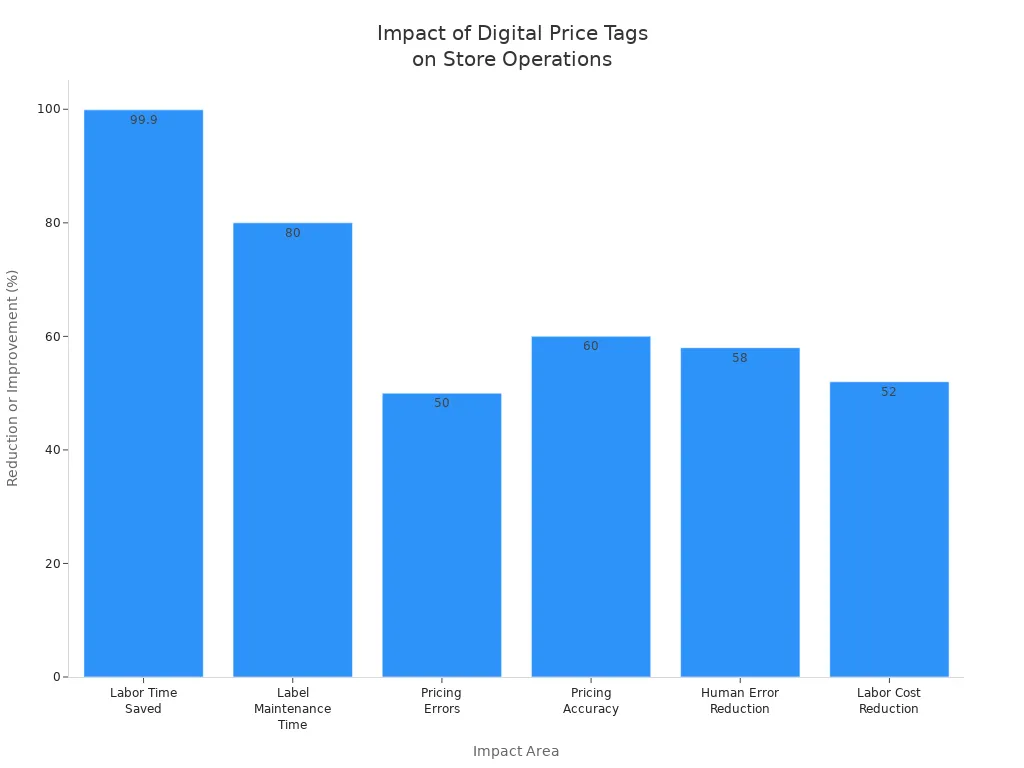
You benefit from fewer interruptions, higher pricing accuracy, and a smoother workflow. Automated pricing solutions help you focus on what matters most—delivering excellent customer service and improving retail efficiency.
Improving the Overall Shopping Experience
Shorter Wait Times at Checkout
Faster Lines and Happier Customers
You want to move through checkout lines quickly. Digital price tags help you achieve this by ensuring that prices on the shelf always match those at the register. When you shop in stores that use this technology, you notice fewer interruptions and faster transactions. Retailers like Carrefour and Tesco have reported 50% fewer pricing errors, which means you spend less time waiting for staff to resolve issues. As a result, you enjoy a smoother customer shopping experience and leave the store feeling satisfied.
- Digital price tags reduce checkout friction by eliminating the need for manual price checks.
- You see shorter lines, especially during busy hours, because transactions move faster.
Less Time Spent Resolving Issues
You no longer need to wait while staff fix price discrepancies. Real-time updates allow stores to change prices instantly, so you avoid confusion and delays. Staff can focus on helping you rather than correcting mistakes. This efficiency leads to a better customer shopping experience and encourages you to return.
Tip: When you shop in stores with digital price tags, you spend less time at the register and more time enjoying your day.
Building Trust and Transparency
Shoppers See Accurate Prices
You value price transparency when you shop. Digital price tags provide this by displaying accurate, up-to-date prices at all times. Retailers report up to a 60% increase in pricing accuracy and a 30% decrease in pricing errors. You can trust that the price you see is the price you pay, which builds confidence in your shopping choices.
Here’s how digital price tags influence your customer experience:
| Aspect of Influence | Impact on Customer Experience |
|---|---|
| Pricing Accuracy | Up to 60% increase in accuracy and 30% fewer errors, reducing frustration. |
| Checkout Experience | 50% fewer pricing errors, leading to smoother transactions. |
| Real-Time Updates | Instant price changes ensure shelf and checkout prices always match. |
| Customer Engagement | QR codes and NFC features give you instant access to promotions and product info. |
| Personalized Offers | Dynamic pricing and targeted deals encourage you to return. |
| Labor Efficiency | Staff spend more time helping you, not changing tags. |
| Sustainability | Less paper waste supports eco-friendly values. |
| Retailer Feedback | Faster market response and improved loyalty reported by major retailers. |
Fewer Surprises at Checkout
You dislike surprises at the register. Digital price tags remove this worry by keeping prices consistent from shelf to checkout. Real-time updates mean you never face unexpected charges. This reliability improves your overall customer shopping experience and strengthens your loyalty to the store.
- You feel more confident making purchases when you know prices are accurate.
- Stores that use digital price tags create a transparent environment, which helps you trust their pricing.
Note: Accurate pricing and clear information make your shopping trips more enjoyable and stress-free.
Retail Efficiency and Inventory Management
Real-Time Inventory Accuracy
Instant Stock Updates
You gain a significant advantage when your store uses digital price tags for inventory management. These tags synchronize with point-of-sale and inventory systems, providing real-time updates that keep shelf prices and stock data accurate. When an item runs low, the system sends instant alerts to staff, allowing you to restock shelves quickly and avoid out-of-stock situations. This automation reduces human error in both pricing and inventory marking by 58%, which means you can trust the information you see on the shelf.
- Digital price tags display current stock status and send alerts for low inventory.
- Integration with AI-driven analytics helps you optimize inventory levels and reduce waste.
- Staff can respond to low-stock notifications within minutes, improving operational efficiency.
You benefit from a shopping experience where products are available when you need them, and staff can focus on keeping shelves full rather than checking inventory manually.
Better Data for Reordering
Digital price tags provide better data for reordering by linking directly to store databases and inventory platforms. When stock levels fall below a set threshold, the system triggers automatic reorder alerts. This feature eliminates the need for manual stock checks and supports just-in-time inventory practices. Integration with POS and ERP systems ensures that price adjustments and order syncing happen instantly, reducing errors and paperwork.
| Benefit Aspect | Supporting Evidence |
|---|---|
| Speed of Restocking | Staff can restock shelves within five minutes after receiving real-time low-stock notifications. |
| Accuracy Improvement | Automation reduces human errors in pricing and inventory marking by 58%. |
| Pricing Accuracy | Pricing accuracy improves by 60%, supporting reliable inventory records and fewer discrepancies. |
| Labor Time and Cost Savings | Automating price updates saves up to 12 hours per week per store and reduces labor costs by 52%. |
| Automated Reordering | Systems trigger automatic reorder alerts when stock is low, eliminating manual stock checks. |
| Inventory Visibility | Real-time synchronization provides instant alerts for low or out-of-stock items, reducing stockouts. |
You see the benefits in faster restocking, fewer stockouts, and more accurate inventory records.
Cost Savings and Fewer Errors
Reduced Labor Costs
You help your store save money by using digital price tags. These systems eliminate the need for manual price tag changes, saving thousands of labor hours each year. You no longer spend time printing paper labels or updating shelves by hand. Instead, you can focus on customer service and sales, which increases overall retail efficiency.
- Digital price tags remove expenses for paper, ink, and printing equipment.
- Automation reduces labor costs by up to 80-90%.
- Routine maintenance is minimal, with battery replacement every 5-7 years.
A Walmart team lead reported that price updates that once took days now take only minutes, showing how digital price tags streamline operations.
Minimizing Pricing Mistakes
You reduce pricing mistakes by relying on real-time updates and automated workflows. Digital price tags connect directly to the store database, ensuring shelf prices always match checkout prices. This integration prevents customer disputes and compliance fines. You also enable agile, data-driven pricing strategies that respond to market changes instantly.
- Real-time synchronization with POS systems guarantees flawless price consistency.
- Automation reduces price error rates from 3-5% to less than 0.1%.
- The typical payback period for digital price tags is between 1 to 3 years, after which operational costs drop.
You support a more accurate, efficient, and cost-effective retail environment by adopting digital price tags.
Addressing Challenges with Digital Price Tags
Implementation and Training
Training Staff on New Systems
You may encounter challenges when your store adopts digital price tags. Staff often need to learn new systems and workflows. To make this transition smoother, many retailers provide user-friendly guides and instructional videos. You can also benefit from on-site or remote technical support sessions, which help you get comfortable with the technology. Pilot programs in select store areas allow you to test the system before a full rollout. This approach helps you identify and resolve issues early.
- Training often includes hands-on demonstrations and Q&A sessions.
- Clear communication and involvement of all stakeholders ease the adoption process.
- Scalable solutions ensure that as your business grows, the system adapts with you.
Retailers also address resistance to change by appointing leadership champions and involving staff at every level. This strategy helps you feel more confident and supported during the transition.
Ensuring System Reliability
You rely on digital price tags to work seamlessly every day. Technical issues can disrupt operations, so retailers focus on robust infrastructure and thorough testing. Before full deployment, you may use sample tags to test connectivity and integration with existing systems. Reliable wireless technologies, such as Bluetooth and Wi-Fi, ensure stable connections throughout the store.
Here is a summary of common technical issues and their solutions:
| Technical Issue | Description | Resolution |
|---|---|---|
| Power Infrastructure | Battery management and power outlet shortages | Scheduled battery checks; add outlets or PoE |
| Legacy Server and Gateway Hardware | Outdated hardware limits integration and scalability | Migrate to cloud servers; use API gateways |
| Wireless and Network Hardware | Slow connections and dead zones | Upgrade to Wi-Fi 6; deploy mesh networks |
| Display and Mounting Hardware | Incompatible shelves complicate installation | Use modular mounts; consult professionals |
| Integration with Retail IT Systems | Complex POS and ERP integration | Secure APIs; regular testing and monitoring |
You can minimize disruptions by following best practices for installation and ongoing maintenance.
Security and Privacy
Protecting Customer Data
You expect your data to remain safe when shopping in stores with digital price tags. Retailers address privacy concerns by enforcing strict data retention schedules and limiting data sharing with third parties. Encryption protects sensitive information from unauthorized access. You benefit when stores delete unnecessary data and avoid collecting information without your consent.
- Secure-by-design principles guide software development.
- Memory-safe programming and rigorous testing reduce vulnerabilities.
- Multi-factor authentication strengthens user access controls.
These measures help you shop with confidence, knowing your personal information stays protected.
Preventing System Tampering
You want assurance that digital price tags cannot be easily tampered with. Retailers secure external access points and enforce least privilege access controls to minimize risks. Regular software updates and security audits help prevent unauthorized entry. By avoiding dark patterns in product design, stores ensure you do not feel pressured to share more information than necessary.
- Mandated phishing-resistant authentication protects against cyber threats.
- Secure APIs and encrypted communications safeguard system integrity.
With these protections in place, you experience a safer, more transparent retail environment.
You see real benefits when stores use digital price tags. These systems eliminate manual updates, reduce pricing errors, and speed up checkout. Staff can focus on helping you, not fixing mistakes. You enjoy accurate prices, faster lines, and a more reliable shopping experience.
| Benefit | Impact for You and Retailers |
|---|---|
| Price Accuracy | Fewer disputes and smoother transactions |
| Labor Savings | More staff available for customer service |
| Customer Satisfaction | Higher trust and loyalty |
FAQ
What are digital price tags?
Digital price tags, also called Electronic Shelf Labels (ESLs), display product prices electronically. You see real-time pricing updates on shelves. Retailers control these tags from a central system, ensuring accuracy and efficiency throughout the store.
How do digital price tags speed up checkout?
You experience faster checkout because digital price tags synchronize prices instantly with the register. This eliminates manual price checks and reduces errors. You spend less time waiting in line and avoid price disputes at the register.
Are digital price tags secure?
Yes, digital price tags use encrypted communication and secure networks. You benefit from strong data protection measures. Retailers regularly update systems and monitor for threats, which helps prevent tampering or unauthorized access.
Can digital price tags display promotions or discounts?
You see promotions and discounts applied instantly on digital price tags. Retailers update offers in real time, so you never miss a deal. This feature supports dynamic pricing and helps you find the best value while shopping.
Do digital price tags help reduce store costs?
You help stores save money by using digital price tags. These systems reduce labor costs, eliminate paper waste, and minimize pricing errors. Retailers report significant savings on operational expenses after switching to digital tags.
What happens if a digital price tag stops working?
If a digital price tag fails, staff receive alerts from the central system. You can ask for assistance, and employees will resolve the issue quickly. Most systems include backup processes to ensure you always see accurate prices.
Are digital price tags environmentally friendly?
Yes, digital price tags reduce paper and ink waste. You support sustainability when stores use these systems. Most tags have long-lasting batteries, which further minimizes environmental impact.
Can you use digital price tags with self-checkout and mobile payments?
You enjoy seamless integration with self-checkout and mobile payment systems. Digital price tags support barcode, QR code, and RFID scanning. You can pay quickly using tap-and-go methods or mobile wallets, making your checkout experience even faster.