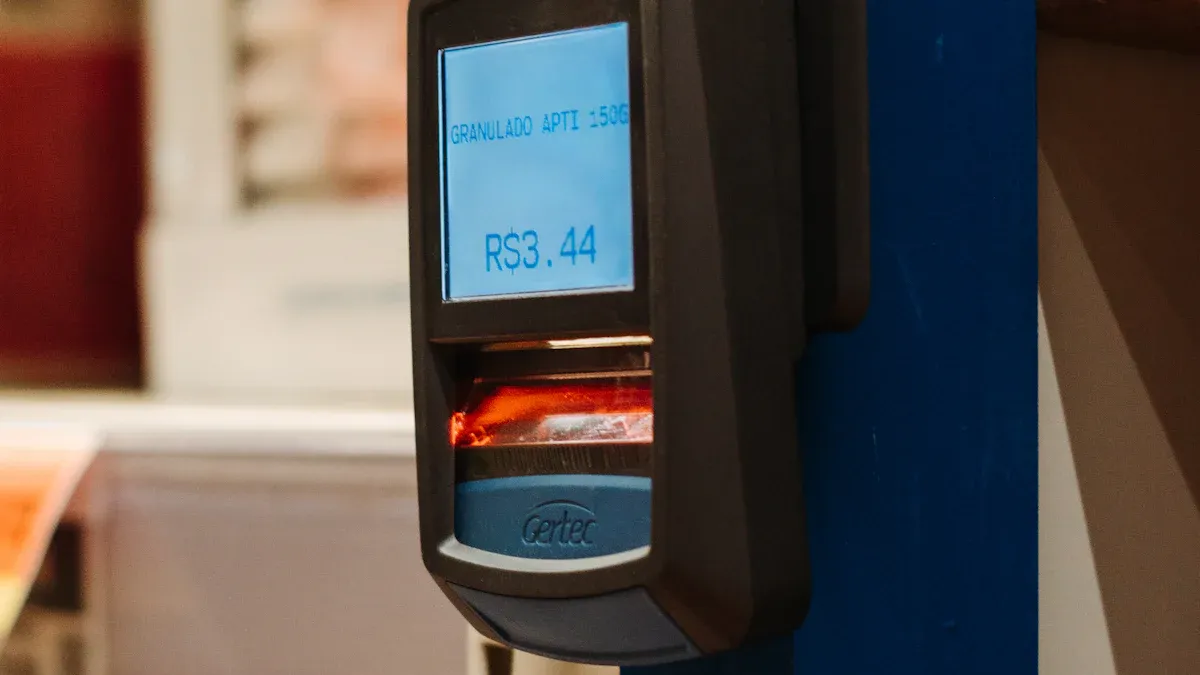
Digital price tags transform traceability by enabling real-time product tracking and precise data collection across the supply chain. Retailers leverage Electronic Shelf Labels, ESL Gateway AP, and ESL Price Tag systems to automate updates, reducing manual labor and improving accuracy. As the global digital price tags market expands, Esl Retail operations increasingly rely on rfid for instant data collection and quality assurance. The table below highlights key adoption metrics:
| Metric | Evidence |
|---|---|
| Adoption Rate | Over 68% of large retail chains use digital price tags |
| Pricing Accuracy | 60% improvement in accuracy |
| Labor Cost Reduction | 52% decrease in labor costs |
| Labor Time Saved | Up to 12 hours saved per week per store |
With rfid integration, businesses enhance data accuracy and ensure seamless traceability from origin to shelf.
Understanding Digital Price Tags and Traceability

What Are Digital Price Tags?
Electronic Shelf Price Tags Explained
Electronic shelf price tags represent a significant advancement in retail technology. These digital displays replace traditional paper tags, providing dynamic pricing and product information directly on store shelves. Retailers use electronic shelf price tags to automate price changes, display promotions, and improve inventory management. The system consists of several components that work together to deliver seamless traceability and operational efficiency.
| Component / Functionality | Description |
|---|---|
| Central Management Software | Connects with ERP, POS, or inventory systems; manages price updates and scheduling across stores and regions. |
| Communication Gateway | Transmits pricing/product info wirelessly using RF, BLE, or Wi-Fi protocols to digital labels. |
| Electronic Labels | E-paper or LCD displays showing prices, barcodes, promotions; may include QR codes, NFC, and color highlights. |
| Store Infrastructure | Integration with smart cameras, shelf sensors, and customer apps for enhanced in-store experience. |
| Real-time Wireless Updates | Enables instant price and promotion changes remotely, ensuring accuracy and speed. |
| Dynamic Pricing & Promotions | Allows retailers to adjust prices based on market conditions, inventory, and competitor pricing. |
| Inventory & Shelf Monitoring | Uses sensors and cameras to detect stock levels, product placement, and customer interactions. |
| Customer Engagement Features | Includes QR codes, NFC chips to link shoppers to product info, reviews, and promotions. |
| IoT and AI Integration | Enhances traceability and operational efficiency through smart shelf tech and analytics. |
| Future Developments | Blockchain-based labeling for product traceability and authentication. |
Core Technologies: NFC, RFID, QR Codes, and Barcodes
Electronic shelf price tags rely on several core technologies to deliver traceability and accuracy. RFID stands out as a key enabler, allowing retailers to track products from manufacturing to the sales floor. NFC and QR codes provide additional layers of product identification and customer engagement. Barcodes remain essential for quick scanning and inventory checks. RFID technology, in particular, supports end-to-end tracking by assigning unique digital identities to each item. This approach ensures compliance with global standards and enhances supply chain visibility.
How Digital Price Tags Enable Traceability
Real-Time Data Synchronization
Electronic shelf price tags synchronize instantly with centralized inventory and pricing systems. This real-time connection ensures that every price change, promotion, or stock update appears on the shelf without delay. RFID integration allows for continuous monitoring of stock levels and product locations. The system reduces manual errors and increases accuracy, supporting dynamic pricing strategies that respond to market demand and inventory status.
Tip: Real-time synchronization not only improves operational efficiency but also boosts customer confidence by ensuring accurate and up-to-date information on every shelf.
Unique Product Identification and Tracking
RFID technology plays a crucial role in traceability by assigning unique identifiers to each product. Electronic shelf price tags use these identifiers to enable precise tracking throughout the supply chain. Retailers can monitor products from the point of manufacture to the store shelf, ensuring transparency and accountability at every stage. The use of GS1 standards and EPC codes further strengthens traceability, making it possible to track both in-house and third-party products. Blockchain integration adds another layer of security, creating tamper-evident records that support authenticity verification and regulatory compliance.
- Digital price tags create unique digital identities for products, enabling tracking throughout the supply chain.
- RFID, QR codes, and IoT sensors collect granular data for real-time analytics.
- Blockchain ensures secure, transparent, and tamper-evident recording of product provenance.
- Smart contracts and predictive logistics optimize operations and reduce errors.
Retailers who implement electronic shelf price tags with RFID technology gain a powerful tool for traceability, accuracy, and operational excellence.
Key Features of Electronic Shelf Price Tags for Traceability
Real-Time Information Display
Instant Updates from Centralized Databases
Electronic shelf price tags deliver instant updates by connecting directly to centralized databases. This system ensures that every product on the shelf displays the most current information, including pricing, stock levels, and product origins. Retailers benefit from cloud-based control, which distributes uniform and accurate data across all store locations. This approach reduces manual errors and supports compliance with labeling and price accuracy regulations.
- Product details such as origin, expiry dates, and consignment status appear in real-time.
- Standardized information across stores improves traceability and operational efficiency.
- Automated price management enables quick adjustments to reflect market changes or inventory needs.
Sales managers and consumers both rely on dependable, secure, and current product information. The ability to display nutritional facts, stock levels, and quality certifications directly on the shelf enhances transparency and supports quality control efforts.
Wireless Communication and IoT Integration
Wireless communication forms the backbone of electronic shelf price tags. These systems use frequency hopping and power-efficient Bluetooth LE technology to ensure reliable data transmission and long battery life. IoT integration allows for seamless connectivity between shelf tags, inventory systems, and quality control platforms.
- RFID technology enables unique product identification and continuous tracking from manufacturing to the sales floor.
- NFC and QR codes provide advanced shopper connectivity and support mobile payments.
- Temperature monitoring and battery status alerts guarantee uninterrupted operation and accurate environmental tracking.
Retailers can display multiple pages of product information, manage digital shelf-life with automatic countdowns, and apply discounts based on shelf-life data. This level of automation reduces errors and supports dynamic pricing strategies.
Integration with Quality Control Systems
Linking to Inspection and Certification Records
Electronic shelf price tags integrate with quality control systems to link products directly to inspection and certification records. This connection provides complete traceability, allowing retailers to display quality inspection results, certifications, and compliance documents at the point of sale.
- QR codes on shelf tags connect shoppers to detailed product histories and quality documentation.
- RFID technology ensures that each item’s inspection status remains up-to-date throughout the supply chain.
- Integration with manufacturing databases supports end-to-end quality control and traceability.
This feature helps retailers meet regulatory requirements and assures customers of product quality and authenticity.
Automated Alerts for Quality Issues
Automated alerts play a vital role in maintaining high standards of quality control. Electronic shelf price tags can trigger notifications for low stock, approaching expiration dates, or deviations in storage conditions.
- Inventory alerts help staff respond quickly to potential quality issues.
- Digital shelf-life management supports proactive discounting and waste reduction.
- RFID and IoT sensors enable real-time monitoring and immediate action when quality thresholds are breached.
These capabilities streamline quality control processes and reduce the risk of non-compliance or product recalls. Retailers gain a robust toolset for managing quality, inventory, and traceability with efficiency and accuracy.
Benefits of Digital Price Tags in Quality Traceability
Operational Efficiency and Cost Savings
Streamlined Inventory and Stock Management
Retailers achieve remarkable improvements in inventory control capabilities by deploying rfid-enabled digital price tags. These systems automate stock monitoring, allowing staff to track product movement in real time. RFID sensors capture data at every stage, from warehouse to shelf, ensuring accurate stock counts and reducing the risk of out-of-stock situations. Inventory automation eliminates the need for manual checks, which often consume significant labor hours and introduce errors. As a result, stores maintain optimal stock levels, respond quickly to demand changes, and minimize waste.
Note: Automated inventory management not only saves time but also supports traceability by providing a clear record of product movement and status.
Reduced Labor and Error-Related Costs
Digital price tags powered by rfid technology deliver substantial reductions in labor and error-related expenses. Manual price updates require extensive staff hours and often lead to mistakes. By automating this process, retailers cut labor costs by up to 90%. For example, Maurer’s Market reduced the time to update 1,400 price tags from four days to less than ten minutes. This efficiency translates into a projected return on investment within 1.5 to 2.5 years, driven by savings in both labor and materials.
The following table highlights key metrics from leading retailers:
| Metric / Aspect | Evidence / Results |
|---|---|
| Labor Cost Reduction | Up to 90% reduction in labor hours for price updates (Walmart); Maurer’s Market cut update time from 4 days to under 10 minutes |
| Pricing Error Reduction | Up to 98% reduction in pricing errors due to real-time POS synchronization |
| ROI / Payback Period | Walmart: 1 to 3.5 years; Maurer’s Market: 1.5 to 2.5 years; Houchens Food Group: ~3.5 years |
| Time Savings | Price updates reduced from days to minutes, enabling faster promotional changes |
| Material Cost Savings | Elimination of paper and ink expenses by removing manual price tag printing |
| Operational Efficiency | Integration with POS and inventory systems improves accuracy and reduces manual labor |
Large retailers have reported that full-store repricing, which once took up to two weeks, now takes only five minutes. The elimination of paper and ink costs further boosts savings. These improvements in operational efficiency and cost control make digital price tags a strategic investment for any business focused on quality and traceability.
Enhanced Compliance and Risk Management
Simplified Regulatory Reporting
RFID-based digital price tags simplify compliance with regulatory requirements. These systems automatically record product data, including batch numbers, expiration dates, and quality certifications. When auditors or regulators request information, staff can retrieve accurate records instantly. Automated data capture reduces the risk of missing or incorrect documentation, supporting seamless traceability throughout the supply chain.
- Real-time data logs support rapid response to regulatory inquiries.
- Automated recordkeeping ensures that all quality-related information remains up-to-date and accessible.
Improved Audit Readiness
Digital price tags enhance audit readiness by maintaining a transparent and tamper-evident record of product movement and quality status. RFID technology tracks each item’s journey, from production to point of sale. This continuous monitoring provides a reliable audit trail, which is essential for demonstrating compliance and managing risk.
Tip: Consistent use of rfid and automated data collection tools helps businesses prepare for both scheduled and surprise audits, reducing stress and minimizing disruptions.
By integrating digital price tags with inventory and quality systems, retailers gain a robust framework for managing compliance, reducing risk, and ensuring the highest standards of product quality and traceability.
Improving Customer Experience with Digital Price Tags
Transparent Product Information and Traceability
Access to Quality Certifications and Product Origins
Digital price tags provide shoppers with immediate access to detailed product information, including quality certifications and origins. By connecting wirelessly to the store’s database, these tags display accurate and consistent pricing, eliminating errors common with manual tags. Shoppers can scan QR codes or use NFC features to view certifications, production details, and even sustainability credentials. This level of transparency supports consumer product traceability and meets growing demands for ethical sourcing.
Supply chain traceability allows companies to share verifiable information about product origins and production practices. When brands disclose sourcing, manufacturing, and distribution details, they build credibility and trust. For example, a shopper searching for ethically sourced goods can verify provenance through traceability systems, which increases satisfaction and confidence in product quality. Brands that openly share their sustainable practices stand out and appeal to conscious consumers.
Real-Time Updates for Shoppers
- Digital price tags display real-time promotions, dynamic pricing, and product details, ensuring shoppers always see the latest information.
- RFID technology enables instant updates, so prices shown on tags match those at checkout, reducing frustration and building trust.
- Automation of price changes frees staff to assist customers, improving the clarity and availability of product information.
- Agile pricing allows for immediate adjustments during promotions or seasonal events, visible directly to shoppers.
A mixed-methods study with 300 respondents found that transparent traceability information, delivered through blockchain-enabled QR code labels, significantly enhances customer trust and satisfaction. Consumers who access detailed product data—such as origin, manufacturing processes, and previous buyer reviews—experience reduced uncertainty and greater confidence in product quality. The transparent and immutable nature of blockchain data further strengthens trust, confirming that traceability labels positively impact brand trust and perceived product quality.
Building Trust and Brand Loyalty
Empowering Informed Purchasing Decisions
Digital price tags equipped with rfid, NFC, and QR codes empower shoppers to make informed decisions. Leading brands like Diageo, Unilever, and L’Oréal use these technologies to provide authenticity verification, sustainability information, and personalized content. These features help combat counterfeiting and enhance consumer engagement. Smart packaging and rfid integration allow brands to gather consumer insights and improve supply chain transparency, which strengthens brand reputation and emotional connection.
A global survey of 307 supply chain professionals reveals that over 77% believe traceability improves brand loyalty by enhancing product management and customer satisfaction. More than 60% plan to use traceability data to improve customer experience, while 76% emphasize its role in preventing counterfeiting. Full product visibility and rapid recalls further protect brand reputation, contributing to stronger consumer loyalty.
Demonstrating Commitment to Quality
| Key Factor | Description |
|---|---|
| Traceability Label Trust | Trust in digital labels (e.g., blockchain-enabled QR codes) significantly increases likelihood of purchase. |
| Consumer Preferences | Personal preferences and habits influence purchasing behavior, especially in household contexts. |
| Family Needs and Roles | Decision-making is affected by family division of labor and needs of special groups (elderly, children). |
| Household Income | Income level fundamentally affects consumption behavior and trust in traceable products. |
| Product Quality and Safety | Perceptions of quality and safety linked to trust in traceability labels, alleviating consumer uncertainty. |
| Social Integrity and Attractiveness | High trust in labels is attractive amid low social integrity, restoring consumer confidence. |
| Reduction of Consumer Uncertainty | Traceability systems provide transparent information from farm to fork, reducing uncertainty and encouraging purchase. |
Brands that use rfid-enabled digital price tags demonstrate a strong commitment to quality and transparency. Research shows that blockchain-based traceability enhances consumer trust by ensuring product authenticity and data integrity. This trust in technology transfers to trust in the brand, increasing repurchase intentions and recommendations. Consumers perceive benefits such as improved product quality and reduced risk of falsification, which strengthens their emotional commitment to the brand.
Note: Trust in brands using rfid and digital price tags for traceability evolves with consumer experience. These digital mechanisms serve as trust-building tools, addressing consumer uncertainty and supporting long-term loyalty.
Integration of Digital Price Tags with Inventory and Quality Systems
Connecting to ERP, WMS, and Quality Databases
Automated Stock Level Adjustments
Digital price tags equipped with rfid technology connect directly to enterprise resource planning (ERP), warehouse management systems (WMS), and quality databases. This integration enables automated stock level adjustments as products move through the supply chain. When a product leaves the shelf, rfid sensors instantly update inventory records, providing a real-time view of stock across all locations. This item-level visibility helps manufacturing teams avoid shortages and overstock situations. Automated workflows reduce manual data collection, minimize errors, and accelerate response times.
- Integration minimizes duplication and creates a unified view of production and inventory data.
- Real-time visibility into materials and finished goods improves supply chain coordination and reduces bottlenecks.
- Optimized inventory management reduces waste and improves cash flow.
Automated stock adjustments ensure that every rfid-tagged item is tracked accurately from manufacturing to the sales floor, supporting efficient resource allocation.
Real-Time Quality Status Updates
Digital price tags also deliver real-time quality status updates by linking with quality control systems. rfid sensors capture data at each stage of manufacturing, allowing teams to monitor product quality as it moves through production and distribution. Quality control teams receive instant alerts if an item fails inspection or requires special handling. This immediate feedback supports swift decision-making and reduces the risk of non-compliance.
- Traceability systems ensure consistent product quality and regulatory compliance.
- Secure and accurate data management is critical for effective traceability adoption.
- Cross-functional collaboration between food safety and supply chain teams aligns technology investments with shared goals.
Data Analytics and Reporting for Traceability
Insights for Continuous Improvement
Data analytics from digital price tags transform quality control by enabling real-time monitoring and rapid identification of issues. rfid-based data collection provides detailed insights into process performance and quality metrics. Manufacturing teams use these insights to drive continuous improvement, making incremental changes that enhance operational efficiency.
- Data analytics integrates large datasets and statistical analysis to enable data-driven decisions.
- Real-time, high-quality data supports ongoing enhancements in quality control and inventory management.
- Retailers use analytics to optimize pricing and inventory, demonstrating the value of real-time data collection.
A culture of continuous improvement thrives when teams have access to accurate, actionable data from rfid-enabled systems.
Predictive Quality Management
Predictive analytics leverage rfid data to forecast potential quality failures before they occur. By analyzing trends in data collection, manufacturing teams can take preventive actions, reducing waste and rework. Advanced analytics automate reporting, lower operational costs, and maintain product excellence. Quality control teams benefit from early warnings, allowing them to address issues proactively.
- Predictive analytics help forecast trends, mitigate risks, and improve profitability.
- Strategic use of data analytics guides incremental improvements and better resource allocation.
- Automation and advanced analytics reduce manual efforts while supporting quality management goals.
Digital price tags, powered by rfid and integrated with inventory and quality systems, provide a robust foundation for traceability, operational efficiency, and continuous quality improvement.
Real-World Applications of Electronic Shelf Price Tags in Traceability

Retail Industry Success Stories
Improved Traceability in Grocery and Food Chains
Grocery retailers have adopted electronic shelf price tags to achieve real-time accuracy and transparency in their operations. These systems allow instant updates of prices and promotions across all shelves from a centralized platform. Automated price changes reduce manual errors, which previously reached up to 3%, to nearly zero. Staff no longer spend hours replacing paper labels, saving up to 50 hours each week. This efficiency frees employees to focus on customer service and inventory management. Integration with point-of-sale systems ensures that shelf prices always match backend data, supporting traceability throughout the supply chain.
| Application Aspect | Description | Impact on Retail Traceability and Operations |
|---|---|---|
| Real-time Price Updates | Instant updates of prices and promotions across all ESLs from a centralized system | Enables accurate pricing and dynamic promotions, improving traceability of pricing changes |
| Error Reduction | Automated price changes reduce manual errors from 3% to 0.01% | Enhances pricing accuracy and reliability, critical for traceability and compliance |
| Labor Savings | Eliminates manual label changes, saving up to 50 staff hours weekly | Frees staff for customer service and reduces human error in inventory management |
| Operational Cost Savings | No need for printing or replacing paper labels | Reduces costs and environmental impact, streamlining store operations |
| Integration with POS Systems | Synchronization with POS and inventory systems for real-time data accuracy | Supports inventory traceability and compliance by ensuring shelf prices match backend data |
| Dynamic QR Code Integration | Use of QR codes on ESLs for promotions and product information | Enhances product traceability and customer engagement through scan-and-go features |
Enhanced Recall Management in Electronics Retail
Electronics retailers use rfid-enabled electronic shelf price tags to strengthen recall management. These tags provide unique identifiers for each product, allowing precise tracking from warehouse to sales floor. When a recall occurs, staff can quickly identify affected items and remove them from shelves, minimizing risk and ensuring compliance. Dynamic QR codes on shelf tags offer customers instant access to product details and recall information, improving transparency and trust.
Manufacturing and Logistics Use Cases
Streamlined Quality Audits in Factories
In manufacturing, rfid technology delivers traceability throughout manufacturing by enabling real-time, item-level tracking of parts and finished goods. Factories gain manufacturing visibility as rfid tags store and update data during production and shipping. This approach reduces labor, minimizes waste, and supports regulatory compliance. For example, one manufacturer achieved a 100% reduction in rework and a 50% decrease in quality control workload after implementing rfid-based traceability. Receiving times dropped by 95%, and shipment accuracy reached 100%. These results highlight the value of electronic shelf price tags and rfid for quality audits and operational excellence.
End-to-End Tracking in Distribution Centers
Distribution centers rely on rfid, QR codes, and NFC tags to enable end-to-end traceability. These technologies track products from manufacturing through distribution to the end customer. They support demand forecasting and inventory management by providing granular data on product movement and stock levels. Traceability solutions also facilitate efficient recall management by allowing identification and tracking of recalled or defective products at the unit level. Serialization and unique identifiers help meet regulatory requirements in industries such as pharmaceuticals, medical devices, tobacco, and food. These systems contribute to sustainability initiatives, including recycling and carbon footprint tracking, while enhancing consumer engagement by sharing product origin and ingredient information.
Tip: Companies that invest in rfid and electronic shelf price tags gain a competitive edge through improved tracking, compliance, and customer trust.
Overcoming Challenges in Digital Price Tag Implementation
Integration with Legacy Systems and Staff Training
Addressing Compatibility Issues
Businesses often encounter significant hurdles when integrating digital price tags with existing legacy systems. Many legacy platforms lack cloud readiness, which complicates the process of connecting new rfid-based solutions. Integration frequently requires custom coding and middleware, increasing both cost and implementation time. Legacy systems tend to be monolithic and homegrown, making modernization complex and risky. Data migration presents additional challenges, such as cleansing, mapping, and validation, to prevent data corruption. Companies must also allocate skilled employees or hire external consultants, which raises expenses. During migration, the risk of downtime can disrupt core business functions. Security vulnerabilities become more pronounced, as older systems lack modern protections against cyberattacks. Incompatibility with contemporary applications can result in data silos and inefficiencies, while technical debt from short-term fixes reduces agility and scalability.
Tip: A phased integration approach, combined with robust middleware, can help minimize disruption and ensure a smoother transition to rfid-enabled digital price tag systems.
Change Management Strategies
Successful adoption of digital price tags depends on effective change management and comprehensive staff training. Organizations should use digital tools like Learning Management Systems (LMS) and employee apps to manage and track training progress. Digital forms and checklists reduce paperwork and automate compliance tracking. Automated reminders and notifications help employees and managers complete mandatory training before expiration. Centralizing all training documentation in a single platform ensures quick access and review. Training materials, tests, and evaluations delivered through the LMS streamline learning and support accountability. Including line managers in reminder systems reinforces responsibility for timely completion. Systematic procedures for compliance record keeping, such as tracking employee IDs and certification requirements, further support regulatory adherence. Both employers and employees share responsibility for timely training completion, which helps avoid work stoppages.
A comprehensive traceability training program should educate all staff levels on rfid principles and implementation. Cross-functional training ensures consistent understanding and execution of traceability requirements throughout the organization.
Ensuring Data Security and Privacy in Traceability
Protecting Sensitive Product Information
Digital price tag systems must prioritize the protection of sensitive product information. Authentication protocols restrict access, allowing only authorized personnel to update records. Encryption safeguards data transmission between servers, shelf labels, and point-of-sale terminals, preventing unauthorized interception or tampering. Immutable audit trails record every price update with timestamps and user identification, supporting accountability and traceability. Regular compliance audits and system reviews help identify risks and refine security policies. Ongoing staff training ensures employees understand and comply with data protection requirements. Some retailers implement advanced technologies, such as blockchain, to enhance transparency and data integrity in rfid-based traceability systems.
Compliance with Data Regulations
Retailers must demonstrate due diligence in complying with data protection regulations when using rfid-enabled digital price tags. Regular audits and system reviews help maintain compliance and identify potential vulnerabilities. Staff training remains essential for understanding regulatory requirements and best practices. By combining authentication, encryption, and immutable audit trails, organizations can meet legal obligations and protect consumer trust. These measures ensure that rfid-driven traceability solutions remain secure, transparent, and compliant with evolving data protection standards.
Digital price tags drive a new era of quality traceability by automating data collection and ensuring real-time accuracy across the supply chain. Companies experience significant benefits:
- Real-time updates and flexibility improve operational agility and accuracy.
- Interactive features such as QR codes and NFC enhance customer engagement and transparency.
- Smart sensor labels support sustainability, cost efficiency, and compliance with safety standards.
Industry experts recommend integrating AI, RFID, and advanced barcodes to further boost traceability and prepare for evolving regulations. Adopting digital price tags positions businesses for greater efficiency, consumer trust, and a lasting competitive edge.
FAQ
What is the main advantage of digital price tags for traceability?
Digital price tags provide real-time product tracking and instant data updates. This technology reduces manual errors and ensures accurate information throughout the supply chain.
How do digital price tags improve inventory management?
RFID-enabled tags automate stock monitoring. Staff can track product movement instantly, which helps maintain optimal inventory levels and reduces out-of-stock situations.
Are digital price tags secure for sensitive product data?
Digital price tag systems use encryption and authentication protocols. Only authorized personnel can access or update records, which protects sensitive product information.
Can digital price tags integrate with existing business systems?
Most digital price tag solutions connect with ERP, WMS, and quality databases. Integration may require middleware or custom coding, especially with legacy systems.
How do digital price tags support regulatory compliance?
Digital price tags automatically record batch numbers, expiration dates, and certifications. This data helps businesses respond quickly to audits and regulatory inquiries.
What technologies power digital price tags?
| Technology | Function |
|---|---|
| RFID | Product tracking |
| NFC | Customer engagement |
| QR Codes | Information access |
| Barcodes | Inventory checks |
Do digital price tags require special staff training?
Staff need training on RFID principles and system operation. Many companies use digital tools, such as Learning Management Systems, to streamline and track training progress.
How do digital price tags enhance customer experience?
Shoppers access real-time product details, certifications, and origins by scanning QR codes or using NFC features. This transparency builds trust and supports informed purchasing decisions.