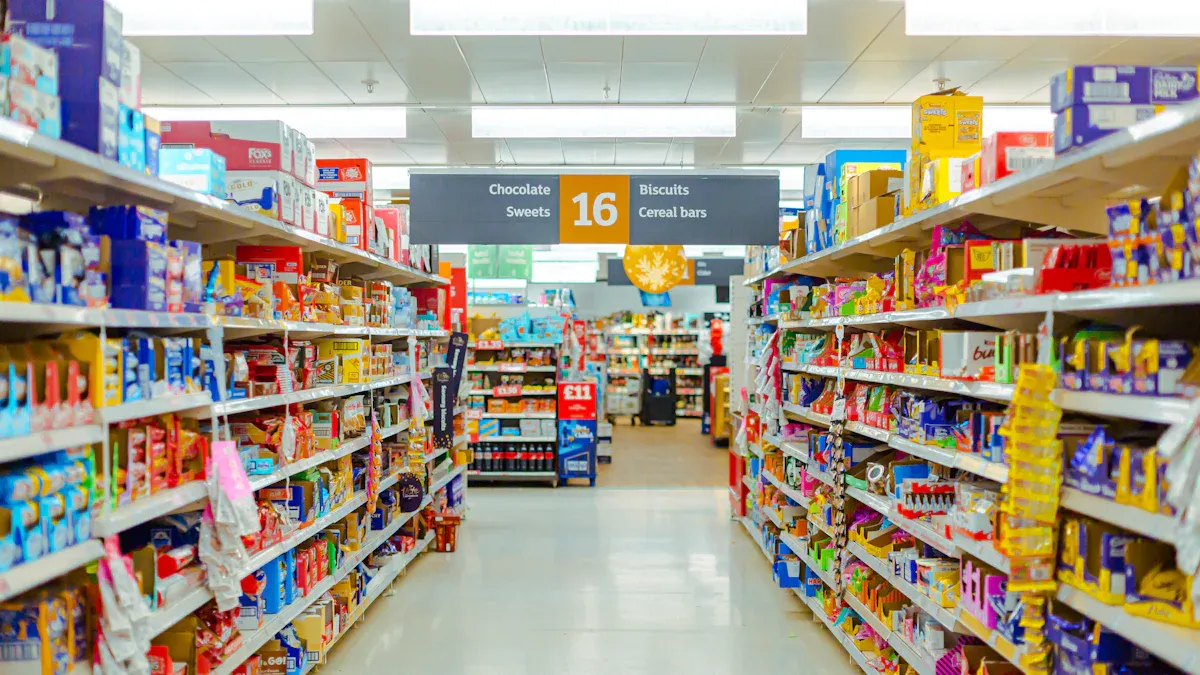
Four providers dominate the American market for electronic shelf labels. SES-imagotag (VusionGroup), Pricer, SoluM, and Zkong lead the Esl Retail sector with their innovative solutions. These brands offer advanced technology, from the central ESL Gateway AP to each individual ESL Price Tag.
Their market leadership stems from robust feature sets and established US-based support networks. This combination ensures reliable and efficient service for American businesses.
Detailed Review of Leading US ESL Brands
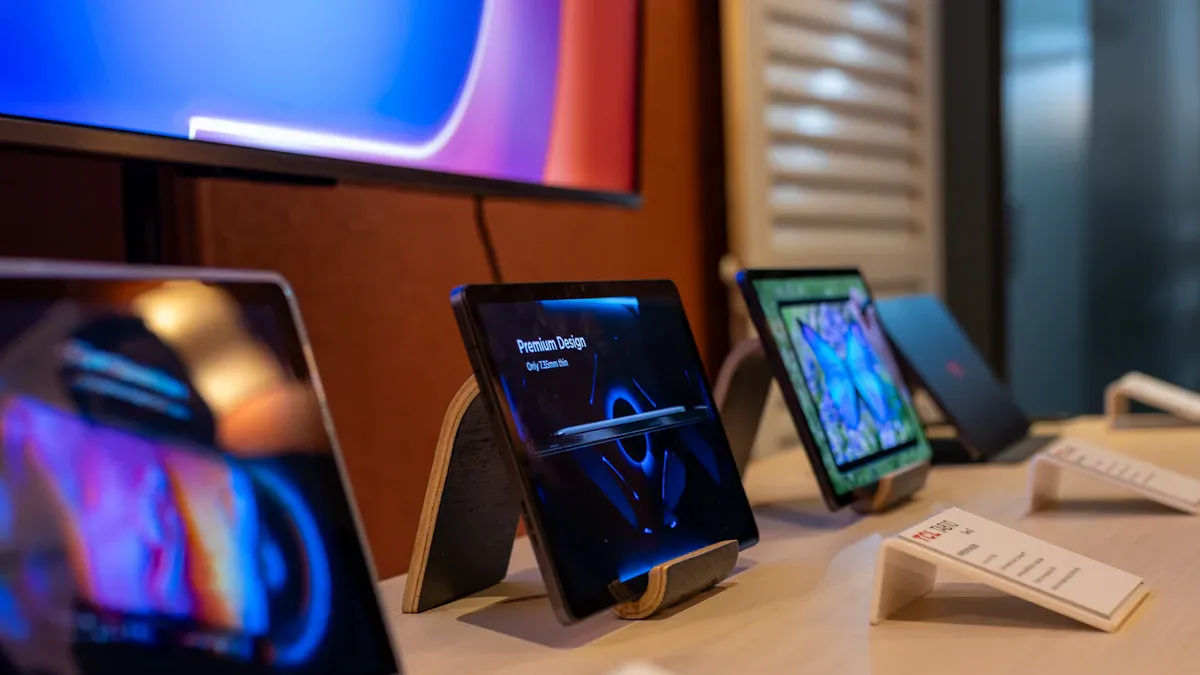
Choosing the right ESL provider requires a close look at what each brand offers. The top contenders in the American market—SES-imagotag, Pricer, and SoluM—each bring unique strengths to the retail environment.
SES-imagotag (VusionGroup)
SES-imagotag stands as a global leader in digital retail solutions, and its VUSION platform is a dominant force in the United States. The company solidifies its market position through major strategic partnerships. For instance, SES-imagotag announced an agreement with Walmart to deploy its VUSION technology platform across hundreds of its U.S. stores, demonstrating its capability to handle enterprise-scale projects.
The VUSION hardware portfolio is extensive, offering specialized labels for nearly any retail scenario. This allows businesses to select the perfect tag for specific departments or environmental conditions.
- V100 Series: An accessible and rugged solution ideal for automating prices and promotions across all retail verticals.
- V300 Series: This series offers a wide range of sizes, up to 15 years of battery life, NFC, and 7-color LEDs. It includes specialized versions like the 4-color BWRY display, a waterproof model for humid areas, and a freezer-proof tag that operates in temperatures as low as -25°C.
- V700 Series: Features a full-color display for high-impact marketing, enabling dynamic branding and rich promotional content right at the shelf edge.
- VSway Series: A unique tag designed to attach directly to products, providing real-time pricing updates without needing a traditional shelf.
SES-imagotag provides a comprehensive, data-centric ecosystem that goes beyond simple price changes, making it a top choice for large retailers focused on store-wide automation and analytics.
Pricer
Pricer differentiates itself with its reliance on optical infrared (IR) communication. This technology creates a secure, high-speed, and reliable connection between the system and the labels. The result is near-instantaneous updates, a critical feature for retailers with frequent price changes, such as grocery stores managing dynamic promotions.
Pricer’s system supports advanced operational functions. Its two-way communication confirms that each label has received its update, ensuring price accuracy across the store. The platform also enhances store associate efficiency with features like:
- Task Management: Guiding employees to specific locations for restocking or order picking.
- Instant Flash: Using the label’s LED to draw attention to promotions or identify specific items.
💡 Professional Tip: Pricer’s focus on speed and reliability makes it an exceptional choice for high-volume, fast-paced retail environments where operational efficiency is paramount. Their electronic shelf labels are engineered for performance under pressure.
SoluM
Originally a division of Samsung, SoluM has emerged as a major innovator in the ESL market. The company is known for its Newton series, which balances sleek, modern aesthetics with powerful performance and long-term reliability.
SoluM’s Newton labels are designed to be ultra-compact and lightweight, keeping the customer’s focus on the product, not the hardware. They offer a high degree of customization to match store branding.
| Feature | Detail |
|---|---|
| Design | Sleek, lightweight, and customizable to blend with store aesthetics. |
| Interactive Tools | Programmable button and a 7-color LED for associate or customer engagement. |
| Display Technology | Full Graphic E-ink Display with a nearly 180° viewing angle. |
| Battery Life | Up to 10 years, with user-replaceable batteries. |
| Connectivity | 2.4 GHz wireless frequency with over-the-air firmware updates. |
Beyond the hardware, SoluM provides a robust lineup of electronic shelf labels tailored for different needs and budgets:
- Core & LITE: Cost-efficient solutions for retailers beginning their digital transformation.
- Pro & X: High-performance options built for durability and advanced functionality.
- Color & TOUCH: Vivid, interactive displays designed for high-impact marketing and enhanced customer experiences.
A key advantage is SoluM’s focus on a low total cost of ownership. The Newton series boasts an impressive battery life of up to 10 years. Furthermore, the batteries are user-replaceable, and a blinking LED on each tag provides a clear visual cue for low-battery status, simplifying maintenance for store staff.
Zkong
Zkong distinguishes itself in the American market with its fundamentally cloud-native architecture. This modern approach prioritizes scalability, flexibility, and seamless integration, making it an attractive option for businesses planning for future growth. The entire system is built on a global wide area network, ensuring compatibility across major operating systems like Windows, Mac OS, Android, and iOS.
The core of Zkong’s offering is its powerful cloud platform. This system is engineered for massive scale, capable of processing billions of data points and supporting millions of electronic shelf labels within a single network. Businesses gain significant operational freedom through flexible deployment models, including SaaS public cloud, private cloud, and local on-premise installations. For security, the platform integrates professional AES 128-bit encryption and an automatic threat detection mechanism to protect sensitive pricing and operational data.
Platform Power: Zkong’s open architecture provides extensive customization and integration possibilities. With over 200 available API interfaces, it allows for deep connections with existing ERP systems and supports secondary development for new software features or custom apps.
Zkong’s management system provides a comprehensive suite of tools to streamline store operations from a central dashboard. Key capabilities include:
- Shop Management: Handles essential functions like data interfacing with ERPs, managing staff accounts and permissions, and executing marketing campaigns.
- Facilities Management: Oversees hardware performance, including equipment scheduling, task management for associates, and ensuring data security.
- Tools Management: Offers practical utilities such as a template designer for label layouts, system monitoring with alerts, and detailed journal management for tracking changes.
- Application Solutions: Unlocks advanced data-driven strategies, including smart picking optimization, passenger flow analysis, and real-time inventory monitoring.
This cloud-centric model makes Zkong a highly adaptable solution for retailers who value remote management, rapid scalability, and deep integration with their existing technology stack.
How to Choose the Right Electronic Shelf Labels
Selecting the ideal ESL system requires careful evaluation of your store’s operational needs and technical infrastructure. Key decision points include the communication protocol, software deployment model, and long-term maintenance demands.
Communication Technology: RF vs. IR
The communication method between the central system and the labels is a foundational choice. Most providers use Radio Frequency (RF), which operates on the 2.4 GHz band. RF offers excellent flexibility and coverage. However, some providers, like Pricer, champion Infrared (IR) technology for its unique advantages.
IR communication offers several benefits for specific retail environments:
- High Speed and Reliability: IR is not affected by Wi-Fi or Bluetooth interference. This allows for near-instantaneous price updates, which is critical for fast-paced grocery stores.
- Enhanced Security: IR signals cannot pass through walls. This physical limitation prevents external hacking attempts and protects sensitive pricing data.
- Low Power Consumption: The technology is highly efficient, contributing to a long service life for the labels.
However, IR systems require a direct line of sight between the transmitter and the label. Hard objects can block the signal, and its range is shorter than RF. Businesses must weigh the speed and security of IR against the installation flexibility of RF.
Software Platform: Cloud vs. On-Premise
Your ESL software platform can be hosted in the cloud or on your own local servers. A cloud-native platform offers immense scalability and accessibility. Retailers can manage their entire network from anywhere with an internet connection. While data security is a consideration, leading cloud providers use robust security protocols and offer private cloud options for enhanced control.
An on-premise solution gives a business complete control over its data but requires a significant investment in IT infrastructure. A typical deployment demands:
- A dedicated, secure server room with active cooling and a backup power supply (UPS).
- Server-grade hardware, including multi-core processors (Intel Xeon or AMD EPYC), at least 32GB of RAM, and fast SSD storage.
- Specific server software, such as Windows Server, Microsoft IIS, and a full version of SQL Server.
This option is best for large enterprises with strict data governance policies and the resources to manage the hardware.
Battery Life and Maintenance Needs
The battery life of Electronic shelf labels directly impacts the total cost of ownership and maintenance workload. Modern ESLs are highly efficient. Battery longevity typically ranges from 5 to 7 years. Some advanced models from top brands can last 10 or even 15 years, though this often depends on the frequency of updates. A label updated twice daily will last much longer than one updated every hour. Many systems also feature user-replaceable batteries and low-battery indicators to simplify maintenance for store associates.
Total Cost of Ownership and ROI
Calculating the total cost of ownership (TCO) goes beyond the initial hardware purchase. It includes installation, software licensing, and ongoing maintenance. The price per label varies significantly based on features and size.
- Basic Labels: Small, simple displays (around 2 inches) typically cost between $5 and $10.
- Advanced Labels: Models with features like NFC, multi-color LEDs, or freezer-proof capabilities can range from $8 to over $20.
- Large Promotional Displays: Full-color, graphic-capable labels for endcaps or special promotions can exceed $100 per unit.
Despite the upfront investment, electronic shelf labels deliver a strong return on investment (ROI). The savings come from reduced labor costs, elimination of paper and ink, and prevention of pricing errors.
Industry analysis from firms like Mordor Intelligence shows that large retail chains often achieve a full payback on their ESL investment within 18 to 24 months. US-specific market reports further confirm the cost-efficiency and technological drivers supporting this rapid adoption.
US-Based Support and Service
Reliable, accessible support is crucial for maintaining store operations. A provider with a strong American presence offers significant advantages, including faster response times, on-site service availability, and a deeper understanding of the US retail landscape. Top-tier brands demonstrate their commitment to the American market by establishing dedicated offices and support teams within the country. For example, SoluM America Inc. operates from its headquarters in Ridgefield Park, New Jersey, ensuring direct support for its US clients. Choosing a partner with a domestic footprint minimizes downtime and simplifies logistics for any service needs.
Beyond the Big Four: Other Notable ESL Providers
While the top four providers command significant market share, other innovative companies offer compelling electronic shelf label solutions for American businesses. These providers often specialize in particular technologies or serve specific market niches.
Displaydata
Displaydata carves out a strong position in the market with its visually engaging and feature-rich electronic shelf labels. The company targets a wide range of US retail sectors, including grocery, consumer electronics, DIY, and convenience stores. Its product lineup is centered on two primary series, Chroma and Aura, which are managed through the Dynamic Central enterprise software suite.
- Chroma Series: These labels feature a three-color (black, white, red) electrophoretic display. They provide clear, engaging visuals and are available in sizes from 1.6 to 12.2 inches.
- Aura Series: This series uses Bluetooth Low Energy (BLE) and includes built-in beacon technology. This feature enables retailers to send personalized messages directly to shoppers’ mobile devices, creating interactive in-store experiences.
Both series offer a nearly 180-degree viewing angle and feature replaceable batteries, simplifying long-term maintenance for store staff.
Samsung
Samsung plays a crucial role in the ESL ecosystem, primarily as a provider of core technology and integrated solutions. The company engineers high-quality e-ink displays and advanced wireless communication components that power many modern electronic shelf labels. While SoluM now operates independently, its origins within Samsung are evident in the technology used.
Samsung’s solutions focus on seamless integration with Point of Sale (POS) systems and cloud-based platforms for real-time price synchronization. Their technology enables advanced features like the LED blinking on SoluM labels, which helps associates quickly locate items for order picking in warehouses and on the sales floor. This contribution makes Samsung a key technology partner for many ESL deployments.
Diebold Nixdorf
Diebold Nixdorf is a global leader in retail and banking technology, offering electronic shelf labels as part of a broader, integrated store ecosystem. The company’s strength lies in connecting ESLs directly with its comprehensive suite of retail solutions, including advanced POS systems and self-checkout terminals. This deep integration ensures seamless data flow from the back office to the shelf edge. For retailers already using Diebold Nixdorf’s platform, adding their ESLs creates a unified and highly efficient operational environment. Their focus is on providing a holistic technology backbone for modern retail.
Advantech
Advantech is a global powerhouse in industrial computing and IoT solutions. The company leverages this deep technological expertise to offer electronic shelf labels that function as intelligent endpoints within a connected retail environment. Advantech’s approach transforms the shelf edge from a simple display into a dynamic data-gathering tool.
The company’s ESLs are designed with integrated IoT capabilities at their core. This focus on data allows retailers to gain deeper operational insights directly from the sales floor. Key features include:
- ESLs equipped with sensors to track product movement and customer interaction.
- The ability to monitor inventory levels in real-time, triggering alerts for low stock.
- Support for extensive customization of pricing and promotional information.
💡 Data-Driven Retail: Advantech’s solutions are ideal for businesses that want to use their shelf labels for more than just price automation. The technology enables a smarter, more responsive store operation.
A prime example of their offering is the AQUILA SHELF EDGE solution, which is supported by NetTickIT™ Technology. This platform is built to deliver rich, engaging content and critical operational data. Retailers can use it to display:
- Vibrant advertisements and marketing content.
- Detailed product data and interactive QR codes.
- Urgent stock alerts or specific campaign messaging for store associates.
By combining robust hardware with powerful data analytics, Advantech provides a comprehensive system for retailers aiming to build a fully integrated and intelligent store. Their solutions bridge the gap between digital information and the physical shelf, unlocking new efficiencies and marketing opportunities for American businesses.
Choosing the right ESL partner depends on your store’s specific needs. SES-imagotag offers a powerful AI-powered IoT platform for large enterprises. Pricer delivers unmatched speed with its Infrared technology. Zkong provides a flexible, cloud-native architecture. SoluM Co., Ltd. is also a leading player, striking a balance between performance and cost.
| Manufacturer | Communication Tech | Key Differentiator |
|---|---|---|
| SES-imagotag | Radio Frequency (RF) | AI-powered IoT platform for enterprise |
| Pricer | Infrared (IR) | Speed, reliability, and long battery life |
| Zkong | Radio Frequency (RF) | Cloud-native SaaS architecture |
The best provider depends on your business’s scale, budget, and operational goals. We recommend contacting these companies for a direct quote tailored to your American business.
FAQ
What is the typical lifespan of an electronic shelf label?
Most electronic shelf labels have a battery life of 5 to 10 years. The exact lifespan depends on the model, update frequency, and operating temperature. Many providers also offer labels with user-replaceable batteries, which simplifies long-term maintenance and extends the hardware’s usability.
How long does it take to update prices with ESLs?
Update speed varies by technology. Infrared (IR) systems provide near-instantaneous updates. Radio Frequency (RF) systems are also very fast, capable of updating thousands of labels across a large store within minutes. Both technologies eliminate the manual labor of changing paper tags.
Can ESLs integrate with my existing POS system?
Yes. Leading ESL providers design their software for seamless integration. They offer robust Application Programming Interfaces (APIs) that allow the ESL platform to connect directly with a business’s existing Point of Sale (POS), Enterprise Resource Planning (ERP), and other management systems for automated data synchronization.
Are electronic shelf labels secure from hacking?
ESL systems incorporate strong security measures.
RF-based platforms typically use AES 128-bit encryption to protect data transmissions. IR systems offer inherent physical security, as their signals cannot penetrate walls, preventing outside interference. These features protect sensitive pricing and operational data.