
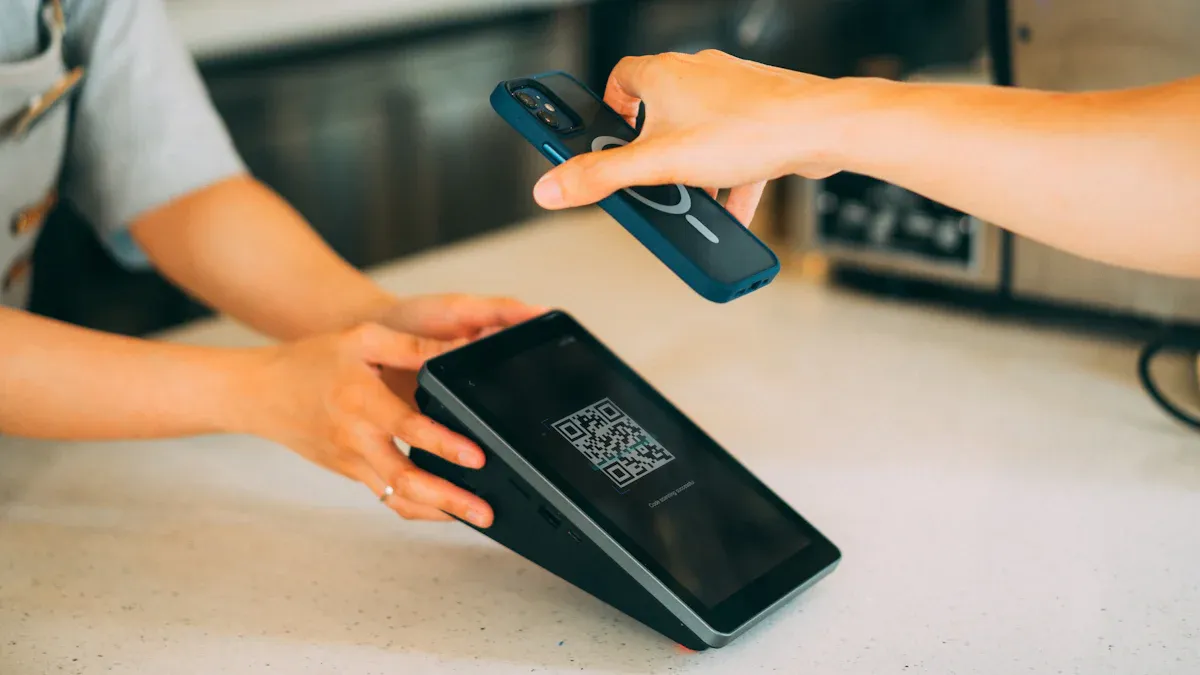
You can immediately improve pricing accuracy and efficiency in your store with digital price tags powered by AI. Electronic Shelf Labels and ESL Gateway AP synchronize in real time with your POS, ensuring shelf prices always match the checkout. When you switch to an ESL Price Tag system, you reduce human error and free up your staff for better inventory management and customer service. Esl Retail solutions also let you deliver targeted promotions and richer product information, creating a seamless experience for your retail customers.
AI-Powered Digital Price Tags: Transforming Retail in 2025

Immediate Benefits for Retailers
Real-Time Dynamic Pricing
You can transform your store’s pricing strategy with real-time dynamic pricing. AI-powered solution platforms let you adjust prices instantly based on demand, competitor activity, or special promotions. This approach ensures you always offer the most competitive prices while protecting your margins. You no longer need to rely on manual updates or wait for scheduled price changes. Instead, you gain the agility to respond to market shifts as they happen.
Tip: Real-time dynamic pricing helps you maximize revenue during peak demand and clear inventory quickly during slow periods.
Enhanced Inventory Synchronization
When you implement a digital price tags solution, you synchronize inventory and pricing across all channels. This integration reduces errors and keeps your stock levels accurate. You can automate stock adjustments and optimize ordering, which helps prevent both overstock and stockouts. Your employees spend less time on manual tasks and more time serving customers.
- AI-powered digital price tags enhance operational efficiency by automating price updates and inventory management, reducing manual labor and errors.
- They enable real-time dynamic pricing, allowing you to adjust prices instantly based on demand, promotions, or competitor pricing.
- Inventory management improves through real-time updates, helping you maintain accurate stock levels, reduce stock-outs, and optimize ordering.
- Labor costs are reduced as staff are freed from manual price changes to focus on higher-value tasks.
- These tags support omnichannel retailing by maintaining price consistency across online and offline channels, improving customer experience.
- Customer engagement is fostered through interactive features like NFC-enabled promotions and personalized shopping experiences.
- Sustainability benefits arise from reduced paper waste due to replacing traditional paper price tags.
- Integration with cloud-based management systems and AI-driven analytics enhances data-driven decision-making and operational control.
- Despite challenges such as initial investment and integration complexity, the long-term benefits in efficiency, cost savings, and customer satisfaction are expected to drive widespread adoption.
Impact on Customer Engagement
Personalized Promotions
You can use an AI-powered solution to deliver personalized promotions directly to shoppers. Digital price tags equipped with NFC or QR codes allow customers to access tailored offers and product information with a simple tap or scan. This interactive experience increases engagement and encourages repeat visits. Your promotions become more relevant, driving higher conversion rates and boosting customer loyalty.
Transparent Pricing
Transparent pricing builds trust with your customers. When you use a solution that updates prices in real time, shoppers always see accurate and up-to-date information. You eliminate confusion at checkout and ensure consistency between shelf and register. This transparency supports a positive shopping experience and strengthens your brand reputation.
| Benefit Category | Immediate Financial/Operational Benefit |
|---|---|
| Labor and Material Savings | Eliminates costs for paper labels, printers, and ink; reduces labor hours spent manually changing price tags, lowering operational expenses. |
| Employee Productivity | Frees employees from low-value manual price updates, allowing focus on shelf replenishment, product display, and customer service. |
| Agile Pricing Strategies | Enables rapid, automated price adjustments based on market demand and competitor pricing, maximizing margins without manual input. |
By adopting an AI-powered solution, you position your retail business for greater efficiency, improved customer engagement, and stronger financial performance.
Understanding Digital Price Tags and AI Solutions
What Are Digital Price Tags?
Electronic Shelf Label Technology
You can modernize your store with electronic shelf labels. These digital shelf labels use e-paper or LCD screens to display prices and product information. The technology allows you to update prices instantly and remotely, reducing the need for manual changes. Electronic shelf labels connect wirelessly to your central system, ensuring that every price on the shelf matches your checkout system. You gain clear, accurate displays that improve both efficiency and customer trust.
Here is a breakdown of the core components and functionalities of digital price tags:
| Core Components and Functionalities | Description and Benefits |
|---|---|
| Electronic Price Tags | Use e-paper or LCD screens for clear, updateable price displays |
| Communication Modules | Wireless methods such as radio frequency, Bluetooth, or Wi-Fi enable real-time syncing with central systems |
| Power Source | Long-lasting batteries support continuous operation |
| Remote Price Updates | Allow centralized, instant price changes, reducing labor and errors |
| Inventory Integration | Synchronize pricing with stock levels to ensure accuracy |
| Customizable Displays | Show promotions, QR codes, and product details to enhance customer engagement |
| Cost Efficiency | Reduce labor and paper costs over time |
| Customer Experience | Provide accurate, up-to-date pricing to build trust and loyalty |
| Sustainability | Eliminate paper tags, supporting green initiatives |
Integration with Retail Systems
You can integrate digital shelf labels with your retail systems for seamless operations. When you connect these labels to your POS and inventory management platforms, you ensure that pricing and stock information remain consistent across all channels. This integration supports real-time updates and reduces errors. You also gain the ability to display promotions or product recognition features, such as QR codes, directly on the shelf. This approach enhances the shopping experience and supports your store’s digital transformation.
How AI Algorithms Power Retail Solutions
Data Analysis and Market Insights
You can leverage ai to analyze large volumes of data from your retail environment. Machine learning algorithms process information from sales history, customer behavior, market trends, and even weather patterns. This analysis helps you forecast demand and optimize inventory. Digital shelf labels can display dynamic prices and promotions based on these insights. Product recognition technology further enhances your ability to personalize offers and improve customer engagement.
- AI algorithms analyze data such as historical sales, customer behavior, seasonality, and competitor pricing to forecast demand.
- Machine learning enables you to detect inventory discrepancies and automate replenishment.
- Product recognition and digital shelf labels work together to deliver personalized promotions and accurate pricing.
Automated Price Optimization
You can use machine learning to automate price optimization in your store. The algorithm evaluates consumer feedback, price elasticity, and market dynamics to recommend the best price points. Machine learning also enables scenario modeling, so you can predict how changes in tariffs or promotions will impact demand. When you integrate digital price tags with your ai platform, you ensure that pricing changes reflect in real time on your shelves. This coordination between pricing and inventory helps you avoid stockouts and maximize profitability.
Tip: Automated price optimization with digital shelf labels allows you to respond quickly to market changes and maintain a competitive edge.
Key Benefits of AI-Driven Digital Price Tags for Retail
Real-Time Pricing and Market Responsiveness
Adapting to Competitor Pricing
You can use digital shelf labels to monitor and respond to competitor pricing in real time. AI-driven solutions analyze data streams such as customer demand, competitor prices, and external factors. This analysis allows you to adjust your pricing instantly and accurately. You gain the ability to capture revenue opportunities during demand spikes and minimize losses during downturns. Real-time pricing moves your strategy from reactive to proactive, forecasting future demand and market trends. You maintain a strong competitive position by responding quickly to rivals’ price changes.
- Digital shelf labels ensure pricing accuracy and promotional compliance at the store level.
- You reduce errors and protect your margins with automated price updates.
- Real-time pricing enhances your agility in volatile markets and increases customer loyalty.
- You can see up to a 13% lift in average order value during peak periods and a 5% increase in conversion rates among repeat buyers.
- Retailers have reported turnover increases up to 3% and profit margin improvements up to 10% through dynamic pricing.
Maximizing Revenue and Margins
AI-powered solutions help you maximize revenue and profit margins by enabling dynamic pricing strategies. You can adjust prices instantly based on real-time market conditions, inventory levels, and competitor activity. This flexibility allows you to increase prices during peak demand and offer discounts during slower periods. Automation reduces manual labor and pricing errors, leading to significant cost savings and improved operational efficiency. AI-powered analytics provide actionable insights that optimize pricing across categories and channels, ensuring consistent and competitive pricing.
| Aspect | Evidence | Impact on Revenue and Profit Margins |
|---|---|---|
| Dynamic Pricing | AI-driven price tags enable real-time price adjustments based on demand, inventory, and competitor prices. Amazon’s dynamic pricing algorithms increased profits by about 25%. Retailers report up to a 13% rise in average order value. | Maximizes revenue by capturing higher profits during peak demand and balancing sales during off-peak periods. |
| Labor Cost Savings | Large supermarket chains save up to $200,000 annually in labor costs; small stores reduce price update time by up to 80%. Pricing errors decrease by up to 40%. | Reduces operational costs and errors, directly improving profit margins. |
| Pricing Accuracy and Speed | Price updates reduced from weeks or days to minutes; instant remote updates ensure consistent pricing across channels. | Enhances pricing accuracy and responsiveness, preventing revenue loss from outdated or inconsistent prices. |
| Data-Driven Decision Making | AI analyzes sales, inventory, and competitor data to recommend optimized pricing strategies, improving stock turnover and reducing overstock or stockouts. | Supports sustained revenue growth and margin optimization through informed pricing decisions. |
| Environmental and Operational Efficiency | Eliminates paper tag waste and reduces material costs, supporting sustainability and lowering expenses. | Contributes to cost savings and operational efficiency, indirectly supporting profit margins. |
You can rely on these solutions to deliver consistent pricing, reduce errors, and support your business goals.
Improved Inventory Management Solution
Automated Stock Adjustments
You can improve inventory management by using digital shelf labels that sync with your inventory databases in real time. These solutions enable automatic pricing adjustments based on stock levels. When items run low, the system triggers restocking alerts, helping you avoid both overstocking and understocking. AI models analyze buying trends and predict demand spikes, allowing you to optimize pricing and maximize profits. You gain better visibility into on-shelf availability and can plan more effective promotions.
- Digital shelf labels collect data on customer interactions and purchase behavior.
- This information supports better inventory planning and personalized promotions.
- You can ensure on-shelf availability and reduce the risk of out-of-stock situations.
Reducing Overstock and Stockouts
You can use AI-powered solutions to reduce overstock and stockouts by linking digital shelf labels directly with your inventory systems. This integration provides real-time stock updates and dynamic pricing adjustments. You prevent manual errors and enhance operational efficiency. AI-powered shelf scanning detects shelf gaps instantly, enabling timely replenishment. The system tracks product movement, optimizes stock distribution, and reduces waste by providing precise inventory status. You ensure compliance with retail agreements through accurate reporting and maintain high on-shelf availability.
Operational Efficiency in Retail
Reducing Manual Labor
You can streamline shelf management by automating price updates and inventory adjustments. Solutions powered by AI reduce the need for manual labor, freeing your staff to focus on higher-value tasks such as customer service and product merchandising. Large supermarket chains have saved up to $200,000 annually in labor costs, while smaller stores have reduced price update time by up to 80%. Pricing errors decrease by up to 40%, further improving operational efficiency.
Streamlining Store Operations
You can use digital shelf labels and AI-driven solutions to create a seamless shelf management process. Automation ensures that pricing and inventory information remain accurate and up to date across all channels. You eliminate the need for paper tags, supporting sustainability and reducing material costs. Real-time data and analytics help you make informed decisions, optimize shelf management, and maintain high on-shelf availability. These improvements lead to a more efficient retail operation and a better customer experience.
Tip: Embrace automation and data-driven shelf management to boost efficiency, reduce costs, and improve on-shelf availability in your retail environment.
Step-by-Step Guide to Implementing AI-Powered Solutions
Assessing Retail Business Needs
Identifying Use Cases for Digital Price Tags
You should start by identifying where digital price tags can deliver the most value in your store. Review your current operations and look for areas where manual price changes slow down processes or cause errors. Consider high-traffic aisles, fast-moving products, and categories with frequent promotions. Digital price tags work best in environments where pricing changes often or where you want to test dynamic pricing strategies. Map out these use cases to align your investment with your business goals.
Tip: Focus on departments with frequent markdowns or seasonal changes. These areas benefit most from automated price updates and real-time inventory visibility.
Setting Success Metrics
You need clear metrics to measure the impact of your new solution. Define what success looks like for your retail business. Common metrics include reduction in labor hours spent on price changes, improvement in pricing accuracy, and increased sales from targeted promotions. Track inventory turnover rates and customer satisfaction scores to see how digital price tags affect store performance. Set benchmarks before implementation so you can compare results after rollout.
| Success Metric | Description | Example Target |
|---|---|---|
| Labor Hours Saved | Time saved by automating price updates | 80% reduction |
| Pricing Accuracy | Fewer pricing errors at checkout | 95%+ accuracy |
| Inventory Turnover | Faster movement of stock | 10% improvement |
| Sales Uplift | Increased sales from dynamic pricing | 5% growth |
| Customer Satisfaction | Higher ratings and fewer complaints | 4.5/5 average score |
Selecting Digital Price Tag and AI Solution Providers
Evaluating Vendor Capabilities
Choosing the right partner is critical for a successful deployment. You should evaluate vendors based on their expertise with AI and their experience in retail environments. Look for providers who offer transparent information about their AI development practices and data governance frameworks. Strong data privacy and compliance with regulations such as GDPR or CCPA protect your business from legal risks. Assess technical capabilities, including how easily the solution integrates with your existing systems. Vendor support structures, such as service level agreements and ongoing maintenance, ensure you receive help when you need it. Scalability and flexibility matter if you plan to expand or adapt your solution in the future.
- Prioritize vendors with proven AI expertise and retail experience.
- Ensure robust data governance and privacy compliance.
- Evaluate technical integration capabilities and ease of use.
- Assess vendor support, including SLAs and maintenance.
- Consider scalability and flexibility for future growth.
- Align the solution with your strategic business goals.
- Factor in cost, privacy, support, and time to value.
Note: Use a structured comparison matrix to objectively compare vendors on technical, governance, cost, and support criteria.
Choosing the Right AI Platform
You should select an AI platform that fits your business needs and integrates smoothly with your current systems. Review the platform’s data privacy features, including anonymization and secure data handling. Check that the platform supports open APIs and is compatible with your POS and inventory management software. Review the sources and licensing of training data to avoid intellectual property risks. Negotiate contracts to clarify intellectual property rights, transparency requirements, and termination clauses. The right platform should adapt as your business grows and as market conditions change.
Integrating with Retail Systems
Connecting to POS and Inventory Management
Integration with your POS and inventory management systems ensures real-time synchronization of pricing and stock data. Start by assessing your current infrastructure for compatibility with digital price tags. Map your existing workflows to identify integration requirements and gaps. Choose a solution that supports seamless communication between digital price tags, POS, and inventory management platforms. Use an API-led approach and middleware to connect new and legacy systems. Pilot testing and phased rollouts help you manage risks and gather feedback before full deployment.
- Establish strong vendor partnerships for smooth integration.
- Use APIs and middleware to enable communication between systems.
- Conduct pilot programs to test integration and gather feedback.
- Provide staff training focused on new workflows and real-time monitoring.
Ensuring Data Security and Flow
You must protect sensitive data as you integrate new technology. Implement centralized data management, encrypted communication, and multi-factor authentication to secure your systems. Maintain ongoing support and regular updates to address technical issues and improve performance. Automate repetitive integration tasks and design for reliability with error logging and retry logic. Monitor system performance regularly to maintain synchronization and operational efficiency. Compliance with data protection standards ensures you meet legal requirements and build customer trust.
Tip: Prioritize data security and privacy at every stage of integration. This approach protects your business and supports long-term success.
Staff Training and Change Management in Retail
Educating Employees on AI-Powered Solutions
You must prepare your staff for the shift to AI-powered digital price tags. Effective training ensures your team understands both the technology and the reasons behind the change. The Prosci ADKAR Model offers a proven structure for guiding your employees through this transition. This model helps you build Awareness of the need for change, foster Desire to participate, provide Knowledge about the new system, develop Ability to use it, and reinforce the change for lasting results.
Note: The ADKAR Model has driven successful digital transformations in large organizations, making it a reliable framework for your retail environment.
To maximize adoption and minimize resistance, consider these best practices:
- Build awareness by explaining the benefits of AI-driven digital price tags for both staff and customers.
- Engage respected sales managers as trainers and champions to lead by example.
- Offer continuous, repeated training sessions rather than one-off events to reinforce learning.
- Teach the concepts behind the technology, not just the technical steps, so employees understand the “why” as well as the “how.”
- Launch pilot programs to create early advocates who can share positive experiences with their peers.
- Use digital adoption tools like WalkMe or Whatfix to provide in-app guidance and on-demand learning, reducing confusion and support requests.
- Gather real-time feedback with platforms such as Microsoft Viva Glint or Lattice to monitor morale and address concerns quickly.
A table can help you visualize the key elements of an effective training program:
| Training Element | Description | Example Tool/Method |
|---|---|---|
| Awareness | Communicate the need for change | Team meetings, emails |
| Desire | Motivate staff to support adoption | Incentives, gamification |
| Knowledge | Teach system concepts and usage | Workshops, e-learning |
| Ability | Develop practical skills | Hands-on sessions |
| Reinforcement | Sustain change through ongoing support | Feedback tools, coaching |
Managing Transition and Adoption
Managing the transition to AI-powered digital price tags requires more than technical training. You need a comprehensive change management strategy that addresses both emotional and practical challenges. Early pilot programs help you identify potential resistance and create advocates who can influence others. Aligning sales incentives with adoption goals encourages participation and healthy competition.
You should monitor tool usage from the start. If you notice low engagement or confusion, address these issues through targeted education and open communication. Set clear, measurable KPIs for adoption, such as the percentage of staff using the system or the number of successful price updates completed. Break these goals into simple steps so progress feels achievable.
Tip: Use real-time sentiment feedback tools to track employee morale and adjust your approach as needed. This proactive stance helps you maintain momentum and reduce turnover during the transition.
Ongoing Optimization of AI Solutions
Monitoring Performance Metrics
After you implement AI-powered digital price tags, you must focus on continuous improvement. Start by monitoring key performance metrics such as profit margins, sales volume, and price sensitivity. Regularly review these indicators to evaluate how well your AI pricing strategies perform. Look for anomalies in AI predictions, which may signal errors or unexpected behavior. Early detection allows you to correct issues before they impact your business.
You should also set minimum and maximum price limits to maintain control over your pricing. This step protects your profit margins and prevents drastic price swings that could confuse customers or damage your brand.
Continuous Improvement Strategies
Optimization does not end with deployment. You need to adapt your pricing strategies as market conditions change. Establish a feedback loop to refine and update your AI models regularly. This process ensures your system stays accurate and competitive over time.
Balance automation with human oversight. While AI can handle most pricing decisions, your team should review outcomes to ensure alignment with business goals and customer expectations. Use explainable AI models that provide clear insights into pricing decisions. This transparency builds trust with both your staff and your customers.
Callout: Implement AI pricing solutions in phases. Start with pilot testing and A/B testing, then iterate and scale gradually. This approach reduces risk and helps you optimize performance at every stage.
By focusing on ongoing monitoring and continuous improvement, you ensure your AI-powered digital price tag solution delivers lasting value and keeps your retail operation agile.
Overcoming Challenges in AI-Driven Digital Price Tag Integration
Ensuring Data Quality and Accuracy
Reliable Data Inputs for AI
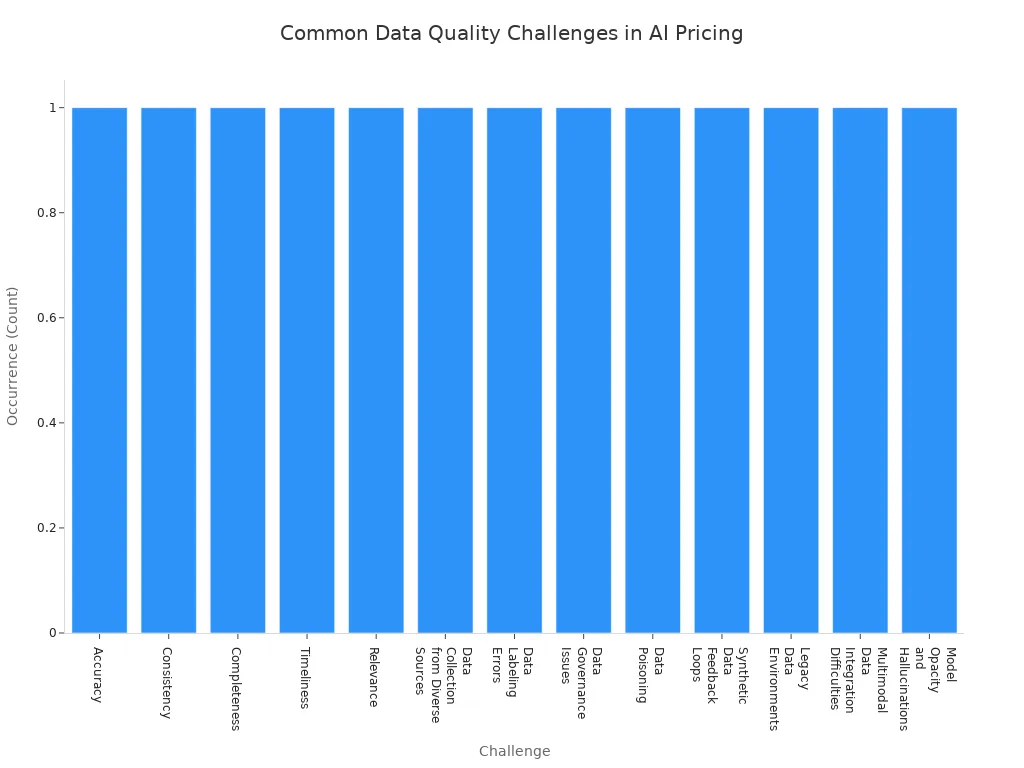
You must prioritize reliable data inputs to achieve accurate AI-driven pricing. Inconsistent or incomplete data can lead to incorrect price updates and inventory issues. When you implement digital price tags, you need to validate all data sources and standardize formats across your systems. This approach ensures your shelf management processes remain efficient and trustworthy.
| Data Quality & Accuracy Challenges | Description | Mitigation Strategies |
|---|---|---|
| Accuracy | Errors in data input can cause incorrect AI decisions | Ensure accurate data input and validation |
| Consistency | Data must follow standard formats to avoid confusion | Standardize data formats and enforce consistency |
| Completeness | Missing data leads to biased or incomplete AI results | Collect comprehensive datasets and fill gaps |
| Timeliness | Outdated data causes irrelevant or misleading outputs | Maintain data freshness and update regularly |
| Relevance | Irrelevant data clutters models and reduces efficiency | Focus on relevant data aligned with use case |
| Data Collection from Diverse Sources | Integrating data from multiple sources can reduce quality | Use automated tools like web scrapers with standards |
| Data Labeling Errors | Manual labeling is error-prone and time-consuming | Employ quality control and automated labeling tools |
| Data Governance Issues | Lack of governance leads to siloed, inconsistent data | Implement strong data governance frameworks |
| Data Poisoning | Malicious data can corrupt model training | Conduct regular audits and anomaly detection |
| Synthetic Data Feedback Loops | Overuse of synthetic data can degrade model quality | Balance synthetic and real data carefully |
| Legacy Data Environments | Old systems may not support modern AI needs | Modernize data architecture and storage |
| Multimodal Data Integration Difficulties | Combining different data types is complex | Use advanced integration methods and human oversight |
| Model Opacity and Hallucinations | AI models may produce inaccurate or misleading outputs | Apply human oversight, prompt engineering, and validation |
Addressing Integration Issues
You may encounter integration challenges when connecting digital price tags to your existing shelf management and inventory systems. Legacy environments often lack support for modern AI needs. To overcome these obstacles, you should modernize your data architecture and use advanced integration methods. Automated quality reviews and human oversight help maintain data accuracy and prevent model errors. Regular audits and prompt engineering further reduce the risk of data poisoning or model hallucinations.
Tip: Use a unified data strategy and strong governance frameworks to ensure seamless integration and reliable shelf management.
Building Customer Trust in Retail AI Solutions
Communicating Pricing Changes
You build trust by communicating pricing changes clearly and openly. Customers want to know how AI-driven pricing works and why prices change. You should explain your pricing methods and provide transparency at every touchpoint. When you use digital price tags, you can display real-time updates and offer explanations through QR codes or in-store signage.
- Share how your AI pricing algorithms operate.
- Highlight the fairness and consistency of your pricing.
- Use omnichannel communication to keep customers informed.
Addressing Customer Concerns
Customers value fairness and transparency in pricing. You must ensure your AI solutions do not discriminate or create confusion. Assign clear roles to product categories and use price image guardrails to maintain a consistent brand reputation. Studies show that retailers who prioritize transparency and fairness see higher customer loyalty and increased sales. By balancing personalization with price fairness, you foster long-term trust and satisfaction.
Note: 75% of consumers consider price fairness important in their purchasing decisions. Ethical AI pricing practices directly impact your store’s reputation.
Regulatory Compliance for Digital Price Tags
Meeting Pricing Laws
You must comply with all relevant pricing laws in your market. Digital price tags help you meet these requirements by enabling instant price updates and centralized control. This technology ensures that shelf prices always match point-of-sale prices, reducing the risk of mispricing penalties. In sectors like pharmaceuticals, frequent and accurate price changes are essential for compliance.
| Regulatory Compliance Requirement | Description | How Digital Price Tags Support Compliance |
|---|---|---|
| Real-time Price Updates | Prices must be updated instantly to reflect current pricing laws and avoid outdated info. | Wireless connection to central system enables immediate price changes, ensuring accuracy and compliance. |
| Centralized Control | Consistent price display across all products and locations is required. | Centralized management software allows monitoring and controlling prices store-wide from a single interface. |
| Audit Trails and Reporting | Retailers must track price changes and provide evidence of compliance. | ESL systems generate reports and track price updates, creating transparent audit trails. |
| Price Accuracy | Prevent mispricing penalties by ensuring shelf prices match point-of-sale prices. | Digital display reduces manual errors and discrepancies between shelf and checkout prices. |
| Dynamic Pricing Regulations | Some jurisdictions regulate price adjustments based on demand or other factors. | ESLs support dynamic pricing while ensuring prices remain within regulatory limits. |
| Sales and Marketing Visual Compliance | Sales advertisements must meet rules about price reductions and disclosures. | Digital labels can display clear sale information and significant price reductions to comply with advertising laws. |
| Specific Price Regulations (e.g., Minimum Pricing, Unit Pricing, Price Ceilings) | Various laws set minimum/maximum prices, unit pricing rules, and anti-price discrimination laws. | Digital labels help implement and display prices that comply with these diverse regulations efficiently and accurately. |
Protecting Customer Data Privacy
You must protect customer data privacy when using AI-powered shelf management solutions. Implement strong encryption, centralized data management, and regular audits to safeguard sensitive information. Compliance with data protection standards, such as GDPR or CCPA, builds customer confidence and reduces legal risks. By prioritizing privacy, you demonstrate your commitment to ethical business practices and responsible technology use.
Managing Cost and ROI of AI-Powered Solutions
Calculating Total Cost of Ownership
You need a clear understanding of the total cost of ownership before you invest in AI-powered digital price tags. Start by listing every cost involved. This includes hardware, software, installation, integration, training, and ongoing maintenance. Do not overlook the costs of battery replacement or software updates. These expenses add up over time.
Compare these new costs to your current baseline. Manual price updates require labor, printing, paper, and regular compliance checks. Traditional labels also need frequent maintenance. When you switch to digital price tags, you reduce many of these recurring expenses.
Here is a table to help you organize your cost and benefit analysis:
| Cost/Benefit Aspect | Details/Examples |
|---|---|
| Initial Investment | Hardware (price tags), software, installation, integration, training, maintenance |
| Current Cost Baseline | Labor for manual updates, printing, paper, compliance, traditional label upkeep |
| Projected Savings & Revenue | Labor reduction, fewer errors, dynamic pricing, increased sales, better satisfaction |
| Additional Cost Factors | Training, change management, software updates, battery replacement |
| Key Performance Indicators | Conversion rates, error frequency, labor efficiency, revenue from dynamic pricing |
You can follow a step-by-step process to calculate ROI:
- Define KPIs that matter to your store.
- Gather data on your current costs.
- Estimate future savings and revenue from digital price tags.
- Add up all investment costs.
- Use the ROI formula:
ROI = (Total Return – Total Investment) / Total Investment × 100% - Review results for both tangible and intangible benefits.
- Monitor and adjust as needed.
Tip: Always include both direct and indirect costs in your calculations for a realistic view of your investment.
Demonstrating Value and Payback
You want to see a clear return on your investment. In the first year, you may notice a negative ROI because of upfront costs. Over time, as savings and new revenue grow, your ROI turns positive. Many retailers report payback periods between 1 and 3.5 years, depending on store size and complexity.
Dynamic pricing increases sales and improves margins. Automated updates reduce labor hours and pricing errors. These benefits add up quickly. You also gain from improved customer satisfaction and fewer compliance issues.
Use these key performance indicators to track your progress:
- Conversion rates
- Frequency of pricing errors
- Labor hours saved
- Revenue from dynamic pricing
Note: Real-world examples show that grocery stores often reach payback in 1.5 to 2.5 years, while electronics retailers may see returns within a year.
You can demonstrate value by tracking these KPIs and sharing results with your team. Regular reviews help you optimize your system and maximize your investment. When you measure both financial and operational gains, you build a strong case for AI-powered digital price tags in your retail business.
Real-World Retail Use Cases for AI and Digital Price Tags
Grocery and Supermarkets
Dynamic Pricing for Perishables
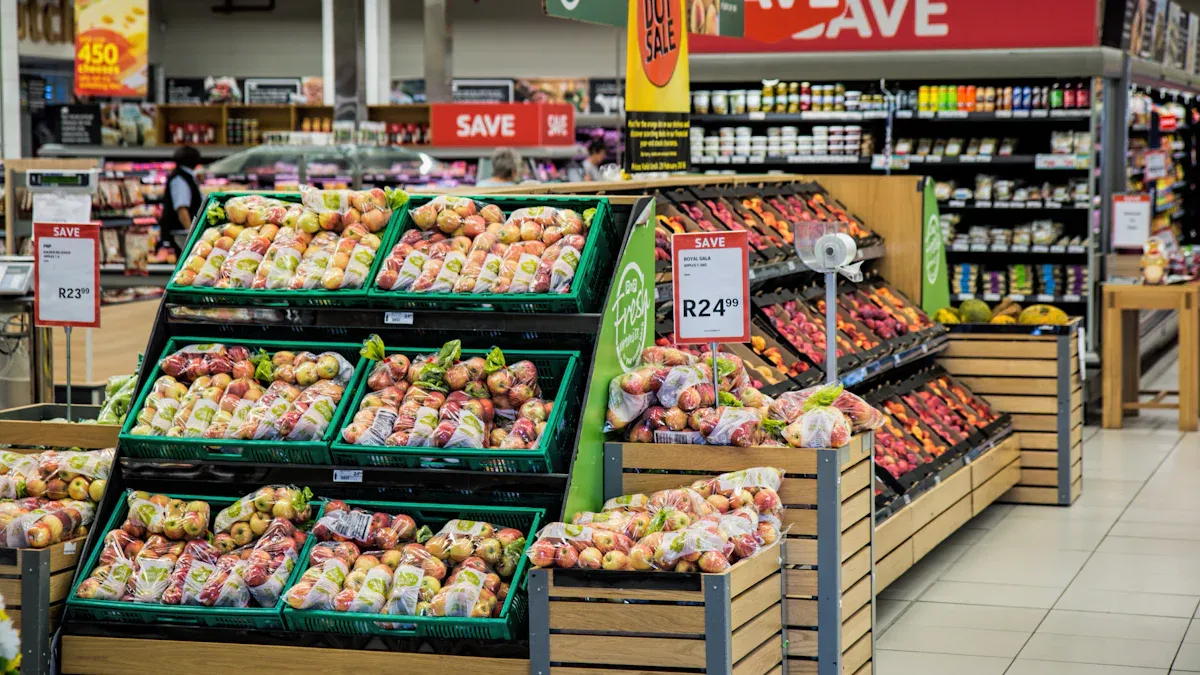
You can transform how you manage perishables by using AI-driven digital price tags. These systems automate price updates across thousands of products, reducing labor costs and human errors. When you implement dynamic pricing, your store can adjust prices in real time based on market data, inventory levels, and customer behavior. This approach helps you respond quickly to demand changes and competitor pricing. For items nearing expiration, automatic markdowns reduce food waste and support your sustainability goals. Integration with your POS and inventory systems ensures shelf prices always match checkout prices, building customer trust.
- Launch flash sales and time-limited promotions instantly to boost engagement and optimize inventory turnover.
- Use loyalty program data to offer personalized discounts, encouraging repeat purchases.
- Provide shoppers with instant access to nutritional information and digital coupons through QR codes or NFC on price tags.
Retailers such as Carrefour, Walmart, and Tesco have adopted these technologies to improve efficiency and competitive pricing.
Flash Sales and Promotions
You can increase shopper engagement by launching flash sales and location-based promotions with just a few clicks. AI-powered digital price tags allow you to roll out targeted offers quickly, helping you move excess stock and attract more customers. Personalized pricing strategies, powered by customer data, foster loyalty and drive repeat visits. Interactive features on digital price tags, such as QR codes, enhance the shopping experience by providing instant access to promotions and product details.
Electronics and Specialty Retail
Competitive Price Matching
You can stay ahead in electronics and specialty retail by leveraging AI-powered digital price tags for competitive price matching. Stores like Best Buy and Walmart use in-store digital kiosks and screens to compare product specs, prices, and reviews. This enables instant price comparison with competitors, ensuring your prices remain attractive during peak shopping periods. Real-time dynamic pricing strategies analyze market trends and customer behavior, allowing you to adjust prices for specific segments or hours.
| Retailer | Price Matching Capability | Customer Engagement Features |
|---|---|---|
| Best Buy | Instant competitor price comparison | Service recommendations, user-generated content |
| Amazon Go | Real-time dynamic pricing | Personalized recommendations, frictionless checkout |
| Walmart | Real-time price comparisons | Loyalty integration, personalized promotions |
| Sephora | N/A | Virtual try-on, tailored product recommendations |
| Nike | N/A | Feedback collection, immersive shopping journey |
Personalized Offers Based on Behavior
You can deliver a tailored shopping experience by integrating AI with digital price tags. These systems use browsing history and shopping patterns to recommend products and display personalized offers. For example, Amazon Go and Walmart provide customized promotions and loyalty rewards directly on digital screens. Product recognition technology further enhances personalization by identifying items and suggesting relevant accessories or upgrades. This approach increases customer satisfaction and encourages higher spending.
Fashion and Apparel Retail
Seasonal Price Adjustments
You can optimize your pricing strategy in fashion and apparel retail by using AI-driven digital price tags for seasonal adjustments. These systems allow you to update prices instantly as trends shift or new collections arrive. You can respond to market demand and competitor activity without manual intervention. This agility helps you maximize revenue during peak seasons and clear inventory efficiently at the end of each cycle.
Inventory-Driven Promotions
You can boost sales and reduce excess stock by linking digital price tags to your inventory management system. When certain items are overstocked or moving slowly, the system triggers automated promotions or discounts. This targeted approach ensures you maintain healthy stock levels and avoid markdowns that erode your margins. Customers benefit from timely offers, while you achieve better inventory control and profitability.
Home Improvement and DIY Stores
Automated Bulk Discounting
You can transform your pricing strategy in home improvement and DIY stores by using AI-powered digital price tags for automated bulk discounting. These digital tags connect directly to your inventory and AI systems, allowing you to adjust prices instantly across thousands of products. When you detect excess stock, you can lower prices to accelerate turnover. If stock runs low, you can raise prices to protect your margins. This flexibility helps you respond quickly to changing market conditions.
- AI-driven price tags enable you to launch bulk discounts, bundle offers, and time-based promotions with just a few clicks.
- Machine learning algorithms analyze sales trends and predict demand, recommending optimal price points for bulk purchases.
- Automation reduces manual errors and ensures pricing consistency across all store locations.
- You can match or beat competitor prices instantly, keeping your store competitive during peak seasons.
Tip: Automated bulk discounting not only helps you move inventory faster but also supports compliance by ensuring all discounts are applied accurately and consistently.
AI-powered planning tools also automate the creation and adjustment of store-specific planograms. By using real-time sales and inventory data, you can minimize overstock and stockouts. For example, a UK retailer automated over 30,000 planograms annually, which led to a 49% increase in like-for-like product sales. This shows how AI-driven inventory management and pricing strategies work together to boost sales and efficiency in your store.
Real-Time Stock Level Pricing
You can optimize profitability and stock turnover by leveraging real-time stock level pricing. Digital price tags update automatically as inventory levels change, ensuring that prices always reflect current stock. When you have surplus inventory, the system can trigger markdowns to clear space. If certain items become scarce, prices adjust upward to maintain healthy margins.
- Integration with your inventory system means you always display accurate prices, reducing the risk of overstock or waste.
- Real-time pricing allows you to respond swiftly to market changes, such as sudden spikes in demand or supply chain disruptions.
- Dynamic pricing strategies include surge pricing, bundling, and personalized offers based on customer behavior and stock status.
| Benefit | How It Works in DIY Stores |
|---|---|
| Price Consistency | Automation ensures all shelves display the correct price |
| Stock Optimization | Prices adjust to encourage sales or protect margins |
| Competitive Advantage | Instant price changes help you stay ahead of competitors |
| Reduced Waste | Overstocked items get discounted before becoming obsolete |
Note: Real-time stock level pricing gives you the agility to maximize sales, minimize losses, and deliver a better shopping experience for your customers.
By adopting AI-powered digital price tags, you gain the tools to manage complex pricing scenarios with ease. You ensure your store remains efficient, competitive, and responsive to both customer needs and market trends.
Actionable Recommendations for Retailers Adopting AI Solutions
Building a Roadmap for Digital Price Tag Integration
Short-Term Steps for Retailers
You can lay a strong foundation for digital price tag integration by focusing on immediate, practical actions. Begin by assessing your current retail operations and technology landscape. Set clear goals for what you want to achieve with digital price tags, such as reducing pricing errors or improving inventory accuracy. Evaluate your existing technology stack to identify compatible solutions. Prioritize initiatives that offer the highest impact with the least complexity. Allocate resources, including budget and staff, to support your pilot programs. Develop a detailed timeline for testing and initial deployment. Establish success metrics early to measure progress. Start with pilot programs in select locations to refine your approach before scaling up.
- Assess current operations and technology.
- Define clear objectives for digital price tag adoption.
- Evaluate and select suitable technology solutions.
- Prioritize high-impact, feasible initiatives.
- Allocate resources and set a pilot timeline.
- Establish metrics for success.
- Launch pilot programs in targeted stores.
Long-Term Strategies for AI Adoption
For long-term success, you should invest in scalable and flexible technologies that can grow with your business. Form cross-functional teams to oversee implementation and ensure collaboration across departments. Standardize procedures for technology adoption to maintain consistency. Implement change management best practices, including clear communication and regular feedback. Maintain a cycle of continuous improvement by updating and optimizing your systems. Future-proof your operations by choosing solutions that adapt to evolving market needs.
Tip: Regularly review your roadmap and adjust strategies to align with new business goals and technological advancements.
Measuring Success of AI-Powered Solutions
Tracking Key Performance Indicators
You need to track the right metrics to measure the effectiveness of your AI-powered digital price tags. Monitor competitor pricing accuracy to stay competitive. Keep an eye on product availability to avoid stockouts. Measure your brand’s share of search and content quality to gauge digital shelf presence. Ratings and reviews provide insight into customer satisfaction. Watch for assortment gaps and evaluate the effectiveness of promotional pricing. Use AI-powered dashboards for real-time monitoring and data-driven decisions.
- Competitor pricing accuracy
- Product availability
- Share of search
- Content quality
- Ratings and reviews
- Assortment gaps
- Promotional pricing effectiveness
Adjusting Strategies Based on Results
You should use these metrics to refine your strategies. If you notice gaps in product availability or pricing accuracy, adjust your inventory or pricing models. Analyze ratings and reviews to identify areas for improvement in customer experience. Use real-time insights from your dashboards to make quick, informed decisions. Continuous monitoring and adjustment help you maximize the value of your AI investment.
Staying Competitive in Retail with AI
Leveraging AI for Continuous Innovation
You can maintain a competitive edge by using AI to drive ongoing innovation. Retailers like Wegmans and Kroger use AI for demand forecasting, dynamic pricing, and inventory optimization. Amazon Fresh and Walmart personalize promotions and optimize supply chains with AI. These strategies help you respond quickly to market changes, optimize profits, and enhance customer experience.
Callout: Edge computing enables real-time price adjustments and personalized strategies, even in stores with limited internet connectivity.
Fostering a Culture of Agility
You should foster a culture that embraces change and agility. Encourage your teams to experiment with new AI-driven features and respond quickly to feedback. Cross-functional collaboration and open communication help you adapt to evolving customer expectations. By investing in scalable solutions and continuous learning, you ensure your business remains resilient and future-ready.
- Promote experimentation and learning.
- Support collaboration across departments.
- Adapt quickly to market and technology shifts.
By following these recommendations, you position your retail business for sustained success in the era of AI-driven digital price tags.
The Future of AI-Driven Digital Price Tags in Retail
Emerging Trends in AI-Powered Retail Solutions
Integration with Omnichannel Experiences
You will see digital price tags become a central part of the omnichannel retail experience. As you connect your physical stores with online platforms, these tags help you deliver consistent pricing and promotions across every channel. AI integration lets you analyze data from loyalty cards, in-store sensors, and online activity. This real-time analysis predicts shopper preferences and tailors promotions for each customer. You can update prices and offers instantly, whether your customer shops in-store or online. This seamless approach supports hyper-personalization and builds stronger customer relationships.
- Digital price tags now support real-time promotions and loyalty discounts, making your offers more relevant.
- You can use AI to scan competitor prices and adjust your own pricing strategy instantly.
- Retailers in fashion and fast-moving consumer goods (FMCG) are adopting these solutions, expanding beyond traditional sectors.
Tip: By connecting your digital price tags to both online and offline systems, you create a unified shopping journey that meets modern customer expectations.
Advancements in Predictive Analytics
You gain a competitive edge when you use predictive analytics with digital price tags. Machine learning models process vast amounts of sales, inventory, and customer data. These models help you forecast demand, optimize stock levels, and set prices that reflect real-time market conditions. You can reduce food waste by predicting demand for perishables and adjusting prices before items expire. This approach not only improves your margins but also supports sustainability goals.
- Predictive analytics enables you to respond faster to market shifts without manual repricing.
- You can offer urgency-driven discounts and flexible promotions that encourage customer loyalty.
- Real-time data analysis helps you avoid overstocking or running out of popular products.
Note: As predictive analytics becomes more advanced, you will see digital price tags evolve into smarter, more flexible tools that benefit both retailers and consumers.
Preparing for Ongoing Change in Retail
Adapting to Evolving Customer Expectations
You must keep pace with changing customer expectations. Shoppers now expect transparency, fairness, and personalization in pricing. Digital price tags powered by AI help you deliver on these demands. You can provide clear, up-to-date prices and explain changes through interactive features like QR codes. Personalized offers and loyalty rewards make your customers feel valued. However, you should also address concerns about price transparency and fairness, especially as dynamic pricing becomes more common.
- Customers want to know they are getting a fair deal, even as prices change in real time.
- You can use digital price tags to communicate your pricing strategy and build trust.
Investing in Scalable AI Solutions
You should invest in scalable AI solutions to future-proof your retail operations. Choose technologies that grow with your business and adapt to new trends. Scalable systems let you expand digital price tags across multiple locations and integrate with emerging retail platforms. Regular updates and ongoing optimization ensure your solution remains effective as the market evolves.
Callout: Investing in scalable, flexible AI-powered digital price tags positions your business for long-term success in a rapidly changing retail landscape.
You can future-proof your retail business by adopting AI-driven digital price tags. These solutions let you adjust prices in real time, personalize offers, and improve inventory management. To succeed, follow these steps:
- Prioritize digital shelf labels for agile pricing.
- Integrate smart features like QR codes for customer engagement.
- Use sustainable materials to meet new standards.
- Monitor regulations and partner with certified suppliers.
Stay transparent about AI pricing and focus on ethical practices to build lasting customer trust.
FAQ
What are the main advantages of AI-driven digital price tags?
You gain real-time pricing, reduce manual errors, and improve inventory accuracy. These tags help you respond quickly to market changes and enhance customer trust with transparent, up-to-date pricing.
How do digital price tags connect with my existing systems?
Most solutions integrate with your POS and inventory management platforms using APIs or middleware. You can synchronize pricing and stock data across all channels for seamless operations.
Are AI-powered price tags secure?
Yes. You protect your data with encryption, centralized management, and regular security updates. Always choose vendors who comply with data privacy regulations and offer robust security features.
Can I customize promotions and pricing for different products?
You can set rules for dynamic pricing, flash sales, and personalized offers. AI algorithms analyze sales trends and customer behavior, allowing you to tailor promotions for specific products or categories.
What is the typical ROI timeline for digital price tag adoption?
Most retailers see a positive return within 1 to 3.5 years. You benefit from labor savings, fewer pricing errors, and increased sales from dynamic pricing strategies.
How do I train my staff to use AI-powered digital price tags?
You provide hands-on training, digital adoption tools, and ongoing support. Focus on both technical skills and the reasons behind the change to ensure smooth adoption and high engagement.
What happens if the system goes offline?
Digital price tags store the last update locally. You maintain accurate pricing until the connection restores. Most systems alert you to connectivity issues so you can take action quickly.
Do digital price tags support sustainability goals?
Yes. You eliminate paper waste and reduce the need for printing supplies. This supports your store’s green initiatives and lowers long-term operational costs.