
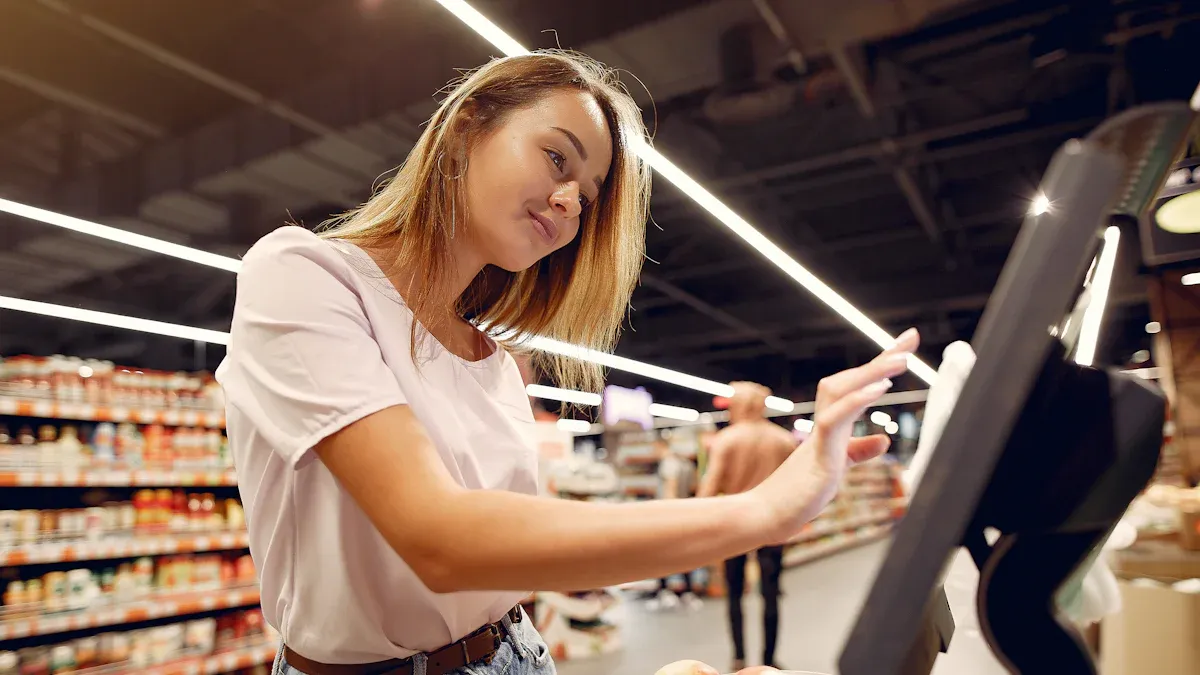
You transform the retail experience when you use digital price tags and electronic shelf labels. These tools connect with POS systems, so you can update prices instantly and reduce pricing mismatches at checkout. Customers see real-time, accurate prices, which eliminates frustration and speeds up transactions. Automation through ESL Gateway AP and ESL Price Tag allows you to implement dynamic pricing, supporting markdowns for Esl Retail and enhancing the overall experience. Electronic shelf labels help you avoid manual errors, increase efficiency, and improve cash register system efficiency. With automation, your staff can focus on delivering a better customer experience every day.
How Digital Price Tags Improve Cash Register System Efficiency
Real-Time Price Synchronization with POS Systems
Instant Updates Across All Registers
You gain a significant advantage when you connect digital price tags to your POS system. These tags use wireless connections, such as Wi-Fi or Bluetooth, to link directly to your store’s database. This setup allows you to push real-time updates to every shelf label in your store. When you change a price in your system, the update appears instantly across all registers and shelf tags. This process ensures that your customers always see the correct price, and your staff no longer needs to walk the aisles to replace paper tags.
- You can update thousands of digital price tags within seconds.
- Real-time updates support dynamic pricing strategies, such as flash sales or competitor price matching.
- You reduce the time spent on manual updates, which improves cash register system efficiency.
Elimination of Price Discrepancies
With real-time updates, you eliminate the risk of pricing discrepancies between the shelf and the register. When your POS and shelf labels always match, you avoid customer disputes and speed up the checkout process. This synchronization leads to fewer errors and a smoother experience for both staff and shoppers.
- Pricing accuracy improves, reducing the need for price corrections at checkout.
- You see fewer disputes, which means faster transactions and higher customer satisfaction.
- Supermarkets have reported a 30% reduction in manual price tag updates, directly impacting labor costs and efficiency.
Centralized Price Management
Unified Control for Multiple Locations
Digital price tags give you centralized control over pricing across all your stores. You can manage prices for every location from a single dashboard. This unified approach ensures that every store receives real-time updates, maintaining consistency and accuracy everywhere.
| Retailer / Example | Measurable Benefit Description | Impact / ROI Details |
|---|---|---|
| Kroger | Reduced repricing time from 2 weeks to 5 minutes | Up to 90% labor cost reduction |
| Maurer’s Market | Price update time cut from 4 days to under 10 minutes | Approximately 80% labor time saved; ROI in 1.5 to 2.5 years |
| Large Supermarket Chains | Annual labor cost savings of $200,000; up to 40% reduction in pricing errors | Faster ROI due to scale |
| Carrefour | Labor costs reduced by 60%; staff freed for other tasks | N/A |
| Electronics Retailers | Thousands of price updates in minutes; improved efficiency | ROI within 1 year |
| General Small Retail Stores | Labor and material cost savings; up to 30% reduction in pricing errors | ROI between 1 to 3 years |
Simplified Promotion Rollouts
You can launch promotions and adjust prices across your entire chain in minutes. Real-time updates allow you to respond quickly to market trends and competitor actions. This agility helps you maximize sales opportunities and maintain pricing accuracy. Staff can focus on customer service instead of manual updates, further boosting cash register system efficiency.
Tip: Centralized price management with digital price tags not only saves time but also enhances compliance and customer trust by ensuring real-time pricing and consistent accuracy.
The Technology Behind Digital Shelf Labels
Wireless Connectivity and Integration
Secure Communication with Store Database
You rely on advanced technology to keep your digital shelf labels connected and secure. Most systems use wireless connectivity options such as Wi-Fi, Bluetooth Low Energy (BLE), Radio Frequency (RF), and Near Field Communication (NFC). Each method offers unique benefits:
- Wi-Fi provides broad coverage but can use more bandwidth in large stores.
- BLE helps you save battery life, making it ideal for long-term use.
- RF supports reliable, large-scale updates across thousands of labels at once.
- NFC allows for quick, localized updates when you scan a label.
Security remains a top priority in every integration. End-to-end encryption protects your pricing data during wireless transmission. Authentication protocols ensure only authorized staff can make price changes. Redundancy mechanisms guarantee that real-time updates reach every label, even if you face connectivity issues. Many digital shelf labels use hardware-based security features, such as secure boot and cryptographic ciphers, to prevent tampering and unauthorized access. You benefit from regular software updates that patch vulnerabilities and strengthen defenses.
Compatibility with Existing Systems
You want seamless integration with your current retail systems. Digital shelf labels offer flexible mounting options, including clip-on mounts, magnetic attachments, and rail systems. This flexibility lets you avoid expensive retrofitting. On the software side, you connect digital shelf labels to your Point-of-Sale (POS) software, Retail Management Systems (RMS), and inventory platforms. This integration ensures real-time updates and accurate pricing across your store.
Network infrastructure plays a key role. Many retailers choose RF for its speed and scalability, especially in large environments. Security protocols like multi-factor authentication and automatic failover systems protect your integrated systems from cyber threats. You can manage your digital shelf labels using cloud-based, on-premise, or hybrid server solutions, depending on your needs. Before you implement, always check compatibility to ensure seamless integration and avoid data mismatches.
Automated Price Updates and Dynamic Pricing
Scheduled and On-Demand Changes
You gain a major advantage with automated pricing system features. Digital shelf labels let you schedule price changes or trigger them on demand. This automation reduces the time needed for price changes from days to minutes. Your staff can focus on customer service instead of manual updates. Automated price changes also support sustainability by eliminating paper waste.
- Real-time updates keep your pricing accurate at all times.
- You can roll out personalized promotions quickly and efficiently.
- Features like “Stock to Light” and “Pick to Light” help with inventory management and order picking.
Support for Frequent Promotions
You can respond to market trends with dynamic pricing and frequent promotions. Digital shelf labels make it easy to adjust prices across your entire store or chain. While some retailers use dynamic pricing cautiously to avoid confusing customers, the technology supports future flexibility. Automated price updates help you maintain operational efficiency and cost savings, even as you experiment with new pricing strategies.
Note: Automated price updates and dynamic pricing offer powerful tools for retail, but you should balance operational efficiency with customer trust.
Reducing Labor Costs with Electronic Shelf Labels
Eliminating Manual Price Tag Changes
No More Paper Tag Replacements
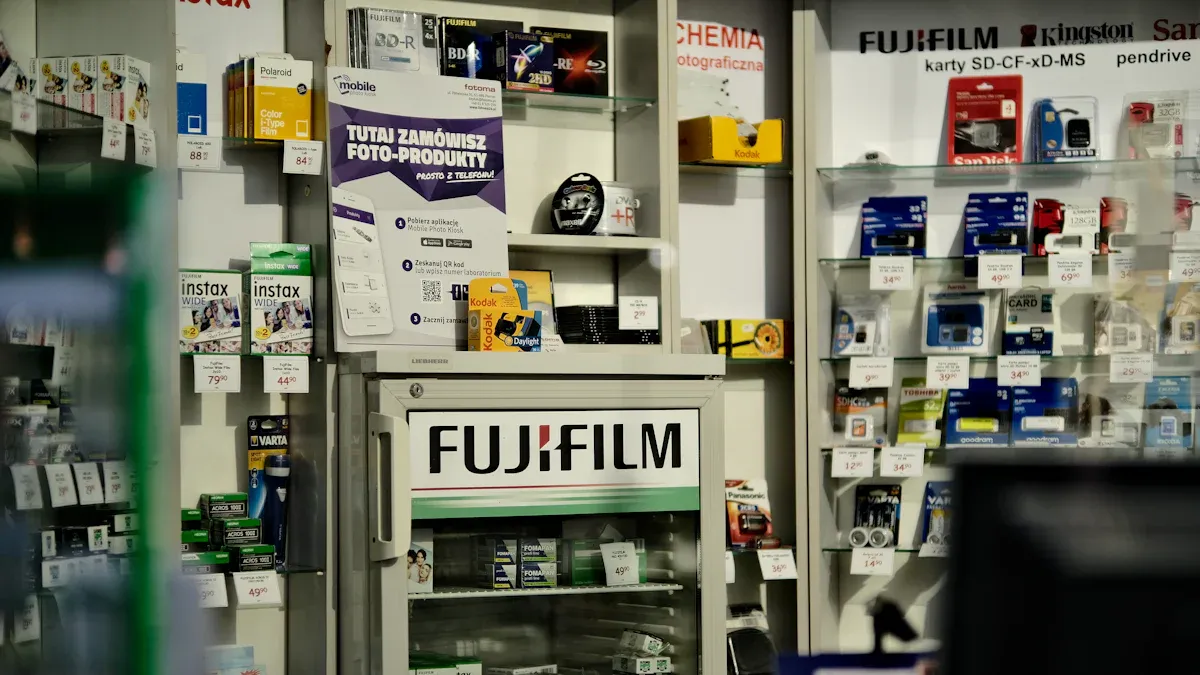
You eliminate the need for paper tag replacements when you switch to electronic shelf labels. Manual price tag changes often require hours of repetitive work, leading to wasted labor and increased operational costs. With digital price tags, you update prices instantly from a central system, removing the need for staff to walk the aisles and replace tags by hand. This shift not only saves time but also reduces the risk of pricing errors that can frustrate customers and disrupt checkout.
| Retailer / Example | Labor Cost Savings / Time Reduction | ROI / Payback Period |
|---|---|---|
| Large Supermarket Chains | Up to $200,000 annual labor cost savings; up to 80% labor time saved on price updates | Typically 12 to 18 months |
| Maurer’s Market | Price update time reduced from 4 days to under 10 minutes; ~80% labor time saved | 1.5 to 2.5 years |
| Houchens Food Group | Labor and cost efficiencies scaled across multiple stores | ~3.5 years |
| TRUNO (30,000 tags) | Labor savings contribute to accelerated payback; large initial investment (~$350,000) | 2 to 3 years (up to 1 year with AI pricing) |
Retailers report up to 80% reduction in labor hours spent on manual price tag changes. You gain a clear financial benefit and see a rapid return on investment by adopting digital shelf labels.
Bulk Updates for Entire Product Ranges
You can update entire product ranges in bulk with electronic shelf labels. This feature allows you to implement price changes across thousands of items in seconds. Manual updates, in contrast, take about two minutes per label. If your store manages 3,000 price changes per week, you save approximately 5,200 hours annually by automating this process. Features like Instant Flash and Geopositioning help your staff identify products quickly, further increasing efficiency and reducing time spent on routine tasks.
- You save up to 10 seconds per item collected due to advanced ESL features.
- Automation of price changes frees your team for higher-value activities.
Freeing Up Staff for Customer Service
More Time for Personalized Assistance
When you automate price changes, you free up staff to focus on customer engagement. Employees no longer spend days updating tags. Instead, they redirect their time to helping customers, managing inventory, and maintaining store appearance. This shift leads to better customer engagement and a more responsive sales floor.
| Aspect | Impact |
|---|---|
| Labor Savings | Stores save approximately 50 labor hours weekly as price changes that took days now take minutes. |
| Productivity Improvement | Staff are able to redirect their time towards customer service and inventory management rather than manual price updates. |
| Operational Efficiency | Automation enables real-time price updates and faster restocking through integrated inventory alerts, enhancing overall store responsiveness. |
“Before digital shelf labels, changing prices in a store took a couple of days; now it takes only minutes. Price updates are sent by the merchant team and can be quickly applied using a mobile device, keeping shelf prices and promotions always up to date. This fast and automatic price management allows staff to focus more on customer service and improves accuracy and speed in order preparation and stocking.”
Improved Employee Satisfaction
You improve employee satisfaction by reducing repetitive tasks. Staff members experience less stress and more meaningful engagement with customers. Increased availability on the sales floor enhances customer engagement and builds trust. Employees feel more valued when they can focus on customer needs rather than manual updates. This positive work environment supports retention and productivity.
- Automation reduces time spent on manual price label updates.
- Employees gain more time to assist customers and maintain store standards.
- Digital price tags improve pricing accuracy and speed, reducing customer disputes.
Minimizing Human Error and Shrinkage
Consistent Pricing Across Channels
Electronic shelf labels ensure consistent pricing across all channels. You synchronize digital price tags with your POS system, eliminating discrepancies between shelf and register. This consistency reduces pricing errors and helps you comply with regulations. Automation of price changes removes the risk of manual data entry mistakes, which often lead to customer frustration or lost sales.
| Organization/Industry | Improvement Metric | Quantitative Result |
|---|---|---|
| Zebra Technologies | Reduction in labeling and inventory errors | 65% decrease |
| Carrefour Warehouses | Reduction in pricing errors | Near elimination of pricing errors |
| German Automotive Manufacturer | Reduction in label-related errors | 25% decrease |
| Tokyo Hospital | Reduction in manual label update time | 60% reduction in update time |
Digital shelf labels provide real-time visibility into stock levels and product locations. This transparency supports faster and more accurate inventory management, reducing shrinkage caused by misplaced or mispriced items.
Reduced Losses from Pricing Mistakes
You reduce losses from pricing mistakes by using electronic shelf labels. Automation ensures that every price change is accurate and immediate. This precision minimizes the risk of undercharging or overcharging, which can impact your bottom line. Retailers have seen a near elimination of pricing errors after implementing digital shelf labels. Consistent pricing and fewer errors lead to higher customer engagement and satisfaction.
Electronic shelf labels reduce human error by automating price and inventory updates. This automation ensures pricing accuracy and consistency between shelf displays and checkout systems. You benefit from fewer discrepancies, improved compliance, and a more efficient operation.
Speeding Up Checkout and Enhancing Efficiency
Ensuring Price Accuracy at the Register
Fewer Price Disputes and Corrections
You improve the checkout experience when you ensure price accuracy at the register. Digital price tags synchronize shelf prices with your POS system in real time. This automation removes the need for manual label changes and reduces human error. You see fewer disputes because customers always see the correct price on the shelf and at checkout. Retailers report a 60% increase in pricing accuracy after adopting digital price tags. Automation reduces human error in pricing and inventory marking by 58%. Every price change is logged, which enhances transparency and accountability.
| Aspect of Improvement | Evidence Detail |
|---|---|
| Pricing Accuracy Improvement | Retailers report a 60% increase in pricing accuracy after adopting digital price tags. |
| Reduction in Human Error | Automation reduces human error in pricing and inventory marking by 58%. |
| Audit Trail | Every price change is logged, enhancing transparency and accountability. |
| Customer Experience Benefits | Accurate shelf prices matching checkout prices reduce disputes and improve shopper trust. |
| Consistency Across Channels | Automated updates ensure prices are current and aligned across all locations and channels. |
You create a more reliable experience for your customers by eliminating pricing discrepancies. This consistency builds trust and reduces the time spent on corrections during checkout.
Seamless Scanning and Faster Transactions
You speed up transactions when you use digital price tags. The system ensures shelf prices match register prices, which reduces disputes and delays. Automatic price updates and clear displays lead to fewer customer complaints and faster checkout times. Integration with mobile apps allows customers to scan product barcodes for instant price and promotion information. Digital price tags update prices every 10 seconds, so customers never miss flash sales or limited-time offers. The technology supports loyalty rewards and personalized promotions, which enhances the overall experience.
- You reduce the frequency of price corrections at the register.
- Customers enjoy a smoother, faster checkout process.
- Employees spend less time resolving pricing issues and more time assisting customers.
Supporting Self-Checkout and Mobile Payments
Enabling Direct Purchases at the Shelf
You empower customers to complete purchases directly at the shelf with digital price tags. Many systems display QR codes or NFC tags, allowing customers to scan and pay using their smartphones. This feature supports self-checkout and mobile payment systems, making the experience more convenient. OCR-based price tag scanning SDKs enable employees to verify price tag accuracy quickly using mobile devices. This technology extracts price and product data automatically, reducing manual labor and errors.
| Technology | Support for Self-Checkout & Mobile Payment | Efficiency Gains |
|---|---|---|
| Electronic Shelf Labels (ESLs) | – Instant price updates across all stores – Dynamic promotions and time-sensitive discounts – Display additional product info (QR codes, reviews) – Enhance customer experience during self-checkout and mobile payments | – Reduced labor costs by eliminating manual price changes – Minimized pricing errors – Faster price updates across thousands of items simultaneously |
| Self-Checkout Kiosks | – Integrated payment systems accepting cards, mobile payments, cash – Real-time inventory updates reflecting scanned items – Customizable interface with promotions and branding – Loss prevention via weight sensors and cameras | – Reduced reliance on cashiers, speeding up checkout – Reduced wait times during peak hours – Improved transaction speed and reliability |
You streamline the experience by allowing customers to check prices, access promotions, and pay—all without waiting in line.
Streamlining Customer Flow
You improve customer flow by integrating digital price tags with self-checkout and mobile payment systems. Customers move through the store more efficiently because they do not need to wait for price checks or manual corrections. Real-time price updates and instant verification support a seamless experience, especially during busy periods. Employees can focus on assisting customers rather than resolving pricing issues, which further enhances efficiency.
Tip: Use digital price tags to display time-sensitive promotions and product information. This approach encourages customers to make quick decisions and keeps the checkout process moving smoothly.
Reducing Line Wait Times
Higher Throughput at Cash Registers
You increase throughput at cash registers by ensuring pricing accuracy and reducing manual interventions. Digital price tags at Sam’s Club have reduced checkout times by 23% through real-time synchronization between shelf and checkout prices. Automation of price updates allows staff to focus on customer service, which improves operational efficiency. Integration with Retail Management Systems and POS software ensures consistent pricing, minimizing delays caused by pricing errors. Labor savings and increased scan-and-go adoption further streamline the checkout process.
Enhanced Customer Satisfaction
You deliver a better experience when you reduce line wait times. Digital price tags lead to a 60% increase in pricing accuracy, which reduces disputes and speeds up checkout. Automation decreases cashier errors by 58%, allowing transactions to move faster. Real-time synchronization between shelf and POS systems eliminates manual price checks and disputes, so customers spend less time waiting. Staff productivity improves as employees focus on service rather than manual updates.
| Impact Area | Evidence and Explanation |
|---|---|
| Pricing Accuracy | Digital price tags lead to a 60% increase in pricing accuracy by ensuring shelf prices always match POS prices, reducing disputes and speeding up checkout. |
| Human Error Reduction | There is a 58% reduction in human error related to pricing and inventory marking due to automation, which decreases cashier errors and accelerates transactions. |
| Operational Efficiency | Real-time synchronization between shelf and POS systems eliminates manual price checks and disputes, allowing faster resolution of price issues and reducing line wait times. |
| Staff Productivity | Automation reduces time spent on manual price updates (from days to minutes), enabling staff to focus more on customer service, further contributing to shorter wait times. |
You create a positive experience for customers by making checkout faster and more reliable. This improvement leads to higher satisfaction and encourages repeat visits.
Real-World Results: Case Studies on Digital Price Tags
Success Stories from Grocery and Electronics Retailers
Labor Cost Savings Achieved
You see significant labor cost savings when you implement digital price tags and electronic shelf labels. Many retailers have transformed their operations by automating price updates and reducing manual work. The following table highlights real-world outcomes from leading grocery and electronics stores:
| Retailer / Example | ROI / Payback Period | Key Labor Cost Savings and Outcomes |
|---|---|---|
| Large Supermarket Chain | N/A | Annual labor cost savings of approximately $200,000; up to 40% reduction in pricing errors; automation improves efficiency |
| Kroger | N/A | Repricing time reduced from 2 weeks to 5 minutes; up to 90% reduction in labor costs for price updates |
| Maurer’s Market | 1.5 to 2.5 years | Price update time cut from 4 days to under 10 minutes for 1,400 tags; about 80% labor time saved; fewer pricing errors |
| Houchens Food Group | ~3.5 years | Significant labor and cost efficiencies across multiple store formats |
| TRUNO (30,000-tag system) | 2 to 3 years (up to 1 year with AI pricing) | Large-scale system with $350,000 initial investment; payback accelerated by AI-based price optimization |
| Electronics Retailers | Within 1 year | Rapid price updates of thousands of labels in minutes; dynamic pricing; improved operational efficiency |
| General Small Retail Stores | 1 to 3 years | Labor cost savings, elimination of printing/material costs, up to 30% reduction in pricing errors, improved accuracy |
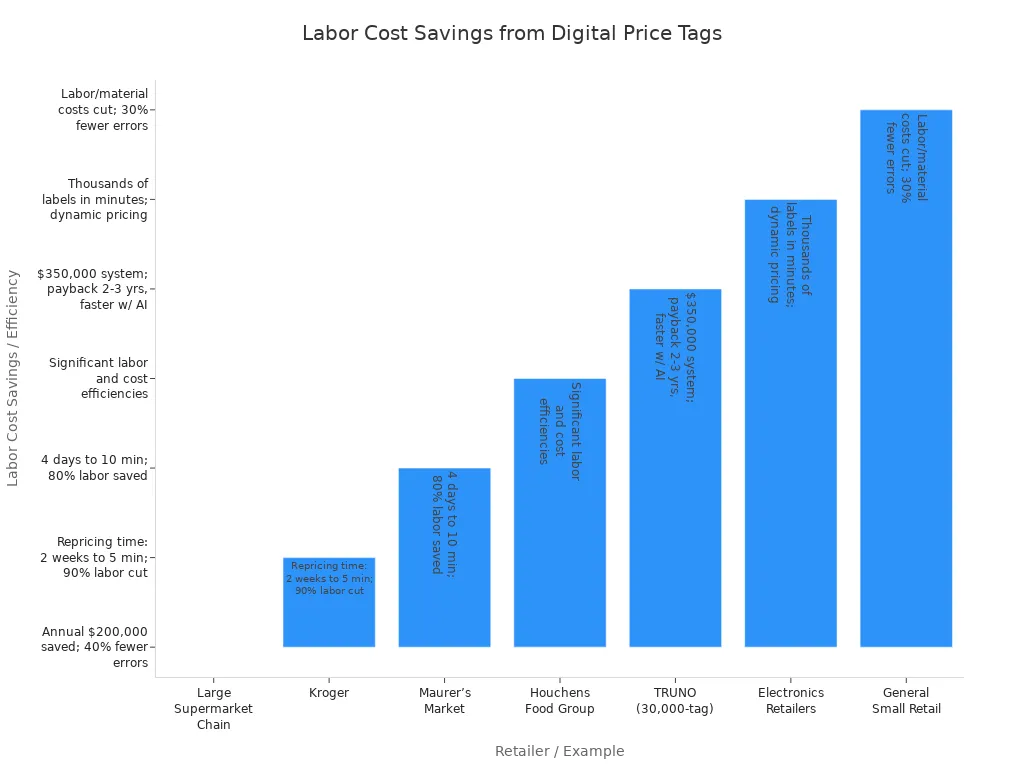
You notice that electronic shelf labels not only cut labor costs but also improve pricing accuracy and reduce errors. These changes lead to a better experience for both staff and customers.
Checkout Time Reductions
You improve the checkout experience by reducing wait times and speeding up transactions. Retailers using digital price tags report faster price updates and fewer pricing disputes at the register. For example, Kroger reduced repricing time from weeks to minutes, which directly impacts how quickly customers move through checkout. Electronics retailers also update thousands of prices in minutes, supporting dynamic sales and promotions. This efficiency creates a smoother experience for every customer.
Measurable Improvements in Cash Register System Efficiency
Increased Pricing Accuracy
You achieve a higher pricing accuracy rate when you use digital price tags and electronic shelf labels. The following table shows measurable improvements in cash register system efficiency across several key metrics:
| Efficiency Metric | Measurable Improvement / Impact |
|---|---|
| Pricing Accuracy | Up to 60% increase in pricing accuracy after digital price tag adoption |
| Human Error Reduction | 58% reduction in pricing and inventory-related human errors |
| Labor Time Saved | Up to 12 hours saved per week per store by automating price updates |
| Labor Cost Reduction | Approximately 52% reduction in labor costs related to price updates |
| Label Maintenance Time | 80% reduction (e.g., Carrefour) |
| Pricing Errors | 50% fewer pricing errors (e.g., Carrefour) |
| Inventory Accuracy | Improved from ~65% to over 98% with digital price tags |
| Restocking Time | Reduced by 35% with alerts and LED indicators |
| Order Fulfillment Time | Reduced by up to 50% through digital shelf label features |
| Product Turnover Rate | Increased by 15% due to dynamic pricing capabilities |
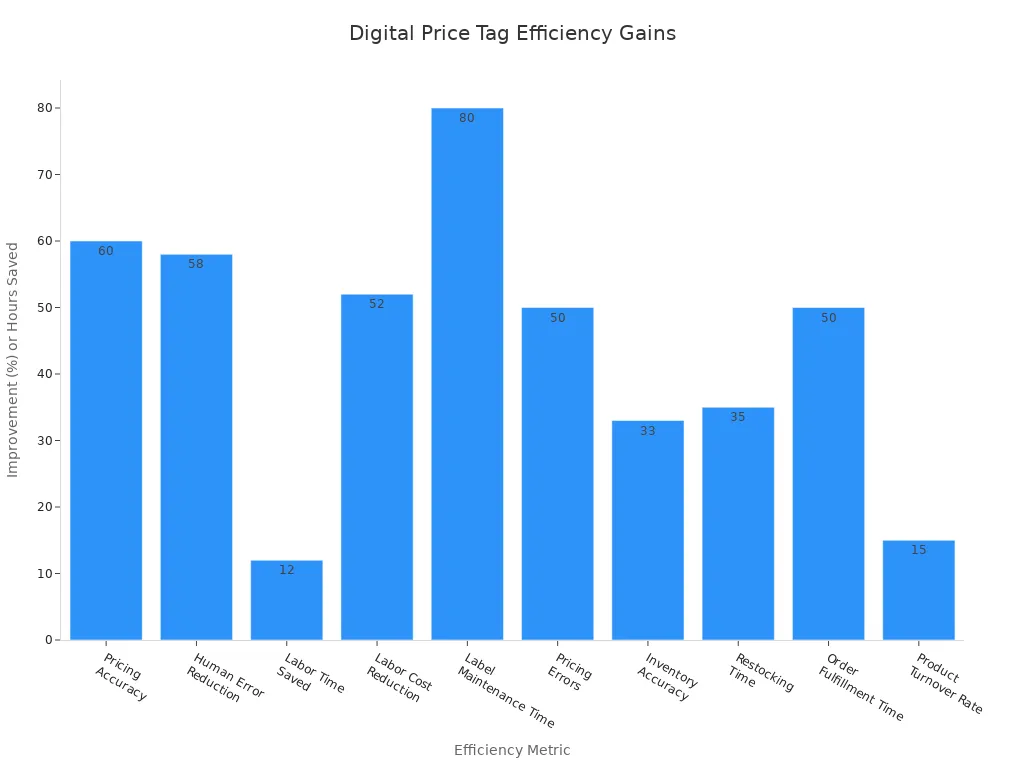
You benefit from real-time synchronization between shelf and checkout prices, which reduces pricing errors and customer disputes. Automated alerts for low stock help you restock faster and prevent lost sales. Dynamic pricing features move near-expiry products quickly, increasing sales and reducing waste.
Positive Staff and Customer Feedback
You create a better experience for both staff and customers with digital price tags and electronic shelf labels. Here is what you can expect:
- Customers enjoy up-to-date pricing, special offers, and detailed product information, which makes shopping easier.
- Staff spend less time on manual tasks and more time helping customers, improving operational efficiency.
- RFID technology with electronic shelf labels improves inventory tracking and speeds up checkout, enhancing the overall experience.
- Faster checkout processes reduce wait times, leading to higher customer satisfaction and loyalty.
- Retailers report improved customer experiences and operational cost savings.
- Customers appreciate real-time pricing updates, QR codes for more information, and easier purchasing decisions.
- Digital price tags improve store navigation by showing inventory levels and product locations.
- Staff benefit from instant price updates across multiple locations, eliminating manual changes.
- Inventory management improves as digital tags alert staff when restocking is needed.
- The technology supports sustainability by reducing paper waste and using low-power displays.
- Implementation is easy and scalable, with remote updates and minimal training required.
You see that digital price tags and electronic shelf labels deliver measurable improvements in cash register system efficiency, pricing accuracy, and the overall experience for your customers and staff.
Practical Benefits for Staff and Shoppers
For Store Employees
Less Repetitive Workload
You notice a dramatic shift in your daily routine when you implement digital shelf labels. The system automates price updates and syncs with your POS, so you no longer need to walk the aisles replacing thousands of paper tags. This change eliminates tedious, error-prone tasks and allows you to correct pricing errors remotely with just a few clicks. You also reduce waste from paper and plastic tags, which supports a more sustainable work environment.
- You save time by avoiding manual label changes.
- Batch and remote updates streamline your workflow.
- The technology helps prevent showrooming by keeping prices competitive and current.
By removing repetitive tasks, you create more opportunities for meaningful engagement with customers and your team.
More Focus on Customer Engagement
With less time spent on manual updates, you can focus on what matters most—customer engagement. You have more time to assist shoppers, answer questions, and manage inventory. This shift improves the overall customer shopping experience and allows you to build stronger relationships with your customers. You also help maintain store appearance and respond quickly to customer needs, which enhances the experience for everyone.
- You dedicate more time to customer service and inventory management.
- Automation frees you to engage with customers and improve their shopping journey.
- A sustainable environment boosts employee morale and supports positive engagement.
For Customers
Clear, Up-to-Date Pricing Information
You benefit from clear, accurate pricing every time you shop. Digital shelf labels provide real-time price updates, so you always see the correct price at the shelf and at checkout. This consistency reduces confusion and builds trust in your shopping experience. Promotions, flash sales, and dynamic pricing appear instantly, creating excitement and urgency. You also find detailed product information, such as ingredients, allergens, and QR codes, which empowers you to make informed decisions.
- Real-time updates ensure pricing accuracy and transparency.
- High-resolution displays make prices and product details easy to read.
- You access personalized promotions and targeted offers through loyalty programs and mobile apps.
Consistent and reliable pricing strengthens your confidence and encourages repeat visits, enhancing your overall customer shopping experience.
Faster, Hassle-Free Checkout Experience
You enjoy a faster, smoother checkout process because digital shelf labels keep prices synchronized with the register. This accuracy eliminates confusion and reduces the need for price checks or corrections. You move through the store efficiently, supported by instant updates and clear promotions. Integration with smart carts and mobile apps further streamlines your experience, making every visit more convenient.
- Automation reduces wait times and speeds up transactions.
- Staff spend more time assisting you, improving your customer shopping experience.
- The technology supports sustainability, which can positively influence your perception of the store.
You experience a seamless blend of technology and service that elevates your customer shopping experience and fosters lasting engagement.
Key Considerations for Retailers Adopting Digital Shelf Labels
Implementation Steps and Best Practices
Selecting the Right Digital Price Tag System
You need to choose a digital price tag system that fits your store’s needs and supports seamless integration with your existing technology. Start by evaluating the compatibility of the system with your POS and inventory management platforms. Look for solutions that offer secure access, role-based permissions, and centralized control. This approach ensures only authorized staff can make changes, protecting your pricing data.
To implement digital shelf labels effectively, follow these steps:
- Log into the management system using secure authentication.
- Access the automation rules dashboard for centralized control.
- Create automation rules using templates for scheduled or inventory-based price changes.
- Assign clear names and descriptions to each rule for easy management.
- Set triggers based on time, inventory levels, or competitor pricing.
- Define actions, such as remote price updates or automatic promotions.
- Add conditions and exceptions to prevent unwanted changes.
- Test rules in a controlled environment before full deployment.
- Monitor performance using analytics dashboards.
- Troubleshoot issues by checking network stability and system integration.
- Regularly review and update rules to maintain efficiency.
Tip: Organize your automation rules clearly and integrate them with inventory management and POS systems for maximum efficiency.
Staff Training and Change Management
You must prepare your team for new technology by providing thorough training. Focus on hands-on sessions that show how to use the digital shelf labels, manage automation rules, and respond to system alerts. Encourage staff to ask questions and share feedback. This approach builds confidence and supports engagement. Change management should include clear communication about the benefits of the technology, such as reduced manual work and more time for customer engagement.
Cost, ROI, and Long-Term Savings
Upfront Investment vs. Ongoing Benefits
You will encounter several cost components when adopting digital shelf labels. The table below outlines typical expenses and benefits:
| Cost Component | Description & Typical Range |
|---|---|
| Hardware Costs | ESL units: $6–$100+ each, depending on size and features. |
| Installation & Infrastructure | $1,000–$10,000, based on store size and legacy systems. |
| Software & Integration | Middleware or API development for system connectivity. |
| Maintenance & Support | Battery life 5–7 years; annual support fees $1,000–$3,000. |
You gain ongoing benefits such as labor cost reduction, improved price accuracy, and sustainability. Digital shelf labels automate price updates, saving hundreds of staff hours each month. Real-time updates support dynamic pricing and reduce waste from paper tags.
Calculating Return on Efficiency Gains
You can measure ROI by tracking key performance indicators like update response time, price accuracy, labor efficiency, inventory turnover, and customer satisfaction. Most retailers see a return within 12 to 36 months, especially when combining digital shelf labels with price optimization software. Improved integration with inventory management and POS systems boosts operational efficiency and supports long-term savings.
Overcoming Common Challenges
Integration with Legacy Systems
You may face challenges when integrating new technology with older systems. High initial costs and the need for a label on every product can seem daunting. To overcome these issues, focus on phased rollouts and prioritize integration with your core inventory management and POS platforms. This strategy helps you manage costs and ensures a smooth transition.
- Address consumer skepticism by emphasizing transparency and privacy protections.
- Highlight efficiency gains and smarter labor allocation to ease concerns about job losses.
- Use AI-enabled markdowns to reduce food waste and support sustainability.
Maintenance and Technical Support
You must plan for ongoing maintenance and technical support. Choose vendors that offer reliable support and regular software updates. Monitor system performance and address issues quickly to maintain efficiency. Regulatory scrutiny around dynamic pricing and privacy may arise, so stay informed about compliance requirements and maintain open communication with stakeholders.
Note: Ongoing oversight and transparency help you build trust with customers and regulators as you adopt new technology.
You transform your store’s efficiency and customer experience by adopting digital price tags and electronic shelf labels. These solutions automate price updates, saving up to $200,000 annually in labor costs for large supermarkets and reducing price update times by 80% in small stores.
- Staff benefit from fewer manual tasks, improved productivity, and more time to enhance the customer experience.
- Customers enjoy real-time pricing, dynamic promotions, and a seamless experience at every touchpoint.
- Digital price tags and electronic shelf labels support sustainability, reduce errors, and position your business for future-ready operations.
You deliver a modern, engaging experience that builds customer trust and satisfaction.
FAQ
What are digital price tags and electronic shelf labels?
Digital price tags and electronic shelf labels are small electronic displays that show product prices and information. You can update them remotely and instantly from a central system. These devices replace traditional paper tags and help you keep pricing accurate.
How do digital price tags connect to my store systems?
You connect digital price tags to your POS and inventory systems using wireless technology like Wi-Fi, Bluetooth, or RF. This integration lets you update prices in real time and ensures consistency across all channels.
Will digital price tags work with my existing POS software?
Most digital price tag solutions offer compatibility with leading POS and retail management systems. You should check with your vendor to confirm integration options and ensure a smooth setup.
How long do digital shelf labels last before needing maintenance?
You can expect most digital shelf labels to last five to seven years before battery replacement. The displays use low power, so you minimize maintenance and reduce downtime.
Can I use digital price tags for promotions and dynamic pricing?
Yes, you can schedule promotions, flash sales, and dynamic pricing with digital price tags. You control these updates from a central dashboard, so you respond quickly to market changes.
What are the main benefits for my staff and customers?
You save time and reduce errors by automating price updates.
Your staff focuses more on customer service.
Customers see accurate prices and enjoy faster checkout.
Are digital price tags secure?
Digital price tags use encrypted communication and authentication protocols. You protect your pricing data and prevent unauthorized changes by following best practices and choosing reputable vendors.